 Bellingham Siding
 Siding Repair Built for Lynden's Climate
Lynden sits inland from Bellingham Bay, but the same weather pattern that soaks Whatcom County reaches every farm road and cul-de-sac in town: long wet winters, driving rain that comes in sideways more often than straight down, and a moss season that can run eight months out of the year in shaded, north-facing exposures. Add the salt-tinged air that rolls in off the Salish Sea and settles across the lowlands, and you have a climate that is quietly hard on exterior siding, even when nothing looks obviously wrong from the driveway.
Most siding repair calls we get in Lynden aren't from storm damage. They're from slow, cumulative moisture exposure — a failed caulk joint here, a moss mat holding water against a wall there — that eventually shows up as soft trim, a stained band near the foundation, or paint that won't hold no matter how many coats go on. Repairing siding correctly in this climate means understanding not just what's broken, but why it broke, so the same failure doesn't come back in two years.
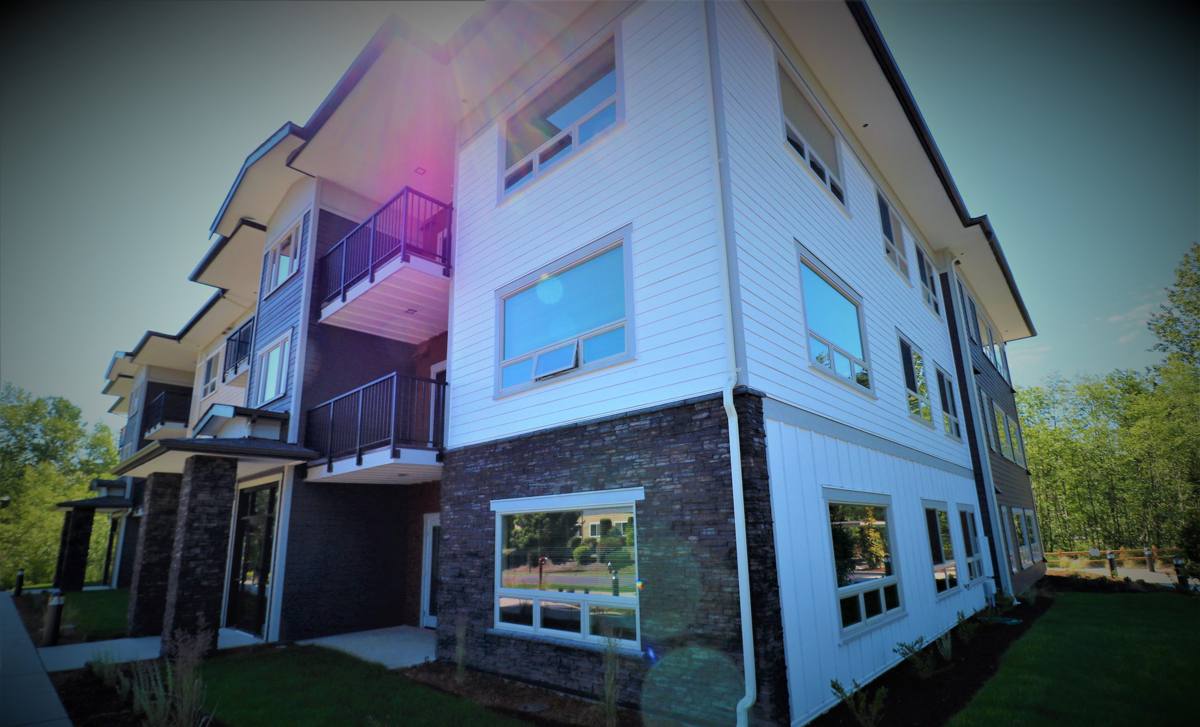
Signs Lynden Homeowners Should Watch For
Siding damage rarely announces itself. It usually shows up as one of these smaller signals first:
- Soft or spongy spots when you press on siding near the bottom courses or around window trim
- Paint that's bubbling, peeling, or failing faster than the rest of the house
- Dark streaking, green-black staining, or moss cushions on shaded walls and under eaves
- Visible gaps, cracks, or warping where panels or boards meet at corners and seams
- A musty smell or noticeable dampness on the interior side of an exterior wall
- Nail pops, loose boards, or siding that flexes more than it should when tapped
- Caulk joints that have shrunk, cracked, or pulled away from trim and window flanges
Any one of these on its own might be minor. Two or three in the same area usually means water has been getting behind the siding for a while, and the repair needs to address the water path, not just the visible symptom.
Why Small Problems Escalate Fast Here
In a drier climate, a cracked caulk joint might sit for a season without consequence. In Whatcom County, that same gap is an open invitation during four or five months of near-constant rain. Once moisture gets behind siding, it doesn't evaporate quickly — the humidity and cloud cover that make this region green also slow down drying time for wall assemblies. That's the core reason a "small" siding repair here needs to be diagnosed properly instead of just patched over.
What a Correct Siding Repair Actually Involves
A repair that just covers the damaged spot with new material is a temporary fix. A correct repair traces the problem to its source. That generally means:
- Removing enough surrounding material to see the full extent of water intrusion or rot, not just the visible failure point
- Inspecting the water-resistive barrier and flashing behind the siding — a repair that ignores a torn house wrap or missing kickout flashing will fail again
- Confirming the structural sheathing is sound before new siding goes back on; soft sheathing needs to be addressed, not sided over
- Matching material and fastening method so the repaired section performs the same as the rest of the wall, not as a patch that ages differently
- Re-sealing and re-flashing correctly at every joint, seam, and penetration touched during the repair
Skipping any of these steps is how a homeowner ends up paying for the same repair twice. We'd rather explain upfront why a job takes a day longer than quote something faster that doesn't actually solve the problem.
Common Siding Repair Situations by Material
What a repair looks like — and how long it holds — depends heavily on what's already on the house. Here's how the common siding types in Lynden typically respond to moisture and moss exposure, and what repair realistically involves for each:
| Siding Type | Common Failure Mode | Repair Difficulty |
|---|---|---|
| Vinyl | Cracking in cold snaps, warping near heat sources, moss trapped in overlaps | Panels are easy to replace but color-matching older vinyl is often impossible |
| Cedar / wood | Rot at butt joints and lower courses, moss holding moisture against the board | Labor-intensive; damaged boards must be fully removed, not just resurfaced |
| LP SmartSide / OSB-based | Edge swelling and delamination once the factory seal is breached | Swollen edges rarely return to original shape; full panel replacement is usually needed |
| Fiber cement (James Hardie) | Failed caulk joints, impact chips, occasional installation-error moisture entry | Straightforward — the board itself doesn't absorb or swell, so repairs are isolated to the actual damage |
We repair what's already on a home whenever that's the right call — not every repair needs to turn into a full siding replacement. But this table is also why we only install James Hardie fiber cement on new work: it's the one material on this list where a future repair stays a repair, instead of turning into a rot investigation.
Our Siding Repair Process in Lynden
We keep the process the same whether it's a single damaged panel or a full wall section:
- On-site inspection — we look at the damage, the surrounding area, and check for signs of moisture intrusion you can't see from the ground
- Honest diagnosis — we tell you what's actually causing the failure, not just what's visibly broken
- Written scope and estimate — you know exactly what's being repaired and why before work starts
- Removal and inspection of the wall behind the siding — flashing, house wrap, and sheathing get checked, not assumed to be fine
- Repair with matched or compatible material — fastened, flashed, and sealed to current best practice, not just "close enough"
- Final walkthrough — we show you what was found and what was done before we consider the job finished
Repair or Replace? How We Help You Decide
Not every damaged wall needs full replacement, and we're not going to sell you one if a targeted repair genuinely solves the problem. The honest factors that tip the decision:
| Factor | Leans Toward Repair | Leans Toward Replacement |
|---|---|---|
| Extent of damage | Isolated to one wall or section | Recurring issues across multiple walls |
| Age of existing siding | Under 10-15 years, otherwise sound | Near or past expected service life |
| Underlying material | Fiber cement or sound wood | Swollen OSB-based product, widespread rot |
| Moisture source | Found and fixable (caulk, flashing, moss) | Systemic, tied to original installation |
| Cosmetic match | Repaired section can blend acceptably | Discontinued color or profile, visible patchwork |
If a repair is the right call, that's what we'll recommend. If a house has enough underlying issues that repair after repair is the more expensive path over time, we'll say that too — with the reasoning laid out, not a sales pitch.
Why We Only Repair and Install With James Hardie Products
When a repair does call for new material — whether it's a few boards or a full wall — we use James Hardie fiber cement. It's non-combustible, engineered for Pacific Northwest moisture exposure through Hardie's HZ5 product line, and holds its factory ColorPlus finish without the swelling, delamination, or moss-retentive texture problems we see in the materials listed above. That matters for a repair specifically because it means the fix stays a fix — it doesn't become the first domino in a longer chain of problems the way a moisture-compromised OSB panel or an unsealed wood joint often does.
We don't install vinyl, LP SmartSide, Cemplank, Allura, primed spruce, or cedar as new siding, even though we'll gladly repair what's already there. That standard exists because we've seen how each of those materials ages under exactly the conditions Lynden gets every winter, and Hardie is the one that holds up with the least ongoing maintenance burden for the homeowner.
Why Hiring a Local Crew Matters
Siding repair is a trade where local experience actually changes the outcome. A crew that already works Whatcom County knows how far moss season typically runs, how much rain exposure a north wall gets compared to a south wall, and which failure patterns show up again and again in this specific climate. That's the difference between a repair that's cosmetically fine for a season and one that's built to hold up through the next several wet winters.
We're set up to serve Lynden alongside the rest of Whatcom County — close enough for a fast on-site look at a damaged section, and familiar enough with the area's building stock and weather exposure to diagnose problems accurately the first time.
Get a Free, No-Pressure Estimate
If you're seeing soft spots, moss buildup, staining, or damaged siding anywhere on your Lynden home, it's worth having someone look before the next storm season adds to the problem. Fill out the form below for a free estimate — we'll give you a straight answer on whether it's a repair, and if it is, exactly what that repair involves.