 Bellingham Siding
 Why Fairhaven's Climate Is Hard on an Ordinary Roof
Fairhaven sits close enough to the water that homes here deal with a version of Bellingham's weather that's a notch more aggressive than inland neighborhoods. Salt-laden air moves in off Bellingham Bay, wind-driven rain gets pushed sideways under eaves and around fascia, and the tree cover that makes the neighborhood shady and green also means moss has months on end of damp, shaded roof surface to work with. None of this is unique to Fairhaven, but the combination shows up faster here than in drier parts of Whatcom County.
A roof that's merely "installed correctly" on paper can still fail early if it wasn't detailed for this specific mix of conditions. Metal roofing, done right, handles all three of these stressors better than most other roofing materials — but "done right" is doing a lot of work in that sentence, and it's worth understanding what that actually means before you hire anyone.
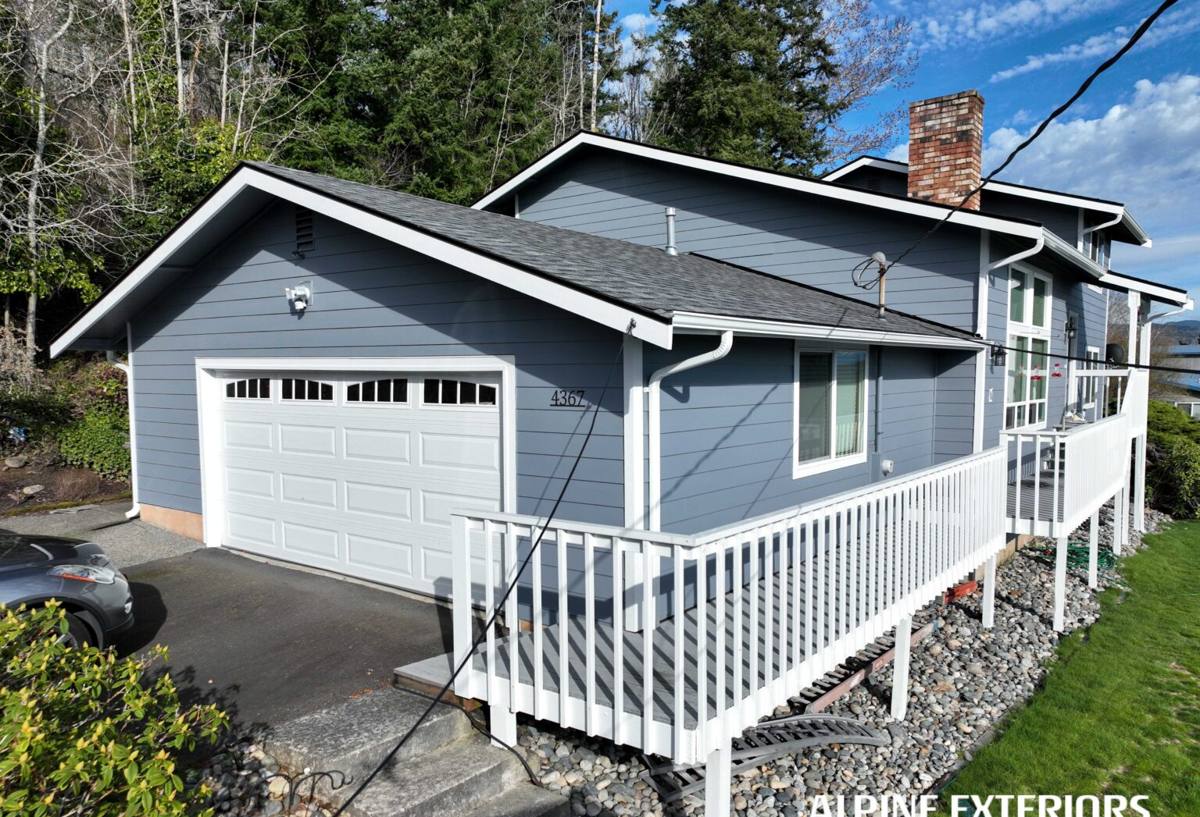
What Salt Air, Rain, and Moss Actually Do to a Roof
Salt Air and Corrosion
Airborne salt accelerates corrosion on any exposed metal — fasteners, flashing, panel edges, and cut ends where a protective coating has been compromised. On a roof close to the water, this isn't a hypothetical; it's a maintenance timeline that either gets extended by using the right materials and fastener specs, or gets shortened by cutting corners.
Driving Rain
Wind-driven rain doesn't just fall straight down — it gets forced up and under laps, around penetrations, and into any gap in the flashing detail. Roofs in exposed or wind-funneled spots need tighter seams, properly lapped underlayment, and flashing that's mechanically sound, not just caulked.
Moss and Moisture Retention
Shaded, north-facing, and tree-covered roof sections stay damp longer after every rain event, which is most of the year here. Moss holds moisture against the roof surface, and on some materials that trapped moisture leads to slow deterioration. Metal itself doesn't rot, but moss buildup can still trap debris, hold water against flashing and fasteners, and shorten the life of everything around the metal if it's left unmanaged.
Why Metal Roofing Is a Strong Fit for Fairhaven
Metal roofing has real advantages for this kind of environment when it's specified and installed correctly:
- Sheds wind-driven rain efficiently because of long, continuous panel runs with fewer horizontal joints than shingles
- Doesn't absorb water, so it isn't prone to the freeze-thaw and rot issues that affect porous materials
- Steep-slope and standing seam profiles shed moss more readily than rough, granulated surfaces, since there's less texture for spores and debris to grab onto
- Class A fire ratings and strong wind resistance, useful given the tree cover and occasional winter windstorms in this part of Whatcom County
- Long service life when the coating system and fasteners are matched to a coastal environment
That said, metal roofing is not maintenance-free, and it is not forgiving of a sloppy installation. The material's strengths only show up if the underlying work — underlayment, flashing, fastening, and ventilation — is done to a coastal standard.
What a Correct Metal Roof Installation Involves
Deck and Underlayment
Before any metal goes down, the deck gets inspected for rot or soft spots — common on older Fairhaven homes where a previous roof trapped moisture. We use a high-temp synthetic or self-adhered underlayment rated for the wind-driven rain this area sees, with extra attention to laps and valleys.
Fastener and Flashing Selection
This is where a lot of roofs near saltwater environments run into trouble. Mismatched metals (for example, the wrong fastener alloy against a panel type) can set off galvanic corrosion, and standard-grade fasteners can fail years before the panels do. We match fasteners, flashing, and panel material so nothing corrodes prematurely, and we pay particular attention to edge metal, valleys, and any penetration (vents, chimneys, skylights) since those are the spots driving rain finds first.
Panel Seams and Attachment Method
Standing seam systems use concealed clips rather than exposed screws, which removes the most common long-term leak point on lower-grade metal roofs. Where an exposed-fastener panel is the right choice for the budget or roof style, we use proper washered fasteners and correct spacing, and we're upfront about the extra maintenance that style requires over time.
Ventilation
Proper intake and exhaust ventilation keeps moisture from building up in the attic space, which matters as much for a metal roof as any other — trapped moisture under the deck contributes to rot and can shorten the life of the whole system regardless of what's on top.
Choosing a Metal Roofing System: Options Compared
| System | Best For | Coastal Durability | Maintenance |
|---|---|---|---|
| Standing seam (concealed fastener) | Most Fairhaven homes, especially exposed or waterfront-adjacent lots | Excellent — no exposed fasteners to corrode | Low; occasional debris and moss check |
| Exposed-fastener panel | Budget-conscious projects, outbuildings, secondary structures | Good, if fasteners are marine-grade and checked periodically | Moderate; fastener washers age faster near salt air |
| Metal shingle/shake profile | Homes wanting a traditional look with metal's durability | Good with correct flashing detail | Low to moderate |
We'll walk through which of these fits your roof's exposure, slope, and architecture rather than defaulting to one system for every job.
Our Process for a Fairhaven Metal Roofing Project
- On-site assessment — we look at slope, exposure to prevailing wind and rain direction, existing moss or moisture damage, and deck condition
- System recommendation — we recommend a panel type and gauge suited to your home's exposure, not just the lowest bid option
- Tear-off and deck repair — any rotten or compromised decking is replaced before anything new goes down
- Underlayment and flashing — installed to handle wind-driven rain, with extra detail at valleys, walls, and penetrations
- Panel installation — correct seam or fastener spacing, matched hardware, and attention to thermal expansion (metal panels move with temperature, and need to be installed to allow for it)
- Final walk-through — we go over care and what to watch for, particularly around moss and gutter debris
What Affects the Cost of a Metal Roof in Fairhaven
| Factor | Why It Matters Here |
|---|---|
| Panel system (standing seam vs. exposed fastener) | Standing seam costs more upfront but reduces long-term corrosion risk near the water |
| Roof complexity (valleys, dormers, penetrations) | Each detail is another spot driving rain can find if not flashed correctly |
| Deck condition | Older homes with prior moss or moisture damage may need deck repair before install |
| Coating and fastener grade | Marine-grade hardware and coatings cost more but matter more in a coastal-adjacent neighborhood |
| Accessibility and roof pitch | Steep or tree-shaded roofs take longer to work safely |
We give straightforward, itemized estimates so you can see where the money is going, rather than a single lump number.
Keeping a Metal Roof Healthy in a Fairhaven Environment
Metal roofing needs less upkeep than most materials, but "less" isn't "none," especially with the tree cover and moisture common to this neighborhood.
- Clear leaves and needles from valleys and gutters at least twice a year — shaded sections accumulate debris faster
- Check for moss or algae buildup on north-facing slopes and remove it gently; don't pressure-wash a coated metal panel
- Have flashing and sealant at penetrations inspected periodically, since these are the first points to show wear
- Watch for any exposed fastener heads with worn washers and have them replaced before they become a leak point
- After major windstorms, a quick visual check for lifted panels or debris impact is worth the ten minutes
Why Hiring a Crew That Already Works in Fairhaven Matters
A metal roof installed by a crew unfamiliar with this specific stretch of coastline can still look fine on move-out day and start showing problems within a few years — corroding fasteners, moss creeping under poorly lapped flashing, or leaks at a valley that wasn't detailed for driving rain. Crews who regularly work Fairhaven and the surrounding Bellingham waterfront neighborhoods know which details need extra attention on this side of Whatcom County, not just what a manufacturer's install manual says in general.
That local familiarity also shows up in smaller, practical ways — knowing which tree-shaded lots need extra moss prevention detail, which streets catch the worst of the wind off the bay, and how older Fairhaven homes tend to be framed underneath the existing roof. It's the difference between a roof that's technically installed and one that's actually built for where it sits.
Get a Straightforward Estimate
If you're weighing metal roofing for a Fairhaven home, we're happy to take a look, walk you through what your specific roof needs, and give you a clear, no-pressure estimate — no obligation either way. Use the form below to get started.