 Bellingham Siding
 New-Construction Windows for Barkley Homes
Barkley sits close enough to the water and to Bellingham's tree cover that new homes going up here face a specific mix of weather: salt-laden air drifting off Bellingham Bay, wind-driven rain that hits walls sideways more often than straight down, and a moss season that can run eight or nine months out of the year. New-construction window work in this kind of environment is not just about setting a window in a rough opening and calling it done. It's about how that opening was framed, how the flashing sheds water before it ever reaches the window unit, and whether the materials chosen will hold up to decades of damp, salty air without the frame swelling, the hardware corroding, or the glass fogging from a failed seal.
We've worked new builds and additions throughout the Barkley area long enough to know which details matter here specifically, versus what's fine for a drier inland lot. This page covers what a correct new-construction window install looks like for this neighborhood, what tends to go wrong when it's rushed, and how we run the job from rough opening to final trim.
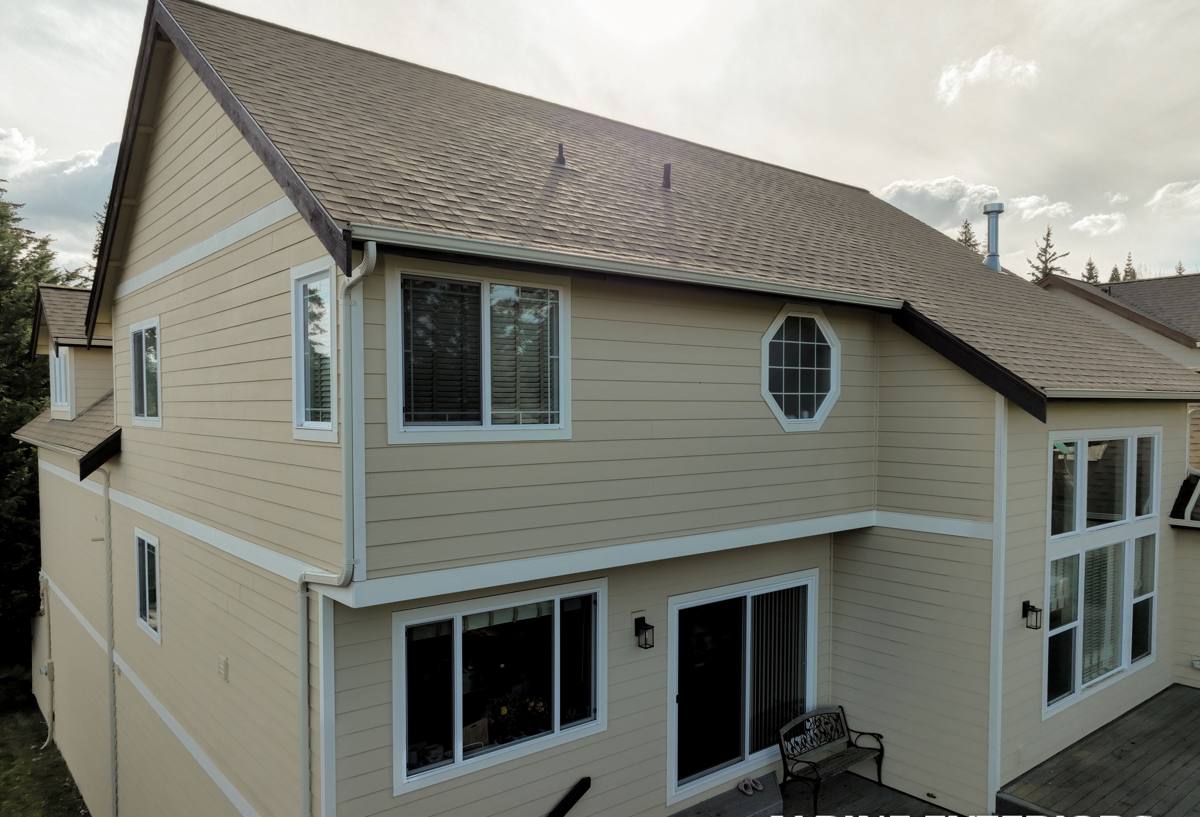
What Barkley's Climate Actually Does to a Window Opening
Whatcom County gets a lot of rain, but the specific challenge in Barkley is the combination of moisture and salt exposure with proximity to the bay. That combination shows up in three ways over the life of a window:
- Corrosion on hardware and fasteners — cheap or mismatched screws, hinges, and cranks pit and seize faster near salt air than they would ten or twenty miles inland.
- Moss and algae growth on sills and lower sashes — constant shade and damp conditions let organic growth take hold on any horizontal surface that doesn't drain and dry properly, which slowly degrades wood trim and traps moisture against the frame.
- Wind-driven rain intrusion at the rough opening — this is the big one. Storms here don't just drop rain straight down; they push it sideways and upward under trim and through any gap in the flashing sequence. A window that would be fine in a calm climate can still leak here if the water management around it isn't built correctly.
None of this means Barkley is a hard place to build. It means the install has to account for what the site actually experiences, not just meet a generic code minimum.
Why New Construction Is Different From a Retrofit
On a retrofit or replacement job, we're working with an existing wall and trying to match or improve what's there. New construction is the opposite — and it's actually the better opportunity. The rough opening, the weather-resistive barrier, the flashing tape, and the window unit itself can all be sequenced correctly from the start, with no old caulk, no rotted sill plate, and no guesswork about what's hidden behind the siding. Getting it right here means the homeowner never has to think about that window again for a long time. Getting it wrong means a callback in a year or two, usually after the first hard winter storm finds the gap.
What a Correct New-Construction Window Install Involves
There's a specific order of operations that protects a new-construction window opening from water, and skipping or reordering steps is where most leaks trace back to. Here's the sequence we follow:
- Rough opening check — verify the opening is square, level, and sized correctly to the manufacturer's specs before anything else happens. An opening that's slightly out of square stresses the frame and can prevent proper sealing later.
- Weather-resistive barrier integration — the house wrap or building paper has to be cut and lapped correctly around the opening so water is directed out and down, not into the wall cavity.
- Sill pan flashing — a sloped, sealed pan at the bottom of the rough opening gives any water that gets past the window a way out, instead of pooling against the sill and rotting the framing underneath.
- Side and head flashing, shingle-style — flashing tape applied in the correct overlapping order (sides before head, head lapping over the top of the side flashing) so water always sheds downward and outward, never backward into a seam.
- Setting the window — plumb, level, and square, with shims placed at the manufacturer's specified points, not just wherever is convenient.
- Fastening per manufacturer schedule — the right fastener type, spacing, and location, since incorrect fastening voids most window warranties even if the window itself is fine.
- Insulating the gap — a low-expansion foam or backer rod and sealant between the frame and rough opening, sized so it doesn't bow the frame inward.
- Exterior trim and final sealant — the visible finish work, done with sealants and trim details rated for the moisture and UV exposure the site actually gets.
Every one of those steps has to hold up specifically to sideways rain and long damp stretches, which is why we don't shortcut the flashing sequence to save an hour on a Barkley job the way it might get shortcut somewhere drier.
Choosing Window Products for This Environment
We install a range of window lines, and the right choice depends on budget, home style, and how exposed the specific elevation is to wind and rain. In general, for Barkley new construction we steer homeowners toward vinyl or fiberglass frames with factory-applied, marine-grade or coastal-rated hardware finishes on the more exposed sides of the house, and we're careful about wood-frame windows on elevations that take direct weather — not because wood windows are a bad product, but because unclad or poorly maintained wood in this kind of salt-and-damp environment carries a higher maintenance burden than most homeowners want to sign up for. If a homeowner wants the look of wood, a clad-exterior wood window (vinyl, aluminum, or fiberglass cladding over a wood interior) gives that look with far less exposure risk.
Glass and Gas-Fill Considerations
Double-pane, low-E glass with an argon fill is the baseline we recommend for this climate — it manages condensation and heat loss well through the wet, cool stretches of the year. On elevations with more direct wind exposure, we'll also talk through impact-resistant or heavier-gauge glass options, since driving rain in a windstorm can carry debris.
| Frame Material | How It Handles Barkley's Climate | Maintenance Level |
|---|---|---|
| Vinyl | Won't corrode or rot; handles damp and salt air well | Low — occasional cleaning |
| Fiberglass | Very stable in temperature swings, strong moisture resistance | Low |
| Clad wood (vinyl/aluminum/fiberglass exterior) | Good protection on the weather side, wood look inside | Low to moderate |
| Unclad wood | Attractive but exposed wood needs regular sealing/painting in this climate | High |
| Aluminum (uninsulated) | Prone to condensation and heat loss in our wet, cool winters | Moderate |
Where Homes in This Area Tend to Have Trouble
When we get called out to look at a Barkley home with a window problem, a handful of causes come up again and again:
- Sill pan flashing skipped or installed backward, letting water pool against the framing instead of draining out
- House wrap taped in the wrong order around the opening, creating a seam that channels water inward instead of down and out
- Trim and caulk used as the primary water barrier instead of a backup, which fails once the caulk ages and cracks
- Moss and debris allowed to build up on sills and in weep holes, blocking the drainage path the window was designed to use
- Fasteners that aren't corrosion-resistant, leading to staining and eventual hardware failure
Every one of these is preventable with the right sequence and the right materials at the time of install — which is a lot cheaper than opening up a wall and repairing rot two or three years later.
Our Process for a Barkley New-Construction Job
We keep this straightforward because clear communication matters as much as the technical work:
1. Site Visit and Measurement
We look at the actual rough openings, note which elevations take the most wind and rain, and talk through product options that fit the home's design and the homeowner's budget.
2. Written Proposal
A clear scope covering window specs, flashing and install method, timeline, and cost — no vague allowances that turn into surprise change orders mid-job.
3. Coordinated Install Timing
On new construction, window install has to be sequenced correctly with the framing and weather-barrier trades. We coordinate directly with the builder or general contractor so windows go in at the right point in the build, not too early or too late.
4. Install and Inspection
Each opening gets the full flashing sequence described above, and we walk the job before trim goes on to confirm every opening is sealed correctly — that's the point in the build where it's cheapest and easiest to catch and fix an issue.
5. Final Walkthrough
We go over operation, hardware, and basic care with the homeowner or builder before we consider the job finished.
What to Ask Before Hiring Anyone for This Work
New-construction window work is easy to do poorly and hard to inspect once the siding and trim are on, which is exactly why the contractor matters as much as the product. A short checklist worth going through with any crew you're considering:
- Do they use a sill pan flashing system on every opening, or only "when needed"?
- Can they explain their flashing lap order without hesitation?
- Are they installing to the specific window manufacturer's instructions, which affects warranty coverage?
- Do they coordinate directly with the builder's schedule, or show up on their own timeline?
- Will they walk the openings with you or the builder before trim closes them up?
- Are they familiar with corrosion-resistant hardware and fastener choices for this specific area?
A crew that already works new construction around Bellingham and the Barkley area specifically should be able to answer all of these without a pause, because it's the same sequence they run on every job here.
Cost Factors to Expect
Pricing on new-construction windows depends on more than just the window unit itself. The main variables we see are:
| Factor | How It Affects Cost |
|---|---|
| Window count and size | Larger openings and more units increase both material and labor cost |
| Frame material | Vinyl is typically most economical; fiberglass and clad wood cost more upfront |
| Glass package | Impact-resistant or upgraded low-E glass adds cost per unit |
| Elevation exposure | Openings on wind- and rain-exposed sides may warrant extra flashing detail or hardware upgrades |
| Coordination complexity | Tight build schedules or multiple trades on site can affect labor timing |
We give homeowners and builders a real number after seeing the plans or the framed openings, not a generic per-window estimate that doesn't reflect the actual site.
Get an Estimate for Your Barkley Project
If you're building new or adding on in Barkley, we're glad to look at your plans or your framed openings and give you a straightforward, no-pressure estimate on new-construction window installation — including product recommendations suited to this neighborhood's weather. Use the form below to get started.