 Bellingham Siding
 Roofing Built for Blaine's Coastline, Not a Generic Climate
Blaine sits right on the water at the far northwest corner of Whatcom County, and that location shapes what a roof needs to survive here. Homes close to Semiahmoo Bay and the Strait of Georgia take on salt-laden air that accelerates corrosion on fasteners, flashing, and exposed metal. Add in the driving, wind-pushed rain that comes off the water during winter storms, plus a moss season that can run eight months or longer in the shaded, damp conditions typical of this part of Washington, and it's clear why a roof that works fine in a drier inland climate can underperform on a Blaine roofline. A correctly installed roof here isn't just about shingles — it's about the underlayment, the flashing metal, the ventilation, and the fastener choices working together against constant moisture and salt exposure.
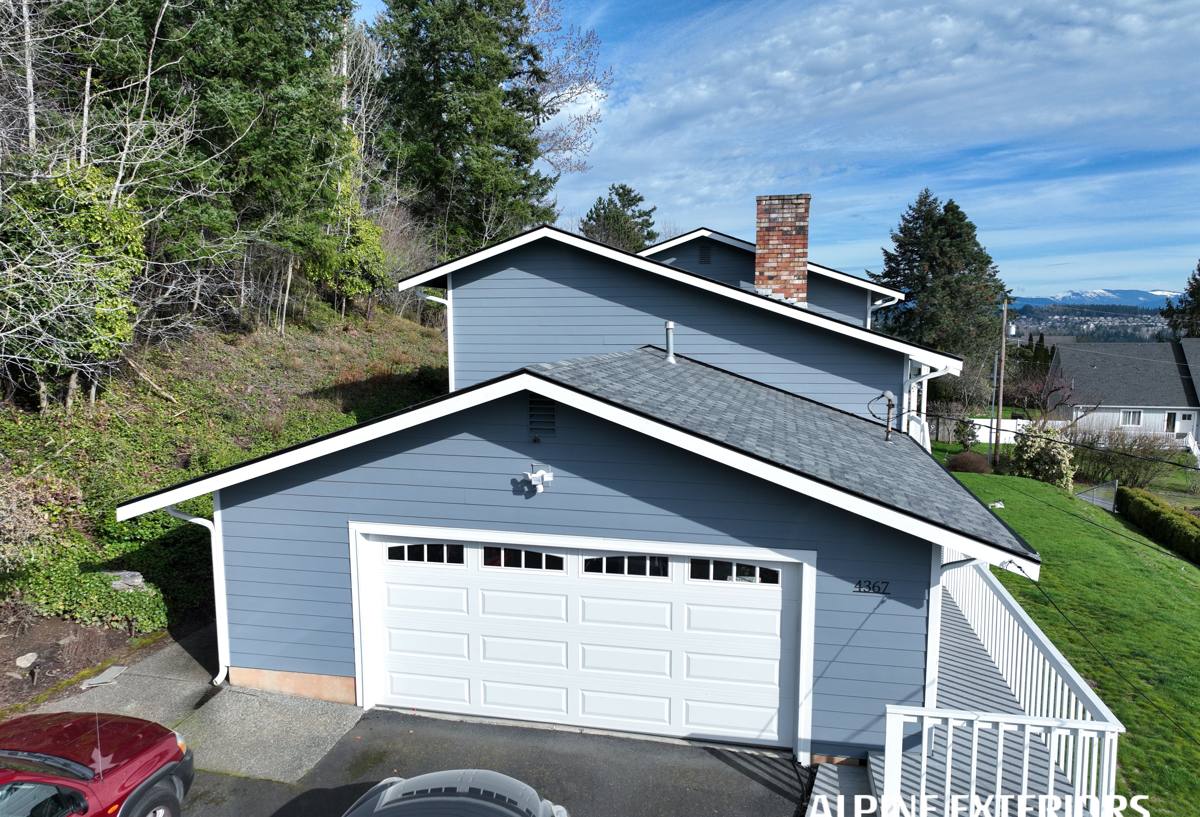
What Blaine Homes Actually Need From a New Roof
We look at four things on every Blaine roof before we talk product selection: wind exposure, salt exposure, moss history, and roof geometry. A home on an open lot facing the water needs a different wind-rated shingle and fastening pattern than a home tucked into a tree-sheltered inland lot. A roof with a north-facing slope that stays shaded most of the day is going to grow moss faster than a south-facing slope, and that changes how we think about ventilation and algae-resistant materials.
Salt Air and Metal Components
Salt air corrodes untreated or poor-grade metal faster than most homeowners expect. Nails, drip edge, flashing, and vent components that aren't rated for coastal exposure can start showing rust streaks and early failure within a few years on a property near the water. We spec corrosion-resistant fasteners and flashing metals on Blaine jobs as a standard practice, not an upgrade — it's cheaper to do it right the first time than to chase leaks caused by a corroded flashing seam five years in.
Driving Rain and Water Intrusion
Wind-driven rain doesn't behave like a straight-down downpour. It gets pushed sideways and upward under shingle edges, around vent boots, and into valleys if the underlayment and flashing details aren't built for it. That's why we pay close attention to valley construction, ice-and-water shield placement at eaves and valleys, and proper flashing laps — these are the spots where a marginal install shows up as a leak during the first real winter storm.
Moss and Roof Longevity
Moss holds moisture against the roof surface, and sustained moisture is what shortens the life of shingles, degrades wood decking underneath, and can work its way under tab edges over time. Moss growth is a symptom of a shaded, damp roof, not a random nuisance — the fix is a combination of roof material choice, adequate attic ventilation to reduce underside moisture, and, where it makes sense, zinc or copper strips near the ridge to slow regrowth.
What a Correct Roof Installation Actually Involves
A new roof is a system, not a single product. Here's what we consider non-negotiable on every install, Blaine or otherwise:
- Tear-off to the decking so we can inspect for rot, soft spots, or prior water damage before anything new goes down
- Decking repair or replacement where moisture has compromised the sheathing
- A properly lapped synthetic underlayment rated for the exposure level of the roof
- Ice-and-water shield at eaves, valleys, and roof penetrations — the highest-risk zones for wind-driven rain
- New flashing at all walls, chimneys, skylights, and roof-to-wall transitions rather than reusing old flashing
- Balanced intake and exhaust ventilation sized to the attic space, not just a handful of vents added for looks
- Manufacturer-specified nailing pattern and fastener spacing, upgraded for wind exposure where the site calls for it
- A final walk-through covering gutters, downspout tie-ins, and any trim or siding areas disturbed during the tear-off
Skipping any one of these doesn't necessarily cause an immediate problem — but it's usually the corner that gets cut, and it's usually the corner that causes the callback three or four years later.
Our Process, Start to Finish
1. On-Site Assessment
We walk the roof, check the attic for existing ventilation and moisture signs, and look at the site conditions — tree cover, wind exposure, proximity to the water. This tells us what the roof actually needs, not just what it currently has.
2. Written Scope and Estimate
You get a clear, itemized estimate that spells out materials, underlayment, flashing approach, and ventilation plan. No vague line items. If tear-off reveals decking damage, we show you the affected area before replacing anything so there are no surprise charges.
3. Tear-Off and Deck Inspection
Old roofing comes off down to the deck. This is the point where hidden problems — rot, prior leak damage, undersized ventilation — actually show themselves. We document and address what we find.
4. Underlayment, Flashing, and Ventilation Install
This is where the roof's real durability gets built. Underlayment and ice-and-water shield go down first, followed by new flashing at every penetration and transition, then the ventilation components sized to your attic.
5. Roofing Material Installation
Shingles or your chosen material go down per manufacturer spec, with fastener upgrades where wind exposure warrants it.
6. Cleanup and Final Walk-Through
Magnetic sweep for nails, full site cleanup, and a walk-through where we point out what was done and answer questions before we call the job finished.
Roofing Material Considerations for a Coastal Whatcom County Property
There's no single "best" roofing material for every Blaine home — it depends on budget, roof pitch, architectural style, and how much maintenance you want to take on. Here's an honest comparison of the main options we install:
| Material | Coastal/Moss Performance | Typical Lifespan | Maintenance |
|---|---|---|---|
| Architectural Asphalt Shingle | Good with algae-resistant granules and proper ventilation | 25–30 years | Low; periodic moss treatment recommended |
| Standing Seam Metal | Excellent when using marine-grade coatings and coastal-rated fasteners | 40–50+ years | Very low; occasional fastener and seam check |
| Synthetic/Composite Shingle | Strong moisture and moss resistance | 30–50 years | Low |
| Cedar Shake | Requires diligent maintenance in damp, shaded conditions | 20–30 years with upkeep | High; regular treatment against moisture and moss |
We're upfront that cedar shake, while attractive, asks the most of a homeowner in a climate like Blaine's — the combination of moisture and shade that drives moss growth also stresses natural wood shingles, so we make sure clients understand the maintenance commitment before they choose it, rather than after.
Cost Factors Specific to a Blaine Reroof
Every roof is priced on its own specifics, but the factors that most often move the number on a Blaine job are:
| Factor | Why It Affects Cost |
|---|---|
| Roof pitch and access | Steeper roofs and limited equipment access require more labor and safety setup |
| Deck condition | Rot or soft decking found during tear-off adds repair or replacement cost |
| Wind exposure rating | Open, water-facing lots may need upgraded fastening and higher wind-rated materials |
| Ventilation upgrades | Older homes often need added intake or exhaust vents to meet current standards |
| Material choice | Asphalt, metal, synthetic, and cedar carry different material and labor costs |
| Flashing complexity | Chimneys, skylights, and multiple roof-wall transitions add detail work |
We don't quote a number without seeing the roof first — anyone who gives a firm price over the phone for a full reroof is guessing, and that guess tends to turn into change orders later.
Why a Crew That Already Works Blaine Matters
Roofing crews who work throughout Whatcom County and Bellingham but haven't spent much time on Blaine's waterfront properties can miss the details that matter most there — the added corrosion protection, the wind-rated fastening, the moss-prone shaded slopes that need extra ventilation attention. We've worked on homes across this stretch of coastline and in inland Whatcom County neighborhoods, and we bring that same coastal-exposure standard to every Blaine roof regardless of how close it sits to the water, because conditions can shift block by block depending on tree cover and wind exposure.
Local presence also means faster response if something needs a look after a major storm, and a crew that's already familiar with permitting and inspection expectations in the area.
Signs Your Blaine Roof May Need Replacement Rather Than Repair
- Granule loss showing up in gutters or downspouts in significant amounts
- Curling, cupping, or cracked shingles across multiple areas of the roof
- Persistent moss or algae staining that returns quickly after cleaning
- Soft spots or sagging visible from the ground or in the attic decking
- Daylight visible through the roof deck from inside the attic
- Recurring leaks in the same area despite prior patch repairs
- Roof age at or beyond the manufacturer's expected service life
If you're only seeing one or two of these and the roof is otherwise sound, a repair may be the more honest recommendation — we'll tell you that rather than push a full reroof you don't need yet.
If you're weighing a new roof for your Blaine home, we're happy to take a look and give you a straightforward, no-pressure estimate — just fill out the form below to get started.