 Bellingham Siding
 Why Sunnyland Roofs Wear Differently Than Roofs Inland
Sunnyland sits close enough to Bellingham Bay that homes here deal with a different mix of weather stress than a roof twenty minutes inland in Whatcom County. Salt-laden air off the water accelerates corrosion on exposed metal fasteners and flashing. Driving rain, pushed sideways by wind off the bay, finds every weak seam and lap joint a roof has. And the long, damp moss season that defines a Pacific Northwest winter doesn't let up the way it might in a drier climate — moss and algae get a running start every fall and don't fully dry out again until late spring.
None of this means a roof over Sunnyland needs to be exotic or overbuilt. It means the ordinary parts of a roofing job — fastener choice, underlayment quality, flashing detail, and ventilation — matter more here than they would in a milder climate, and cutting corners on any of them shows up faster on a roof in this neighborhood than it would somewhere drier.
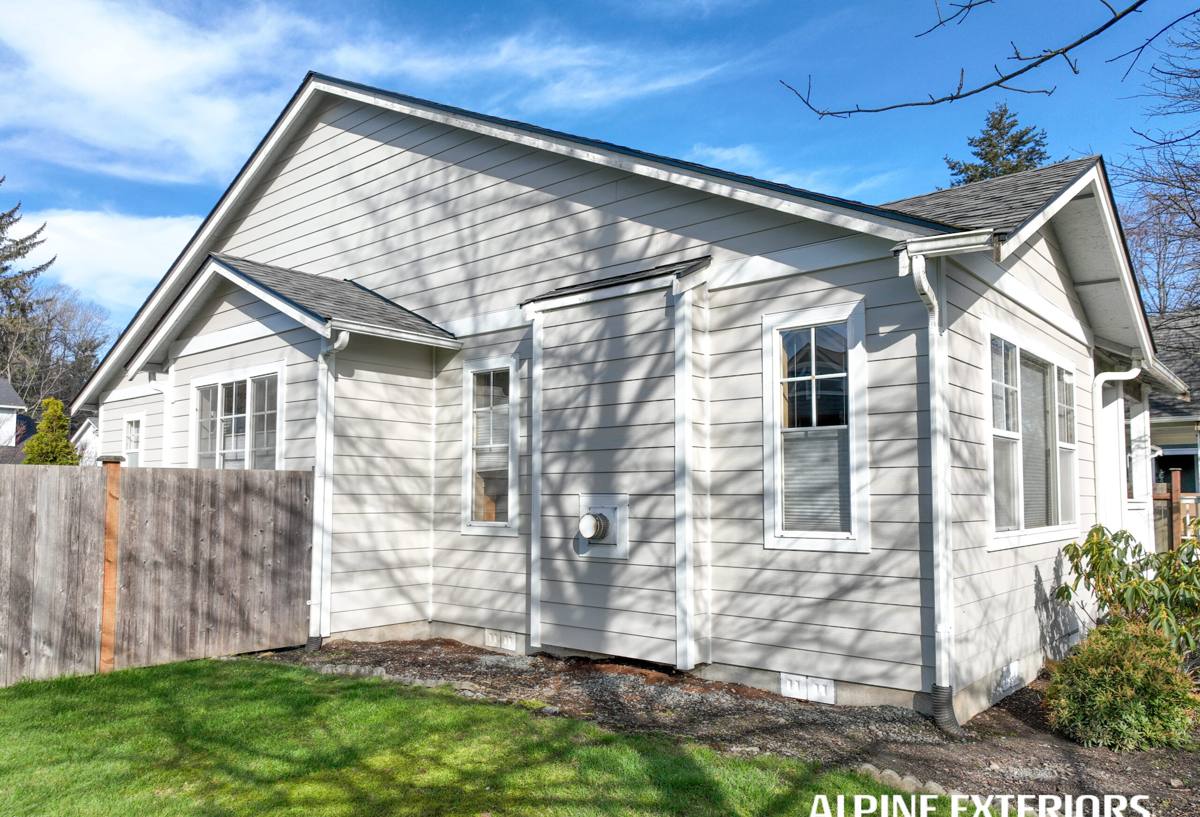
Signs a Sunnyland Home Needs a New Roof, Not Another Repair
A lot of roofs get patched for years past the point where patching still makes sense. Some signs that a full replacement is the more honest recommendation:
- Granule loss heavy enough that you can see bare asphalt on multiple slopes, not just one worn spot
- Shingles that are cupping, curling, or cracking across large sections rather than isolated areas
- Moss growth that keeps returning within a season or two of cleaning, especially on north-facing slopes
- Soft or spongy decking felt underfoot during an inspection, which usually means water has already gotten past the surface layer
- Daylight visible through the roof deck from inside the attic, or staining on attic sheathing
- A roof original to a home built more than 20–25 years ago, even if it looks intact from the ground
If a roof is showing one or two of these, a targeted repair may still be the right call. If several are present together, repair costs start to approach replacement costs without buying back much lifespan — and that's worth saying plainly rather than stringing a homeowner along with patch after patch.
What a Correct New Roof Installation Actually Involves
Tear-Off and Deck Inspection
A proper installation starts with a full tear-off down to the decking, not an overlay on top of old material. This is the only point in the project where the decking itself can actually be inspected and any soft, delaminated, or water-damaged sheathing can be replaced before it's covered up again for another 20-plus years.
Underlayment
Given how much rain a Sunnyland roof sees over a winter, underlayment isn't a place to save money. A synthetic underlayment with proper lap and fastening, plus self-adhered ice-and-water membrane at eaves, valleys, and any low-slope transitions, gives the roof a real second line of defense if wind-driven rain ever gets under the primary roofing material.
Flashing
Flashing around chimneys, skylights, sidewalls, and roof-to-wall transitions is where most roof leaks actually originate — not in the field of the shingles. Correct step flashing, counter-flashing, and properly lapped valley metal matter more in a wet, wind-exposed neighborhood like Sunnyland than almost anything else in the job.
Ventilation
A roof that can't breathe traps moisture in the attic, which speeds up moss growth on the underside of decking, shortens shingle life from below, and can lead to condensation issues in a damp marine climate. Balanced intake and exhaust ventilation is part of a correct installation, not an optional add-on.
Roofing Material Options for a Marine Climate
There's no single "best" roofing material for every home — the right choice depends on budget, roof pitch, how the house looks from the street, and how much long-term maintenance a homeowner wants to take on. Here's an honest comparison for a home in this climate:
| Material | Typical Lifespan | Moss/Algae Resistance | Maintenance Level |
|---|---|---|---|
| Architectural asphalt shingle | 25–30 years | Good with algae-resistant granules; still needs periodic cleaning | Low to moderate |
| Standing seam metal | 40–50+ years | Very good — smooth surface sheds moss more easily | Low |
| Synthetic/composite shake | 30–40 years | Good, varies by product | Low to moderate |
| Cedar shake (untreated) | 20–30 years | Fair — porous surface holds moisture, needs regular treatment | High |
We install architectural asphalt and metal roofing most often on Sunnyland homes because they hold up well against this specific combination of rain volume and moss pressure without demanding constant upkeep from the homeowner. Cedar shake can still be the right call on the right home, but it's fair to be upfront that it asks more of an owner in a climate this wet.
Cost Factors Homeowners Should Understand
Every roof is priced individually, but the factors that actually move the number are consistent:
| Factor | Why It Matters |
|---|---|
| Roof size and number of slopes | More material and labor, more valleys and edges to flash correctly |
| Pitch and accessibility | Steep or hard-to-access roofs take longer and require more safety setup |
| Number of layers being removed | Tear-off of multiple old layers adds labor and disposal cost |
| Decking condition | Rotten or delaminated sheathing found during tear-off adds material and time |
| Material choice | Metal and premium shingle lines cost more upfront but less over the roof's life |
| Penetrations and flashing complexity | Chimneys, skylights, and multiple roof-to-wall transitions add detail work |
Broad ranges for a full tear-off and replacement on a typical single-family home run from the low five figures for a straightforward asphalt shingle job up into the high five figures or more for larger roofs, steep pitches, or metal roofing. A real number only comes from an actual measurement and inspection — anything quoted without one is a guess.
Our Installation Process
- Inspection and measurement — we walk the roof, check the decking where accessible, and note flashing, ventilation, and drainage conditions specific to the home
- Written estimate — material options, scope, and pricing laid out clearly before anything is scheduled
- Tear-off — full removal down to the deck, with daily site cleanup so the property isn't left exposed or littered with debris overnight
- Deck repair — any soft or damaged sheathing replaced before underlayment goes down
- Underlayment and flashing — ice-and-water membrane at vulnerable areas, synthetic underlayment across the field, new flashing at all penetrations and transitions
- Roofing installation — material installed to manufacturer specification, which is also what keeps the manufacturer's warranty intact
- Ventilation check — intake and exhaust balanced for the attic space
- Final walkthrough — we go over the finished roof with the homeowner before calling the job done
Living With a New Roof Through Moss Season
Even a correctly installed roof benefits from a bit of homeowner attention once moss season sets in each fall. Keeping gutters clear so water doesn't back up under the eaves, trimming back overhanging branches that shade a roof and keep it damp, and scheduling a light moss treatment every year or two will noticeably extend the interval between major cleanings. None of this is complicated, but it makes a real difference on a roof exposed to Bellingham's wet season for months at a stretch.
Why Local Experience in Sunnyland Matters
A roofing crew that regularly works this specific part of Whatcom County knows how the wind comes off the bay, which slopes in this neighborhood tend to hold moss longest, and what decking condition to expect opening up a roof built in a given era around here. That's not something a crew coming in from outside the region picks up on the first job. It shows up in small decisions — where extra ice-and-water membrane actually earns its keep, how much ventilation a particular attic layout needs — that add up to a roof that performs the way it's supposed to for its full lifespan.
Before You Sign a Roofing Contract
Whoever you hire, a few questions are worth asking upfront:
- Is the company licensed and insured in Washington, and can they provide proof?
- Does the estimate include a full tear-off, or is it pricing an overlay?
- What underlayment and ice-and-water membrane are included, and where will they be installed?
- Is decking replacement priced as a contingency, or will it be a surprise change order?
- What's covered under workmanship warranty, separate from the manufacturer's material warranty?
- Who's actually doing the work — the company's own crew, or subcontractors?
A contractor who answers these plainly, without dodging or padding the conversation, is usually the one worth hiring.
If your Sunnyland roof is showing its age or you just want an honest read on where it stands, we're glad to take a look. Fill out the form below for a free, no-pressure estimate.