 Bellingham Siding
 Why New Roof Installation in Puget Is Its Own Job
Puget sits close enough to Bellingham Bay that homes here take a different kind of weathering than roofs a few miles inland. Salt-laden air corrodes exposed metal faster, wind-driven rain gets pushed sideways under poorly lapped materials, and the long stretch of gray, wet months every fall through spring keeps roof surfaces damp for weeks at a time. That combination is what actually determines whether a new roof lasts fifteen years or thirty-five. A correct installation in Puget isn't just about laying shingles straight — it's about managing water and moisture at every seam, vent, and edge before it ever becomes a problem.
We install roofs across Bellingham and greater Whatcom County, and Puget homes get the same attention to detail as anywhere else we work: proper flashing, real ventilation, and materials matched to what this specific stretch of coastline actually throws at a house year-round.
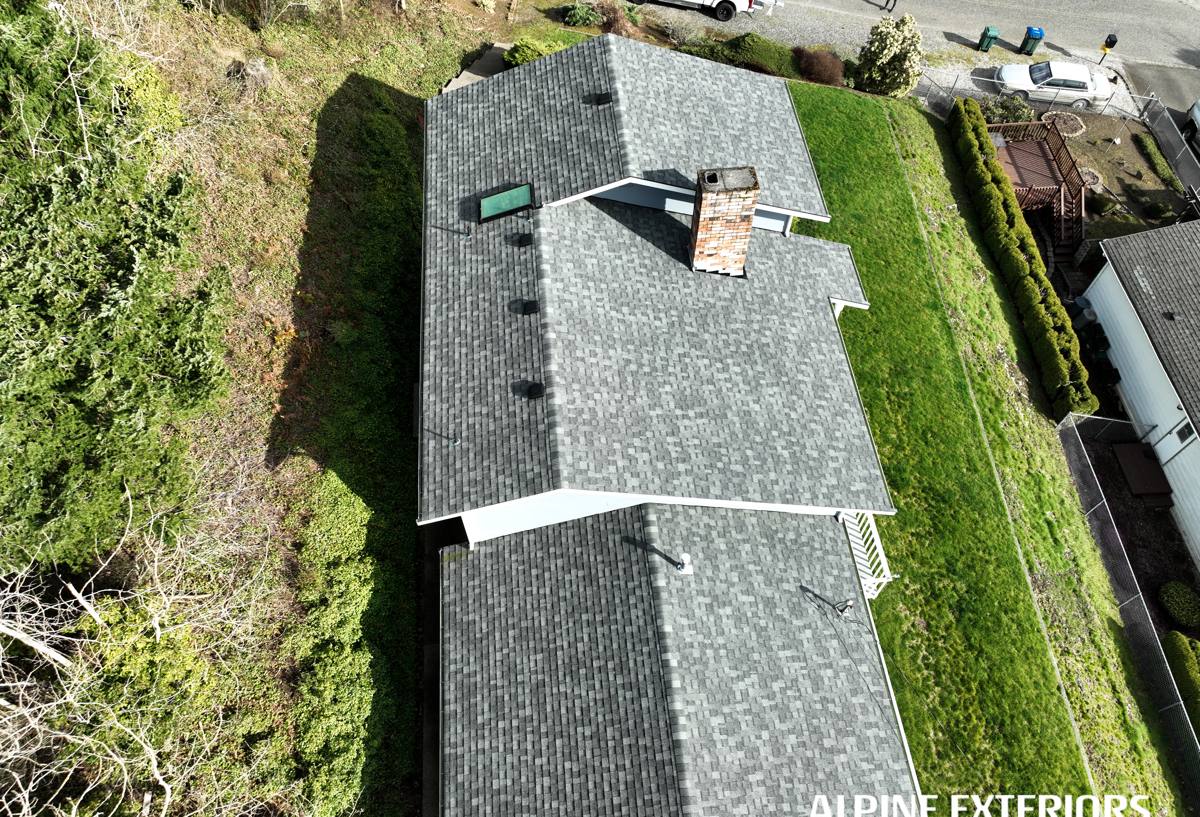
What Puget's Climate Does to a Roof
Salt Air and Metal Corrosion
Proximity to the water means airborne salt settles on every exterior surface, including roofing metal. Fasteners, flashing, and vent stacks that aren't rated for coastal exposure corrode faster here than they would twenty miles inland. This is one of the most overlooked details in budget roof jobs — the shingles look fine for years while the metal underneath them is quietly failing.
Driving Rain
Storms coming off the Sound don't just fall straight down — wind pushes rain sideways and up under roof edges, around chimneys, and into any gap in the flashing. A roof that would hold up fine in a calm climate can leak within a season here if the underlayment and flashing details aren't built for wind-driven water.
Moss Season
Whatcom County's long wet season, combined with shade from mature trees common in this area, creates ideal conditions for moss and algae growth on north-facing slopes and anywhere debris collects. Moss holds moisture directly against the roofing surface, and over time it lifts shingle edges and works its way under tabs and flashing, giving water a path underneath the roof covering.
What a Correct New Roof Installation Actually Involves
A new roof is more than swapping old shingles for new ones. The parts nobody sees are usually what determine whether the roof performs for its full expected lifespan.
- Full tear-off: we remove the old roofing down to the deck rather than layering over it, so we can actually inspect what's underneath.
- Deck inspection and repair: soft, delaminated, or water-stained sheathing gets replaced before anything new goes down — covering rotten decking with new shingles just hides the problem.
- Ice-and-water shield at vulnerable areas: eaves, valleys, and around penetrations get a self-adhering waterproof membrane, not just felt.
- Synthetic underlayment across the field: a water-resistant barrier over the full deck as a second line of defense.
- New flashing at every transition: chimneys, sidewalls, skylights, and roof-to-wall junctions get new metal flashing — reusing old, corroded flashing is a common shortcut we don't take.
- Balanced ventilation: intake at the eaves and exhaust at the ridge, sized to the attic, so moisture and heat actually move out instead of condensing under the deck.
- Manufacturer-correct fastening and nailing pattern: under-nailing or over-driven nails are one of the most common causes of premature shingle failure and voided warranties.
Choosing the Right Material for Puget Conditions
There's no single "best" roofing material — the right choice depends on the home's exposure, roof pitch, budget, and how much long-term maintenance the owner wants to take on. Here's how the common options actually compare for a coastal Whatcom County property:
| Material | Salt Air / Coastal Performance | Moss Resistance | Maintenance | Typical Lifespan |
|---|---|---|---|---|
| Architectural asphalt shingle | Good with corrosion-resistant fasteners and flashing | Moderate — benefits from algae-resistant granules | Low to moderate | 25–30 years |
| Standing seam metal | Excellent when coastal-rated coatings and fasteners are used | Very good — moss struggles to hold on smooth metal | Low | 40–50+ years |
| Cedar shake | Requires diligent maintenance near salt air | Poor without regular treatment and cleaning | High — regular treatment needed | 20–30 years with upkeep |
| Synthetic/composite shingle | Good — resists corrosion since it's non-metallic | Good, varies by product | Low | 30–50 years |
We're upfront about trade-offs. Cedar shake can look great, but in a coastal, moss-prone area like Puget it demands a maintenance schedule most homeowners underestimate — regular cleaning, treatment, and closer inspection intervals. Standing seam metal costs more upfront but shrugs off both salt exposure and moss when it's installed with the right fasteners and coatings. Asphalt remains the most common choice here because, done correctly with proper ventilation and flashing, it holds up well for the price and is easier to repair or eventually replace in sections.
Our Installation Process
1. Roof Assessment
We inspect the existing roof, decking condition (where visible), attic ventilation, and flashing details, and take note of exposure — which slopes face prevailing wind and rain, which stay shaded and hold moss.
2. Written Scope and Estimate
You get a clear breakdown of materials, tear-off scope, any decking replacement allowance, flashing work, and ventilation upgrades — no vague line items.
3. Tear-Off and Deck Inspection
Old roofing comes off completely. Any soft or damaged sheathing is flagged and replaced before we move forward, with photos and an honest conversation if something unexpected turns up.
4. Waterproofing and Underlayment
Ice-and-water membrane goes down at eaves, valleys, and penetrations first, followed by synthetic underlayment across the rest of the deck.
5. Flashing and Ventilation
New flashing at every wall, chimney, and skylight transition, plus intake and exhaust ventilation sized correctly for the attic space.
6. Roofing Installation
Materials go down following manufacturer specifications for nailing pattern, exposure, and fastener type — using corrosion-resistant fasteners given the proximity to salt air.
7. Final Walkthrough and Cleanup
We walk the property with you, check gutters and downspouts tie in correctly with the new roof edge, and do a magnetic sweep for stray nails.
Ventilation: The Detail Most Roofs Get Wrong
An attic that can't breathe traps heat in summer and moisture in winter. In a climate as consistently damp as Bellingham's, that trapped moisture condenses on the underside of the roof deck, feeding rot and, eventually, mold — all invisible until it's a real repair. Correct ventilation balances intake (typically at the soffit or eave) with exhaust (at the ridge), so air actually flows rather than just having vents present for the sake of it. We size ventilation to the specific attic, not a one-size-fits-all rule, because an unbalanced system can do more harm than no system at all.
Signs Your Roof Needs Replacement, Not Just Repair
- Granules collecting heavily in gutters — a sign shingles are wearing thin
- Curling, cracking, or missing shingles across multiple areas rather than one isolated spot
- Persistent moss growth that returns quickly after cleaning
- Soft spots or noticeable sagging when walking the roof or viewing from the attic
- Daylight visible through the roof deck from inside the attic
- Water stains on ceilings or in the attic, especially after wind-driven storms
- Flashing that's visibly rusted, lifted, or separated from the roof-to-wall transition
- The roof is approaching or past the manufacturer's expected lifespan for its material
What to Expect During the Project
Most residential re-roofs in this area take one to a few days depending on size, roof complexity, and weather. We schedule around Whatcom County's wetter stretches where possible and communicate honestly if a rain system pushes a start date — installing underlayment or shingles on a soaked deck isn't a shortcut we take, because trapped moisture under new roofing defeats the purpose of the job. Expect noise during tear-off, a dumpster or trailer on-site for old material, and a full cleanup and nail sweep before we consider the job finished.
Why a Crew That Works Puget Regularly Matters
Roofing crews who mostly work drier, inland areas don't always default to coastal-rated fasteners, aggressive moss prevention, or wind-driven-rain flashing details, because they don't need to most of the time. A crew that regularly works Puget and the surrounding Bellingham waterfront areas builds those details in as standard practice, not an upsell. That familiarity with local exposure conditions — which slopes take the worst of the wind, how fast moss returns on shaded roofs near the water — comes from repeat work in this specific area, not a general roofing checklist.
If you're weighing a new roof for a Puget-area home, we're glad to walk the property, explain what we're seeing, and put together a clear, honest estimate — no pressure, no obligation. The form below gets you started.