 Bellingham Siding
 Roof Repair Built for Cordata's Weather, Not a Generic Climate
Cordata sits close enough to Bellingham Bay that salt-laden air, driving rain off the Salish Sea, and a moss season that can stretch from October through May all show up on local roofs faster than they would in a drier inland town. A roof repair here isn't just patching a leak — it's addressing the specific way this climate attacks a roof: moss lifting shingle edges, moisture working into fastener holes, and wind-driven rain finding the smallest gap in flashing. We repair roofs in this neighborhood on a regular basis, and the failure patterns repeat often enough that we can usually tell what's going on before we're even on the ladder.
This page focuses specifically on roof repair — not full replacement — for homes in and around Cordata. If your roof is sound but has a problem area, this is the service that applies to you.
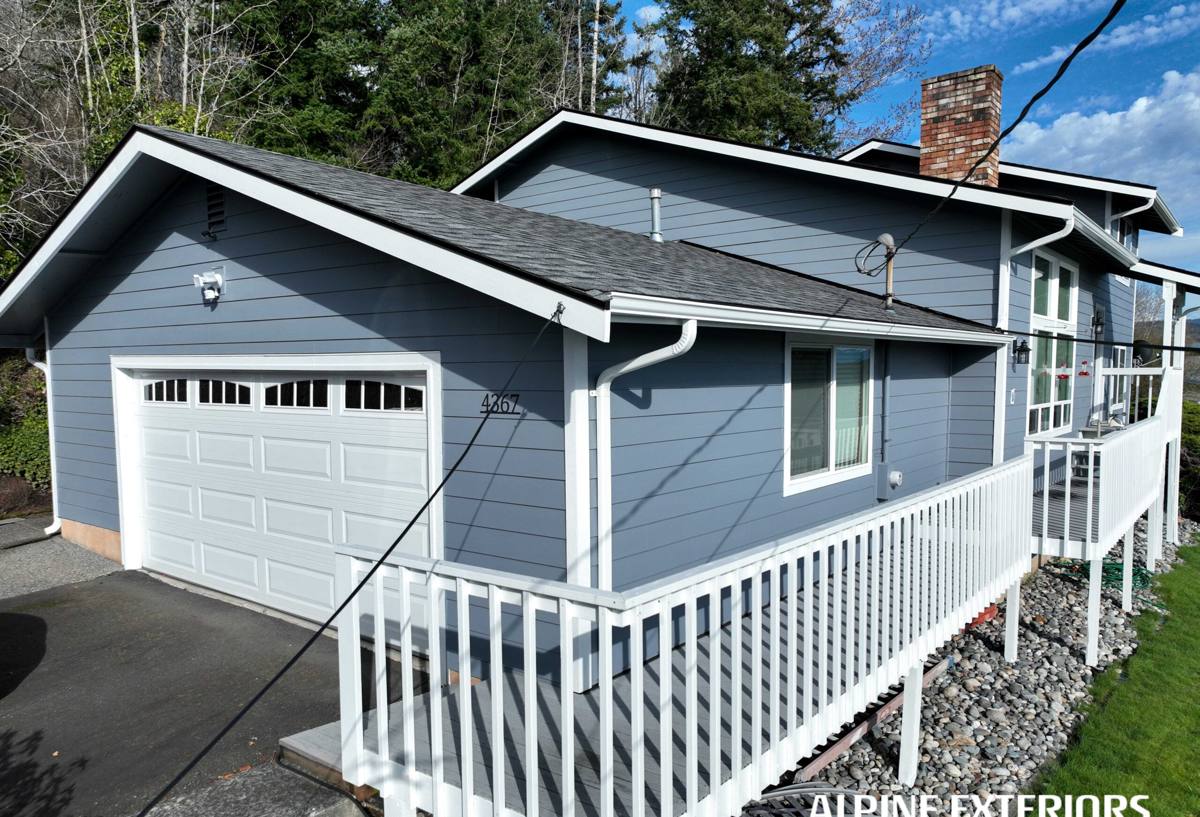
Why Whatcom County Roofs Wear the Way They Do
Three climate factors do most of the damage locally, and they interact with each other in ways that make roofs age faster than the shingle warranty would suggest.
Salt air and metal fatigue
Proximity to the bay means a steady low-level exposure to salt-carrying air. Over years, that accelerates corrosion on exposed metal — flashing, fasteners, gutter hangers, and any exposed roofing nails. Corroded fasteners back out or lose their grip, which is one of the more common hidden causes of a leak that seems to appear "out of nowhere."
Driving rain and wind direction
Rain here rarely falls straight down. Wind off the water pushes it sideways and up under laps, edges, and flashing that would shed water fine in a calmer climate. Roof details that are adequate elsewhere — a short step-flashing overlap, a valley without enough width, a vent boot with a small gap — get tested here in a way they wouldn't be in a drier region.
Moss and prolonged moisture contact
Long stretches of damp, mild weather are ideal moss-growing conditions. Moss holds water against the roof surface, keeps shingles from drying out between rain events, and its root structure works into shingle granules and laps over time. A roof with a heavy moss mat is often wetter, underneath, than one without — even if no water has visibly come through yet.
Signs a Cordata Roof Needs Repair, Not Full Replacement
Most roofs don't fail all at once — they develop localized problems that are very repairable if caught early. Watch for:
- A stain on an interior ceiling or wall, especially near a chimney, skylight, or where two roof planes meet
- Visible moss buildup concentrated on the north-facing or shaded sections of the roof
- Granules collecting in gutters or at downspout outlets
- Shingles that look curled, lifted at the edges, or visibly out of line with their neighbors
- Rusty streaking below metal flashing or exposed nail heads
- Soft spots underfoot in an attic walk (a sign moisture has already reached the sheathing)
- Daylight visible through the roof deck from inside an unfinished attic
Any one of these, on its own, is usually a repair — not a reason to replace the whole roof. The exception is when several of these show up together across multiple areas, which usually points to the roofing material reaching the end of its service life rather than a single failed detail.
The Repairs We See Most Often in This Neighborhood
Flashing failure
Flashing around chimneys, skylights, dormers, and roof-to-wall transitions is the single most common leak source we find. It's a small amount of metal doing a disproportionate amount of work, and in a driving-rain climate, a flashing detail that's slightly undersized or has started to corrode is often the whole story behind a leak that seems mysterious from inside the house.
Valley wear
Roof valleys carry more water volume than any other section of the roof, and in this climate that water often arrives with wind behind it. Valleys with worn material, insufficient width, or debris buildup are a recurring repair here — usually more urgent than a leak on a flat plane because of the volume of water involved.
Moss-related shingle damage
When moss has been allowed to sit for a season or more, the fix usually isn't just a moss treatment — it's careful removal, an assessment of the shingles underneath for granule loss or lifted edges, and repair of any sections that moss has already compromised.
Fastener and fastener-hole failure
Corroded or backed-out nails, particularly in exposed-fastener areas, are a quieter but very common repair. The fix is straightforward — replace and properly seal — but it's easy to miss if the inspection isn't thorough, since the entry point for water can be tiny.
Gutter and edge-of-roof issues
Gutters that are undersized, clogged, or pulling away from the fascia don't just cause overflow — they push water back up under the roof edge, which shows up later as a roof repair rather than a gutter one. We check this as part of any roof repair visit because the two systems are connected, not separate problems.
What a Correct Roof Repair Actually Involves
A repair that's done right is more than "find the leak, cover the hole." The steps that actually stop water from coming back:
- Trace the water, not just the stain. Interior water stains often show up several feet from the actual entry point, since water travels along the underside of the deck or along rafters before it drips.
- Inspect the surrounding area, not just the failure point. If moss, corrosion, or wear caused one failure, nearby material is usually at a similar age and condition — worth checking before it becomes the next call.
- Match materials appropriately. Flashing metal, underlayment, and shingle type all need to be compatible with what's already on the roof, both for the repair to blend in and for it to perform the same way the surrounding roof does.
- Re-seal and re-fasten properly. This is where corner-cutting shows up years later — correct nail placement, correct sealant, and correct lap direction matter more in this climate's wind-driven rain than in a calmer one.
- Clean up the cause, not just the symptom. If moss or debris contributed to the failure, that gets addressed as part of the repair, not left for the homeowner to deal with separately.
Repair vs. Replacement: How We Help You Decide
Homeowners often aren't sure whether a leak means "small fix" or "time for a new roof." We give a straight answer based on a few honest factors, not a sales pitch toward the bigger job.
| Factor | Favors Repair | Favors Replacement |
|---|---|---|
| Roof age | Well within expected material lifespan | At or past typical service life for the material |
| Extent of damage | Isolated to one area or detail | Spread across multiple sections or planes |
| Underlying deck condition | Solid, dry sheathing | Soft, delaminated, or repeatedly wet sheathing |
| Moss history | Recent growth, caught early | Years of untreated buildup with granule loss |
| Number of past repairs | First or second repair in this area | Repeated repairs to the same section |
If a roof lands clearly in the "repair" column, we tell you that — a repair that's done correctly can add years of reliable service, and there's no reason to spend more than the situation calls for.
Materials We Work With
Cordata homes are covered mostly with composition (asphalt) shingle roofing, with some cedar shake and a growing number of metal roofs, particularly on additions and outbuildings. Each material has its own repair considerations in this climate:
- Composition shingle — the most common, and generally the most straightforward to repair section by section as long as matching shingles are available or a reasonable color match can be found.
- Cedar shake — more moisture-sensitive by nature, so repairs focus heavily on ventilation and moss control in addition to replacing damaged shakes, since trapped moisture is the main long-term risk.
- Metal roofing — generally handles this climate well once installed correctly, but seam and fastener integrity matter more here than in a drier climate, and repairs focus on those details rather than the panels themselves.
We don't push a homeowner toward a different material during a repair visit. Our job is to repair what's there correctly, and to be honest if a material or installation detail is going to keep causing the same problem regardless of how well we fix it this time.
Our Process for a Cordata Roof Repair
The process is the same whether the job is small or involves several repair areas:
- A roof inspection, including the interior attic space where accessible, to find the actual cause rather than just the visible symptom
- A clear explanation of what we found, in plain terms, and a straightforward estimate before any work starts
- The repair itself, matching materials and fastening methods to what's appropriate for the existing roof and this climate
- A check of adjacent areas that share the same age and exposure, so a second visit isn't needed for something we could have caught the first time
- Cleanup — debris, old materials, and any moss or organic buildup removed as part of the job, not left behind
Why It Matters to Hire a Crew That Already Works This Neighborhood
Roof repair isn't a one-size-fits-all trade. A crew that mostly works drier inland areas may not think twice about a flashing detail or fastener spec that's marginal here but fine somewhere else. Working regularly in Bellingham and around Whatcom County means we're used to sizing repairs for wind-driven rain, salt-air corrosion, and long moss seasons as a matter of course — not as an afterthought once a callback comes in. It also means we're familiar with the roofing styles and ages common to this area, which speeds up diagnosis and keeps the repair estimate accurate the first time.
A Simple Roof Health Checklist for Homeowners
Between professional inspections, these are worth checking yourself, especially heading into the wetter months:
- Look at the roof from the ground (or a safe upstairs window) for visible moss patches, especially on shaded sides
- Check gutters for granule buildup after a hard rain
- Look at ceilings and upper walls for any new staining, even faint
- Check that gutters and downspouts are clear and draining, not overflowing at the seams
- If you can safely access an attic, look for daylight, damp insulation, or dark spots on the underside of the deck
- Note any storm damage after high wind events rather than waiting to notice it months later
Catching a small problem early is almost always the difference between a modest repair and a much bigger one once moisture has had a season or two to work into the deck.
Get a Straight Answer About Your Roof
If you're dealing with a leak, a moss problem, or just want a second opinion on whether a repair is enough, we're happy to take a look and give you an honest assessment — no pressure, no upsell toward replacement if a repair will do the job. Use the form below to request a free estimate for roof repair in Cordata.