 Bellingham Siding
 Ferndale Roofs Work Harder Than Most People Realize
Ferndale sits close enough to the water that salt-laden air is a real factor in how a roof ages, and far enough into Whatcom County's rain patterns that wind-driven storms off the Salish Sea hit the area hard several months a year. Add in the shaded, damp conditions that let moss take hold on north-facing slopes, and you've got a combination that wears out roofing materials faster than in drier inland climates. A roof that would last two extra decades in Eastern Washington often needs replacement here on a shorter timeline, simply because of what the local climate does to shingles, flashing, and fasteners year after year.
This page is specifically about full roof replacement for Ferndale homes — not a general roofing overview. If you're trying to figure out whether your roof needs replacing, what a proper job actually includes, and why it matters to hire a crew that already works in this specific corner of Whatcom County, this is written for you.
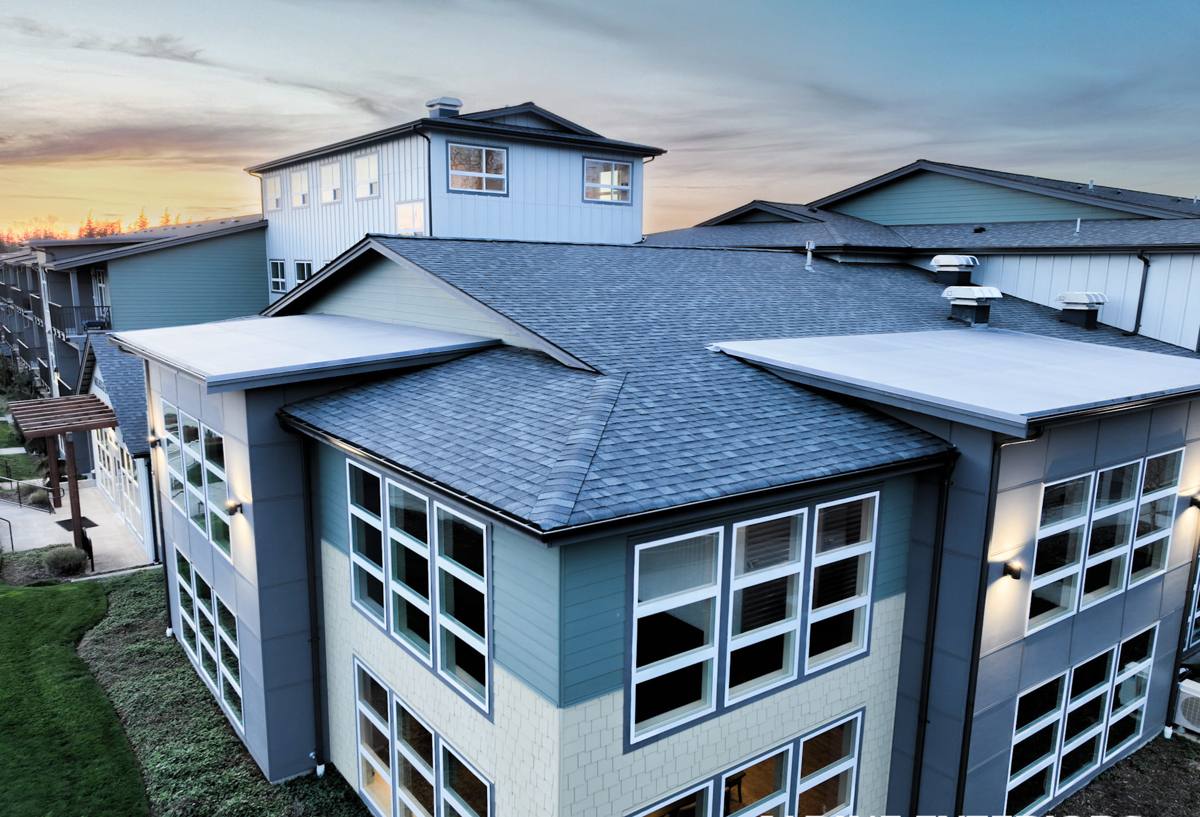
How Whatcom County Weather Wears Down a Roof
Salt Air and Coastal Moisture
Homes closer to the water deal with airborne salt that accelerates corrosion on exposed metal — nail heads, flashing, gutter fasteners, and any hardware that isn't properly coated or protected. Over time this shows up as rust streaking, loosened flashing seams, and fasteners that back out or fail earlier than their rated lifespan. It's not dramatic, it's cumulative, and it's one of the reasons roofing hardware choices matter more here than they would fifty miles inland.
Driving Rain and Wind-Driven Water
Whatcom County storms don't always drop rain straight down. Wind-driven rain gets pushed sideways and upward under shingle edges, around chimney flashing, and into any gap where the underlayment or flashing detail was done sloppily. A roof that would shed a gentle rain just fine can still leak during a sideways storm if the water barrier details underneath the shingles weren't installed correctly. This is why the layers you can't see — underlayment, ice and water shield at vulnerable points, proper flashing laps — matter as much as the shingles themselves.
Moss, Shade, and a Long Growing Season
Northwest Washington's mild, wet climate is close to ideal for moss growth, especially on roof slopes that stay shaded by trees or face north. Moss holds moisture against the roof surface long after the rest of the roof has dried out, which speeds up granule loss on asphalt shingles and can lift shingle edges as it grows. Left unchecked for years, moss doesn't just look bad — it shortens the roof's effective life.
Repair or Replace? Signs It's Time
Not every roof problem means a full replacement. But there's a point where patching individual issues stops making sense and a full replacement becomes the more honest recommendation. Signs we look for on Ferndale homes include:
- Granule loss heavy enough that you can see bare, shiny patches on shingles, or granules collecting in gutters
- Shingles that are cupping, curling at the edges, or cracking when you press on them
- Persistent moss or algae staining that comes back within a season or two of cleaning
- Soft spots in the roof deck, visible sagging, or daylight visible through the attic sheathing
- Flashing around chimneys, skylights, or roof-to-wall transitions that's rusted, lifted, or was never properly stepped and counter-flashed
- Water stains on interior ceilings, especially ones that appear or worsen during wind-driven storms rather than steady rain
- A roof that's already had multiple repair patches and is approaching or past its expected material lifespan
If a roof is showing two or more of these signs at once, it's usually more cost-effective long-term to replace than to keep patching.
What a Correct Roof Replacement Actually Involves
Full Tear-Off vs. Overlay
Installing new shingles over old ones is faster and cheaper, but it hides the condition of the deck underneath and traps moisture between layers — a real problem in a climate this wet. Our standard is a full tear-off down to the deck on every replacement. It takes longer and costs more up front, but it's the only way to actually inspect the sheathing for rot, confirm ventilation is adequate, and install water barrier layers correctly from the ground up.
Underlayment and Water Barriers
Given how much wind-driven rain this area sees, we treat underlayment as a real second line of defense, not a formality. That means synthetic or felt underlayment across the full deck, plus self-adhering ice and water shield at eaves, valleys, and any roof-to-wall transition where wind-driven water is most likely to get pushed backward under the shingle line.
Ventilation
A roof deck that can't breathe traps moisture from inside the house, which speeds up rot from underneath — independent of anything happening on the outside surface. Balanced intake and exhaust ventilation is part of a correct replacement, not an upsell, especially on older Ferndale homes where the original ventilation may have been minimal or blocked over the years by insulation upgrades.
Flashing Details
Chimneys, skylights, dormers, and roof-to-wall junctions are where most roof leaks actually originate, not in the open field of shingles. Correct step flashing, counter-flashing, and valley treatment take more time to install properly, and it shows in how the roof performs during the area's sideways winter storms.
Choosing Roofing Materials for a Ferndale Home
Most Ferndale homes are well served by quality asphalt composition shingles, but the right choice depends on the roof's exposure, slope, and how much shade and moss pressure it deals with. Here's how the common options compare for this specific climate:
| Material | Moss / Moisture Resistance | Wind Performance | Typical Lifespan Here |
|---|---|---|---|
| Architectural asphalt shingle | Good, especially with zinc or copper strip protection at the ridge | Good when properly nailed and rated for local wind exposure | 20-30 years |
| Standing seam metal | Excellent — sheds moisture fast, little surface for moss to grip | Excellent | 40-50+ years |
| Cedar shake | Requires ongoing maintenance to resist moss and rot in this climate | Fair, depends on installation and fastening | 20-25 years with upkeep |
| Synthetic composite shake/slate | Good — engineered to resist moisture absorption | Good to excellent | 30-50 years |
We don't push cedar shake as a first recommendation for shaded, moss-prone slopes in this climate — not because it's a bad-looking product, but because it demands more regular maintenance to keep moss and moisture from shortening its life here than most homeowners want to keep up with. If a homeowner wants the look and is prepared for the upkeep, we'll install it correctly; we just believe in being upfront about that trade-off before you commit.
Our Ferndale Roof Replacement Process
- On-site inspection and estimate — we walk the roof, check the attic for ventilation and moisture signs, and give you an honest read on repair vs. replace.
- Material selection — we go over the options above in the context of your roof's slope, shade, and exposure, with real cost and lifespan trade-offs, not just a catalog pitch.
- Permitting — most full roof replacements require a permit through the local building department; we handle that paperwork as part of the job.
- Tear-off and deck inspection — full removal of old roofing, with any soft or rotted decking replaced before anything new goes down.
- Water barrier and ventilation install — underlayment, ice and water shield at vulnerable points, and ventilation components installed to spec.
- Shingle or material installation — installed to manufacturer specifications, including proper nailing patterns for this area's wind exposure.
- Flashing and detail work — chimneys, valleys, and penetrations finished with correct step and counter-flashing.
- Final walkthrough and cleanup — magnetic sweep for stray nails, debris haul-away, and a final inspection with you before we call the job done.
Why Local Experience in Ferndale Matters
A roofing crew that regularly works Ferndale and the surrounding Whatcom County area already knows which slopes tend to hold moss longest, which roof styles are most exposed to wind-driven rain off the water, and how the local building department handles permitting for a full tear-off. That's not something you can fully substitute with a generic checklist — it's the kind of judgment that comes from having done the work here repeatedly, not just once.
It also matters for scheduling. Roof replacement needs a stretch of dry weather to do right, and a crew that knows this region's weather patterns plans around that instead of getting caught mid-tear-off when a storm rolls in off the coast. That planning is part of doing the job correctly, not just an operational detail.
What Affects the Cost of a Ferndale Roof Replacement
Every roof is different, so we don't quote a number without seeing the job, but the main cost drivers are consistent from house to house:
| Factor | Why It Matters |
|---|---|
| Roof size and pitch | More square footage and steeper pitches both increase labor time and safety requirements |
| Number of layers to remove | Tearing off two layers of old shingles takes longer than a single-layer tear-off |
| Deck condition | Rotted or soft sheathing found during tear-off needs replacement before new roofing goes down |
| Material choice | Asphalt, metal, and composite products carry different material and labor costs |
| Roof complexity | Valleys, dormers, skylights, and multiple chimneys all add flashing detail work |
| Ventilation upgrades | Older homes may need added intake or exhaust venting to meet current standards |
The only way to get an accurate number is a real on-site look at your specific roof — anything else is a guess.
If your roof is showing its age or you're just not sure whether repair or full replacement is the right call, we're happy to come take a look. There's no pressure and no obligation — just an honest assessment and a straightforward estimate using the form below.