 Bellingham Siding
 Roof Repair Built for Sehome's Weather, Not a Generic Climate
Sehome sits close enough to Bellingham Bay that its homes take on a mix of challenges most inland neighborhoods don't deal with in the same combination: salt-laden air drifting up from the water, driving rain that comes in sideways during winter storms, and a moss season that can run eight months or longer under the Pacific Northwest's cloud cover. None of these problems are dramatic on their own. What they do is work slowly, and that's exactly why roof repair in this neighborhood is different from roof repair somewhere dry and inland. A roof here doesn't usually fail all at once — it fails one small unaddressed spot at a time until the damage finally reaches the inside of the house.
We work on roofs throughout Bellingham and Whatcom County, and Sehome's mature tree canopy, older housing stock, and proximity to the water give it its own repair profile. Homes here tend to be a mix of postwar builds and newer infill, many with roofs that have already been through at least one or two Pacific Northwest winters without attention. That combination — established trees, coastal humidity, and roofs that are due for a look — is what we're solving for on every Sehome repair call.
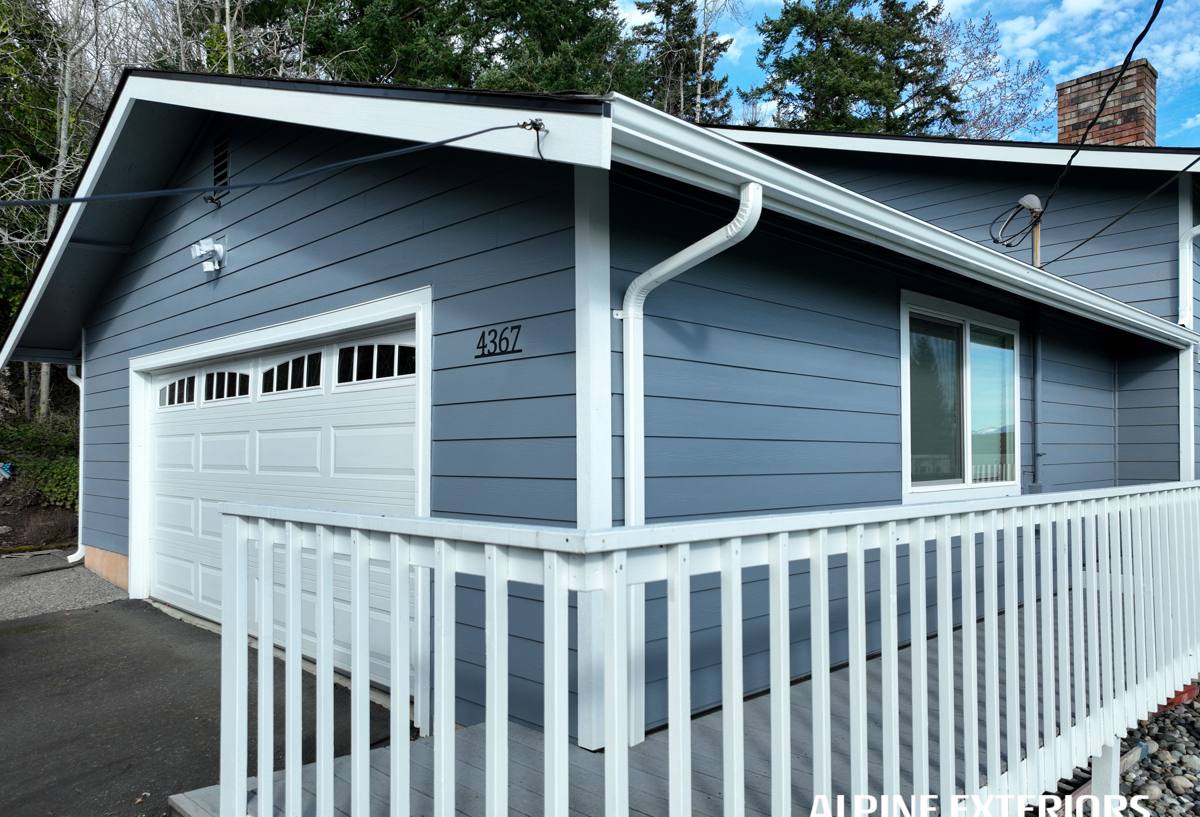
What Bellingham's Climate Actually Does to a Roof
It helps to understand the specific mechanisms at work, because they determine what a correct repair looks like.
Salt Air and Metal Fasteners
Bellingham Bay isn't the open ocean, but salt-bearing air still travels inland, especially on windy days. Over years, that air accelerates corrosion on exposed metal — nail heads, flashing edges, gutter fasteners, and any exposed roofing hardware. Corroded fasteners lose their grip, and corroded flashing develops pinholes long before it looks obviously "rusted through." This is a slow process, which is exactly why it's easy to miss during a casual look from the ground.
Driving Rain and Wind-Driven Water
Whatcom County storms frequently bring rain at an angle, not straight down. That matters because a roof system is designed to shed water moving downward and outward — not water being pushed sideways and upward under shingle edges, into vents, and behind flashing laps. Driving rain finds every marginal seal a calm rain would never reach. It's the single biggest reason a "small leak" during a storm can appear in a spot that looks completely dry on a clear day.
Moss, Shade, and Trapped Moisture
Sehome's tree cover is a real asset for the neighborhood, but shaded, moisture-retaining roof surfaces are prime moss territory. Moss doesn't just sit on top of shingles — its root structure lifts shingle edges and granules, holding water against the roof deck instead of letting it run off. Given how long our moss season runs, a roof with unmanaged moss growth is under sustained moisture pressure for most of the year, not just during storms.
Common Roof Repair Needs We See in Sehome
- Flashing failures around chimneys, skylights, and roof-to-wall transitions, where corrosion or original poor installation lets wind-driven rain in
- Moss-related shingle lifting on north-facing and shaded slopes, especially under overhanging trees
- Valley leaks where two roof planes meet and debris or moss collects, backing water up under shingles
- Nail pop and fastener corrosion that loosens shingles enough for wind to catch an edge
- Clogged or damaged gutters that overflow during heavy rain and push water back under the roof edge
- Soft or stained decking discovered after a long-term slow leak has gone unnoticed
- Vent boot cracking, where the rubber collar around plumbing and exhaust vents dries out and splits over time
What a Correct Repair Actually Involves
A roof repair done right isn't just patching the spot where water is showing up inside the house. Interior staining almost never lines up directly with the source — water travels along rafters and decking before it drips somewhere visible. That means the first job is tracing the actual entry point, not the symptom.
Our Process
- Inspection — We get on the roof (not just a look from the ground or a photo) and examine the suspect area along with the surrounding field, flashing, and any penetrations nearby.
- Diagnosis — We trace water paths, check decking condition by feel and sound, and identify whether this is an isolated failure or a symptom of broader wear.
- Scope and explanation — Before any work starts, we tell you plainly what we found, what's causing it, and what the repair will involve — including if we think a full section or the whole roof is a better long-term call than another patch.
- Repair — Matching materials where possible, replacing compromised decking, correcting flashing details, and re-sealing with materials rated for our climate rather than a quick caulk-and-hope fix.
- Verification — We check the repair holds up to water testing where appropriate and confirm there's no secondary damage we missed.
We don't upsell a full roof replacement when a targeted repair will genuinely hold. We also won't quietly patch over a problem that's clearly heading toward bigger failure, because that just costs you more later and puts our name on a repair we know won't last.
Repair vs. Replacement: How We Help You Decide
Not every roof problem in Sehome needs a full replacement, and not every problem should be patched indefinitely either. The right call depends on the roof's age, how localized the damage is, and what we find once we're actually up there.
| Factor | Leans Toward Repair | Leans Toward Replacement |
|---|---|---|
| Roof age | Under 15-20 years, single layer | Original roof past its expected lifespan |
| Damage extent | Isolated to one flashing point or section | Multiple leak points across different slopes |
| Decking condition | Firm, dry decking under the damaged area | Soft, delaminating, or repeatedly wet decking |
| Shingle condition overall | Rest of the roof still granulated and flat | Widespread curling, cracking, or bald spots |
| Repair history | First real issue in years | Third or fourth repair in the same general area |
We'll walk you through where your roof falls on this before recommending anything — this table is a starting framework, not a substitute for actually looking at your specific roof.
Why Moss Management Matters More Here Than Most Places
Because Bellingham's moss season runs so long, moss control isn't a one-time cosmetic task — it's ongoing maintenance that directly affects how often you need repairs. When we do a roof repair in Sehome, we also look at moss growth patterns across the whole roof, not just the repair area, because moss you can see growing today is often sitting on top of moisture damage that hasn't shown up as a leak yet.
Where it makes sense, we'll talk with you about physical moss removal, zinc or copper control strips, and trimming back branches that keep a slope in shade — all of which reduce how often repair calls come up in the first place. We're not going to push products or services your roof doesn't need, but if we see conditions that are clearly going to cause the next leak, we'll tell you.
Signs a Sehome Homeowner Shouldn't Ignore
Roof problems in this climate rarely announce themselves loudly. Here's what tends to show up before a leak becomes obvious:
- Dark streaking or green growth concentrated on shaded slopes
- Granules collecting in gutters or at downspout outlets
- A musty smell in an attic or top-floor closet after a rainy stretch
- Shingle edges that look lifted or curled, especially near valleys
- Discoloration on interior ceilings, even faint or old-looking stains
- Daylight visible around a chimney or vent from inside the attic
- Gutters overflowing during moderate, not just heavy, rain
Any one of these on its own might be minor. Two or more together, or anything paired with an interior stain, is worth having looked at before the next big storm.
Why a Crew That Already Works Sehome Makes a Real Difference
Roofing crews who work across a lot of different climates tend to default to generic materials and generic details, because that's what works "well enough" most places. Sehome doesn't reward "well enough." A crew that regularly works this neighborhood already knows which flashing details hold up against wind-driven rain off the bay, which slopes in the area tend to hold moss longest, and what an aging Bellingham roof deck typically looks like underneath the shingles before we ever pull the first one.
That familiarity shows up in small decisions that matter: sealant choices rated for sustained damp exposure rather than occasional rain, fastener materials that resist salt-air corrosion, and flashing laps sized for driving rain rather than the vertical rain a lot of national roofing guidance assumes. None of this is exotic — it's just the difference between a repair built for this specific place and a repair built for an average that doesn't quite fit here.
What to Expect When You Call Us
We keep the process straightforward. You describe what you're seeing — a stain, a drip, visible damage, or just a roof that's due for a check after a bad storm — and we schedule a time to get up there and look in person. We don't diagnose roof problems from a phone description or a photo alone, because too much of what matters is only visible up close: fastener condition, flashing lap direction, decking firmness, and moss root penetration.
Once we've inspected, you get a straight explanation of what's wrong, what caused it, and what it'll take to fix — in plain language, not a sales pitch. If it's a simple, contained repair, we'll tell you that too.
Get a Free, No-Pressure Estimate
If you've got a leak, moss buildup, or a roof that just needs a second look before the next storm season, we're happy to come take a look. Fill out the form below for a free estimate on roof repair in Sehome — no pressure, no obligation, just an honest read on what your roof actually needs.