 Bellingham Siding
 Siding Installation in Sehome: A Neighborhood That Puts Siding to the Test
Sehome sits on one of Bellingham's defining hillsides, wrapped by mature tree canopy and close enough to Bellingham Bay to catch the salt-tinged air rolling off the Salish Sea. That combination — shade, slope, and marine moisture — makes Sehome one of the tougher neighborhoods in Whatcom County for exterior siding to survive long term. Homes here run the gamut from older bungalow and craftsman-style houses near the university area to newer infill construction on the hill's upper streets, but almost all of them share the same exposure: long stretches of wet weather, limited direct sun on shaded elevations, and driving rain that comes in sideways off Pacific storm systems rather than falling straight down.
When siding fails in Sehome, it's rarely one single event. It's usually a slow accumulation — moss creeping up from the bottom courses, paint that's stopped holding a seal, soft spots near ground contact, or seams that have quietly been letting moisture behind the cladding for a season or two before anyone notices a problem. A correct siding installation is what prevents that slow failure from ever starting, and it's a very different job than a quick reside done without accounting for this specific climate.
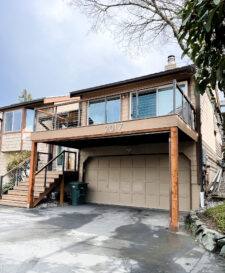
What Bellingham's Climate Actually Does to Siding
Whatcom County doesn't get the coldest winters or the most extreme storms on the West Coast, but it gets something arguably harder on a house: persistence. The wet season runs long, humidity stays elevated for months at a stretch, and full drying windows between rain events can be short, especially on shaded lots like many in Sehome.
Salt Air
Proximity to Bellingham Bay means airborne salt is a real factor for siding, fasteners, and trim, even blocks away from the water. Salt-laden air accelerates corrosion on unprotected metal fasteners and flashing, and it degrades certain paint and coating systems faster than an inland location would experience.
Driving Rain
Storms coming off the water frequently arrive with wind-driven rain rather than a gentle vertical rainfall. That matters enormously for how siding is installed — laps, flashing, and house wrap details that would be adequate in a calmer climate can let water intrude here if they're not built for wind-driven moisture specifically.
Moss and Shade
Tree cover across Sehome's hillside lots keeps a lot of siding in partial shade for much of the day, especially on north- and east-facing walls. Less direct sun means slower drying, and slower drying means moss, algae, and mildew get a foothold that a sunnier lot elsewhere in Bellingham might not deal with nearly as fast.
Signs a Sehome Home Needs New Siding, Not Just Repair
- Moss or dark streaking that returns within a season or two of cleaning, even after pressure washing
- Soft, spongy, or crumbling siding near the foundation line or below window sills
- Paint that's peeling, bubbling, or failing to hold on multiple walls rather than one isolated spot
- Visible gaps, warping, or separation at seams and corners
- Rising interior heating costs with no other obvious cause, which can point to a compromised weather barrier
- Siding that's original to a house built more than 20-25 years ago and has never been fully replaced
Spot repairs make sense for isolated damage. But once moisture problems show up in multiple places, or the siding material itself is past its practical service life, patching becomes a losing game — you're chasing symptoms instead of fixing the underlying exposure.
What a Correct Siding Installation Actually Involves
Siding is a system, not a single product. The visible boards or panels get most of the attention, but the parts nobody sees after the job is done are usually what determine whether a home stays dry for the next 30 years or starts having problems in five.
Weather-Resistant Barrier
A continuous, properly lapped water-resistive barrier goes on before any siding, with special attention to how it integrates at windows, doors, and penetrations. In a driving-rain climate like Bellingham's, sloppy WRB work is one of the most common root causes of hidden moisture damage.
Flashing at Every Transition
Window heads, deck ledgers, roof-to-wall intersections, and anywhere two different materials meet all need dedicated flashing designed to shed water outward, not just caulk. Caulk fails; flashing built into the assembly does not depend on staying perfectly sealed forever.
Proper Clearances
Siding needs a minimum gap above roof lines, decks, and grade so it never sits in standing water or gets wicking moisture from the ground or a roof surface. This is one of the most commonly skipped details on rushed installs, and it's a direct path to rot in a climate this wet.
Fastening Schedule and Material
Corrosion-resistant fasteners, installed at the manufacturer's specified pattern and depth, matter more here than in a dry inland climate because of the salt-air exposure. Over- or under-driven fasteners are a quiet, common cause of premature siding failure.
Correct Material for the Exposure
Not every siding product is engineered for a marine, high-moisture, low-sun climate. This is where material choice and installation quality intersect directly with how long a home stays looking and performing the way it should.
Our Process for a Sehome Siding Installation
- On-site assessment. We walk the home, check for existing moisture damage, evaluate sun exposure and drainage on each elevation, and identify any trouble spots specific to the lot — shade patterns, grading, tree proximity.
- Tear-off and substrate check. Old siding comes off and we inspect the sheathing underneath for rot or damage before anything new goes on. Problems found here get addressed, not covered up.
- Weather barrier and flashing installation. This is the step that determines long-term performance more than any other, and it's not one we compress to save time.
- Siding installation to manufacturer spec. Correct fastening, clearances, and lap details, installed the way the product is actually engineered to perform.
- Finish work and cleanup. Trim, caulking at appropriate joints only (not as a substitute for flashing), and full site cleanup.
- Final walkthrough. We go over the finished work with the homeowner before calling the job done.
Why We Install Only James Hardie Fiber Cement
We standardized on James Hardie siding for every installation we do, including in Sehome, because it holds up to exactly the conditions this neighborhood deals with. It's non-combustible, it doesn't feed moss and algae growth the way some organic-based siding materials can, and its ColorPlus factory finish is baked on to resist the fading and peeling that shaded, salt-air exposure accelerates on field-painted products. Hardie's HZ5 product line in particular is engineered for climates with significant moisture exposure, which describes Whatcom County well.
We get asked why we don't install vinyl, LP SmartSide, or cedar. The honest answer is trade-offs we're not willing to put on a customer's home in this climate: vinyl can warp and doesn't offer the fire resistance or premium look Hardie does; engineered wood products are more installation-sensitive to moisture intrusion at cut edges and seams; and cedar demands ongoing maintenance and refinishing that most homeowners don't want to keep up with in a climate this wet. Hardie, installed correctly, is the product we're confident standing behind for the long haul.
Siding Material Comparison for This Climate
| Factor | James Hardie Fiber Cement | Vinyl | Cedar / Engineered Wood |
|---|---|---|---|
| Moss/algae resistance | High — non-organic substrate | Moderate | Lower — organic surface feeds growth |
| Finish durability in shade | Factory ColorPlus finish, long fade resistance | Can chalk/fade over time | Requires periodic refinishing |
| Moisture sensitivity | Low when installed to spec | Low material sensitivity, seams can leak | Higher, especially at cut edges |
| Fire resistance | Non-combustible | Combustible | Combustible |
| Typical maintenance | Occasional wash, repaint decades out | Occasional wash | Regular refinishing/sealing |
What Drives Cost on a Sehome Siding Job
Every home is different, and we don't quote sight-unseen, but a few things consistently move the price on Sehome projects specifically:
| Cost Factor | Why It Matters Here |
|---|---|
| Existing moisture/rot damage | Sheathing repair adds cost but can't be skipped if found |
| Home access and slope | Hillside lots and limited driveway access can affect staging and labor time |
| Number of elevations and trim detail | Complex rooflines and multiple gables mean more flashing and cutting |
| Siding profile and accessories | Lap width, trim boards, and soffit work vary in material cost |
| Tear-off vs. install over existing | Full tear-off is almost always the right call in this climate; it costs more but avoids trapping moisture |
Why a Crew That Already Works Sehome Matters
A siding crew that already works this specific hillside knows which elevations tend to hold shade longest, how tree cover changes drainage and drying patterns lot to lot, and what the salt-air exposure realistically does to fasteners and trim over time in this part of Bellingham. That's not something you get from a general contractor working here for the first time, and it's not something a national siding company parachuting in from out of the area is going to have either. Local permitting familiarity in the City of Bellingham and knowing how to sequence a job around this neighborhood's weather windows also just makes the project go smoother.
We're a Bellingham-based crew, and Sehome is part of our regular service area — not a one-off trip.
Ready to Talk About Your Sehome Home?
If your siding is showing moss, soft spots, failing paint, or you're just past the point where patching makes sense, we'd rather look at it in person than guess over the phone. Request a free, no-pressure estimate below and we'll walk your home, tell you honestly what we see, and explain what a correct James Hardie installation would involve for your specific lot.