 Bellingham Siding
 Siding Installation Built for Sudden Valley's Conditions
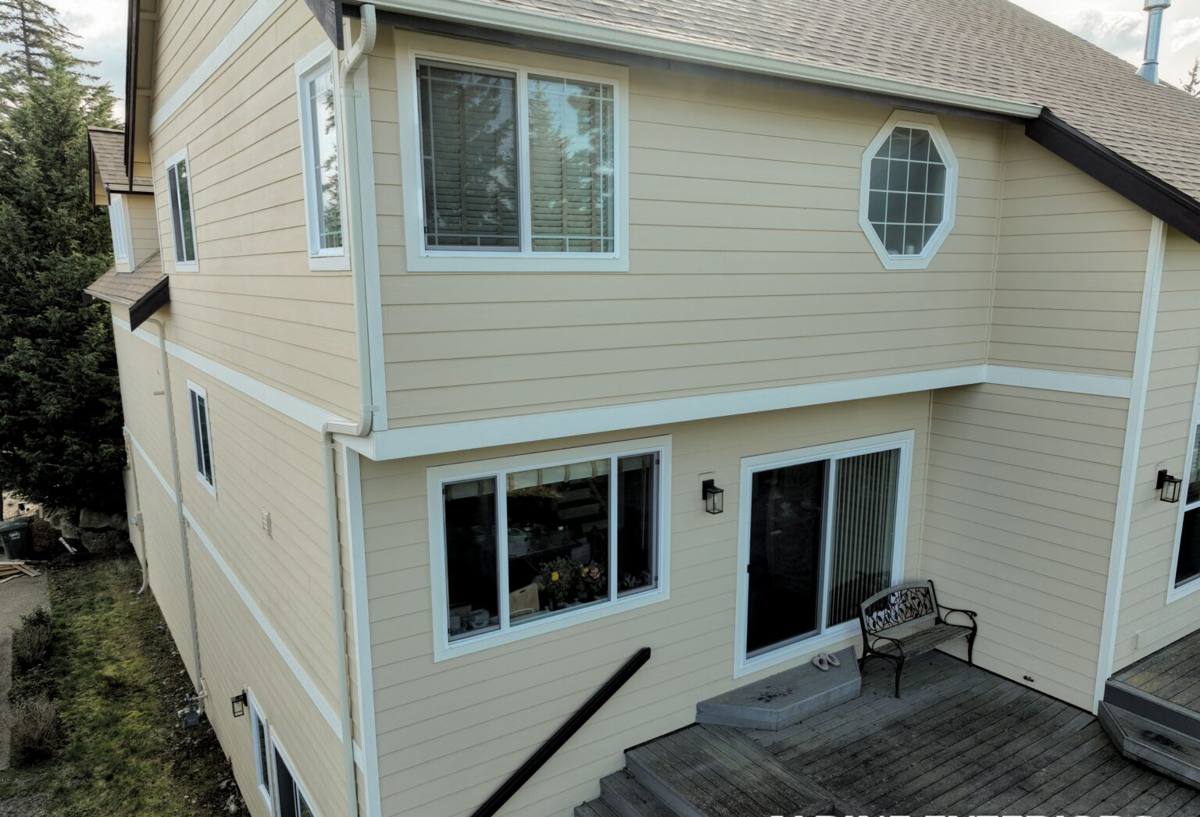
Sudden Valley is a heavily wooded lakeside community on the south shore of Lake Whatcom, and a siding installation here has to answer to conditions that a lot of standard installation guides don't fully account for: extended tree shade on most lots, humidity off the lake, and a moss and mildew season that runs long even by Whatcom County standards. We install James Hardie fiber cement siding on homes throughout Sudden Valley, and this page is about the installation itself — what a correct job actually involves on a property like this, not just what material goes on the wall.
A siding installation is a one-time event with decades of consequences. Get the material, the flashing, and the sequencing right, and a Sudden Valley home can go 30-plus years with minimal drama. Get any one of those wrong, and the shade and moisture that define this neighborhood will find the mistake faster than they would almost anywhere else in the county.
What Sudden Valley's Climate Asks of a Siding Job
Salt Air and Lake Humidity
Lake Whatcom keeps the air around Sudden Valley more humid than it is further inland, and that moisture load sits against the house even on days without rain. Salt-tinged marine air moving through the broader Bellingham region adds to the corrosion risk on fasteners, flashing, and trim. Over years, a corroding fastener loosens its grip and opens a small gap at the point where it penetrates the siding — a direct entry point for water that gets worse with every wet season, not better.
Driving Rain That Hits at an Angle
Straight-down rain is easy for almost any siding to shed. Wind-driven rain isn't, because it pushes water sideways into laps, seams, and trim lines that were only designed to handle water moving downward. Sudden Valley's hilly terrain means different elevations of the same house can take very different exposure — a wall facing open water or a break in the tree line can see far more driving rain than a wall tucked behind heavy canopy. Installers need to treat each elevation on its own terms rather than applying one flashing approach to the whole house.
A Long Moss Season
Shade, humidity, and mild temperatures are the exact combination that keeps moss and mildew active across most of the year, and Sudden Valley's dense tree cover extends that season on siding as much as it does on roofs. Organic growth doesn't just look bad — it holds moisture against a wall surface longer than it would otherwise sit there, stretching out every wet-dry cycle a material goes through. A siding installation that doesn't account for this will show streaking, staining, and softer trim details years before it should.
Why We Only Install James Hardie Fiber Cement
We install one siding system: James Hardie fiber cement. We don't install LP SmartSide, vinyl siding, Cemplank, Allura, primed spruce, or cedar. That's a professional standard, not a sales position, and it comes directly from what a shaded, moisture-heavy environment like Sudden Valley does to materials over time.
- Non-combustible core: Fiber cement doesn't feed a fire the way wood-based siding products can, which matters for both safety and insurance underwriting in a wooded community surrounded by forest.
- Factory-applied ColorPlus finish: The color is baked on under controlled factory conditions instead of brushed on in the field, and it holds up against fading and moisture intrusion far longer than field-applied paint on a wall that stays damp longer than average.
- Climate-engineered HZ product lines: Hardie's HZ5 formulation is built for regions with heavy moisture exposure and freeze-thaw cycling, which matches Sudden Valley's lakeside, shaded conditions well.
- Dimensional stability: Fiber cement doesn't swell, cup, or warp the way wood-based products can after repeated wetting cycles that never fully resolve on a wall that rarely sees direct sun.
- Strong transferable warranty: Hardie backs its products with one of the more substantial warranty structures in the industry, provided the installation follows their published specifications — which is where the installer matters as much as the material.
Other siding products have a legitimate place in the market, and plenty of homeowners elsewhere are satisfied with them. But we've made a professional call that on a property like a typical Sudden Valley lot, we'd rather install one system correctly than offer a cheaper option that quietly shifts long-term maintenance risk back onto the homeowner.
What a Correct Installation Actually Involves
Fiber cement only performs the way it's engineered to when it's installed to Hardie's published specifications, and on a shaded, damp lot the margin for skipped steps is smaller than it is elsewhere. A correct installation covers:
Prep and Water-Resistive Barrier
Before any siding goes up, the existing wall gets inspected for hidden rot or moisture damage, particularly around windows, doors, and any spot where past water intrusion may have gone unnoticed under old siding. A continuous, properly lapped water-resistive barrier goes down over sound sheathing, with no gaps or reversed laps that could let water bypass the drainage plane entirely.
Flashing and Drainage Detailing
Every window, door, and wall penetration gets flashed to shed water outward and downward in the correct sequence with the house wrap. On a shaded, lakeside lot like Sudden Valley, we lean toward including a drainage gap behind the siding rather than installing directly to the sheathing wherever the specific product and application allow it — giving incidental moisture somewhere to go instead of letting it sit against the wall in a spot that rarely dries out fully between rains.
Fasteners, Joints, and Clearance
Correct fastener type, spacing, and depth matter more in a damp environment because a poorly seated or corroding fastener creates a moisture entry point faster here than on a drier property. Cut edges get sealed per Hardie's specifications, joints get properly caulked and backed, and the bottom of the siding is held to correct clearance from grade, decks, and roof lines — all spots where water tends to collect if the clearance is cut close.
Sequencing With Trim and Roofline
Siding doesn't get installed in isolation from the roof and trim around it. Where new siding meets existing roofing, gutters, or trim, the sequencing has to keep water moving outward at every transition. On a tree-shaded property, we also think about how falling debris and prolonged dampness at those transitions will behave over the life of the siding, not just on installation day.
Our Installation Process
- On-site assessment: We walk the exterior and evaluate each elevation individually, since shade, sun exposure, and water exposure can vary significantly from one wall to the next on a typical Sudden Valley lot.
- Written scope and product selection: We confirm the correct Hardie product and HZ line for the home, walk through color options, and put together a clear, written scope and timeline before any work begins.
- Tear-off and inspection: Where existing siding comes off, we check the sheathing and framing underneath for hidden moisture damage before anything new goes up.
- Barrier, flashing, and installation: Water-resistive barrier, flashing, and the Hardie siding itself go on to manufacturer specification, with drainage detailing suited to the property's specific shade and moisture exposure.
- Final walkthrough: We review the completed installation with the homeowner, covering what was done and what basic maintenance, if any, to expect going forward.
Cost Factors for a Sudden Valley Installation
Every installation is priced from the specifics of the home, but a few factors tend to move the number more than homeowners expect on a property like this:
| Factor | Why It Matters Here |
|---|---|
| Tear-off and hidden damage | Shaded walls are more likely to have developed moisture damage under old siding that needs repair before new siding goes on |
| Access and terrain | Sudden Valley's hilly lots and private road network can affect equipment access and staging |
| Drainage gap detailing | Adding a rainscreen or drainage gap behind the siding on heavily shaded elevations adds labor but reduces long-term moisture risk |
| Trim and transition complexity | Homes with more rooflines, dormers, and wall-to-roof transitions require more flashing work per square foot of siding |
| Product line and color | HZ5 panel, plank, and shingle-style products vary in material cost, and ColorPlus colors carry different pricing tiers |
Why a Local Crew Matters for This Job
Sudden Valley is a private community with its own internal road network and homeowners association, and a crew that already works here understands the practical side of that — scheduling around community access, and reading how terrain and tree cover change exposure from one lot to the next even within the same neighborhood. That familiarity shows up in decisions that don't appear on a bid sheet: which walls get extra drainage detailing because they rarely see direct sun, how flashing gets lapped on a steep, shaded roof-to-wall transition, and which fastener grade holds up best in a damp, wooded microclimate. Those are the choices that separate an installation that looks right on day one from one that still performs correctly in year twenty.
What to Check Before Hiring a Siding Installer in Sudden Valley
- Ask what siding material they install, why, and whether they back it with a written warranty
- Confirm current Washington contractor licensing and active liability insurance
- Ask how they handle drainage detailing on shaded, tree-covered walls specifically
- Ask about experience working within HOA or private-road communities, including access and scheduling
- Get a clear, written scope of work — including flashing and barrier details — before signing a contract
If you're planning a siding installation on a Sudden Valley property, we're happy to walk the exterior with you and give an honest read on what the job actually needs. Reach out below for a free, no-pressure estimate.