 Bellingham Siding
 Why Birch Bay Siding Wears Differently Than Inland Homes
Birch Bay sits right on the water, and that changes what siding has to survive. Homes a mile inland in Whatcom County deal with rain and cold. Homes in Birch Bay deal with all of that plus a steady drift of salt air coming off the water, wind-driven rain that hits walls at an angle instead of falling straight down, and a moss season that runs long because everything stays damp for months at a time. Siding repair here isn't just patching a hole — it's understanding why that hole, crack, or soft spot formed in the first place, because the same conditions that caused it will attack the repair if it's done wrong.
We work on homes throughout Bellingham and Whatcom County, but Birch Bay gets its own approach. A repair that would hold up fine in a sheltered inland neighborhood can fail within a couple of seasons on a house facing open water, especially on the west and southwest walls that take the brunt of storms coming across the bay.
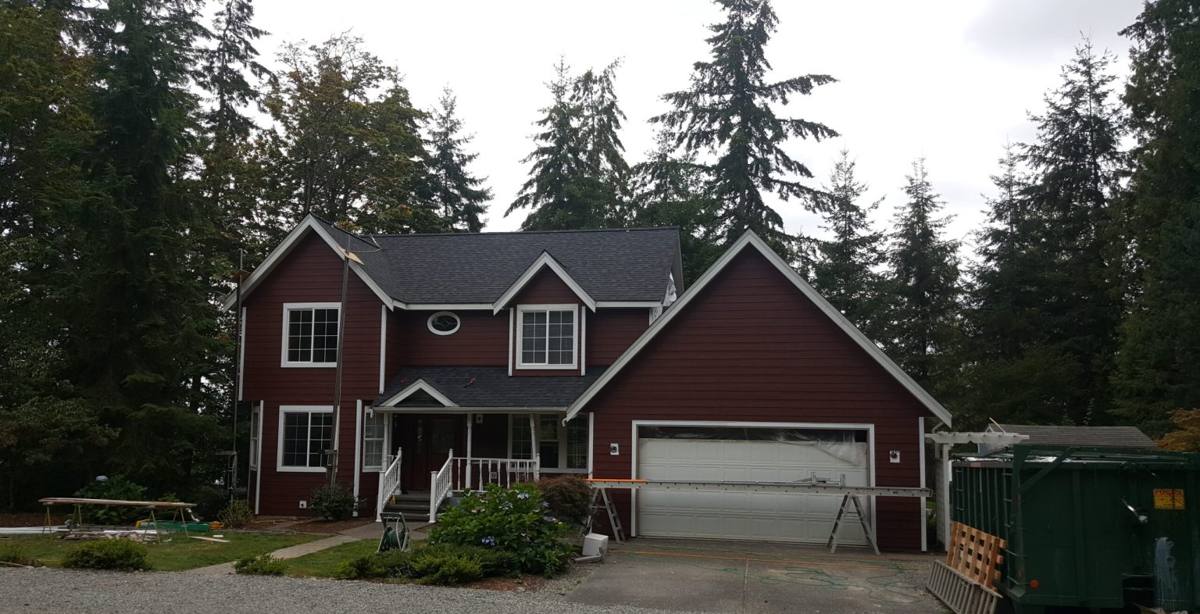
What Salt Air and Driving Rain Do to Siding Over Time
Salt air is corrosive to metal fasteners, flashing, and trim well before it does obvious damage to the siding material itself. On older homes we often find the siding looking mostly intact while the fasteners underneath have corroded, trim screws have rusted and stained the face of the boards, or flashing has degraded to the point it's no longer shedding water the way it should. That's a repair issue that doesn't announce itself until paint starts bubbling or a board starts to feel soft.
Driving rain is the second factor. Wind off the water pushes rain sideways and upward into laps, seams, and butt joints that were designed to shed water falling straight down. Over years, that wind-driven moisture finds its way behind poorly sealed joints, undersized flashing, or caulk that's cracked and shrunk. Once water gets behind the siding, the sheathing and framing underneath are what actually rot — the siding is often just the messenger.
The Moss Factor
Birch Bay's combination of shade, humidity, and a long wet season means moss and algae get a real foothold on north-facing walls, under eaves, and anywhere airflow is limited. Moss holds moisture directly against the siding surface for extended periods, which accelerates paint failure and, on wood-based products, accelerates rot. It's rarely the cause of a repair on its own, but it's almost always present as a contributing factor once we open up a damaged section.
Signs a Birch Bay Home Needs Siding Repair
- Soft or spongy spots when you press on the siding, especially near the bottom courses and around window and door trim
- Paint that's bubbling, peeling, or flaking in patches rather than evenly across a wall
- Visible cracking or splitting, particularly at butt joints and corners
- Rust streaks running down from fasteners, trim screws, or flashing
- Persistent moss or dark staining on north and shaded walls that keeps coming back after cleaning
- Gaps opening up at caulk joints, trim seams, or where siding meets windows, doors, or the foundation
- A musty smell or visible staining on interior walls that back up to exterior siding
- Warping or buckling on walls that face prevailing wind and rain
What a Correct Repair Actually Involves
A siding repair that's done right starts with figuring out how far the damage actually extends — not just patching what's visible. We open up the damaged area, check the condition of the water-resistive barrier and sheathing underneath, and confirm flashing at any penetrations (windows, doors, hose bibs, vents) is doing its job before anything new goes back on. Skipping that step is how a "fixed" wall ends up with the same problem again in two years.
Matching Materials the Right Way
We only install James Hardie fiber cement siding, and repairs are no exception. Hardie's HZ5 product line is engineered for exactly the conditions Birch Bay throws at a house — moisture exposure, freeze-thaw cycling, and coastal air — so when we're replacing damaged sections, we're using material designed to hold up in this environment rather than a patch that's working against the climate from day one. Fiber cement doesn't rot, and it doesn't feed moss and algae the way wood-based products can, which matters a lot on the shaded, damp walls that see moss build up year after year.
Fastening and Flashing Matter More on the Water
Given the corrosion risk from salt air, we pay close attention to fastener choice and flashing details on Birch Bay repairs. Correct fastener spacing, proper corrosion-resistant hardware, and flashing that actually laps correctly (rather than relying on caulk to do a flashing detail's job) are what keep a repair from becoming a callback. Caulk has its place, but it's a backup, not a strategy.
Repair vs. Replacement: How We Make the Call
| Situation | Repair usually makes sense | Replacement is likely the better call |
|---|---|---|
| Damage location | Isolated to one or two walls or a small section | Widespread across multiple walls or the whole exterior |
| Underlying sheathing | Solid, no rot found once opened up | Soft, delaminating, or rotted sheathing found underneath |
| Age of existing siding | Still well within its expected service life | Nearing or past the end of its realistic lifespan |
| Cause of damage | A single identifiable event (impact, one failed flashing detail) | Systemic moisture intrusion or ongoing material failure |
| Existing material | James Hardie fiber cement in otherwise good condition | Vinyl, LP SmartSide, or wood siding showing widespread wear |
If your home currently has a product other than James Hardie fiber cement — vinyl, LP SmartSide, primed wood, or similar — and the damage is more than isolated, that's usually the point where we have an honest conversation about whether repair is even the right long-term move versus replacing the affected sections, or eventually the whole exterior, with a product built to hold up in this environment.
Why We Only Repair With and Onto James Hardie Fiber Cement
We don't install vinyl, LP SmartSide, Cemplank, Allura, primed spruce, or cedar, and that standard applies to repair work too. Vinyl can crack in cold snaps and fade unevenly over time, and patched sections rarely color-match well years later. Wood-based products, including LP SmartSide, depend heavily on caulking and paint maintenance to keep moisture out — exactly the kind of upkeep that's hard to stay ahead of in a climate with this much sustained dampness and moss pressure. Cedar and primed spruce bring real natural appeal but come with ongoing maintenance demands that most homeowners underestimate until they're dealing with rot.
James Hardie fiber cement is non-combustible, holds its factory-applied ColorPlus finish far longer than field-applied paint, and comes with a strong transferable warranty when installed to manufacturer spec. For repair work specifically, that means new sections we tie in are built to last as long as the rest of a well-maintained Hardie exterior — not a temporary fix that becomes tomorrow's callback.
Our Process for a Birch Bay Repair
- On-site inspection of the damaged area and a check of surrounding walls for related issues (fastener corrosion, flashing condition, moss buildup)
- Opening the affected section to assess sheathing and water-resistive barrier condition before any new material goes on
- Correcting the underlying cause — failed flashing, poor fastening, a bad caulk joint — not just replacing the visible board
- Installing matching James Hardie fiber cement siding and trim, fastened and flashed to spec for coastal conditions
- Final check of paint match, joint sealing, and drainage so water sheds the way it's supposed to
Why Hiring a Crew That Already Works Birch Bay Matters
Repair work rewards local knowledge in a way that new construction doesn't always demand. A crew that already works Birch Bay knows which walls on a water-facing lot tend to take the worst of the wind-driven rain, knows how aggressively moss builds up on shaded north walls in this specific microclimate, and has already seen what salt air does to fasteners and flashing over a decade or more. That's the difference between a repair that just covers up a problem and one that actually accounts for why the damage happened, so it doesn't come back.
If you're noticing soft spots, peeling paint, persistent moss, or any of the warning signs above on your Birch Bay home, we'd rather take a look and give you a straight answer than have you guess. Reach out for a free, no-pressure estimate — we'll walk the exterior with you, explain what we find, and lay out what a proper repair (or, if it makes more sense, a longer-term plan) would actually involve.