 Bellingham Siding
 Cordata's Climate Is Harder on Siding Than Most Homeowners Realize
Cordata sits in north Bellingham, close enough to Bellingham Bay and the Strait of Georgia that salt-laden air is a constant, low-grade presence on every exterior surface in the neighborhood. Combine that with Whatcom County's driving rain — the kind that comes in sideways off the water during fall and winter storms — and a moss season that can stretch from October through May, and you have three separate stresses working on your siding at once, year-round. Most siding products aren't engineered with all three in mind simultaneously. That's the gap that shows up as premature failure on homes that are otherwise well built and well maintained.
Salt air accelerates corrosion of fasteners and metal trim, and it works its way into paint films and substrate materials over time, softening bonds that were never designed for a marine-influenced environment. Wind-driven rain finds every gap in flashing, every under-caulked seam, and every place where water is expected to run down the face of the wall instead of behind it. And moss and algae don't just look bad — they hold moisture against the siding surface for weeks at a stretch, which is exactly the condition that rots wood-based products and stains lesser paint finishes permanently.
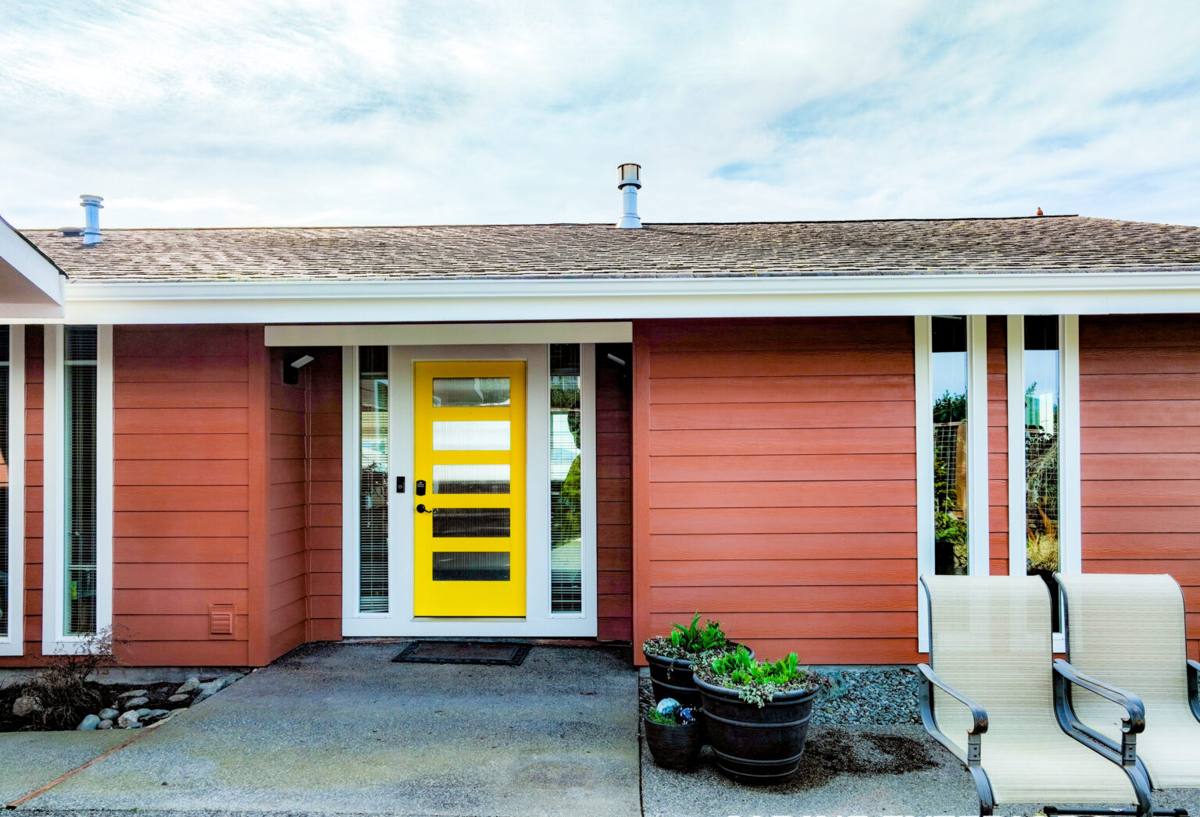
What Correct Siding Replacement Actually Involves Here
A siding replacement in Cordata isn't just swapping old boards for new ones. Given the moisture load this neighborhood deals with, the work underneath the siding matters as much as the siding itself.
Water Management Comes First
Before any new siding goes up, the wall needs a continuous weather-resistive barrier, properly lapped and taped at every seam, window, and door opening. On homes where we find the old barrier failed or missing — which is common on houses that were built or re-sided during faster growth periods without much attention to detail — we replace it rather than siding over a compromised layer.
Rainscreen Gaps Matter More Here Than in Drier Climates
A small air gap between the weather barrier and the siding lets any moisture that does get behind the cladding drain and dry out instead of sitting against wood sheathing. In a climate with as much sustained rain and humidity as Whatcom County sees, skipping this detail is one of the most common reasons siding fails years ahead of schedule.
Flashing at Every Penetration
Windows, doors, hose bibs, light fixtures, and vents all need proper flashing that directs water outward and downward — never relying on caulk alone as a water barrier. Caulk is a backup, not a strategy, and it's one of the first things to fail under repeated freeze-thaw cycling and UV exposure.
Why We Install Only James Hardie Fiber Cement Siding
We made a deliberate decision to stop installing vinyl, LP SmartSide, and other fiber cement brands, and to standardize on James Hardie. That decision was shaped directly by what we see on re-siding jobs across Whatcom County, including plenty of homes in and around Cordata.
Fiber cement is non-combustible, which matters given Washington's increasing wildfire smoke and ember exposure even in wetter western counties. James Hardie's ColorPlus factory-applied finish is baked on under controlled conditions and backed by a finish warranty that's stronger than what field-applied paint can offer — a real advantage in a climate where repainting siding every few years isn't realistic for most homeowners. Hardie also engineers regional product lines specifically for climate exposure, which is relevant here: this is not a one-size-fits-all product line.
We're not going to tell you every other product is worthless — vinyl is inexpensive and low-maintenance in mild conditions, and engineered wood products have genuine fans. But we've seen enough of them fail early in this specific climate — vinyl warping and fading under UV and temperature swings, engineered wood siding taking on moisture at cut edges and butt joints when installation isn't flawless — that we don't want our name on that outcome. Fiber cement done correctly holds paint, resists moisture intrusion, and doesn't feed the moss and mildew problem the way some wood-based products can when the finish starts to degrade.
HZ5 vs. HZ10: Which Line Fits a Cordata Home
| Product Line | Engineered For | Relevance to Cordata |
|---|---|---|
| HZ5 | Climates with moderate freeze-thaw and moisture exposure | Standard fit for most Bellingham-area homes away from direct water exposure |
| HZ10 | Higher humidity, sustained moisture, and more extreme temperature swings | Often the better call for homes closer to the bay, more exposed to wind-driven rain, or in heavy shade where moisture lingers |
We'll walk you through which line makes sense for your specific lot and exposure rather than defaulting to one option for every job.
Signs Your Cordata Home May Need Siding Replacement Now
- Boards that are cracked, warped, or visibly separating at the seams
- Soft or spongy spots when you press on the siding, especially near the bottom courses or under windows
- Paint that's peeling or bubbling within a year or two of a repaint
- Moss or algae staining that keeps returning within months of cleaning
- Visible gaps, rot, or daylight at trim boards and corner boards
- A noticeable jump in heating costs, which can point to a compromised weather barrier letting in drafts and moisture
- Siding that's original to a home built more than two to three decades ago and has never been replaced
Our Process, Start to Finish
We keep the process straightforward and give you real visibility into what's happening at each stage:
- Free on-site estimate — we walk the exterior, check for hidden moisture damage, and give you an honest read on scope
- Written proposal — product line, color, trim details, and pricing spelled out, no vague allowances
- Tear-off and inspection — old siding comes off and we inspect sheathing for rot or damage before anything new goes up
- Repair and water management — any damaged sheathing gets replaced, and a new weather-resistive barrier and rainscreen gap go in
- Hardie installation — installed to manufacturer fastening and clearance specifications, not shortcuts
- Final walkthrough — we go over the finished job with you before calling it done
What Drives Cost on a Cordata Siding Replacement
| Cost Factor | Why It Matters |
|---|---|
| Home size and number of stories | More square footage and higher walls mean more material and labor, plus added scaffolding or lift time |
| Condition of the sheathing underneath | Hidden rot or moisture damage found during tear-off adds repair work before new siding can go on |
| Existing siding material | Removal and disposal costs vary — old vinyl comes off faster than layered wood or damaged fiber cement |
| Trim, corners, and architectural detail | Homes with more corners, dormers, and trim transitions take more labor per square foot than simple rectangular walls |
| Product line (HZ5 vs. HZ10) | Higher-exposure lines cost more but reduce long-term maintenance and moisture risk |
| ColorPlus color selection | Premium and darker ColorPlus finishes can carry a modest upcharge over standard options |
We give you an itemized number after the site visit rather than a rough phone estimate — there's too much variation house to house to guess accurately from a distance.
Living With Your New Siding: Maintenance in a Wet, Mossy Climate
Fiber cement with a factory finish is genuinely low-maintenance, but "low" isn't "zero" in this climate. A yearly rinse-down with a garden hose (not a pressure washer aimed directly at seams) clears off the early moss and algae growth before it has a chance to establish and stain the finish. Keep gutters clear so water isn't sheeting down the wall face during heavy rain, and trim back vegetation and tree limbs that keep siding shaded and damp for long stretches — that shade is exactly what lets moss take hold fastest in a place like Cordata, where tree cover is common on residential lots.
Check caulking at trim joints and penetrations every year or two and touch it up before gaps open into real water paths. None of this is heavy labor, but staying ahead of it is what makes the difference between siding that still looks sharp at fifteen years and siding that needs attention every spring.
Why Hiring a Crew That Already Works in Cordata Matters
Siding installation done to spec looks similar on paper everywhere, but the judgment calls — where to add extra flashing, which product line fits a given exposure, how much rainscreen gap a shaded, damp lot actually needs — come from having done the work locally, under this climate, over and over. A crew that primarily works drier inland regions won't have the same instinct for where Whatcom County moisture actually causes problems. Choosing a contractor who already knows Bellingham's weather patterns, permitting expectations, and the way salt air and moss behave on homes in this specific area reduces the guesswork on your project.
If you're weighing a siding replacement for your Cordata home, we're happy to take a look and give you a straightforward, no-pressure estimate — no obligation, just an honest assessment of what your home needs.