 Bellingham Siding
 Why Silver Beach Puts Extra Demands on Siding
Silver Beach sits close enough to Bellingham Bay that the air itself works against your exterior. Salt-laden moisture drifts in off the water, settles on siding and trim, and speeds up corrosion on fasteners, flashing, and any cladding that isn't built to handle it. Add in Whatcom County's long, wet fall-through-spring stretch — driving rain that comes in sideways off the water more often than it falls straight down — and you've got a neighborhood where siding earns its keep or fails early.
Then there's moss. Silver Beach has plenty of mature tree cover and homes tucked against slopes and greenbelt, which means shaded, slow-drying wall sections that stay damp for days after a storm passes. That's exactly the environment where moss, algae, and mildew take hold on siding that can't shed moisture fast enough. On a lot of homes in this area, the siding on the north and west-facing walls looks noticeably older than the rest of the house — that's not bad luck, it's just the microclimate doing what it does.
None of this means Silver Beach is a hard place to keep a house looking good. It means the siding and the installation both have to be matched to the conditions, not just to what's cheapest or fastest to hang.
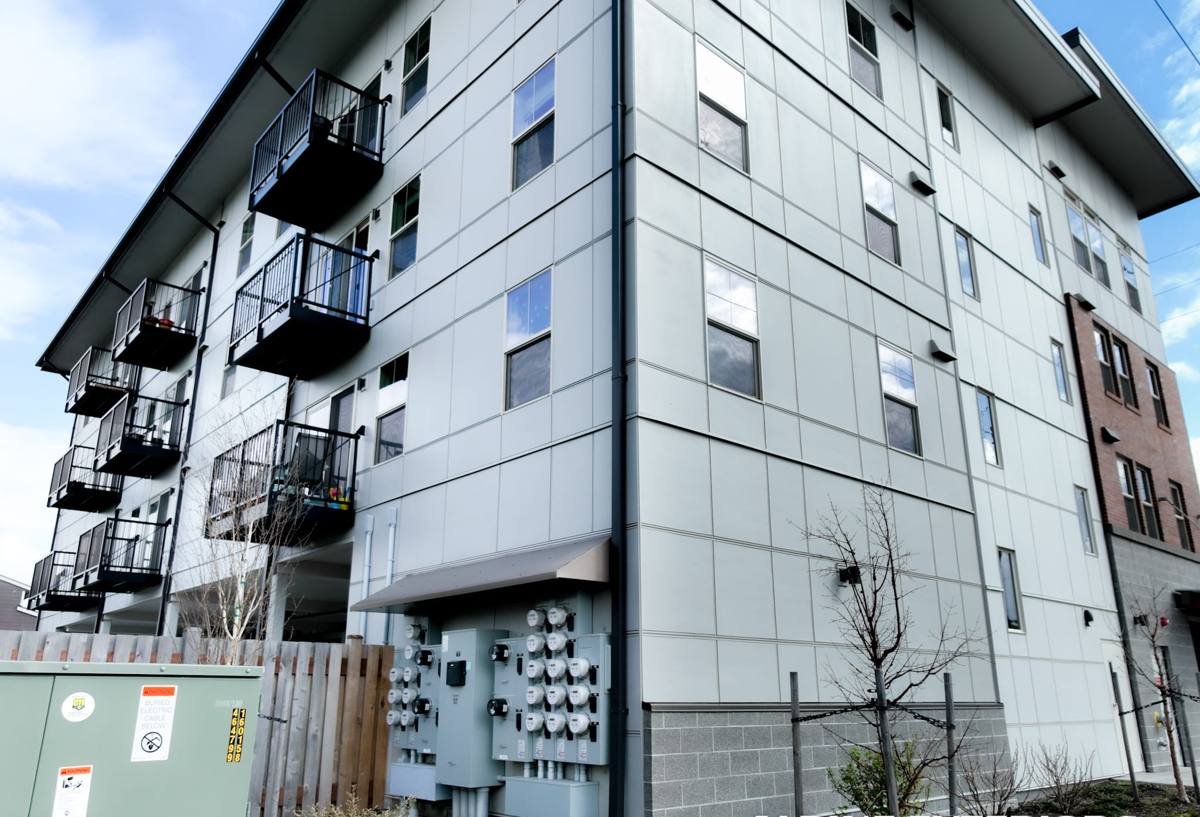
What Salt Air, Rain, and Moss Actually Do to a Wall System
It helps to know the specific failure patterns instead of just "the weather is rough here":
- Salt air corrosion: attacks exposed metal fasteners, uncoated flashing, and staples faster than it does inland — a fastener that's fine in Ferndale can rust and streak a wall in Silver Beach within a few seasons.
- Wind-driven rain: pushes water up and under laps and around penetrations (hose bibs, vents, light fixtures) rather than just running straight down the wall, which is why lap overlap and flashing details matter more here than in calmer inland spots.
- Trapped moisture: shaded, slow-drying wall sections stay wet longer, and any siding material that absorbs water and swells will hold onto that moisture instead of shedding it.
- Moss and algae growth: takes hold fastest on porous or textured surfaces that stay damp, and once established it holds even more moisture against the wall, accelerating everything else on this list.
A siding product and installation that ignore these mechanisms will look fine for a year or two and then start showing problems in exactly the spots — north walls, low corners, anything near grade or under eaves — where Silver Beach's climate concentrates its punishment.
Why We Install Only James Hardie Fiber Cement
We standardized on James Hardie fiber cement for every job we do, including here in Silver Beach, and it's a deliberate call rather than a brand preference. Fiber cement is made from cement, sand, and cellulose fiber — it doesn't absorb and swell the way wood-based products can, and it doesn't corrode the way exposed metal accessories do. That matters directly in a salt-air, high-moisture neighborhood.
James Hardie's HZ5 product line is engineered specifically for regions with prolonged moisture exposure and freeze-thaw cycling, which describes the Pacific Northwest generally and bayside neighborhoods like Silver Beach specifically. The ColorPlus factory finish is baked on under controlled conditions rather than sprayed on site, which gives it more consistent adhesion and a longer service life before repainting — a real advantage when the local climate is already working to break a finish down faster.
We won't install LP SmartSide, vinyl, Cemplank, Allura, primed spruce, or cedar. That's not a knock on every homeowner who has one of those products already — it's that once we saw the pattern of maintenance calls and premature failures across those products in this specific climate, we made the call to stop installing anything but Hardie. We'd rather turn down a job than install something we don't believe will hold up on a Silver Beach wall.
What a Correct Fiber Cement Installation Involves Here
The product is only half the equation. A lot of the siding problems we see on older Silver Beach homes trace back to installation shortcuts, not the material itself. A correct job includes:
Water Management Behind the Siding
A drainage plane (weather-resistant barrier plus rainscreen or furring where called for) that lets any water that gets past the siding drain back out instead of sitting against the sheathing. This is non-negotiable in a neighborhood where wind-driven rain is routine.
Flashing and Fastener Details
Corrosion-resistant fasteners and properly lapped flashing at every window, door, and penetration. In salt air, using the wrong fastener is how you end up with rust streaks bleeding down a wall within a couple of years.
Correct Clearances
Hardie's own installation instructions call for minimum clearances from grade, roofing, and decks — clearances that keep the bottom edge of the siding from sitting in standing moisture or splash-back, which is a common failure point on homes close to grade near the water.
Caulking and Joint Treatment
Sealed and painted cut edges, and joint treatment that keeps water from wicking into the panel ends — small details that matter more in a wet climate than a dry one.
Comparing Siding Options for a Silver Beach Home
| Factor | James Hardie Fiber Cement | Vinyl | Untreated Wood (Cedar/Spruce) |
|---|---|---|---|
| Salt air / corrosion resistance | High — non-combustible, doesn't corrode | Moderate — can chalk and become brittle over time | Low — fasteners and surface degrade faster near salt air |
| Moisture and moss resistance | High when installed with proper drainage details | Moderate — doesn't absorb water but seams can trap moisture | Low — absorbs moisture, prone to rot and moss without frequent upkeep |
| Finish longevity | Long — factory-baked ColorPlus finish | Moderate — color is through-body but can fade | Low — needs repainting or restaining every few years |
| Fire resistance | Non-combustible | Combustible | Combustible |
| Typical maintenance | Occasional wash, repaint on a long cycle | Low, but damage often means full panel replacement | Frequent — sealing, staining, moss treatment |
This isn't about declaring every alternative unusable — vinyl and wood both have homeowners who are happy with them. It's about what happens specifically in a climate that combines salt air, driving rain, and heavy shade, which is the exact combination Silver Beach deals with.
Our Process for a Silver Beach Siding Project
- On-site assessment: we walk the exterior, check current siding condition, look at drainage patterns, grading, and shaded wall sections specific to your lot.
- Moisture and damage check: before any new siding goes up, we check sheathing and framing behind problem areas for hidden water damage — common on homes with older siding in this neighborhood.
- Product and color selection: we walk you through Hardie's HZ5 boards, panels, and trim options, and ColorPlus color choices suited to the home and neighborhood.
- Written estimate: clear scope, materials, and timeline before anything is signed.
- Installation to spec: proper drainage plane, flashing, fastening, and clearances — not shortcuts to save a day of labor.
- Final walkthrough: we review the finished work with you and confirm everything matches what was agreed.
What to Ask Before Hiring Anyone for Fiber Cement Work
Fiber cement is not a forgiving material to install wrong — cut edges left unsealed, missing rainscreen where it's needed, or wrong fastener choices won't show up as a problem on day one, but they will show up in year three or four. Before hiring a crew for this kind of work in Silver Beach, it's worth asking:
- Do you install to the manufacturer's written instructions, including clearances and fastening patterns?
- What's your approach to drainage and moisture management behind the siding, specifically for shaded or bayside walls?
- Do you carry manufacturer certification or specific training on the product you're installing?
- Can you explain, in plain terms, why you recommend one product over another for this location?
- What does the warranty actually cover, and is it transferable if the home sells?
A crew that's worked in Silver Beach and similar bayside neighborhoods before should have straightforward answers to all five without hesitating.
Warranty and Long-Term Value
James Hardie backs its products with a strong, transferable limited warranty — a real factor if you plan to sell the home down the line, since new owners inherit the coverage rather than starting from zero. Combined with a ColorPlus finish that holds its color longer than field-applied paint, the long-term cost of ownership on Hardie siding tends to compare well against products that need more frequent repainting, sealing, or moss treatment to stay presentable in this climate.
For a Silver Beach home specifically, that long-term value shows up as fewer maintenance calls for moss removal, less repainting on shaded walls, and less risk of hidden moisture damage behind the siding — all of which cost real money and time over the life of a house near the water.
Ready for a No-Pressure Look at Your Home
If you're dealing with aging siding, moss buildup, or just want an honest read on what your Silver Beach home needs, we're happy to take a look. Fill out the form below for a free estimate — no pressure, no obligation, just a straight answer about what your house needs and what it would cost to do right.