 Bellingham Siding
 Siding Replacement Built for South Hill's Setting
South Hill sits up above much of Bellingham, which gives homes here real advantages — light, air movement, and views toward the bay on a clear day. But that same elevated, tree-lined setting works against exterior siding in ways that flat, sheltered lots don't experience as intensely. Older homes on South Hill's slopes catch wind-driven rain from Puget Sound weather systems, sit under mature tree canopy that keeps siding shaded and damp longer after storms, and pick up salt-laden air drifting off the water. Put those three together — salt air, driving rain, and a moss season that can run half the year in Whatcom County — and you get a neighborhood where siding ages faster than the manufacturer's brochure suggests, unless it was installed correctly to begin with.
This page is about one job, done right, in one place: replacing siding on a South Hill home with a system built to actually hold up here.
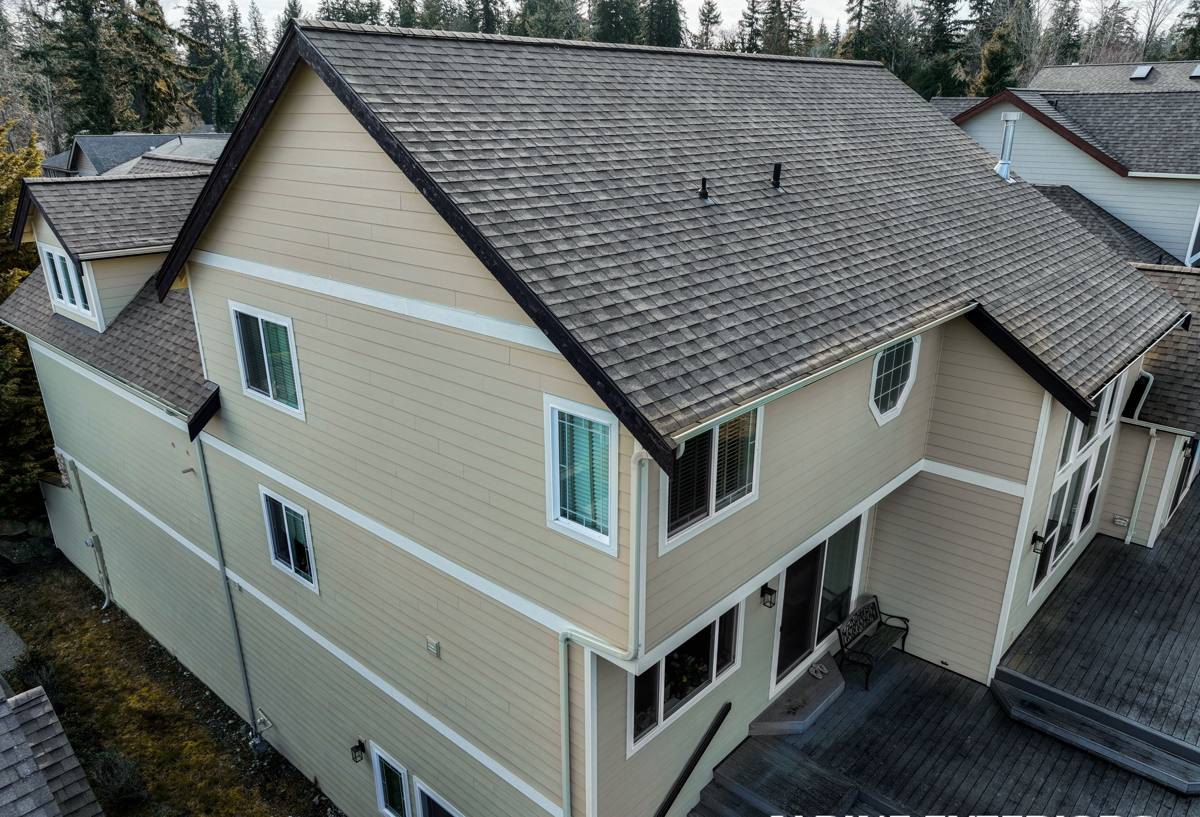
Why South Hill's Climate Is Hard on Siding
Bellingham's marine climate means moisture is almost always in the equation, but South Hill adds a few local wrinkles worth understanding before you commit to a siding replacement.
Driving Rain and Elevation
Homes higher up on the hill are more exposed to wind-driven rain than sheltered lots closer to sea level. Rain doesn't just fall straight down here — it gets pushed sideways into wall assemblies, which is exactly the condition that exposes weak flashing, poor caulking, and gaps in old siding.
Tree Cover and Moss Season
Many South Hill properties have significant mature tree cover, which is part of the neighborhood's character but also means siding stays shaded and slow to dry after rain. Combined with our long moss season, that shade creates ideal conditions for moss, algae, and mildew to take hold on north-facing and tree-shaded walls — staining paint, holding moisture against the substrate, and accelerating rot in anything that isn't moisture-resistant by design.
Salt Air
Bellingham's proximity to the water means a steady low level of salt exposure, which is harder on paint finishes, fasteners, and untreated wood than most homeowners expect. Over years, that exposure shows up as chalking paint, corroding trim nails, and faster breakdown of caulked joints.
Signs a South Hill Home Needs Siding Replacement
Repainting or patching can buy time, but certain signs mean the siding itself — not just the finish — has reached the end of its useful life. If you're seeing more than one or two of these, it's worth having the whole wall assembly evaluated rather than spot-treating the symptoms.
- Soft, spongy, or visibly warped sections, especially near the bottom of walls or under windows
- Paint that keeps failing within a year or two of repainting, even with quality paint
- Persistent moss or dark algae staining that returns shortly after cleaning
- Visible gaps, cracking, or separation at butt joints and trim
- Rising heating bills with no other explanation, suggesting moisture-compromised insulation behind the siding
- Bubbling or peeling on shaded, tree-covered walls specifically, while sunnier walls look fine
- Fastener staining — rust streaks bleeding through the paint at nail locations
What a Correct Siding Replacement Actually Involves
Siding replacement isn't just removing old boards and nailing up new ones. On a hill exposed to wind-driven rain, the assembly behind the siding matters as much as the siding itself.
Weather-Resistive Barrier and Flashing
Once the old siding is off, the sheathing gets inspected for hidden rot before anything new goes up. A proper weather-resistive barrier is installed with correctly lapped seams, and flashing is detailed around every window, door, and penetration so water is directed out and down — never trapped behind the cladding. This step is where most shortcut jobs fail, and it's invisible once the new siding is on, which is exactly why it has to be done right the first time.
Ventilation and Drainage
A drainage gap behind the siding lets any moisture that does get past the outer layer drain and dry out instead of sitting against the wall — important on shaded, tree-covered walls that don't dry quickly on their own.
Fastening and Manufacturer Specification
Fiber cement siding has specific fastener patterns, clearances, and caulking requirements set by the manufacturer to keep the warranty valid and the assembly weathertight. Skipping or guessing at these details is one of the most common causes of premature failure in siding that otherwise looks fine on day one.
Why We Install James Hardie Fiber Cement — and Only That
We install exclusively James Hardie fiber cement siding. We don't install vinyl, LP SmartSide, Cemplank, Allura, primed spruce, or cedar, and we think that's worth being upfront about rather than quietly downselling homeowners into whatever's easiest to install.
Vinyl is inexpensive and low-maintenance in mild conditions, but it can warp in temperature swings and doesn't hold paint if a homeowner ever wants a different color down the road. Wood products — cedar and primed spruce — look great and can perform well, but they demand consistent maintenance to resist moisture and rot, which is a tall order under South Hill's tree cover and moss season. Engineered wood products like LP SmartSide use a wood-strand substrate that depends heavily on correct installation and sealed edges to keep moisture out over time. James Hardie fiber cement is non-combustible, holds its factory-applied ColorPlus finish far longer than field-applied paint, and is manufactured in climate-specific HZ formulations engineered for exactly the kind of wet, humid, freeze-thaw conditions the Pacific Northwest produces.
| Material | Moisture/Moss Behavior | Maintenance Demand | Salt Air Durability |
|---|---|---|---|
| James Hardie fiber cement | Engineered for wet climates; resists swelling and moss-driven rot | Low — factory finish, no sealing required | Strong, with proven coastal use |
| Vinyl | Doesn't rot, but can trap moisture behind it if installed poorly | Low, but can't be repainted long-term | Can chalk and fade faster in sun/salt exposure |
| Cedar / primed spruce | Natural material; vulnerable to moss, rot without upkeep | High — regular sealing, painting, inspection | Moderate; salt accelerates weathering |
| LP SmartSide | Wood-strand core; performance depends on sealed edges and correct install | Moderate — edge sealing and paint upkeep matter | Moderate |
Our Process on South Hill Homes
Assessment
We start by walking the exterior with the homeowner, looking specifically at tree-shaded walls, areas with visible moss or staining, and anywhere water has clearly been running or pooling. We check for soft sheathing and existing flashing problems before quoting anything.
Tear-Off and Prep
Old siding comes off in full sections, not patched around, so the sheathing and framing underneath can be properly inspected and any hidden rot addressed before it's sealed back up behind new material.
Installation to Spec
New weather-resistive barrier, flashing, and drainage detailing go in first, followed by James Hardie siding installed to the manufacturer's fastening and clearance specifications — the details that determine whether the warranty holds and whether the wall actually sheds water the way it's designed to.
Final Walkthrough
We review the finished work with the homeowner, including trim, caulking lines, and any areas that needed extra attention due to tree cover or prior moisture damage.
What Affects the Cost of a South Hill Siding Replacement
Every home is different, but the following factors are the ones that most often move the price up or down on a project in this neighborhood specifically.
| Factor | Why It Matters |
|---|---|
| Home size and wall complexity | More square footage and more trim, dormers, or angles means more material and labor |
| Condition of existing sheathing | Hidden rot from tree-shaded moisture found during tear-off requires repair before new siding goes on |
| Site access and slope | Hillside lots and mature landscaping can require more scaffolding or staging than flat, open lots |
| Siding profile and color | Lap width, trim details, and ColorPlus finish selection affect material cost |
| Tear-off and disposal | Removing and hauling old siding, especially layered or previously patched siding, adds labor |
Why It Matters That We Already Work in South Hill
A contractor who's worked this specific part of Bellingham knows what to check before pulling the first board — where tree cover tends to create hidden moisture problems, how wind-driven rain behaves on exposed uphill walls, and how quickly moss can return on shaded siding if drainage isn't handled correctly the first time. That familiarity doesn't replace a careful, individual inspection of your home, but it does mean fewer surprises and a crew that isn't learning the neighborhood's quirks on your project.
If your South Hill home's siding is showing its age — or you just want an honest read on whether it needs replacement or can be maintained a while longer — we're happy to take a look. Reach out for a free, no-pressure estimate using the form below.