 Bellingham Siding
 Storm Damage Roof Repair in Fairhaven
Fairhaven sits right up against Bellingham Bay, which means the neighborhood takes weather differently than homes further inland in Whatcom County. Roofs here deal with a combination most other parts of the county don't see in the same mix: salt-laden air rolling off the water, driving rain that comes in sideways during winter storms, and a moss season that runs longer than almost anywhere else in the Pacific Northwest. Add in the mature tree canopy common to Fairhaven's older streets, and you've got a roof environment that ages differently than a roof in, say, a newer subdivision east of I-5.
When a storm rolls through and lifts shingles, drives water under flashing, or drops a branch on a roof plane, the fix isn't just "patch the hole." A repair that doesn't account for what Fairhaven roofs are already dealing with — salt exposure, moisture retention, moss undermining the shingle mat — tends to fail again within a season or two. This page walks through what storm damage actually looks like here, what a correct repair involves, and how we approach it.
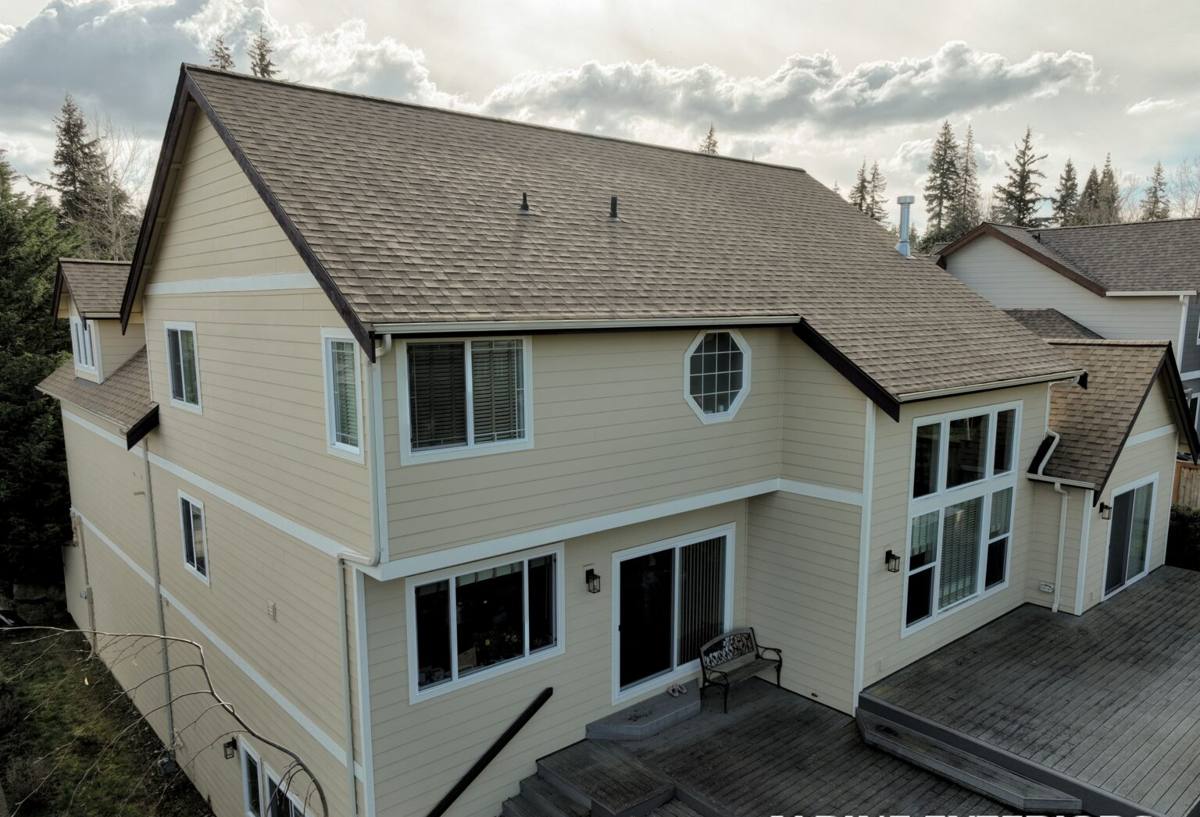
Why Fairhaven Roofs Take Storm Damage Differently
Salt air off Bellingham Bay
Homes close to the water are exposed to salt-laden moisture almost constantly, not just during storms. Salt air accelerates corrosion on exposed metal — flashing, fasteners, gutter hardware, vent caps — faster than it would a few miles inland. A roof that's already dealing with corroded fasteners or thinning flashing has less margin left when a windstorm hits, which is part of why storm damage in Fairhaven often shows up at the same weak points: flashing seams, nail heads, and metal valleys.
Wind and driving rain
Storms coming off the water tend to hit Fairhaven with more direct wind exposure than roofs tucked into more sheltered parts of Bellingham. Wind-driven rain doesn't just fall on a roof, it pushes sideways and upward under shingle edges, which is why storm damage here frequently isn't a dramatic hole — it's water finding its way under a lifted tab or around a flashing edge and working its way into the decking over weeks, not minutes.
A long moss season
Whatcom County's wet season stretches long, and Fairhaven's tree cover and shaded rooflines keep moisture sitting on shingles even longer than average. Moss isn't just cosmetic — it holds water against the shingle surface, lifts shingle edges as it grows, and creates a soft, saturated layer that storm wind can get underneath more easily. A roof with established moss growth is more vulnerable to storm damage than a clean one, and it's a factor we look at on every storm repair call in this area.
What Counts as Storm Damage
Not all storm damage looks like a missing shingle. Some of the most common issues we find on Fairhaven roofs after a wind or rain event include:
- Shingles lifted, creased, or torn loose along ridge lines and roof edges where wind pressure is highest
- Flashing pulled away from chimneys, skylights, or wall intersections, letting water track behind the roof plane
- Gutters pulled loose or clogged with storm debris, causing water to back up under the roof edge
- Branch or debris impact damage from mature trees common on older Fairhaven lots
- Granule loss on shingles from wind-driven rain and hail, which shortens the shingle's remaining service life even without a visible hole
- Soft or spongy decking discovered under existing moss growth once shingles are pulled back for repair
The tricky part is that several of these aren't visible from the ground. That's why a proper storm damage assessment means getting on the roof, not just looking at it from the driveway.
What a Correct Storm Repair Actually Involves
A rushed storm repair — nailing a shingle back down or slapping sealant over a gap — can look fine for a few months and then fail with the next heavy rain. A correct repair addresses the whole assembly, not just the visible symptom:
1. Full assessment before any repair
We check the damaged area plus everything around it — adjacent shingles, flashing condition, decking underneath, and gutter/drainage function. Storm damage rarely stays contained to one spot; wind and water travel.
2. Matching materials, not mismatched patches
Where shingles need replacing, we match type, color, and exposure as closely as possible so the repair doesn't stand out or create an uneven wear pattern down the road. On older Fairhaven homes with weathered roofing, this sometimes means a broader repair area than the storm damage itself, so the patch blends and performs consistently.
3. Flashing and underlayment get checked, not assumed fine
Because salt air corrodes exposed metal faster here, we don't just re-seat flashing that looks intact — we check for pitting, thinning, or fastener corrosion that would let the same failure happen again in the next storm.
4. Decking repair when water has already gotten in
If moisture has reached the decking, replacing the shingle without addressing the wood underneath just traps the problem. Soft or delaminated decking gets cut out and replaced before new roofing goes down.
5. Moss and debris cleared from the surrounding area
Given how much moss growth affects long-term roof health here, we clear moss and debris from around the repair area as part of the job, not as an upsell — leaving established moss next to a fresh repair undermines it from day one.
Our Storm Damage Repair Process
- Inspection and documentation — We assess the roof, photograph the damage, and give you a plain-English explanation of what happened and what it will take to fix it correctly.
- Insurance-ready reporting — If you're filing a storm damage claim, we document findings in a way that's useful to your adjuster, without exaggerating or downplaying scope.
- Repair plan and honest estimate — You get a clear scope: what's being repaired, what materials are used, and a straightforward cost range — no pressure to upgrade beyond what the damage actually requires.
- The repair itself — Matched materials, proper flashing and underlayment work, decking replacement where needed.
- Cleanup and final check — Debris removed, gutters cleared, and a final walk-through so you know exactly what was done.
Repair vs. Replacement: Sorting Out What You Actually Need
Not every storm-damaged roof needs a full replacement, but not every roof should be patched indefinitely either. The table below covers the main factors we weigh when advising a homeowner in Fairhaven.
| Factor | Leans toward repair | Leans toward replacement |
|---|---|---|
| Age of roof | Under roughly 12-15 years, otherwise sound | Nearing or past typical shingle service life |
| Extent of damage | Isolated to one section or slope | Spread across multiple roof planes |
| Decking condition | Dry, solid decking under the damage | Widespread soft or water-stained decking |
| Moss/algae history | Minor, manageable growth | Long-term moss damage affecting shingle integrity broadly |
| Flashing and metal condition | Localized corrosion or wear | Widespread corrosion from long-term salt air exposure |
If you're not sure which category your roof falls into, that's exactly what an inspection is for — we'll tell you honestly if repair is the right call, even if replacement would be the bigger job for us.
Storm Damage and Insurance Claims
Many storm repairs in Fairhaven are covered in part by homeowner's insurance, but coverage depends on your policy and the cause of damage. A few things that help the process go smoothly:
- Document damage with photos as soon as it's safe to do so, before any temporary repairs
- Avoid full repairs before your adjuster has seen the damage, if the schedule allows it
- Keep any temporary tarping or emergency work receipts — most policies reimburse reasonable emergency measures
- Ask your contractor for a written scope of damage, not just a verbal estimate, for your claim file
We're happy to walk a roof with you and point out what we're seeing, but we don't represent your insurance company or promise claim outcomes — that's between you and your adjuster. Our job is an honest, accurate assessment of the roof itself.
Why It Matters to Hire a Crew That Already Works in Fairhaven
Roofing crews that mostly work inland don't always account for how much faster salt air corrodes metal near the water, or how long moss stays active in a shaded, waterfront-adjacent neighborhood. A crew that regularly works Fairhaven and similar Bellingham waterfront areas already knows to check flashing and fasteners more closely, to expect a longer moss season when scheduling maintenance, and to plan for the wind exposure that comes with being close to the bay.
Fairhaven also has a mix of older homes with original or aging roofing and newer construction, sometimes on the same block. A repair approach that works for a home built in the last decade isn't always right for a century-old roof structure, and a crew familiar with the neighborhood's housing stock will spot that difference during the inspection rather than after the repair is done.
A Quick Post-Storm Checklist for Fairhaven Homeowners
- Look for shingle debris (granules, torn pieces) in gutters or on the ground after a storm
- Check for water stains on interior ceilings, especially near chimneys or skylights
- Note any branches or debris that landed on the roof, even if they don't look heavy
- Check gutters and downspouts for debris blocking drainage after wind and rain
- Avoid climbing onto the roof yourself — a visual check from the ground is enough to know it's time to call for an inspection
- Get damage assessed sooner rather than later — small storm damage left through another rainy stretch tends to turn into decking repair
Get a Straight Answer on Your Fairhaven Roof
If you've had storm damage, suspect a leak, or just want a second opinion on what a previous storm left behind, we're glad to take a look. The estimate is free, there's no pressure to do more than the roof actually needs, and you'll get a plain explanation of what we find. Use the form below to request your no-obligation estimate.