 Bellingham Siding
 Storm Damage Repair Built for Happy Valley's Weather
Happy Valley sits close enough to the water and the hills around Bellingham that homes here take a specific kind of weather beating: salt-tinged wind off Bellingham Bay, long stretches of driving winter rain, and a moss season that can run nearly nine months out of the year. A roof in this neighborhood doesn't fail the way a roof does in a dry climate. It fails from the slow combination of wind-lifted shingles, saturated underlayment, and organic growth working into every seam it can find. When a storm comes through and does visible damage, it's rarely an isolated event — it's usually the moment that exposes weaknesses the weather had already been working on for a while.
This page covers what storm damage roof repair actually looks like for Happy Valley homes: what we're checking for, how we handle it, and why hiring a crew that already works this specific area matters more than it might seem.
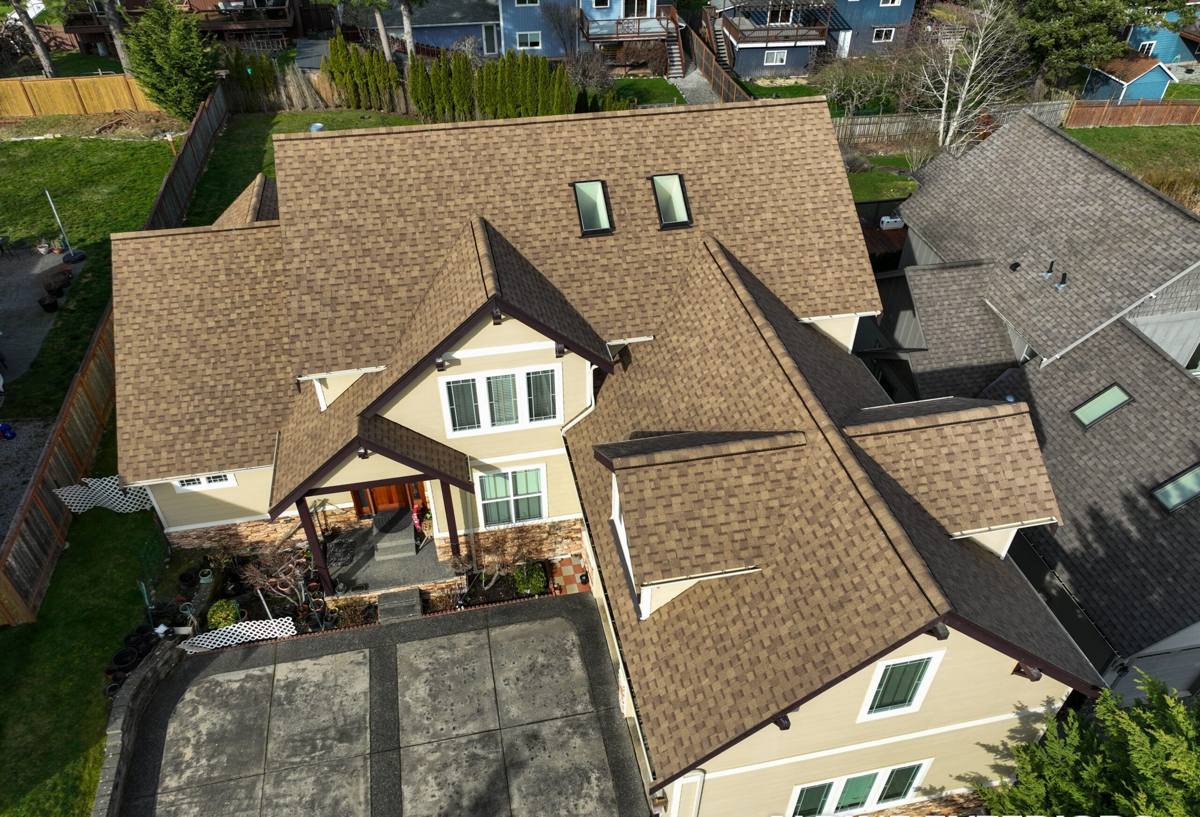
Why Whatcom County Storms Hit Roofs Differently
Bellingham doesn't get the hurricane-force events some regions do, but it gets something arguably harder on a roof over time: sustained wind combined with sustained moisture. A single windstorm off the Sound can lift or crease shingles along ridges and rake edges without tearing them off completely, which means the damage doesn't announce itself with a missing shingle in the yard. Instead, water starts finding a path underneath, and the first sign homeowners notice is a stain on a ceiling weeks later.
The three things we see most after storms in this area
- Wind-lifted or creased shingle tabs, especially along ridges, hips, and the roof edges most exposed to prevailing wind
- Flashing that's worked loose around chimneys, skylights, and roof-to-wall transitions where wind and rain concentrate
- Debris impact — fir and cedar limbs are common in and around Bellingham, and even a small branch dropped from height can crack a shingle or dent a vent cap
None of these are dramatic-looking from the ground. That's exactly why storm damage on a Happy Valley roof needs an actual inspection rather than a drive-by look.
What Counts as Storm Damage — and What Doesn't
Part of doing this job honestly is telling homeowners the difference between damage a storm caused and wear that was already there and simply got exposed. We don't pad an inspection report to make a claim look bigger, and we don't wave off legitimate storm damage because it's subtle.
Storm-caused damage typically shows up as fresh creases, tears, or granule loss concentrated on the windward side of the roof, cracked or punctured shingles under a specific limb or debris path, or flashing that's visibly bent or pulled away right after a known wind event. Pre-existing wear looks different: even granule loss across the whole roof, brittle shingles that crack when touched anywhere (not just in a storm zone), or moss and moisture staining that's clearly been building for seasons. Both matter — but they call for different scopes of work, and an honest contractor tells you which one you're dealing with before any repair starts.
Our Storm Damage Repair Process
Our process is built around getting an accurate picture first, then doing the actual repair once, correctly — not coming back twice because something was missed.
1. Ground and roof-level inspection
We start with a visual assessment from the ground to identify likely impact zones and wind exposure, then get on the roof itself to check individual shingles, flashing points, vents, and the underlayment where it's exposed. In a neighborhood like Happy Valley, roof pitch, tree cover, and orientation to prevailing weather all vary block to block, so we look at your roof's specific exposure rather than assuming it matches the house next door.
2. Photo documentation
Every damaged area gets documented before any repair work starts. This matters for your own records and, if you're pursuing an insurance claim, gives you a clear before-and-after picture of what was damaged and what was fixed.
3. Scoped repair, not guesswork
We repair what's damaged — replacing shingles in kind, resetting or replacing flashing, resealing penetration points — rather than defaulting to a larger scope than the damage calls for. If an area's condition means a patch repair won't hold reliably, we'll say so plainly and explain why, rather than either overselling a full replacement or underselling a repair that won't last.
4. Close-out inspection
Once the repair is done, we walk the roof again to confirm water paths are sealed and nothing was missed, and we go over what we found and fixed with you directly.
Repair vs. Replace: How We Decide
Not every storm-damaged roof needs full replacement, and not every repair is a good long-term answer. The right call depends on the roof's age, how widespread the damage is, and what condition the material was in before the storm.
| Factor | Points Toward Repair | Points Toward Replacement |
|---|---|---|
| Roof age | Under 12-15 years, material still flexible | Nearing or past manufacturer's expected service life |
| Damage spread | Isolated to one slope or a specific impact zone | Damage found across multiple slopes or elevations |
| Underlying condition | Decking solid, no widespread moisture staining | Soft decking, rot, or long-term moisture intrusion found |
| Moss/organic history | Minor surface growth, roof otherwise sound | Heavy moss with granule loss and shingle lifting throughout |
| Material match | Discontinued or close-enough match available | Shingle line discontinued with no reasonable match |
We'll walk through where your roof falls on this before recommending either path — the goal is an honest answer, not the bigger invoice.
Materials and Methods for a Repair That Actually Lasts
A storm repair is only as good as its weakest connection point, which is almost always where new material meets old. We tie repairs into the existing roof system properly rather than treating a patch as a standalone piece.
- Shingle matching: we match style, color, and profile as closely as current product lines allow, and we're upfront if an exact match isn't possible due to discontinued lines or sun-fading on the existing roof.
- Flashing work: flashing gets re-bedded or replaced with material appropriate to the substrate, not just caulked over — caulk is a short-term fix, not a flashing repair.
- Underlayment integrity: anywhere we open up a section of roof, we check the underlayment underneath and replace it if it's compromised, since a new shingle over damaged underlayment just delays the same leak.
- Fastening for wind exposure: given how much wind this area sees off the water, we fasten and seal repaired sections to hold up against the same wind loading the rest of the roof was built for.
Moss, Moisture, and Why Bellingham Roofs Need Ongoing Attention
Storm damage repair and moss management aren't separate conversations here — they're connected. Bellingham's long wet season means moss gets a head start on any roof with shade or north-facing exposure, and moss doesn't just sit on the surface. It holds moisture against the shingle, works into the granule layer, and can lift shingle edges over time, which makes those same shingles more vulnerable the next time wind picks up. A roof that's already carrying moisture from moss is a roof that takes storm damage more easily and heals from it less cleanly.
When we're out doing a storm repair, we'll flag moss and moisture issues we see even if they're outside the immediate repair scope — not to upsell a bigger job, but because it directly affects how well the repair we just did is going to hold up.
If You're Filing an Insurance Claim
Many storm-related roof repairs in this area do go through homeowners insurance, and a few things make that process smoother. Document the damage as soon as it's safe to do so, keep any receipts or notes about when the storm occurred, and get an inspection before doing any repair work yourself — insurers want to see the original damage, not a homeowner's temporary patch. We provide the photo documentation and written scope of damage that adjusters typically ask for, and we're glad to speak directly with your adjuster if that's useful. We don't handle the claim itself — that's between you and your insurer — but we make sure the documentation supports an accurate assessment.
Why a Local Happy Valley Crew Matters Here
A roofing crew that already works Bellingham and Whatcom County knows what a wind-lifted shingle looks like after a Nor'easter-style blow off the Sound versus wear from a slow moss season, because we've seen both on roofs a few streets over. That's not something you get from a crew driving in from outside the area for one job. It also means we're realistic about timing — we know which weeks tend to bring the next round of wind and rain, and we schedule repairs to get ahead of that instead of leaving a tarp up longer than it needs to be.
Being local also means accountability. If something about a repair doesn't hold up the way it should, we're not hard to find.
What to Do Right After a Storm
- Do a ground-level visual check for obvious debris, displaced shingles, or damaged gutters — don't get on the roof yourself
- Check attic spaces or top-floor ceilings for new staining, which can show up before an exterior leak is visible
- Take photos of any visible damage and note the date of the storm
- Cover any active leak point temporarily from the inside if it's safe to do so (a bucket, a tarp over insulation) rather than climbing onto a wet roof
- Call for an inspection before assuming the damage requires full replacement — or before assuming it's nothing
- Hold off on doing your own patch repair if you plan to file an insurance claim, so the original damage stays documented
Get an Honest Look at Your Roof
If a recent storm has left you with a leak, missing shingles, or just a nagging feeling something's not right up there, we're happy to come take a real look — not a five-minute glance from the driveway. We'll tell you plainly what we find, what it'll take to fix it, and whether repair or replacement makes sense for your roof's actual condition. Request a free, no-pressure estimate using the form below.