 Bellingham Siding
 Siding Replacement in Sudden Valley: Why This Job Is Different Here
Sudden Valley sits on the south shore of Lake Whatcom, a forested, HOA-managed residential community a short drive from downtown Bellingham. It's one of the more heavily wooded neighborhoods in the area, and that setting changes what "siding replacement" actually means for a home here compared to a house on an open lot closer to town. Shade, humidity, and a long wet season don't just make siding look tired faster — they change how fast the wall assembly behind it starts to fail. When we replace siding in Sudden Valley, we're not just swapping old boards for new ones; we're addressing a specific set of conditions that this community deals with more than most.
We install James Hardie fiber cement siding exclusively, and this page is about the replacement process specifically: what tells you it's time, what a correct job looks like from tear-off to finish, and why hiring a crew that already knows this neighborhood's quirks — private roads, HOA processes, tree-heavy lots — actually matters for how smoothly the project goes.
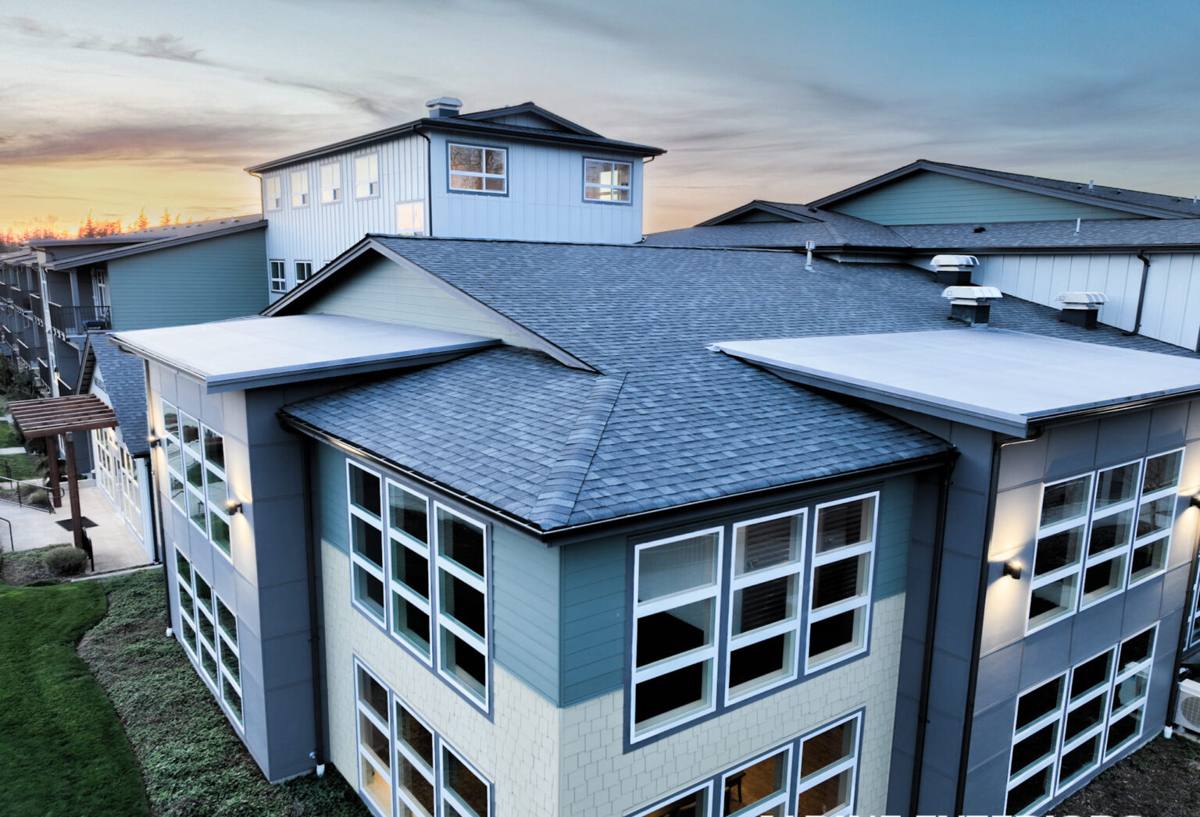
What Sudden Valley's Climate Does to Existing Siding
Heavy Shade and Slow Drying
Most homes in Sudden Valley sit under significant tree canopy, and many have at least one wall face that gets very little direct sun through most of the year. Siding on those walls stays wet longer after every rain than it would on an open lot. Materials that rely on sun exposure to dry out between storms don't get much chance to here, which is exactly the condition under which moisture-sensitive siding starts breaking down years earlier than it should.
Driving Rain Off the Lake
Wind moving across Lake Whatcom pushes rain sideways into exposed wall faces rather than letting it fall straight down. That matters at the seams: lap joints, trim intersections, and anything penetrating the wall (hose bibs, light fixtures, vents) take on water from an angle that a calmer, drier climate wouldn't test nearly as hard. Old caulking and worn flashing details that might hold up elsewhere often fail here first.
A Long Moss and Mildew Season
The combination of shade, lake humidity, and mild temperatures year-round means moss and mildew growth isn't a seasonal event in Sudden Valley — it's closer to a constant, low-level pressure on the exterior. Whatcom County's broader marine climate, with moisture-laden air moving in off the Salish Sea, adds to that baseline dampness even this far inland. Any siding material with even slight porosity, or one that traps moisture against the substrate instead of shedding it, becomes a growth surface, usually first in the spots nobody checks regularly: behind shrubs, under eaves, on the north wall.
Signs It's Time for Replacement, Not Just Repair
Homeowners often call about a repair and end up needing a full replacement once we're able to look at what's actually happening behind the siding. These are the signs worth acting on before small problems become structural ones:
- Boards that are soft, spongy, or visibly swollen, especially near the bottom courses or around windows and doors
- Paint or finish that's peeling, bubbling, or won't hold a fresh coat no matter how well it's prepped
- Persistent moss or dark staining that comes back within a season of cleaning
- Visible gaps, warping, or cupping in individual boards, particularly on shaded or north-facing walls
- Soft or discolored sheathing felt through a probe test at trim edges and butt joints
- A musty smell in interior rooms along an exterior wall, which can indicate moisture has already reached the framing
- Siding that's original to a home built more than 20-25 years ago, especially if it's a moisture-sensitive material to begin with
Any one of these can sometimes be handled with a patch. Several of them together, especially on a shaded lot like most in this community, usually mean the assembly underneath needs a real look before more money goes into surface-level fixes.
What a Correct Siding Replacement Actually Involves
Full Tear-Off, Not Overlay
We remove the existing siding rather than installing new material over it. Covering old siding hides problems instead of solving them, and on a shaded, moisture-heavy lot that's a bad trade. Tear-off is also the only way to actually inspect what's underneath before it gets covered up again for another 20-plus years.
Checking What's Behind the Old Siding
Once the old material is off, we look at the sheathing, framing, and existing water-resistive barrier for rot, soft spots, or prior water intrusion. This is the step that gets skipped by crews trying to move fast, and it's the step that determines whether the new siding has a sound surface to attach to. Any damaged sheathing gets replaced before anything new goes up — installing new siding over compromised sheathing just resets the clock on the same failure.
Water-Resistive Barrier and Flashing Details
A correctly installed weather-resistive barrier, properly lapped and sealed, along with new flashing at windows, doors, and any wall penetrations, matters more in a driving-rain, high-humidity setting like this one than it would in a drier climate. This is where a lot of the actual water-management work happens — the siding itself is really the last line of defense, not the only one.
Installing to Manufacturer Specification
James Hardie siding has documented requirements for fastener spacing, clearances from grade and roof lines, joint treatment, and caulking that are specific to the product and the climate zone. Installing to spec is what keeps the manufacturer's warranty valid and is also, separately, what makes the siding actually perform the way it's designed to in a wet, shaded environment. Skipping steps to save labor time shows up later as callbacks, not savings.
Why We Only Use James Hardie for These Replacements
We don't offer vinyl, LP SmartSide, primed wood, or other fiber cement brands as alternatives. That's a professional standard, not a sales pitch. James Hardie's fiber cement is non-combustible, holds a factory-applied ColorPlus finish that resists the fading and chalking that field-applied paint jobs are prone to, and comes in climate-engineered HZ formulations built for exactly the kind of sustained moisture and freeze-thaw cycling that Whatcom County sees. On a replacement job specifically, that matters because we're not just picking a product for how it looks going in — we're picking the one we're confident will still be doing its job in twenty years on a shaded lot next to a lake. We've seen enough repeat service calls on moisture-sensitive materials in conditions like these to have stopped offering them.
Our Siding Replacement Process, Start to Finish
- On-site assessment. We walk the exterior, probe suspect areas, and identify how much of the problem is cosmetic versus structural before quoting anything.
- Written scope and estimate. You get a clear breakdown of what's being replaced, what products are used, and what the timeline looks like, with no vague allowances.
- HOA and permitting steps handled up front. If Sudden Valley's HOA requires an architectural review or color approval, we get that sorted before material orders go in, not after.
- Tear-off and sheathing inspection. Old material comes off, the crew inspects and repairs the substrate, and you're shown anything unexpected before we cover it back up.
- Barrier, flashing, and Hardie installation. Water-resistive barrier, flashing, and siding go in to manufacturer spec, with attention to the trim and joint details that matter most in this climate.
- Final walkthrough. We go over the finished work together before calling the job done.
Cost Factors for a Sudden Valley Siding Replacement
Every home is priced individually, but these are the variables that most commonly move the number on a Sudden Valley job specifically:
| Factor | Why It Matters Here |
|---|---|
| Extent of hidden water damage | Shaded, tree-covered walls are more likely to need sheathing or framing repair discovered during tear-off, which affects both cost and timeline |
| Access and site conditions | Sudden Valley's private road network, sloped lots, and mature trees can affect staging, dumpster placement, and material delivery logistics |
| Trim and detail complexity | Homes with more window and door openings, dormers, or multiple rooflines require more flashing and cutting work per square foot of siding |
| Siding profile chosen | Lap siding, board-and-batten, and shingle-style Hardie products differ in material and labor cost |
| HOA-driven color or product requirements | Architectural review timelines and specific color approvals can affect scheduling more than cost, but are worth planning for early |
Why Hiring a Crew That Already Works Sudden Valley Matters
Sudden Valley isn't a typical subdivision. It's a private, HOA-governed community with its own road network, and getting a project done smoothly here usually depends on more than just installation skill. A crew unfamiliar with the neighborhood may not know that an architectural review is expected before materials get ordered, or how tight some of the access points can be for staging equipment and dumpsters on wooded, sloped lots. We've worked this community enough to plan around those realities from the estimate stage rather than discovering them mid-project, which keeps the schedule from slipping and avoids the friction of a surprise HOA hold-up halfway through a tear-off.
Local, repeat presence also matters for something less obvious: accountability. A crew that plans to keep working in Sudden Valley for years has every incentive to do the flashing and prep work correctly the first time, because callbacks and word of mouth both travel fast in a tight-knit community like this one.
If your Sudden Valley home is showing signs it's due for new siding, or you just want an honest opinion on whether you're looking at a repair or a full replacement, we're happy to take a look. Estimates are free, there's no pressure, and you'll get a straight answer either way — fill out the form below to get started.