 Bellingham Siding
 Window Installation Built for Sudden Valley's Conditions
Sudden Valley sits in unincorporated Whatcom County along Lake Whatcom, a few miles outside Bellingham proper. It's a different environment than a lot of the surrounding area — heavier tree cover, more shade on north- and east-facing walls, and homes that often sit closer to the lake's moisture than to open wind. Windows here don't fail for the same reasons windows fail in a dry climate. They fail because water finds a way in slowly, over years, through a gap in flashing or a bead of sealant that was never really doing its job.
We install windows throughout the greater Bellingham area, and Sudden Valley homes get their own read before we quote anything. A house tucked into trees on the lake side needs different attention to moisture management and airflow than a home on an open, sun-exposed lot. Getting that read right up front is most of what separates a window job that lasts twenty-plus years from one that starts leaking behind the trim in five.
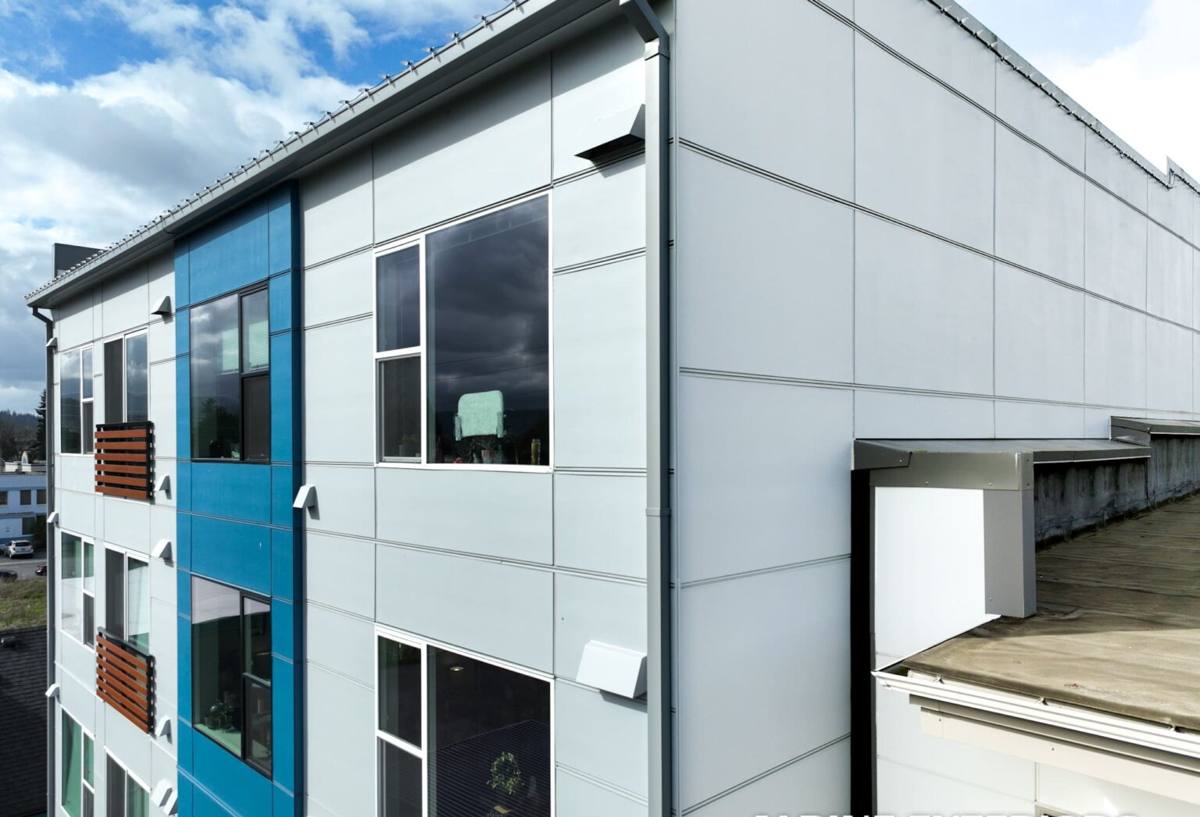
What Whatcom County's Climate Does to Windows Over Time
A handful of regional factors show up again and again when we're diagnosing failed windows in this area, and they're worth understanding before you decide what to replace and with what.
Salt air and moisture in the regional air
Bellingham Bay and the greater Puget Sound region put a mild but steady load of salt-laden moisture into the air across Whatcom County. It's less of a direct concern for a lake-side community like Sudden Valley than for a home right on the water, but it still contributes to the general dampness that never fully lets up here — and that dampness is what slowly breaks down poor-quality sealants and unprotected fasteners around a window opening.
Driving rain
Wind-driven rain doesn't fall straight down — it gets pushed sideways into a wall, and a window opening is the weakest point in that wall. If the flashing detail under and around a window isn't done correctly, driving rain will eventually find the seam. This is the single most common cause of hidden rot we find when we pull old trim off a window during a replacement.
A long moss season
Shaded, tree-lined lots like many in Sudden Valley stay damp longer after a storm than open lots do, and that extended dampness is exactly what moss and algae need to take hold on sills, trim, and cladding. Beyond the cosmetic issue, moss holds moisture against wood and paint far longer than bare material would, which accelerates rot at exactly the joints — sills, corners, trim edges — where a window is most vulnerable.
Tree cover and lake humidity
Sudden Valley's wooded lots are a big part of what makes the area attractive, but they also mean less direct sun to dry out a wall assembly after wet weather, and lake proximity keeps ambient humidity a little higher than you'd find further into town. None of this is a reason to avoid the area — it's just a reason to install windows with the right materials and the right details the first time.
What a Correct Window Installation Actually Involves
"New windows" is not really the product — the installation is. Two identical windows, installed differently, will perform completely differently in this climate. A correct install includes:
- Removing old units carefully and inspecting the rough opening for hidden rot or soft framing before anything new goes in.
- Sill pan flashing that directs any water intrusion back out of the wall instead of into the framing — this is non-negotiable in a wet climate and is one of the most commonly skipped steps in low-bid work.
- Properly lapped flashing tape at the jambs and head, integrated with the home's existing water-resistive barrier (house wrap or building paper) in the correct shingle-style order so water always sheds outward and down.
- Correct shimming and leveling so the window operates smoothly and the seal isn't stressed unevenly over time.
- Low-expansion foam and backer rod at the perimeter for insulation, rather than relying on caulk alone to do a job it isn't built for.
- Quality exterior sealant rated for this climate, applied at the right joints — not everywhere, since over-sealing can trap moisture just as badly as under-sealing.
- Proper trim and casing work that sheds water away from the window rather than channeling it toward the frame.
Skip any one of these steps and the window itself barely matters — water will get behind it eventually. This is also why we don't treat window replacement as an interior-only job. The exterior detailing is where the long-term performance actually gets decided.
Choosing the Right Window for a Sudden Valley Home
There's no single "best" window — the right choice depends on the home's exposure, budget, and how much upkeep the owner wants to take on. Here's how the common frame materials compare for this climate specifically.
| Frame Type | Moisture Performance | Maintenance | Typical Fit |
|---|---|---|---|
| Vinyl | Won't rot; handles constant damp well | Low — occasional cleaning | Most Sudden Valley homes; best value for the climate |
| Fiberglass | Excellent — very stable, minimal expansion/contraction | Low | Homes wanting a stronger frame with a narrower sightline, at a higher price point |
| Wood (unclad) | Requires diligent upkeep to avoid rot in this climate | High — repainting/sealing on a schedule | Historic or architectural homes where the look matters more than upkeep |
| Aluminum-clad wood | Good exterior protection, wood interior warmth | Moderate | Homes wanting a wood interior look without full wood maintenance |
For most Sudden Valley homes, we lean toward vinyl or fiberglass because both shrug off the sustained dampness this area gets without asking the homeowner to keep up a maintenance schedule. We also pay close attention to glazing package — a window with a solid U-factor and the right Low-E coating for a shaded, tree-covered lot will perform differently than one built for a sun-baked open yard, and we spec accordingly rather than defaulting to one package for every job.
A note on why we're selective about certain products
Some window and trim products on the market look good on day one but are genuinely unforgiving of small installation errors, or depend on a maintenance routine most homeowners won't keep up with in a damp climate like this one. We don't install everything that's available — we install what we're confident will hold up here, and we're happy to explain our reasoning on any specific product a homeowner is considering.
Our Process, Start to Finish
- On-site assessment. We look at each window opening, the surrounding siding and trim condition, and any existing signs of moisture damage before quoting anything.
- Honest scoping. If we find rot or framing issues during the assessment, we tell you before work starts, not after demo when you have no choice but to say yes.
- Product selection. We walk through frame material, glazing, and style options suited to that specific wall's exposure — not a one-size answer for the whole house.
- Careful removal. Old units come out with attention to protecting the surrounding siding and interior finishes.
- Correct flashing and sealing at every opening, using the sill pan and shingle-lap methods described above.
- Installation and adjustment so every window operates smoothly and seals evenly.
- Trim and finish work matched to the home's existing exterior.
- Walkthrough and cleanup — we show you the finished work and leave the site clean.
Signs Your Current Windows Are Already Failing
Because water damage around windows tends to happen behind the trim, most homeowners don't catch it until it's significant. Watch for:
- Soft or spongy trim or sill wood when pressed
- Peeling or bubbling paint near the window frame, especially on shaded walls
- Persistent moss or dark staining on sills or trim that keeps coming back
- Fogging or condensation between glass panes (a sign the seal has failed)
- Drafts or a noticeable temperature difference near the window
- Windows that are difficult to open, close, or lock — often a sign the frame has shifted
- Visible daylight or gaps around the frame from outside
Any one of these on its own isn't necessarily an emergency, but they're worth having looked at before the damp season sets in again.
What Affects the Cost of a Window Installation
| Factor | Why It Matters |
|---|---|
| Frame material | Vinyl is typically the most budget-friendly; fiberglass and clad-wood cost more but offer different performance and appearance |
| Window size and style | Larger units, custom shapes, or operable styles like casement cost more than standard double-hung |
| Number of openings | Whole-home replacement typically has a lower per-window cost than a handful done individually |
| Existing damage | Rotted framing or sheathing found during removal adds repair scope before the new window can go in |
| Access and lot conditions | Steep or wooded lots, common in this area, can affect setup and staging time |
| Trim and exterior finish work | Matching existing siding or trim detail adds labor beyond the window unit itself |
We'll never quote a number without seeing the actual openings and the condition behind them — anyone who quotes a whole-house window job over the phone without looking at the house is guessing.
Why It Matters That We Already Work in Sudden Valley
A crew that's worked in Sudden Valley knows what the lots tend to look like — the tree cover, the shaded walls, the way moisture behaves differently on the lake side of a house versus the road side. Many homes here are also part of an HOA community, and we're used to working within whatever access or scheduling considerations that brings, so there are no surprises for the homeowner mid-project.
More practically: we've already seen how the local building conditions here tend to affect window openings over time, which means less guessing and fewer surprises once removal starts. That local familiarity — combined with a crew based in Bellingham and working across Whatcom County day in and day out — means we're not learning the area on your project.
Get a Straight Answer for Your Home
If your windows are original to the house, showing early signs of trouble, or you're just planning ahead, it's worth having a local crew take a look before you decide anything. We'll give you a straightforward, no-pressure estimate based on what we actually see at your home — use the form below to get started.