 Bellingham Siding
 Sunnyland Decks Face a Specific Kind of Wear
Sunnyland sits close enough to Bellingham Bay that the same air carrying salt off the water also carries moisture into every joint, seam, and fastener hole on an outdoor deck. Add Whatcom County's long stretch of driving rain from fall through spring, plus a moss season that can run six months or more on shaded north-facing decks, and you have a structure that's under constant low-grade attack even when it looks fine from a distance. This isn't a coastal-horror-story climate — it's a slow, cumulative one. Decks here rarely fail all at once; they fail one soft board, one rusted fastener, one algae-slick step at a time, until an owner notices a spring in the decking or a stair rail that flexes more than it used to.
Deck repair in this neighborhood is really about managing moisture and organic growth over the life of the structure, not just patching whatever board finally gave out. A repair done without that mindset tends to need a second repair within a couple of seasons.
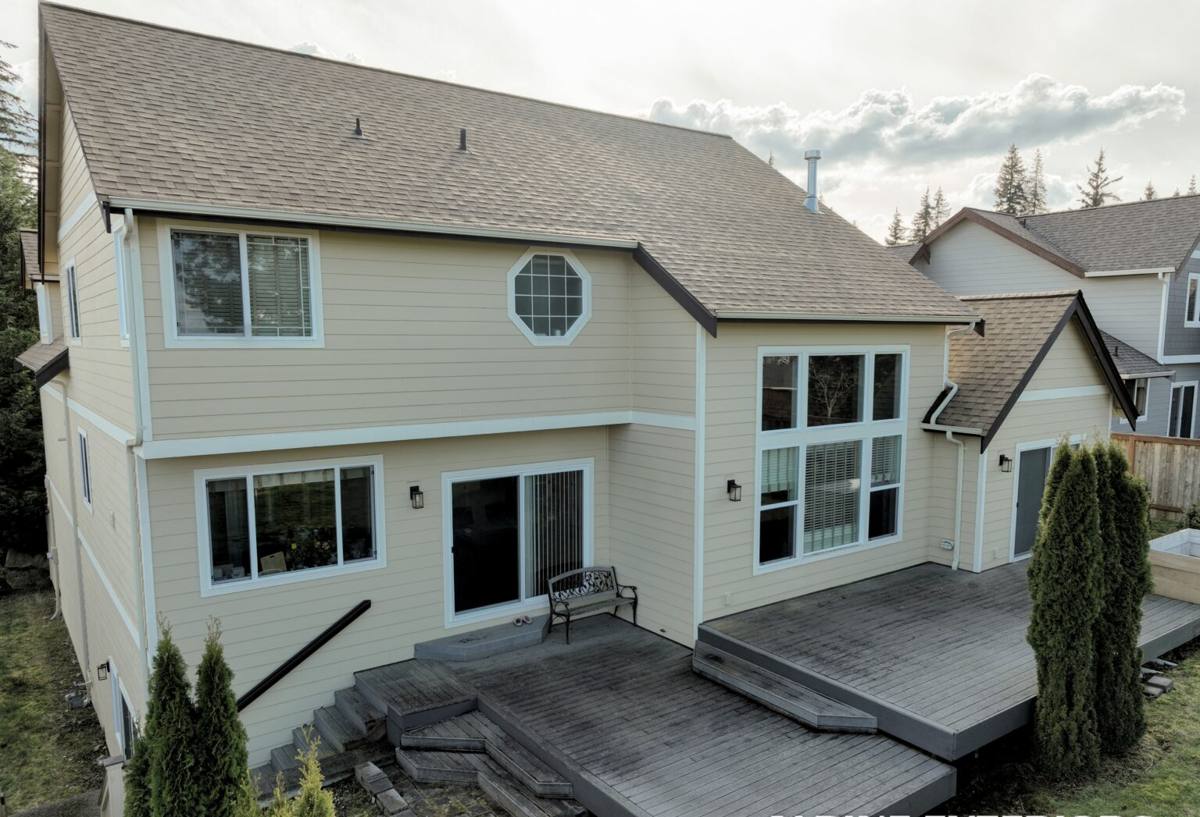
Signs a Sunnyland Deck Needs Repair, Not Just Cleaning
A lot of homeowners power-wash a mossy deck, see it look better for a few weeks, and assume the problem is solved. Moss and surface grime are cosmetic. The issues underneath are structural, and they're the ones that matter. Walk your deck and check for these before deciding whether you need a cleaning, a repair, or a rebuild:
- Soft, spongy, or springy spots in decking boards, especially near the house or under planters
- Rust streaking or crumbling around fastener heads, joist hangers, or ledger bolts
- Gaps opening up between the ledger board and the house siding or trim
- Stair stringers or railing posts that wobble under normal weight
- Persistent green or black film that returns within weeks of cleaning, especially on the north or shaded side
- Standing water that doesn't drain within an hour or two after rain stops
- Visible daylight or gaps at post-to-footing connections
- Cracked or checked wood that lets water pool inside the crack rather than shed it
Any one of these on its own might be a minor fix. Two or three together usually mean the moisture problem has been running longer than the visible symptoms suggest, and it's worth a full inspection rather than a spot patch.
What a Correct Deck Repair Actually Involves
It starts underneath, not on top
The visible decking boards are the last thing we look at, not the first. A repair that only replaces surface boards while leaving compromised framing, hardware, or a leaking ledger connection underneath is a repair that hides a problem instead of fixing it. We check the ledger board attachment to the house (a common failure point behind moss and moisture in this climate), the condition of joists and beams, post-to-footing hardware, and any flashing that's supposed to keep water out of the framing.
Then the connections
Fasteners and structural hardware take the brunt of damp climates. Galvanized coatings wear thin over years of exposure to moisture, and once rust starts at a fastener head it works its way down into the wood fibers around it, softening them from the inside. Part of a correct repair is replacing degraded hardware with fasteners rated for the exposure, not just matching what was there.
Then the surface
Only after the structure and hardware are sound does it make sense to address decking boards, railings, and stair treads — whether that's spot-replacing individual boards, resurfacing, or a broader refresh depending on how much of the deck is affected.
Common Problems We Find on Sunnyland Deck Repairs
Every deck is different, but a handful of issues show up again and again on repair calls in this part of Bellingham:
- Ledger board rot where the deck attaches to the house, often from missing or failed flashing that let water track behind the siding
- Fastener corrosion from standard hardware that wasn't rated for long-term damp exposure
- Moss and algae buildup on shaded boards and stair treads, which holds moisture against the wood and creates a slip hazard
- Undersized or clogged drainage where boards are laid too tight or debris collects between boards, trapping water instead of shedding it
- Footing movement from years of freeze-thaw cycles and saturated soil around posts
- UV and rain-cracked surfaces on boards that were never sealed or haven't been resealed in years
Repair Materials — What We Use and Why
When a repair calls for replacing boards, framing, or hardware, the material choice matters as much as the workmanship. We choose materials based on where they sit on the deck and how much moisture exposure that spot gets, not just what's cheapest.
| Material | Moisture Behavior | Maintenance Needed | Best Use in a Repair |
|---|---|---|---|
| Pressure-treated lumber | Resists rot when properly sealed; can still absorb water at cut ends and fastener holes | Needs re-sealing every 1-2 years in this climate | Framing, joists, structural repairs not usually visible |
| Cedar | Naturally rot-resistant but softer and more prone to surface checking in heavy rain cycles | Regular sealing to maintain resistance | Visible boards and railings where appearance matters |
| Composite decking | Doesn't absorb water into the board itself, sheds moss more easily off the surface | Occasional cleaning, no sealing | Surface boards on decks with heavy shade or moss history |
| Stainless or hot-dip galvanized hardware | Resists the corrosion that standard fasteners develop within a few damp seasons | None — install once, correctly | All structural connections, especially ledger and post hardware |
We're honest about trade-offs. Composite costs more up front and won't match cedar's look for a homeowner who wants a natural wood grain. Cedar looks great but demands more upkeep in a climate that rains as much as ours does. Pressure-treated is the workhorse for framing but isn't the material we'd choose for a fully visible surface repair. The right call depends on the deck, the budget, and how much maintenance the homeowner actually wants to keep up with.
How We Approach a Sunnyland Repair
- Inspection — we check framing, ledger attachment, footings, hardware, and surface boards, and probe any soft spots to see how deep the damage runs
- Scope the repair — we identify exactly what needs replacing versus what's still sound, so you're not paying to replace healthy wood
- Address the moisture source first — flashing, drainage gaps, or grading issues get fixed before anything is closed back up
- Replace compromised structure and hardware — framing, connectors, and fasteners rated for damp exposure
- Restore the surface — matching or upgrading decking boards, railings, and stair treads as needed
- Clean and seal — removing moss and algae buildup and applying appropriate sealant or finish where the material calls for it
We don't close up framing or attach new decking over a problem we haven't traced to its source. That's how repairs end up needing to be redone in two or three years instead of holding for the long term.
Repair or Replace? How We Help You Decide
Not every deck with problems needs a full rebuild, and not every deck is worth patching indefinitely either. We look at a few practical factors: how much of the framing is still structurally sound, how old the deck is relative to its expected life, whether the problems are isolated or spread across the whole structure, and what a homeowner's budget and timeline actually are. A deck with a rotted ledger board and a few soft boards but otherwise solid framing is usually a good repair candidate. A deck where multiple joists, the ledger, and several posts are all compromised is often more cost-effective to rebuild than to keep patching. We'll tell you honestly which category your deck falls into rather than defaulting to the bigger job.
Why It Matters That We Already Work in Sunnyland
A crew that regularly works this neighborhood already understands how the local terrain, tree cover, and proximity to the water affect a given deck before we even climb up on it. We know which orientations hold moss longest through the wet months, which older construction methods common in this area tend to skip flashing details that matter now, and what hardware actually holds up here versus what looks fine in a hardware store aisle but corrodes fast in this air. That local familiarity means a faster, more accurate diagnosis and fewer surprises once we start pulling boards.
It also means we're not guessing at permitting or code requirements for the City of Bellingham and Whatcom County — we handle that as a normal part of doing business here, not as an unfamiliar extra step.
If your deck has soft spots, rust stains, stubborn moss, or just doesn't feel as solid as it used to, we're happy to take a look. Reach out for a free, no-pressure estimate using the form below — we'll tell you plainly what we find and what it would take to fix it right.