 Bellingham Siding
 Why Siding Choice Matters More in Sunnyland Than It Looks Like It Should
Sunnyland is one of Bellingham's older, tree-shaded residential neighborhoods, and that character is exactly what makes siding decisions here trickier than they look. Mature tree canopy keeps north and shaded walls damp longer after every rain. Proximity to Bellingham Bay adds a steady dose of salt-laden air that finds its way into fasteners, trim joints, and any paint film that isn't holding up its end of the bargain. And Whatcom County's long, gray, wet season means many exterior walls simply don't get a real chance to dry out between October and April. None of that is dramatic on its own, but stacked together over years, it's what separates siding that still looks sharp at year fifteen from siding that's chalking, cupping, or growing moss by year five.
We install fiber cement siding on Sunnyland homes because it's built to shrug off exactly this combination of conditions — but the material is only half the story. How it's installed determines whether it actually performs the way it's designed to.
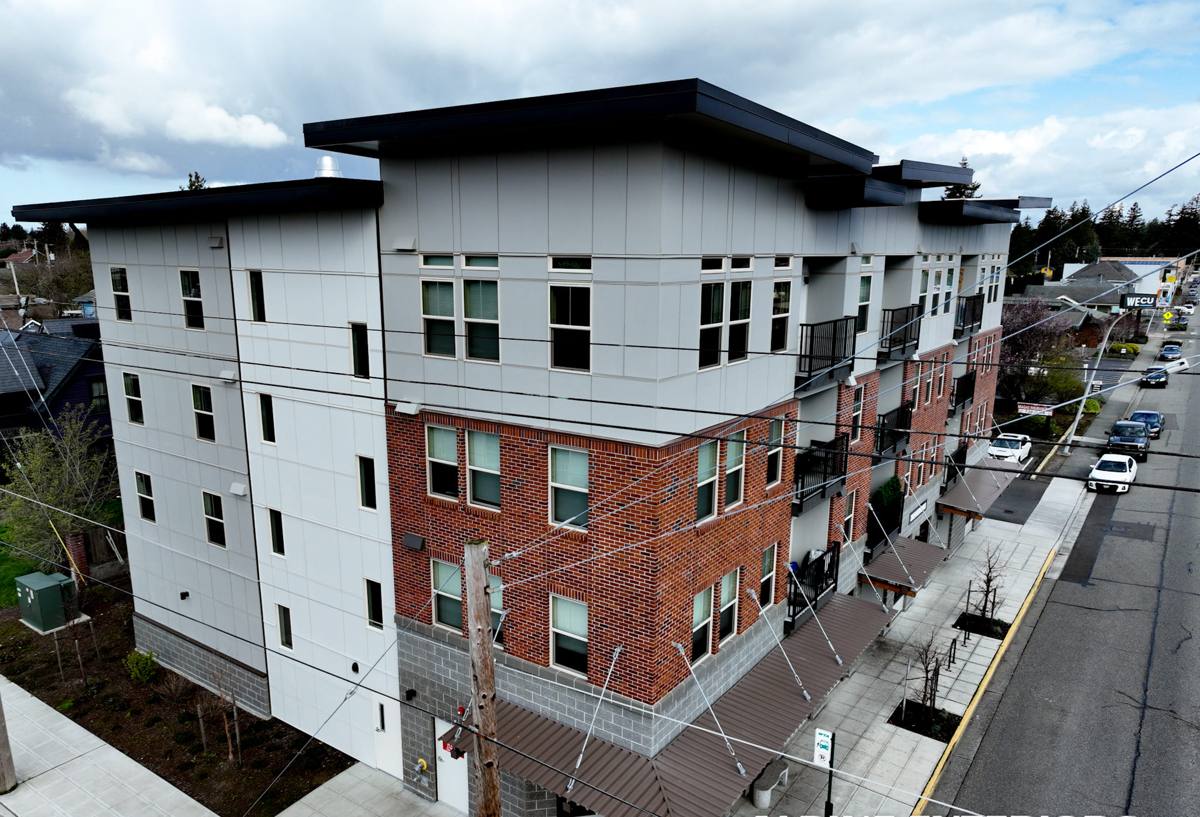
What This Climate Actually Does to a House
Salt Air
Homes within a few miles of the bay deal with airborne salt that accelerates corrosion on exposed fasteners and metal trim, and slowly breaks down cheaper paint films faster than the manufacturer's warranty numbers would suggest. It doesn't damage fiber cement's core material, but it punishes any weak point in the finish or the metal used to install it.
Driving Rain
Bellingham's rain rarely falls straight down — wind off the water pushes it sideways into walls, especially on west and south exposures. That means water management behind the siding (not just the siding itself) is doing most of the real work of keeping a wall dry.
Moss and Sustained Moisture
Shaded, damp siding in a neighborhood like Sunnyland is prime territory for moss and algae growth, particularly on north-facing walls and anywhere siding sits close to landscaping or overhangs that block sun and airflow. Moss holds moisture against the surface far longer than open exposure would, which is hard on paint, caulk, and fasteners alike.
What Fiber Cement Brings to a Sunnyland Home
Fiber cement is a cement-and-cellulose composite, not wood and not plastic. That matters here for a few specific reasons:
- It doesn't rot, so sustained dampness from shade and moss doesn't threaten the material itself the way it would with wood or wood-composite siding.
- It's dimensionally stable — it doesn't swell and shrink with humidity swings the way wood-based products do, so caulked joints and paint lines hold up longer.
- It's non-combustible, which matters given Whatcom County's wildfire-smoke summers and general fire-safety considerations for any home.
- A factory-applied finish (when specified) resists fading and chalking far better than field-applied paint, which is a real advantage against salt air and UV.
Fiber cement doesn't make a home immune to moss or grime — nothing does — but it gives you a surface that can be cleaned and maintained without the material itself breaking down underneath.
Why We Install Only James Hardie
Fiber cement isn't a single product — quality and engineering vary by manufacturer. We standardized on James Hardie because their ColorPlus factory finish is baked on and warranted against fading and chipping in a way field-painted siding can't match, and their HardieZone system engineers panel formulations for specific climate exposures rather than using one generic product everywhere. In a neighborhood dealing with salt air, sustained shade, and driving rain, that engineering difference shows up in how the siding looks and performs a decade in. We'd rather install one product line correctly and stand behind it than offer a menu of materials we can't fully vouch for.
What a Correct Installation Actually Involves
Most fiber cement problems we get called out to inspect on older installs aren't failures of the material — they're installation shortcuts. In a climate like this one, the details below aren't optional extras; they're what determines whether the siding performs for its full service life.
Water Management Behind the Siding
A correctly built wall has a drainage plane — house wrap or building paper, properly lapped, with a means for incidental moisture to drain and dry rather than get trapped against the sheathing. Fiber cement is not waterproof siding in the sense that it seals a wall on its own; it's cladding that has to work with the water-resistive barrier behind it.
Flashing at Every Penetration
Windows, doors, hose bibs, light fixtures, and vents all need proper flashing and integration with the drainage plane. Given how much sideways rain this area gets, a missed or shortcut flashing detail around a single window is often where a wall starts taking on water years before it's visible from the outside.
Fastening and Clearances
Fasteners need to be corrosion-resistant and driven correctly — not overdriven, not underdriven — and siding needs proper clearance from grade, roof lines, and decks so water has somewhere to go instead of wicking into the bottom edge of a board.
Joints, Caulking, and Paint
Butt joints, trim transitions, and any field-cut edges need to be treated per manufacturer spec — sealed or flashed, not just caulked and hoped for. In a salt-air, high-moisture environment, this is often the first place a poorly installed job shows wear.
Cost Factors on a Typical Sunnyland Project
| Factor | Why It Affects the Job |
|---|---|
| Home size and number of stories | More wall area and taller elevations mean more material, more labor, and more staging or scaffolding |
| Existing siding removal | Tear-off of old wood, vinyl, or damaged siding adds labor and disposal costs before installation starts |
| Trim and architectural detail | Homes with more windows, corners, gables, and trim require more cutting, flashing, and finish work |
| Wall condition underneath | Sheathing repair or rot remediation found during tear-off is common on older Sunnyland homes and affects timeline and cost |
| Siding profile and finish | Lap width, texture, and factory-finish color options carry different material costs |
We walk every project through these factors before quoting, so there are no surprises once tear-off starts.
How We Approach a Sunnyland Project
Every job starts with an on-site walkthrough, not a phone estimate. We look at sun exposure, shade patterns, drainage around the foundation, and the condition of the existing siding and trim, since those details drive both the scope of work and the product specification. From there:
- We assess the wall assembly during tear-off and flag any sheathing or moisture damage before covering it back up.
- We install or repair the water-resistive barrier and flashing system to current best practice, not just to match what was there before.
- We install the specified Hardie product to manufacturer fastening and clearance requirements.
- We finish joints, trim, and transitions to hold up against this area's rain and salt exposure.
- We walk the finished job with the homeowner before calling it done.
Matching the Product to the Exposure
James Hardie's HardieZone system specifies formulations for different climate regions, and Whatcom County falls into the HZ5 zone — engineered for wetter, more moisture-variable climates like ours. That's not a marketing distinction; it affects the panel's moisture resistance and how it performs against exactly the driving rain and sustained dampness Sunnyland deals with. On top of the base product, we also factor in wall-specific exposure — a shaded, moss-prone north wall may warrant a different finish or maintenance conversation than a south wall that dries out fast.
Living With Fiber Cement in a Moss-Prone Climate
Fiber cement is low-maintenance compared to wood, but "low-maintenance" doesn't mean "no maintenance" anywhere in Western Washington. A little attention goes a long way toward protecting the finish and getting the siding's full service life:
- Rinse siding down (garden-hose pressure, not a pressure washer) once or twice a year, focusing on shaded and north-facing walls where moss and algae take hold first.
- Keep landscaping and tree limbs trimmed back from siding so walls get airflow and sunlight to dry out between rains.
- Check caulked joints and trim transitions periodically for cracking or separation, especially after the first few winters.
- Clear gutters and downspouts regularly — overflow running down a wall is one of the most common causes of localized staining and moss growth.
- Address any paint chipping or fading early rather than waiting, particularly on factory-finished siding where touch-up done right preserves the warranty.
Why Local Experience in This Neighborhood Matters
A contractor who works Bellingham regularly knows which walls in a neighborhood like Sunnyland need extra flashing attention, which exposures grow moss fastest, and how the region's rain patterns actually hit a house — not just what a spec sheet says in general. That local pattern recognition is what catches a marginal flashing detail or a drainage issue before it becomes a callback five years down the road. It's also why we can give you a straight answer on-site about what your specific home and exposure actually need, rather than a one-size-fits-all quote.
If you're considering fiber cement siding for a home in Sunnyland, we're happy to walk the property with you and give you a clear, no-pressure estimate — just fill out the form below to get started.