 Bellingham Siding
 Windows in Blaine Work Harder Than Windows Inland
Blaine sits right on the water in the northwest corner of Whatcom County, close enough to the Strait of Georgia and Semiahmoo Bay that salt-laden air is just part of daily life. That air, combined with the driving rain that comes off the water and a moss season that can stretch from fall through spring, puts real stress on window frames, seals, and the wood or trim around them. A window that would last three decades in a drier inland climate can start failing years earlier here if it wasn't installed with this specific exposure in mind.
We install windows across Bellingham and the surrounding Whatcom County communities, and Blaine's homes get their own set of problems. This page walks through what that climate does to windows, what a correct installation actually involves, and how we approach the job when we're out working in Blaine.
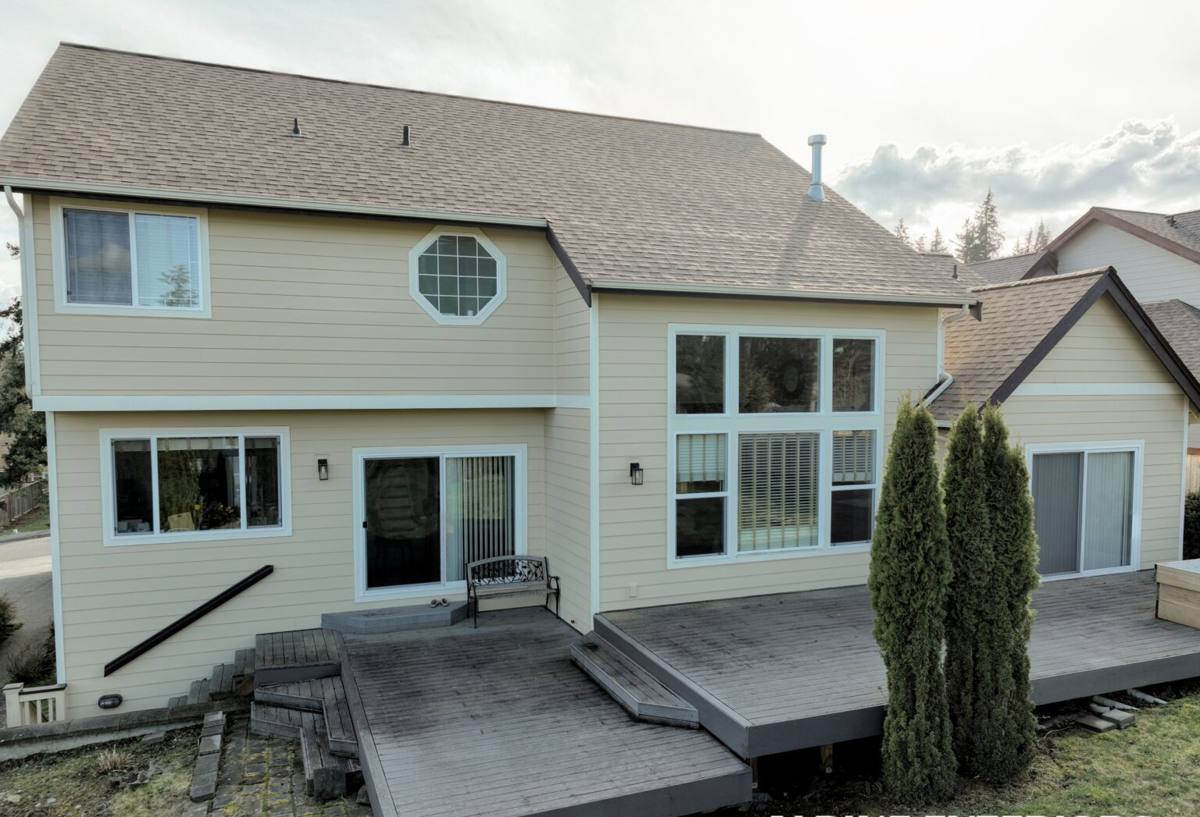
What Salt Air, Rain, and Moss Actually Do to a Window
Salt Air and Hardware Corrosion
Airborne salt accelerates corrosion on anything metal — window locks, balance hardware, screen frames, and especially lower-quality aluminum components. Once hardware starts corroding, windows get harder to open and close, latches stop seating properly, and the seal around the sash weakens. This isn't a defect specific to one brand; it's a slow, steady process that happens faster the closer a home sits to open water.
Driving Rain and Wind-Driven Water Intrusion
Blaine gets rain that doesn't fall straight down — wind off the water pushes it sideways, right into the gaps around window openings. If flashing, sealant, or house wrap integration was done poorly (or skipped), that wind-driven rain finds its way behind the trim and into the wall cavity. This kind of leak is often invisible for years before it shows up as soft trim, staining, or a musty smell near a window.
Moss and Trapped Moisture
A long moss season means more sustained dampness sitting against exterior surfaces, including window trim, sills, and the siding immediately around each opening. Moss holds moisture against wood longer than open air would, which slows drying and gives rot more time to take hold at exactly the joints where a window meets the wall. Even if the window unit itself is fine, neglected trim and sills around it can undermine the whole installation.
Signs a Blaine Home Needs Window Attention
Most homeowners don't think about their windows until something goes wrong. In this climate, a few warning signs are worth acting on before they become bigger repairs:
- Windows that are difficult to open, close, or lock, especially after damp weather
- Visible condensation between the panes of a double-pane window (a sign the seal has failed)
- Soft, discolored, or spongy wood trim around the window frame
- A noticeable draft near the window even when it's fully closed and latched
- Peeling paint or bubbling caulk on the interior or exterior trim
- Visible moss or persistent green staining on the sill or surrounding siding
- Rising heating bills without any other obvious explanation
What a Correct Window Installation Actually Involves
Removal and Opening Inspection
The old window comes out first, and that's when we can actually see what's happening inside the wall — whether the framing is sound, whether there's existing water damage, and whether prior flashing work was done correctly. Skipping this step, or rushing through it, is how hidden rot gets sealed back up behind a brand-new window instead of getting fixed.
Flashing and Weatherproofing
This is the single most important part of the job for a home in Blaine's exposure. Proper flashing directs water down and out and away from the framing rather than letting it collect behind the trim. That means correctly lapped house wrap, sill pan flashing, and head flashing installed in the right order — not just a bead of caulk around the outside, which is a common shortcut that fails the first time wind-driven rain tests it.
Insulation and Air Sealing
The gap between the new window frame and the rough opening needs to be filled with the right material — typically a low-expansion foam or backer rod and sealant, not stuffed with fiberglass insulation, which does little to stop air movement and nothing to stop water. Done right, this step is what actually stops the draft and the energy loss homeowners notice.
Interior and Exterior Finish
Once the window is set, plumb, and sealed, the trim gets reinstalled or replaced, caulked at the right joints (not all of them — some joints need to stay open to let moisture escape), and finished to match the rest of the home. A rushed finish is often where the first signs of trouble show up, even when the window itself was installed correctly.
Choosing a Window Frame Material for This Climate
Frame material matters more in a salt-air, high-moisture climate than it does further inland. Here's how the common options compare for a home in Blaine's exposure:
| Frame Material | Salt Air Resistance | Maintenance | Notes for This Area |
|---|---|---|---|
| Vinyl | Strong — won't corrode or rot | Low | Good all-around choice for coastal exposure; quality varies by manufacturer |
| Fiberglass | Strong — very stable in temperature swings | Low | Handles moisture and salt air well; higher upfront cost |
| Wood (unclad) | Weak without diligent upkeep | High | Needs regular repainting/sealing here or trim will suffer early |
| Wood-clad | Good if cladding is intact | Moderate | Cladding protects the wood, but any breach in the cladding lets moisture in unseen |
| Aluminum | Poor to moderate | Moderate | Prone to corrosion and condensation in this specific climate unless thermally broken |
We don't push one brand over another. We do steer homeowners away from unclad wood and standard aluminum frames on the water-facing sides of a Blaine home, not because those materials are bad products everywhere, but because they demand more upkeep than most people want to keep up with in this specific exposure.
What Drives the Cost of a Window Installation
Every home and every opening is different, but the same handful of factors move the price up or down on most jobs we quote in Blaine:
| Cost Factor | Why It Matters |
|---|---|
| Number and size of openings | More or larger windows mean more material and labor |
| Frame material chosen | Vinyl, fiberglass, and wood-clad price differently |
| Condition of the existing opening | Rot or framing damage found during removal adds repair work |
| Full-frame vs. insert replacement | Full-frame replaces flashing and trim; inserts reuse the existing frame |
| Access and height | Second-story or hard-to-reach windows take more time and equipment |
| Trim and siding tie-in | Matching existing exterior finish around the new window adds labor |
We'd rather walk a homeowner through these factors honestly during the estimate than throw out a number that doesn't hold up once we open the wall.
Full-Frame Replacement vs. Insert Windows
For homes exposed to Blaine's wind and rain, this decision matters more than it would somewhere sheltered. An insert (or "pocket") replacement fits a new window into the existing frame, which is faster and less invasive but leaves any old flashing or hidden damage in place, sealed behind the new unit. A full-frame replacement removes everything down to the rough opening, which costs more and takes longer, but it's the only way to actually fix flashing problems or rot rather than build over them. We'll recommend inserts when the existing frame is genuinely sound, and we'll say so plainly when it isn't — we're not going to install an insert over a compromised opening just because it's the quicker job.
Why a Crew That Already Works in Blaine Makes a Difference
Window installation isn't unique to Blaine, but the conditions a window has to survive here are more demanding than in a lot of Whatcom County. A crew that regularly works this stretch of coastline already has a feel for how far rain travels sideways in a storm, which frame materials hold up and which ones need more attention, and what the moss and moisture pattern looks like on a given exposure before they even start. That's the kind of judgment that shows up in the small decisions — where to add extra flashing, which joints to leave open, what to flag for the homeowner — that a crew unfamiliar with this climate might not think to make.
We also know that permitting and code requirements can vary slightly across Whatcom County jurisdictions, and we handle that as part of the job rather than leaving it for the homeowner to sort out.
Ready for an Honest Look at Your Windows?
If your windows in Blaine are sticking, drafty, fogging between the panes, or just showing their age, we're happy to come take a look and give you a straightforward assessment — no pressure, no upsell, just what we'd actually recommend if it were our own house. Use the form below to request a free estimate.