 Bellingham Siding
 Board & Batten Siding for York Homes
York sits close enough to Bellingham Bay and the surrounding hills that its homes take a steady beating from three things at once: salt-laden air moving in off the water, driving rain that comes in sideways more often than straight down, and a moss season that can run eight or nine months out of the year. Board & batten siding — vertical boards with narrow battens covering the seams — is a style a lot of York homeowners want for the clean, tailored look it gives a house, especially on craftsman-style and updated mid-century homes in the area. But board & batten lives or dies on how it's built, not just how it looks. Done right, it sheds water and resists moss for decades. Done wrong, it traps moisture behind every batten and rots from the inside out where nobody can see it until the damage is expensive.
This page covers what board & batten actually needs to hold up in Bellingham's climate, what a correct installation looks like step by step, and why we only do this work in James Hardie fiber cement.
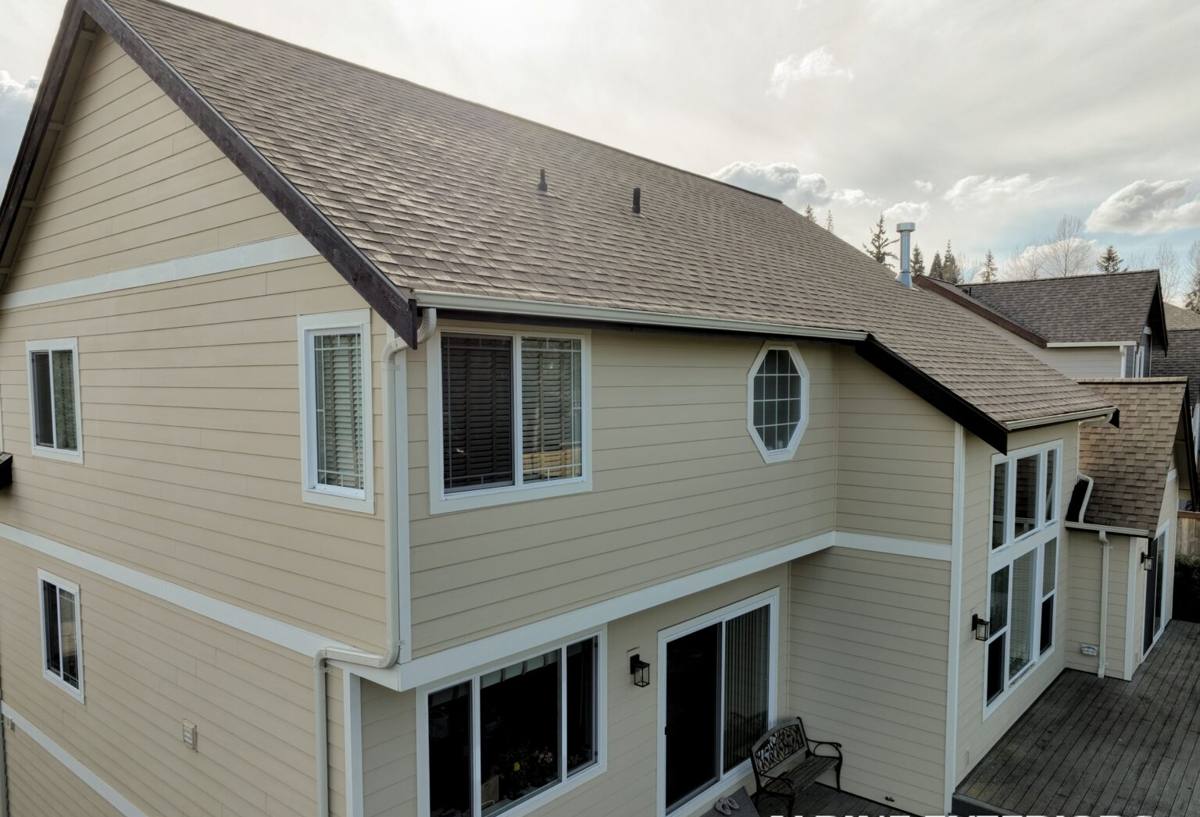
What Whatcom County Weather Does to Board & Batten Siding
Salt Air and Corrosion
Homes closer to the bay deal with airborne salt that accelerates corrosion on fasteners, flashing, and any metal trim. Cheap or mismatched fasteners are one of the first things to fail on a board & batten job near the water — you'll see rust streaks bleeding down the face of the boards years before the siding material itself shows any wear.
Driving Rain
Bellingham doesn't get the heaviest rainfall totals in the state, but wind-driven rain off the Strait and the bay pushes water sideways into wall assemblies, not just straight down over them. Board & batten has more vertical seams and more places for water to find a way in than lap siding does, which makes flashing detail and the drainage plane behind the boards more important here than almost anywhere else in the region.
Moss and Algae
Shade, moisture, and mild temperatures year-round make Whatcom County ideal growing conditions for moss and algae. On board & batten, growth tends to start at the battens themselves, where dirt and moisture collect in the narrow reveal, and along the bottom courses where splash-back keeps the material wet longer. A siding product with a factory-applied finish that resists this buildup, rather than one that depends on paint or stain reapplication to keep it at bay, saves a lot of ladder work over the life of the house.
What a Correct Board & Batten Installation Actually Involves
The board & batten look is simple. The assembly behind it isn't, and skipping steps is exactly how houses end up with hidden rot behind siding that still looks fine from the street.
Drainage Plane and Rainscreen Gap
Behind the boards there needs to be a water-resistive barrier (house wrap or building paper) installed shingle-style so water sheds down and out, not into the wall. On top of that, a rainscreen gap — typically furring strips — lets any water that gets past the boards drain and lets the wall assembly dry out between rain events. In a climate that stays damp for most of the year, that drying capacity is not optional.
Flashing at Every Horizontal Break
Window heads, door heads, roof-to-wall intersections, and any horizontal trim need proper metal flashing integrated with the drainage plane, not just caulk. Caulk is a maintenance item; flashing is the actual defense.
Fastening and Batten Spacing
Boards need to be fastened into solid framing or sheathing per the manufacturer's spec, with battens fastened independently rather than nailed straight through both layers into the board underneath — nailing through both layers restricts the board's ability to move slightly with moisture and temperature, which leads to splitting and popped fasteners over time.
Bottom Termination and Ground Clearance
The bottom of the siding needs a clean termination point with adequate clearance above grade, decks, and roof lines, plus proper drip flashing so water doesn't wick up into the lowest board — the piece most exposed to splash-back and the piece most likely to show moss first.
Why We Install James Hardie for Board & Batten — And Nothing Else
We standardized on James Hardie fiber cement for every project, board & batten included, and we don't install LP SmartSide, vinyl, Cemplank, Allura, primed spruce, or cedar. That's a deliberate call, not a default.
Non-Combustible Material
Fiber cement doesn't burn, which matters on a house that will sit through decades of Pacific Northwest weather and, increasingly, wildfire smoke seasons.
Factory-Applied ColorPlus Finish
Hardie's ColorPlus finish is baked on at the factory under controlled conditions, which gives it better fade and moss resistance than a field-applied paint job, and it comes with its own finish warranty separate from the substrate warranty.
Climate-Engineered HZ Product Line
James Hardie makes region-specific formulations (HZ5 for the kind of wet, moderate climate we have here) engineered for moisture exposure rather than a one-size-fits-all product. That matters more on board & batten than on most siding styles, given the extra seams.
Real Cedar Look Without the Real Cedar Maintenance
Board & batten in cedar looks great the day it goes up. It also needs ongoing staining or sealing, and it's a wood product living in a climate that stays damp most of the year — that's a maintenance commitment we're honest with clients about before they choose a material, not after.
Material Comparison for Board & Batten Siding
| Material | Moss/Moisture Resistance | Finish Longevity | Maintenance Burden |
|---|---|---|---|
| James Hardie Fiber Cement | Strong — engineered for wet climates | Factory finish, long-dated warranty | Low — periodic wash, no refinishing cycle |
| Cedar | Moderate — needs sealing to perform | Field-applied, fades and needs redoing | High — stain/seal every few years |
| Vinyl | Doesn't rot, but seams and panels flex/gap over time | Color molded in but can chalk and fade | Low, but limited repair options if damaged |
| Engineered Wood (LP-type) | Depends heavily on correct installation and sealed cut edges | Factory finish, but wood-based core is moisture-sensitive | Moderate — edge sealing and inspection matter |
This is a general comparison to help homeowners understand the trade-offs — every product has legitimate uses, and this table reflects our professional standard, not a claim that other materials can't work anywhere.
Our Process on a York Board & Batten Project
We start with a walk-around of the existing wall assembly, not just the visible siding — on older York homes that means checking what's actually behind the current cladding before we quote anything. From there:
- Assess the existing wall for moisture damage, rot, or inadequate flashing before removal begins
- Confirm drainage plane and rainscreen approach for the specific wall orientation and exposure
- Install house wrap, furring, and flashing to manufacturer spec before a single board goes up
- Lay out board and batten spacing for even reveals and correct fastening into framing
- Detail all window, door, and roofline transitions with proper metal flashing
- Finish with corner and trim details that match the home's existing character where that's the goal
- Walk the finished job with the homeowner before calling it done
Because we work regularly in and around York, we already have a working sense of the neighborhood's housing stock, typical wall assemblies, and the permitting expectations for the area — that's less guesswork on our end and fewer surprises for the homeowner.
Maintenance Homeowners Should Expect
Board & batten in James Hardie is low-maintenance, not no-maintenance. A realistic yearly routine for a York home:
- Rinse the siding, especially lower courses and shaded north/east walls, to keep moss and algae from establishing
- Check caulking at trim and penetrations annually and touch up before gaps open into leaks
- Keep vegetation and sprinkler spray pulled back from the wall to reduce constant moisture exposure
- Look at gutters and downspouts each fall — clogged gutters overflow straight down the wall face, which is one of the more common causes of premature siding wear we see locally
Why a Local Crew Matters for This Job
Board & batten installed to spec depends on getting dozens of small details right — flashing laps, fastener choice, batten spacing, drainage — and a crew that's done that work repeatedly in Bellingham's specific rain and moss conditions catches problems a crew unfamiliar with the region might miss. We also know the practical side: realistic weather windows for a dry install, what inspectors in Whatcom County typically want to see, and how to sequence a job so a wall isn't left exposed longer than it needs to be.
If you're weighing board & batten for a home in York, we're glad to come take a look, walk you through what your specific house needs, and put together a straightforward, no-pressure estimate — just fill out the form below.