 Bellingham Siding
 James Hardie Siding for York Homes
York is one of Bellingham's established, close-in residential neighborhoods, with a mix of older character homes and newer infill sitting under a mature tree canopy. That combination — aging exterior materials on one hand, heavy shade and moisture retention on the other — is exactly the kind of setup that wears siding out faster than homeowners expect. We install James Hardie fiber cement siding for York properties specifically because it's the one system we've found actually holds up to Whatcom County's particular mix of salt air, wind-driven rain, and a moss season that can run most of the year on shaded walls.
This page is about that one job — James Hardie siding installation and replacement for York homes — not a general overview of everything we do. If you're trying to figure out what your home actually needs, what a correct installation looks like, and why the crew doing the work matters as much as the material itself, this is written for that.
What York's Climate Does to Siding
Salt Air and Sustained Moisture
Bellingham's proximity to the bay means the air moving through York carries a steady, low-grade load of salt and moisture even on days that don't feel particularly wet. That exposure doesn't announce itself the way a storm does — it works slowly on fasteners, trim, and any finish that isn't built to shrug off sustained dampness, and the damage is usually well along before it's visible from the street.
Driving Rain
Rain in this part of Whatcom County rarely just falls straight down. Wind pushes it sideways into lap joints, trim seams, and anywhere two building materials meet, which means flashing details and clearances that would be fine in a calmer climate aren't automatically fine here. A siding system has to be installed with that wind-driven angle in mind, not just a textbook rainfall diagram.
A Long Moss and Mildew Season
York's mature trees are one of the neighborhood's better features, but they also mean more shaded, slow-drying wall surfaces than you'd find on a newer, more open lot. Combined with Bellingham's mild, damp year-round temperatures, that shade keeps north-facing and tree-covered walls wet longer, and that's exactly the condition moss and mildew need to take hold. On any siding material with even slight porosity, that's not just a cosmetic problem — it's moisture sitting against the wall assembly for weeks at a time.
Why James Hardie Is the Right Fit for This Neighborhood
We install James Hardie fiber cement siding exclusively. We don't offer LP SmartSide, vinyl, Cemplank, Allura, primed spruce, or cedar, and that's a deliberate professional standard, not a limitation on what we're capable of installing. Here's what Hardie brings to a York home specifically:
- Non-combustible core: Fiber cement doesn't feed a fire the way wood-based siding can, which matters for both household safety and, in many cases, insurance considerations.
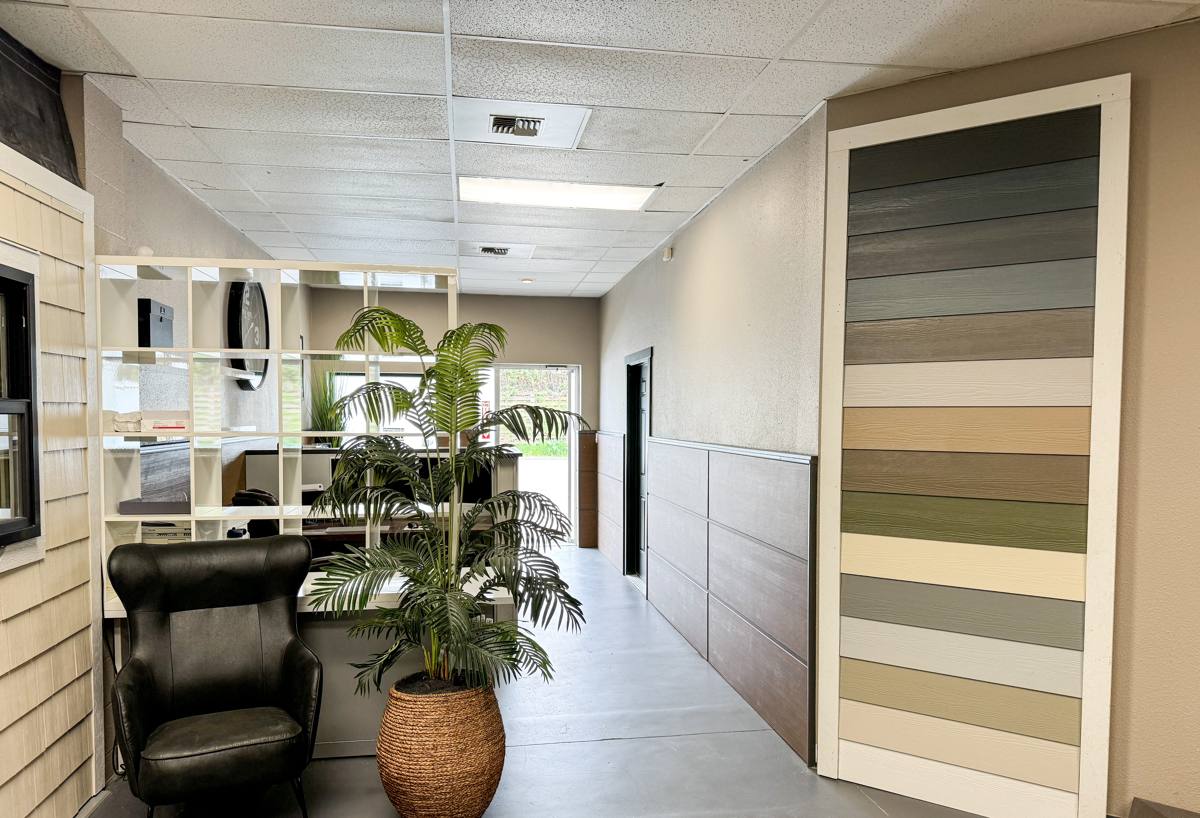
- Factory-applied ColorPlus finish: The color coat is cured under controlled factory conditions rather than brushed on at the job site, so it holds up against Bellingham's salt air and UV exposure far longer than field-applied paint.
- HZ5 climate-engineered formulation: Hardie builds region-specific product lines rather than one generic board, and the HZ5 formulation is engineered for sustained moisture and freeze-thaw cycling — a closer match to coastal Whatcom County than a one-size-fits-all spec.
- Dimensional stability: Fiber cement doesn't swell, cup, or warp the way engineered wood products can after repeated wet-season moisture cycles.
- Strong transferable warranty: Provided installation follows Hardie's specifications, the warranty backing the product is one of the more substantial in the industry.
What Cheaper Alternatives Trade Away Here
LP SmartSide is an engineered wood product with a resin-treated strand core, and it performs reasonably well in drier regions. In York's shaded, moisture-heavy microclimate, that wood-based core is more sensitive to swelling and rot at cut edges and fastener points than fiber cement is. Vinyl is affordable and low-maintenance in a general sense, but it can warp under temperature swings and, more importantly, trap moisture behind the panel if house wrap and flashing aren't detailed with real care — an easy mistake to make and a hard one to spot from outside. Cedar and primed spruce look great going up, but they need ongoing painting, sealing, and moss treatment to keep water out, and in a neighborhood with this much shade and dampness, that maintenance schedule tends to slip in a way that shortens the material's real usable life. These aren't bad products in every setting. They're just not what we've found holds up reliably in York's specific conditions.
What a Correct Hardie Installation Actually Involves
The material is only half of what determines how long siding lasts. The installation details are the other half, and they're where a lot of otherwise-good jobs quietly fail years later. A correct install on a York home means:
- House wrap or weather-resistive barrier installed and lapped correctly, functioning as a continuous drainage plane rather than a formality behind the siding
- Flashing at every window, door, and penetration, detailed to direct wind-driven rain out and away instead of behind the wall assembly
- Manufacturer-specified fastener type, spacing, and penetration depth — not a generalized approach borrowed from a different siding product
- Correct clearance from grade, roofline, and hardscape so lower courses aren't sitting in standing moisture
- Joints and laps sealed and shingled properly so water sheds downward and outward at every seam
Skipping or rushing any one of these steps can undercut the material's real-world performance no matter how good the board itself is. It's also the most common reason a good product ends up with a bad reputation on a given house — the failure was in the install, not the material.
How Our Process Works on a York Property
- Walk-through and assessment: We look at the actual condition of your existing siding, trim, and substrate — not just square footage — including wall orientation, shade exposure, and any visible moisture damage.
- Scope and estimate: We explain what we're seeing in plain terms, including whether the job is a straightforward re-side or whether substrate repair is likely, and give you a free, no-pressure estimate before any work begins.
- Tear-off and substrate check: Removing the old siding is when hidden moisture damage behind aging walls typically shows up. We address anything compromised before new siding ever goes on.
- House wrap, flashing, and install: The weather barrier and flashing go in first, as one connected system, followed by the Hardie siding itself, fastened and lapped to manufacturer spec.
- Trim, finish, and walkthrough: We finish trim and detail work, then walk the property with you so you know exactly what was done and why.
Siding Cost Factors for York Homes
| Factor | What It Affects | Why It Matters in York |
|---|---|---|
| Home age and existing substrate | Repair costs uncovered during tear-off | Older homes in this neighborhood can have decades of hidden moisture exposure behind original siding |
| Tree canopy and shade exposure | Which walls need the most careful flashing and drainage detail | Mature trees common in York keep certain walls damp far longer than sun-exposed sides |
| Trim complexity | Labor time and material needs | Older character homes often carry more detailed trim than newer, simpler builds |
| Tear-off vs. overlay | Labor scope and access to substrate | A full tear-off is usually the only way to catch moisture damage that's been building unseen |
| Color and product line selection | Material cost and long-term finish life | ColorPlus factory finishes hold up longer against salt air and shade-driven mildew than site-applied paint |
These are the variables that actually move a price up or down — we walk the property and give you real numbers rather than a generic square-footage quote.
Comparing Siding Materials Homeowners Consider
| Material | Moisture Behavior in a Shaded, Damp Climate | Typical Long-Term Maintenance |
|---|---|---|
| James Hardie fiber cement | Doesn't absorb moisture or feed rot; non-combustible | Low — factory finish holds up well under sustained shade and dampness |
| Vinyl | Won't rot, but can trap moisture behind panels if house wrap and flashing aren't detailed carefully | Low upfront; typically replaced rather than repaired when it fails |
| LP SmartSide / engineered wood | Wood-based core is more moisture-sensitive at cut edges and fasteners than fiber cement | Moderate — edge sealing and coating upkeep matter more under tree cover |
| Cedar / primed spruce | Absorbs moisture readily; a preferred surface for moss in shaded conditions | Highest — regular repainting, caulking, and moss treatment required |
This isn't a claim that every one of these products fails outright — it's why our own standard, for a neighborhood with this much shade and sustained dampness, is fiber cement installed correctly rather than a lower-upfront-cost material that shifts maintenance risk back onto the homeowner.
Signs Your York Home Needs Siding Attention
- Moss or dark staining that returns quickly after cleaning, especially on shaded or tree-covered walls
- Soft, spongy siding near the base of the wall or around window and door trim
- Peeling paint, bubbling, or visible cupping and warping on siding boards
- Gaps opening up at seams, corners, or trim joints where wind-driven rain can track in
- Cracked or missing sections after wind or storm events
- Rising heating bills that may point to a wall assembly that's no longer sealing properly
Why a Local Crew That Works York Matters
A crew that regularly works this neighborhood learns things a generic out-of-area install team doesn't have reason to know — which walls stay damp longest under which trees, how much clearance siding actually needs above grade given how consistently damp the ground stays here, and where flashing needs extra attention because wind-driven rain finds that particular gap year after year. Those aren't things you can read off a spec sheet; they come from doing this work on this kind of housing stock, in this climate, repeatedly.
That familiarity shows up in small decisions on install day that homeowners rarely see directly but absolutely feel over the following decade — where an extra course of flashing is worth the time, which trim details need caulk versus a mechanical seal, and how fastener spacing should account for the wind exposure a given wall actually gets. It's also why we're straightforward if a job is a targeted repair rather than a full re-side, or if a problem you're seeing in your siding actually started somewhere else, like a roof or window detail.
If your York home needs new siding, a repair, or just an honest look at what's really going on behind an aging wall, we're glad to take a look. Reach out using the form below to schedule a free, no-pressure estimate.