 Bellingham Siding
 Why Siding Wears Out Faster in the York Neighborhood
The York neighborhood sits close enough to Bellingham Bay and the surrounding waterways that homes here take on a different kind of weathering than siding fifty miles inland. Salt-laden air works its way into seams, fastener heads, and any spot where paint has thinned. Combine that with Whatcom County's driving rain — the kind that comes in sideways off Puget Sound during a fall or winter system — and siding gets tested from every angle, not just from above. Add a moss season that can stretch from October through May in a shaded, tree-lined neighborhood like York, and you have three separate stresses working on the same wall assembly year-round.
Older siding materials were rarely engineered with this specific combination in mind. Wood siding absorbs moisture and swells. Vinyl can warp under repeated wet-dry cycling and doesn't hold paint well when a homeowner wants to refresh the color. Even siding that looks fine from the street can be hiding soft trim, failed caulk joints, or moisture trapped behind the cladding — problems that show up as higher heating bills, peeling paint, or a musty smell in a wall cavity long before anyone sees visible rot.
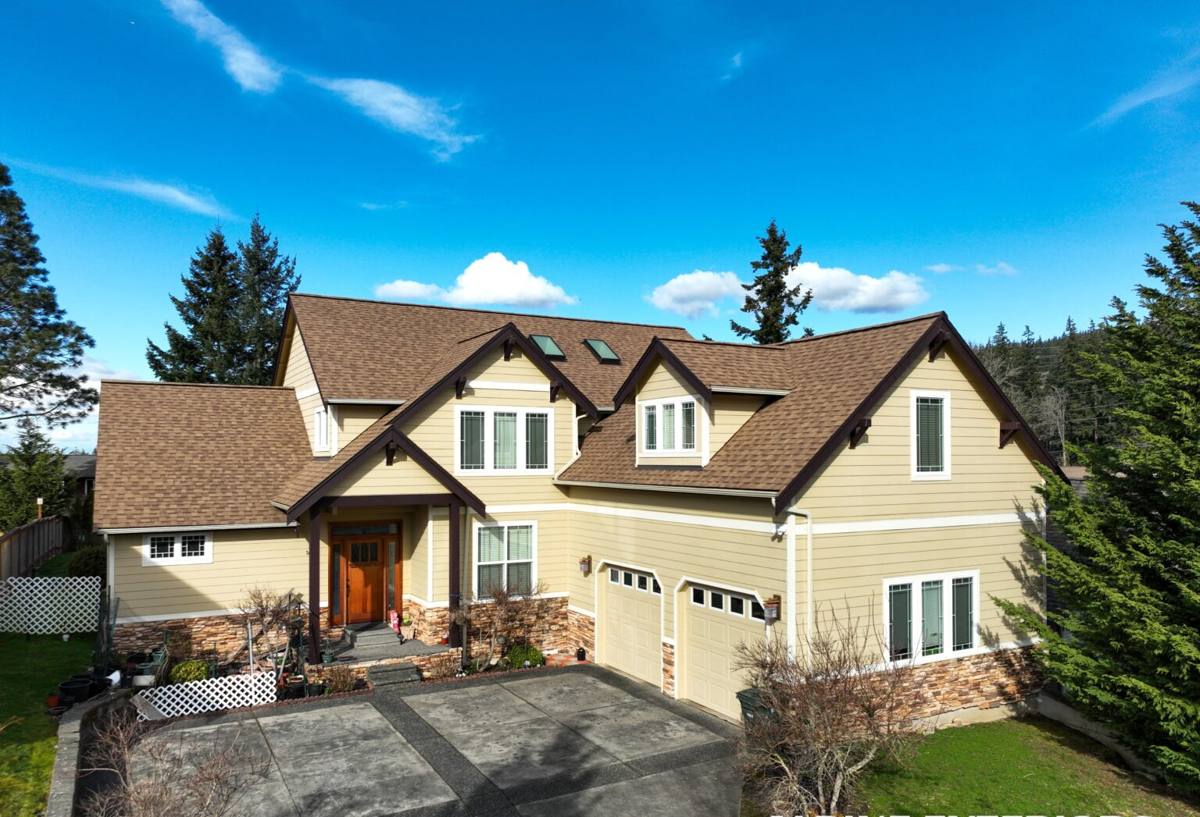
Signs a York Home Needs Siding Replacement, Not Just Repair
Not every siding problem calls for a full replacement, but in a climate like this one, patch jobs often mask a bigger issue underneath. Here's what tends to separate a repair from a replacement:
- Soft or spongy spots when you press on the siding, especially near the bottom courses and around windows
- Paint that keeps failing in the same spots within a year or two of repainting
- Visible cupping, warping, or separation at the seams
- Persistent moss or black streaking that comes back within weeks of cleaning
- Gaps around trim, corner boards, or window flashing that let daylight or drafts through
- Rising energy bills with no other explanation, which can point to moisture-compromised insulation behind the siding
- Siding installed more than 20-25 years ago, especially wood or older vinyl products nearing the end of their practical service life
If you're seeing two or more of these at once, it's usually a sign the underlying water management — not just the surface material — needs attention, and that's a replacement conversation, not a caulk-and-paint conversation.
What a Correct Siding Replacement Actually Involves
Siding replacement done right is mostly about what happens before the new material ever goes up. In a wet climate like this one, the sequence matters as much as the product.
Tear-Off and Inspection
Old siding comes off in full sections so the sheathing underneath can actually be inspected, not guessed at. This is where hidden moisture damage from years of driving rain gets found — soft OSB, rusted fasteners, or compromised framing around window and door openings. Any of that gets repaired before anything new goes on the wall.
Weather-Resistive Barrier
A new, continuous weather-resistive barrier goes over the sheathing, with careful attention to how it laps at seams, corners, and penetrations. In a region with sustained wind-driven rain, the barrier's job is to manage the water that inevitably gets past the outer cladding — it's not optional and it's not a place to cut corners.
Flashing at Every Penetration
Windows, doors, hose bibs, light fixtures, and vents all need proper flashing integrated with the weather barrier so water sheds outward instead of tracking behind the siding. This is one of the most common places older installations fail, and it's invisible once the siding is back on — which is exactly why it has to be done right the first time.
Fastening and Clearances
Fiber cement siding has specific fastening patterns, minimum clearances from grade, roof lines, and decks, and requirements around caulking and paint touch-up at cut edges. Skipping these details doesn't show up immediately — it shows up in five or ten years as premature failure at exactly the joints that were rushed.
Why We Only Install James Hardie Fiber Cement Siding
We made the decision to install James Hardie fiber cement exclusively, and a coastal Whatcom County climate is a big part of why. Fiber cement doesn't absorb water the way wood does, and it doesn't expand and contract with temperature swings the way vinyl can — both of which matter when a house is dealing with salt air and near-constant moisture cycling for months at a time. Hardie's ColorPlus factory finish is baked on under controlled conditions rather than field-painted, which gives it better adhesion and color retention than a job-site paint job exposed to Bellingham's damp spring and fall install windows. It's also non-combustible, which matters as wildfire smoke and dry-season risk have become a bigger part of the conversation even on the wet side of the state.
We're not going to tell you every other product on the market is bad — vinyl, LP SmartSide, and cedar all have legitimate uses and plenty of homes wearing them without issue. But we've chosen to put our name behind one system we can install to spec, warranty with confidence, and stand behind for the long haul in this specific climate, and that system is Hardie.
Our Process for York and Nearby Bellingham Homes
Working in an established, tree-lined neighborhood like York comes with its own set of practical considerations — driveway and street access, protecting landscaping close to the foundation, and coordinating around mature trees that shed year-round. A crew that's worked the area already knows to plan for narrower lots, tighter setbacks, and the extra care needed around established plantings that a homeowner doesn't want disturbed.
Every project starts with a walk-around inspection, an honest assessment of what's actually happening underneath the current siding, and a written scope before any tear-off begins. We stage material to minimize the footprint on your property, protect windows, walkways, and landscaping during removal, and do a daily cleanup so a multi-day job doesn't turn into a multi-week mess in your yard.
What to Expect Day to Day
- Protection of landscaping, walkways, and outdoor fixtures before tear-off starts
- Removal of old siding in sections, with sheathing inspected as it's exposed
- Any needed sheathing or framing repairs completed and documented before covering
- Weather barrier and flashing installed and inspected before siding goes up
- Daily job-site cleanup, including nail and debris sweeps
- A final walkthrough before we consider the job complete
Cost Factors for Siding Replacement
Every home is different, but the same handful of factors drive most of the cost variation we see on siding replacement projects in this area:
| Factor | Why It Matters |
|---|---|
| Home size and number of stories | More surface area and taller walls mean more material, labor, and scaffolding or lift access |
| Condition of the sheathing underneath | Hidden moisture damage found during tear-off adds repair time before new siding can go up |
| Number of window, door, and trim details | More openings mean more flashing and trim work, which takes more time to do correctly |
| Siding profile and accessories chosen | Lap siding, shingle-style panels, and trim boards vary in material and labor cost |
| Site access and lot layout | Tight side yards, mature landscaping, and limited staging space can slow down removal and delivery |
| Paint or color program | Factory-finished ColorPlus colors versus custom color-matching can affect lead time and cost |
We give a written, itemized estimate after the initial inspection so you know exactly what's driving the number for your specific home, not a generic per-square-foot guess.
Why a Crew That Already Works in York Matters
A contractor who's already worked in this neighborhood understands things a crew from outside the area has to learn on the fly: how the local moisture and moss patterns behave on shaded, north-facing walls, what Bellingham's permitting process looks like for exterior work, and how to navigate narrower streets and older lot layouts without turning a siding job into a logistics headache for you or your neighbors. That familiarity translates into fewer surprises, a smoother timeline, and a crew that can spot the difference between a cosmetic issue and a structural one the first time they look at your walls.
Whatcom County's permit requirements and any applicable HOA or neighborhood guidelines are also worth checking before work begins — a local crew that's pulled permits in the city before can walk you through what's actually required for your project instead of leaving you to figure it out.
Maintaining Your New Siding in a Wet, Salt-Air Climate
Even the best siding system benefits from a little seasonal attention in this climate. A soft wash once or twice a year keeps moss and algae from getting a foothold, especially on shaded sides of the house. Keeping gutters clear and downspouts directed away from the foundation reduces the splash-back that accelerates staining at the base of the walls. And an annual walk-around to check caulking at trim and window edges catches small gaps before they become water intrusion points. Fiber cement siding is far more forgiving of this climate than wood or vinyl, but no siding is entirely maintenance-free when it's facing salt air and near-constant winter rain.
If your York-area home is showing signs of siding wear, or you'd simply like an honest opinion on what's underneath it, we're happy to take a look. Reach out for a free, no-pressure estimate — there's a form below to get started.