 Bellingham Siding
 Asphalt Shingle Roofing Built for South Hill's Weather
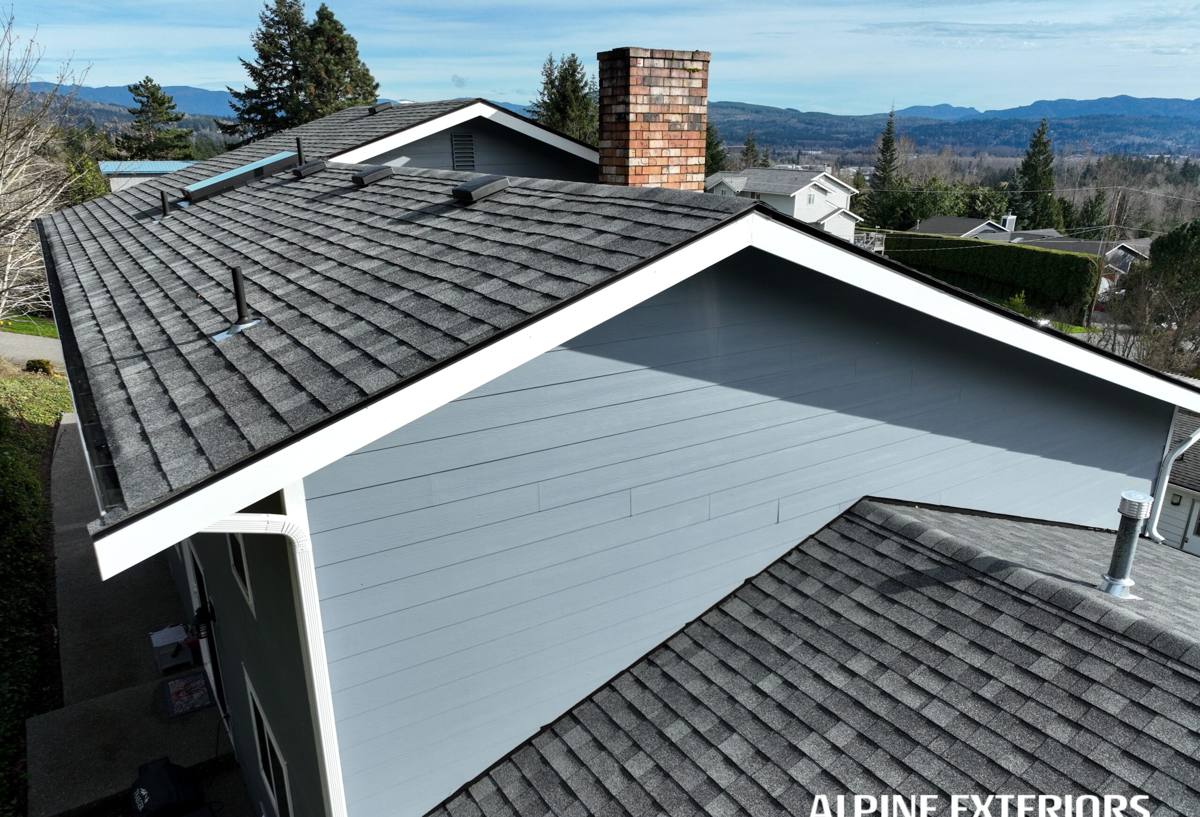
South Hill sits above much of Bellingham, which means homes here catch more of what comes off Bellingham Bay — steady wind, driving rain that hits shingles at an angle instead of straight down, and a marine layer that keeps roofs damp longer than homes further inland. Add Whatcom County's long, gray moss season and a mix of older and newer homes on sloped, tree-shaded lots, and you get a roofing environment that punishes shortcuts. An asphalt shingle roof done right for South Hill isn't the same job as an asphalt shingle roof done right in a drier, flatter part of the state. The materials might look similar on a shelf, but the underlayment, ventilation, and edge details need to answer to this specific climate.
This page covers what we look at, what we install, and how we run the job specifically for asphalt shingle roofing in South Hill — not a generic overview of shingles in general.
What South Hill's Climate Actually Does to a Roof
Salt Air and Coastal Exposure
Homes with elevation and bay exposure get more airborne salt than roofs tucked further inland. Salt-laden air accelerates the breakdown of exposed metal — nails, flashing, vent caps — faster than in a dry climate. It doesn't destroy asphalt shingles directly, but it speeds up corrosion at every metal penetration point on the roof, which is usually where leaks start first, not in the open field of shingles.
Driving, Wind-Driven Rain
Elevation and open exposure on hillside lots mean rain doesn't always fall straight down — it gets pushed sideways under wind. Standard shingle installation assumes water runs downhill in sheets. Wind-driven rain can push water sideways and even slightly uphill at laps, edges, and valleys if those details aren't sealed and lapped correctly. This is one of the most common reasons a roof that "looks fine" still leaks during a storm.
Moss and Sustained Moisture
Bellingham's moss season runs long — shaded, north-facing slopes and tree-covered lots common on South Hill stay damp for weeks at a stretch. Moss doesn't just look bad; it holds moisture against the shingle surface, works its way under tabs and granules, and can lift shingle edges over time. Roofs with poor airflow or heavy shade are the ones we see moss return to again and again, no matter how many times it's cleaned off.
Attic Moisture and Ventilation Load
Cool, damp air outside plus warm, moist air leaking up from the living space inside is a recipe for condensation in the attic. Without balanced intake and exhaust ventilation, that moisture collects on the underside of the roof deck — which shortens the life of both the deck and the shingles from below, invisibly, long before anything shows up as a ceiling stain.
What a Correct Asphalt Shingle Job Includes Here
A shingle roof is a system, not a single layer. Every part below matters, and skipping any one of them is exactly where South Hill roofs tend to fail early.
- Tear-off and deck inspection — full removal of old roofing so we can actually see the deck, not roof over problems that are already there.
- Deck repair — replacing any soft, delaminated, or water-stained sheathing before anything new goes down.
- Ice and water shield — self-adhering membrane at eaves, valleys, and around penetrations, which matters more here than in drier climates because it's the backup layer when wind-driven rain gets past the shingles themselves.
- Synthetic underlayment — a water-resistant layer across the full deck, not just felt paper, for the weeks-long damp stretches typical of a Bellingham winter.
- Starter strip and drip edge — correctly installed at eaves and rakes so wind can't get under the first course of shingles.
- Proper shingle nailing pattern and exposure — matched to the manufacturer's wind rating, which matters on exposed hillside lots.
- Valley and flashing details — step flashing at walls and chimneys, woven or metal valleys sized for real rain volume, not just code minimums.
- Balanced attic ventilation — intake at the eaves, exhaust at the ridge, sized to the attic volume so moisture actually moves out instead of condensing.
Choosing a Shingle for South Hill Conditions
Not every asphalt shingle line handles moss, moisture, and wind the same way. We talk homeowners through trade-offs honestly rather than pushing whatever has the best margin.
| Shingle Type | Best For | Trade-Offs to Know |
|---|---|---|
| Standard 3-tab | Budget-conscious replacements, simple roof lines | Lower wind rating, shorter lifespan, less resistant to moss buildup over time |
| Architectural (laminate) | Most South Hill homes — better wind performance and appearance | Higher upfront cost than 3-tab, but far more common industry standard now |
| Algae/moss-resistant shingles | Shaded, tree-covered, or north-facing roof sections | Copper or zinc granules resist moss growth longer, but this only slows moss — it doesn't replace airflow and periodic cleaning |
| Impact-rated shingles | Homes wanting extra durability against wind-blown debris | Added cost; benefit is mainly about impact resistance, not moisture performance |
For most South Hill homes we recommend a laminate architectural shingle as the baseline, with algae-resistant granules on any section that sits under heavy tree cover. It's a modest upcharge that directly addresses the specific problem — moss — rather than a generic upgrade.
Repair, Partial Replacement, or Full Roof?
Not every roof problem means a full tear-off. We assess based on the actual condition of the deck and the age and coverage of the existing shingles, not a default recommendation.
Repair Makes Sense When:
- The roof is under roughly two-thirds of its expected lifespan and damage is localized (a torn section, a failed flashing point, storm damage in one area).
- The deck underneath is sound and dry.
- Matching shingles are still reasonably available.
Full Replacement Makes Sense When:
- Granule loss is widespread and shingles are curling or cupping across most of the roof.
- There's evidence of deck damage in multiple areas, not just one spot.
- The roof has already been repaired multiple times and keeps leaking in new places — a sign the underlayment system underneath is failing, not just the surface.
- Ventilation was never installed correctly and attic moisture has been an ongoing issue.
Our Process for South Hill Roofs
1. On-Site Inspection
We walk the roof (weather permitting) and check the attic from the inside — ventilation, insulation, any signs of moisture staining on the underside of the deck. Shingle condition alone doesn't tell the whole story; attic conditions often do.
2. Honest Scope and Written Estimate
We explain what we found, what's optional versus necessary, and give a written estimate broken out by scope — not a single vague number. If repair is a reasonable option, we say so, even if it's the smaller job.
3. Scheduling Around Weather
Roofing needs a dry deck to do right. We schedule tear-off and install in windows that give us the best chance of keeping the deck dry from start to finish, and we protect exposed sections if weather shifts mid-job.
4. Tear-Off and Deck Assessment
Old roofing comes off, the deck gets inspected board by board, and any soft or damaged sheathing is flagged and replaced before underlayment goes down.
5. Underlayment, Flashing, and Shingle Installation
Ice and water shield at vulnerable areas, synthetic underlayment across the field, correct flashing at every penetration and valley, then shingles installed to the manufacturer's nailing and exposure specs — sized for wind exposure typical of hillside lots.
6. Ventilation Check and Correction
We verify intake and exhaust venting are balanced for the attic's actual size, adding or correcting vents where the existing setup falls short.
7. Final Walkthrough and Cleanup
Full site cleanup including a magnetic sweep for nails, and a walkthrough so you can see the finished work and ask questions before we consider the job done.
Maintenance That Actually Matters Here
A well-installed roof still needs upkeep in this climate. The list below is what actually extends roof life on South Hill homes — not a generic maintenance checklist.
- Keep gutters clear so water isn't backing up under the eave edge during heavy rain.
- Trim back overhanging branches to cut down on shade and debris buildup, which slows drying time and feeds moss growth.
- Have moss treated (not power-washed, which can strip granules) before it spreads across a full section of roof.
- Check attic ventilation isn't blocked by insulation stuffed into soffit vents during past insulation upgrades.
- After major windstorms, do a visual check for lifted or missing shingles rather than waiting for an interior leak to show up.
Why a Local South Hill Crew Matters
Roofing crews that work Bellingham and Whatcom County regularly already know how South Hill's elevation, exposure, and tree cover behave differently from a flat inland roof. That's not a sales pitch — it changes real decisions on the job: how much ice and water shield to use and where, which valleys need extra attention, how aggressively to address ventilation, and which shingle lines are worth the upcharge for moss resistance versus which aren't. A crew unfamiliar with the area is more likely to install to generic code minimums instead of what this specific climate actually demands.
Get a Straight Answer About Your Roof
If you're dealing with moss buildup, a roof that's leaking in a new spot, or you're just planning ahead for a replacement, we're happy to take a look and give you a clear, no-pressure estimate — repair or replacement, whichever the roof actually needs. Use the form below to schedule a time and we'll walk the roof with you.