 Bellingham Siding
 South Hill's Roofs Work Harder Than Most
South Hill sits up above downtown Bellingham with mature tree canopy, older housing stock, and a clear line of sight down toward Bellingham Bay. That combination is beautiful and it's tough on a roof. The elevation and tree cover mean shade lingers on north-facing slopes long after the rest of the neighborhood has dried out, salt-laden air drifts up off the bay, and the moss season here runs longer than most homeowners expect — often eight or nine months out of the year in Whatcom County. A roof that isn't built for that specific mix of conditions will show it early: streaking, granule loss on old asphalt, soft spots under moss mats, and fastener corrosion that starts small and spreads.
Metal roofing, installed correctly, handles all of that better than almost any other material available for residential homes. The key phrase is "installed correctly." Metal roofing failures we get called out to fix are almost never a material problem — they're an installation problem. This page covers what a metal roof needs to actually deliver on its promise for a South Hill home.
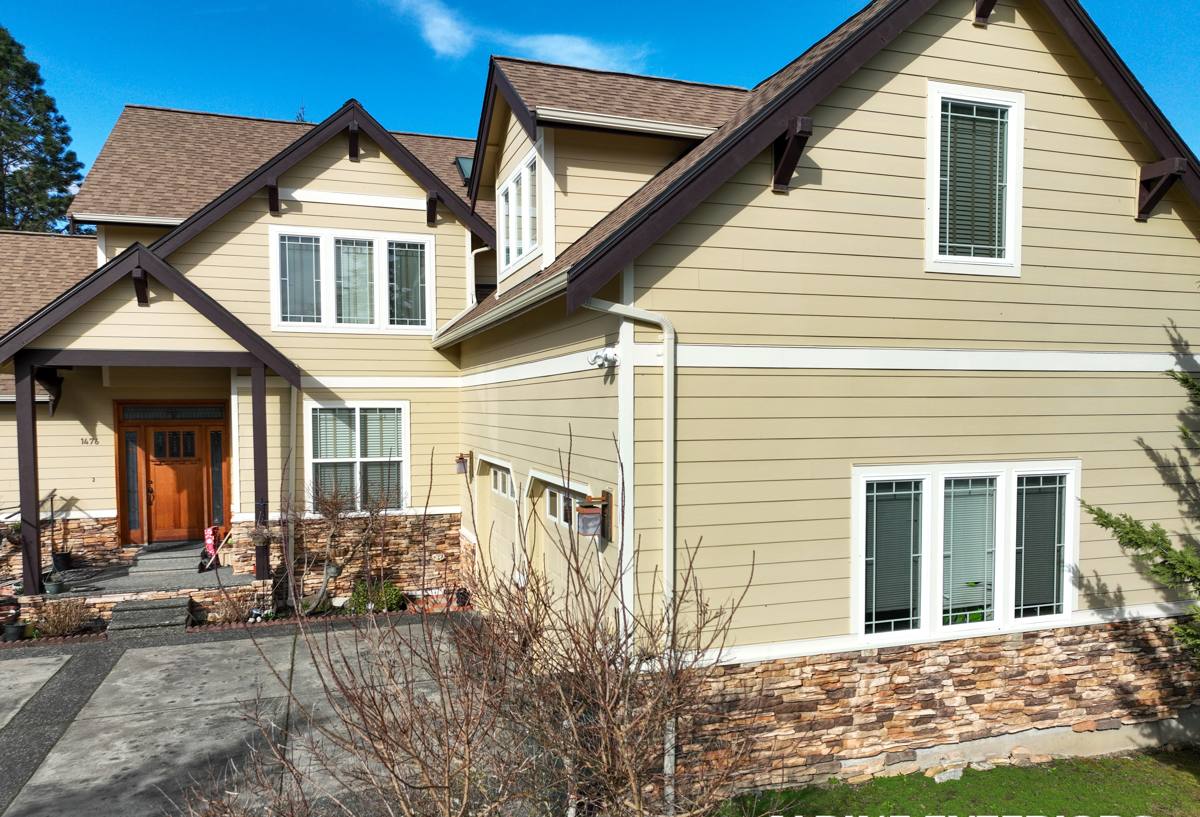
The Climate Factors That Actually Drive the Decisions
Salt Air
Even a mile or two inland from Bellingham Bay, homes on South Hill's western-facing slopes catch enough marine air to accelerate corrosion on unprotected metal — fasteners, flashing, and any exposed cut edges. This is why fastener spec and panel coating matter more here than they would on a roof further inland in the Nooksack valley or up toward Sumas.
Driving Rain
Whatcom County storms rarely come straight down. Wind off the Strait pushes rain sideways against west and south-facing roof planes, which means laps, flashing details, and underlayment matter as much as the panels themselves. A roof that only handles vertical rain will leak the first time a real windstorm rolls through.
Moss Season
Shaded, north-facing roof sections on tree-covered South Hill lots stay damp for extended stretches. Moss and moisture-loving debris build up fast in that environment. On asphalt shingles, moss roots into the mat and lifts granules. On a properly installed metal roof, there's no organic mat for moss to grab — but debris still needs to be managed so it doesn't dam water at valleys and eaves.
What a Correct Metal Roofing Installation Actually Involves
A metal roof is only as good as the details underneath and around the panels. For South Hill's climate, we treat these as non-negotiable:
- Synthetic underlayment rated for the exposure, not felt paper that degrades under prolonged Northwest moisture
- Ice-and-water shield at eaves, valleys, and around every penetration — the places wind-driven rain actually gets pushed
- Matched fastener metallurgy so screws and panels don't set up a corrosion reaction with each other, especially important given the salt exposure on this side of the bay
- Proper panel overlap and seam direction relative to prevailing wind and water flow on each roof plane
- Continuous or properly baffled ridge ventilation so moisture doesn't get trapped in the attic space, which causes condensation problems that have nothing to do with the roof surface but get blamed on it anyway
- Flashing detail work at chimneys, skylights, and wall intersections — the single most common source of "metal roof leaks" we're called to diagnose, and it's never the panel
Skip any one of these and you can still end up with a roof that looks right for a couple of years and then starts causing problems that are expensive to trace back to their real cause.
Metal Roofing Options for South Hill Homes
Not every metal roofing product is the right fit for every house. Here's how the main options compare for a South Hill application:
| Type | Best fit for | Trade-offs |
|---|---|---|
| Standing seam (concealed fastener) | Most South Hill homes, especially anything with visible roof lines from the street or exposed to direct wind-driven rain | Higher material and labor cost; no exposed fasteners to fail over time, which matters most in a salt-air environment |
| Exposed-fastener panel | Outbuildings, shops, additions where budget matters more than curb appeal | Lower upfront cost but fasteners are a maintenance item — gaskets age and need occasional inspection, more so given local moisture exposure |
| Stone-coated steel | Homes wanting the profile of shingle or tile with metal's durability underneath | Heavier system, more installation steps, higher cost; worth it mainly for specific aesthetic goals |
For most South Hill homes we work on, standing seam is the honest recommendation — the concealed fastener system removes the one component (exposed screws) that ages fastest in coastal-influenced air. We'll walk through your specific roof and tell you plainly if a lower-cost option makes sense instead; not every house needs the top-tier system.
Our Process on a South Hill Roof
- On-site assessment — we walk the roof, check the decking condition, note shade patterns and drainage paths specific to your lot, and look at existing flashing and ventilation
- Written scope and material spec — panel type, gauge, coating, underlayment, and fastener spec laid out before any work starts, no surprises mid-job
- Tear-off and deck inspection — we don't install over rot or soft decking; anything compromised gets replaced and documented before panels go on
- Underlayment and flashing first — the waterproofing layer goes in complete and correct before a single panel is set
- Panel installation — proper seam direction, overlap, and fastening for the specific roof pitch and exposure of each plane
- Final walkthrough — we go over ventilation, maintenance expectations, and what to watch for through your first moss season
What Metal Roofing Costs — and What Drives the Range
Metal roofing costs more upfront than asphalt shingles, and the honest reason to choose it is total cost over the life of the roof, not the sticker price on day one. Actual numbers depend on your roof's size, pitch, complexity, and the system you choose, but here are the factors that move the price up or down:
| Factor | Effect on cost |
|---|---|
| Standing seam vs. exposed fastener | Standing seam runs meaningfully higher due to specialized panel forming and labor |
| Roof pitch and access | Steep or hard-to-access roofs (common on hillside South Hill lots) add labor time |
| Number of valleys, penetrations, dormers | Each one adds flashing work — this is often a bigger cost driver than square footage |
| Tear-off vs. new construction | Removing and disposing of old roofing adds a line item most homeowners don't budget for |
| Decking repair | Only known once tear-off exposes the deck; we flag likely risk areas during the initial walk |
We give a written estimate after seeing the actual roof — broad ballpark numbers before that are more likely to mislead than help.
Living With a Metal Roof Through Moss Season
A correctly installed metal roof needs far less attention than shingles, but "far less" isn't "none." A short annual maintenance routine keeps things trouble-free:
- Clear needles, leaves, and debris from valleys and gutters before fall storms arrive
- Rinse shaded, north-facing sections if moss or algae buildup is visible — a garden hose is enough, no pressure washer needed and pressure washing can actually damage coatings
- Check that gutters and downspouts are flowing freely, since backed-up water at the eave is where most moisture problems start regardless of roof material
- Look at flashing around chimneys and skylights once a year for any sealant that's dried out or pulled away
- Trim back overhanging branches where practical to reduce shade and debris load on north-facing planes
Why Hire a Crew That Already Works South Hill
South Hill's mix of hillside lots, mature trees, and older homes means every roof has its own quirks — a shade pattern that keeps one plane wet longer, a wind exposure on the bay-facing side that the rest of the block doesn't get, an older deck that needs an honest look before anything goes on top of it. A crew that already works this neighborhood has seen those patterns before and knows where to look for them, rather than treating your roof like a generic textbook installation. That local familiarity shows up in fewer surprises during tear-off and fewer callbacks after the job is done.
It also matters when something needs attention years down the road. A local, established contractor is easy to reach and accountable for the work — not a name that shows up for one storm-chasing season and disappears.
Get a Straight Answer for Your Roof
If you're weighing metal roofing for a South Hill home, we're happy to come take a look, walk you through what your specific roof needs, and give you a written estimate with no pressure attached. Use the form below to get started.