 Bellingham Siding
 Barkley's Siding Problem Isn't Like Other Neighborhoods'
Homes in the Barkley neighborhood sit close enough to Bellingham Bay to pick up salt-laden air off the water, and close enough to mature tree cover that shaded walls stay damp for days after a storm passes. That combination — salt exposure plus slow-drying shade — is harder on exterior siding than either factor alone. Add in Whatcom County's driving, wind-pushed rain events and a moss season that can run from October well into spring, and you have a set of conditions that punishes any siding product with a weak spot in its finish, its drainage design, or its fastener detailing.
We install James Hardie fiber cement exclusively, on every job, in every neighborhood we work — including Barkley. This page isn't a generic overview of Hardie siding; it's specifically about what Barkley's microclimate demands from a siding system and installation, and how we account for that on every job in this part of Bellingham.
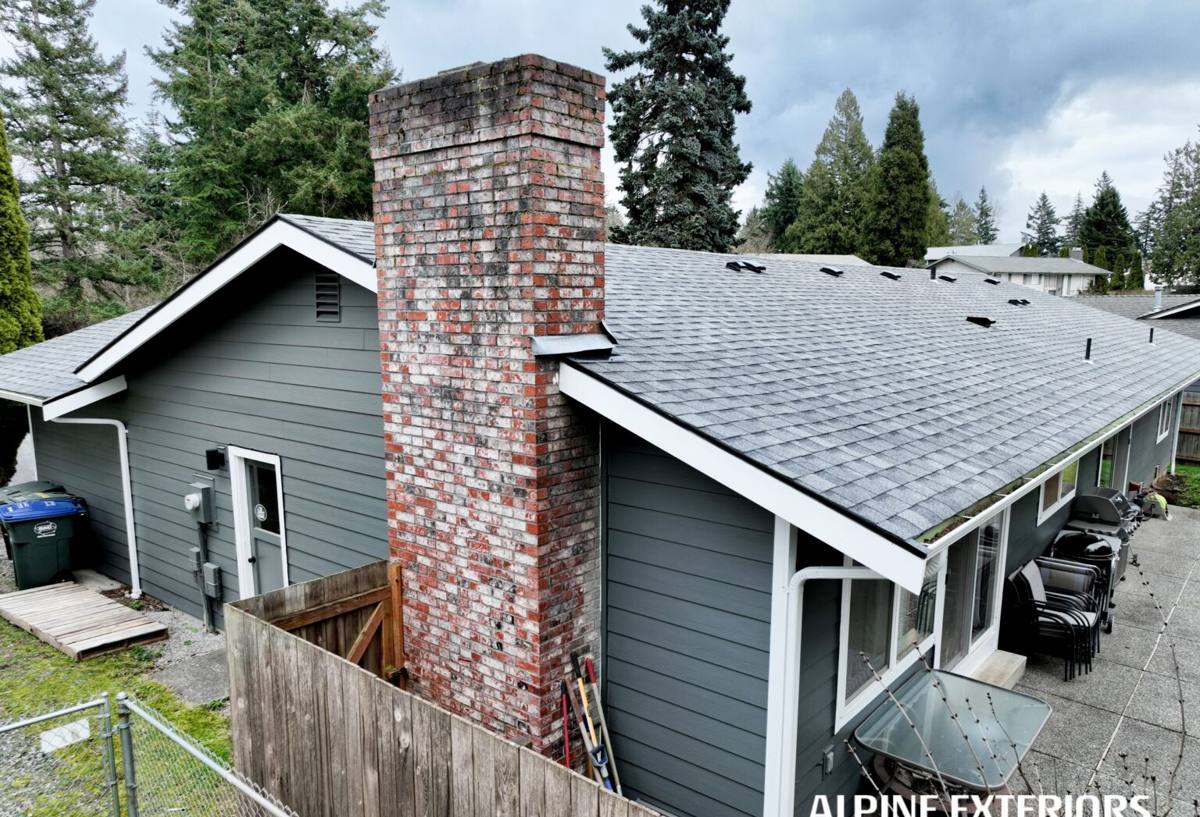
What Salt Air, Rain, and Moss Actually Do to Siding
Salt Air
Airborne salt is corrosive to metal fasteners, flashing, and trim, and it accelerates the breakdown of lower-grade paint finishes. Siding that isn't factory-finished to resist coastal exposure will chalk, fade, and lose adhesion faster near the water than it would ten or twenty miles inland.
Driving Rain
Wind-driven rain doesn't just run down a wall — it gets pushed sideways and upward into laps, seams, and penetrations. A siding system depends on correct overlap, proper flashing at every window and door, and a functioning drainage plane behind the cladding to survive this without moisture getting trapped against the sheathing.
Moss and Sustained Dampness
Moss doesn't just grow on roofs. On north-facing and tree-shaded wall sections common in Barkley's more established lots, moss and algae take hold on any surface that stays damp and doesn't get direct sun. Over years, sustained moisture against a wood-based product's cut edges or a poorly sealed seam is what leads to swelling, soft spots, and eventual rot.
Why We Standardized on James Hardie
None of this is unique to Barkley — it's the reality of siding anywhere in coastal Whatcom County. What's different here is how unforgiving the climate is of shortcuts. That's why we only install James Hardie fiber cement.
- Non-combustible core: Hardie's fiber cement composition doesn't feed a fire the way wood-based sidings can — a real consideration as wildfire smoke seasons have stretched further north into Washington in recent years.
- ColorPlus factory finish: baked-on in a controlled environment, it holds color and resists the chalking and peeling that field-applied paint is prone to in salt air.
- Climate-engineered HZ formulation: Hardie makes region-specific product (HZ5 for our climate zone) engineered for moisture cycling in wetter, more humid parts of the country — not a one-size-fits-all product.
- Dimensional stability: fiber cement doesn't swell and contract with moisture the way wood-based composites do, which matters when a wall spends half the year damp.
- Warranty structure: a manufacturer-backed, transferable warranty that holds up if the home is installed to spec — worth more than a warranty that gets voided by common installation shortcuts.
We get asked from time to time about installing vinyl, LP SmartSide, or cedar instead, usually because a homeowner is comparing sticker price. We're upfront about why we don't: vinyl expands and contracts significantly with temperature swings and can crack in a hard freeze, wood-based composites carry ongoing moisture-maintenance risk at cut edges and seams, and cedar demands a maintenance commitment — refinishing, sealing, monitoring for rot — that most homeowners don't want to sign up for decade after decade. Hardie is the product we're willing to warranty our workmanship against.
How Hardie's Product Lines Compare for This Climate
| Siding Option | Coastal/Salt-Air Behavior | Moisture & Moss Resistance | Maintenance Burden |
|---|---|---|---|
| James Hardie fiber cement (HZ5) | Factory finish resists chalking near salt air | Non-combustible, dimensionally stable core; doesn't swell with cyclical dampness | Occasional wash; no refinishing on the ColorPlus finish for years |
| Vinyl | Can fade and become brittle; seams can loosen over time | Won't rot, but traps moisture behind it if installed poorly | Low, but limited repair options if cracked or warped |
| LP SmartSide / wood composite | Finish can wear faster in salty, humid air | Cut edges and seams are vulnerable to moisture intrusion over years | Moderate — edge sealing and inspection needed regularly |
| Cedar | Natural weathering accelerated by salt and damp shade | High moisture absorption; prone to rot without diligent upkeep | High — regular sealing, staining, and rot monitoring |
What a Correct Installation Looks Like on a Barkley Home
Fiber cement siding is only as good as the installation behind it. Given Barkley's exposure, we treat a handful of details as non-negotiable:
Drainage Plane First
A weather-resistant barrier goes on the sheathing before any siding, with a rainscreen or furring gap where the assembly calls for it, so any moisture that gets behind the cladding has a path to drain and dry out rather than sitting against the wall.
Flashing at Every Penetration
Windows, doors, hose bibs, light fixtures, vents — every penetration gets properly lapped flashing. Driving rain finds any gap in this detailing eventually, and it's the single most common source of hidden rot behind siding that "looks fine" from the street.
Correct Fastening
Hardie specifies fastener type, spacing, and placement for a reason — under-driven or over-driven nails, or the wrong fastener for the exposure, void the manufacturer warranty and create early failure points, especially where salt air accelerates corrosion on the wrong metal.
Proper Gaps and Caulking
Manufacturer-specified gaps at trim, corners, and butt joints allow for the board's minor dimensional movement and give sealant a joint that actually works, instead of a joint that's caulked tight and cracks within a year or two.
Field Cuts Sealed
Every field-cut edge gets sealed with the correct primer before installation — an easy step to skip and the first place moisture gets in on a rushed job.
Our Process for a Barkley Siding Job
- On-site assessment: we walk the exterior, check for existing moisture damage, note shaded/damp wall sections and salt-exposed elevations, and identify any sheathing or framing repair needed before new siding goes on.
- Product and color selection: we help you choose the right Hardie profile (lap, shingle, panel) and ColorPlus color for the home and its exposure.
- Tear-off and prep: old siding comes off, sheathing is inspected and repaired as needed, and the weather-resistant barrier and drainage plane go in correctly the first time.
- Flashing and trim: all flashing, trim, and penetration detailing is installed before the field siding goes up.
- Installation to spec: siding is installed following Hardie's fastening, gapping, and clearance requirements — not shortcuts that save an hour but cost the warranty.
- Final inspection and cleanup: we walk the finished job with you, check every elevation, and confirm the site is clean before we call it done.
Cost Factors for a Barkley Hardie Project
Every home is different, but the same handful of factors drive cost on most Barkley jobs:
| Factor | Why It Matters Here |
|---|---|
| Existing sheathing condition | Homes with hidden moisture damage from a prior siding system need repair before new siding goes on |
| Home size and elevation complexity | Multiple stories, dormers, and cut-up elevations increase flashing and labor detail |
| Trim and profile choice | Shingle-style accents and custom trim cost more than straight lap siding |
| Access and site conditions | Tree cover, slope, and tight lot lines common in established Barkley lots can affect scaffolding and staging |
| Color | Standard ColorPlus colors versus premium or custom-matched finishes |
We give straightforward, itemized estimates rather than a single number pulled from a square-footage rule of thumb — the details above genuinely change the price, and you should know why.
Maintaining Hardie Siding Through Barkley's Moss Season
Hardie siding is low-maintenance, not no-maintenance. In a shaded, damp neighborhood like parts of Barkley, a little seasonal attention goes a long way:
- Rinse siding with a garden hose (not a pressure washer aimed directly at seams) once or twice a year, more often on shaded north-facing walls prone to moss and algae
- Keep gutters clear so overflow doesn't run down siding and feed moss growth at the top courses
- Trim back vegetation and tree limbs that keep wall sections shaded and slow to dry
- Check caulking at trim and penetrations every year or two and re-caulk joints that have cracked or pulled away
- Walk the exterior after major windstorms to check for any impact damage or loosened trim
Why a Crew That Already Works Barkley Matters
Installing Hardie correctly in Bellingham isn't the same job as installing it somewhere dry and inland. A crew that regularly works Barkley and the surrounding neighborhoods already knows which wall orientations need extra drainage attention, how local wind-driven rain patterns tend to find weak flashing, and what permitting and inspection expectations look like in the City of Bellingham and Whatcom County. That local repetition is what keeps a job from becoming a learning experience at your home's expense.
If you're weighing a siding replacement or new construction siding decision for a home in Barkley, we're happy to walk your property, point out what your specific exposure and shade conditions call for, and give you a straightforward, no-pressure estimate.