 Bellingham Siding
 New-Construction Window Installation, Done Right From the Framing Stage
Building new in Puget means making window decisions before the walls are even closed in. Unlike a replacement job, where a window goes into an opening that's already weathered a few decades of Pacific Northwest storms, a new-construction install happens against bare framing and house wrap — which means every flashing detail, every fastener, and every bead of sealant is being set for the first time. Get it right now and the window performs for the life of the house. Get it wrong and you've built a leak path into brand-new walls before anyone's even moved in.
Bellingham and the surrounding Whatcom County shoreline communities, Puget included, sit right where marine weather meets a builder's schedule. That combination is exactly why new-construction window work deserves the same care as the framing and roofing around it — not an afterthought once the walls are up.
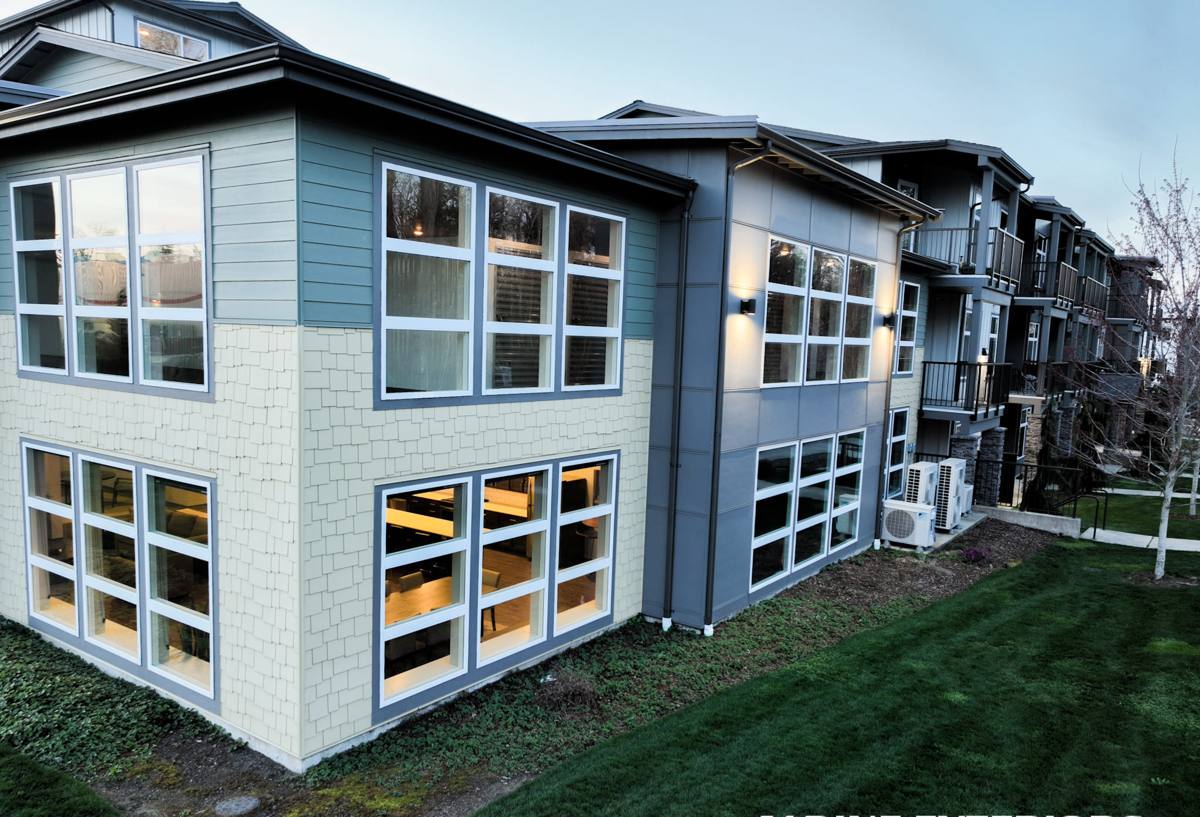
What Puget's Marine Climate Asks of a New Window Install
Homes in Puget face a specific mix of conditions that shapes how we approach a new-construction window package.
Salt Air and Metal Components
Proximity to the water means airborne salt reaches hardware, fasteners, and unprotected metal trim faster than it would inland. That affects which fastener coatings and flashing metals we spec, and it's part of why frame and hardware material selection matters more here than in a drier, inland build.
Wind-Driven Rain
Rain in this part of Washington rarely falls straight down. Storms off the Strait push rain sideways against west- and south-facing walls, which means a window's water management has to work under pressure, not just under gravity. Flashing sequence and sealant placement are what stop wind-driven rain from finding its way behind the siding.
A Long Moss Season
Whatcom County's mild, wet stretch from fall through spring keeps exterior surfaces damp for months at a time. Moss and algae take hold anywhere moisture sits, including in window sills, trim reveals, and anywhere water is allowed to pool instead of shed. A new-construction install needs to be detailed so water leaves the window assembly, not lingers in it.
Why New Construction Is a Different Job Than Replacement
In a replacement, the window goes into an opening that already has finished siding and trim around it, and the work is often about matching what's there. In new construction, we're setting the window into an open rough opening with only sheathing and weather-resistive barrier (WRB) in place. That gives us the advantage of building the water management system in the correct order from scratch — sill pan first, then window, then flashing tape integrated with the WRB in proper shingle-lap fashion, then siding last. It also means there's no room for shortcuts, because everything we install becomes permanently buried behind finish materials once the build moves forward.
The Details That Make or Break a New-Construction Window
Most window failures we're called out to inspect in newer Whatcom County homes trace back to one of a handful of missed steps at the framing stage — not a bad window unit. These are the details we treat as non-negotiable.
Sill Pan Flashing
Every rough opening gets a sloped sill pan before the window ever sits in it. This gives any water that gets past the window a way out, instead of a place to collect against the framing.
WRB and Flashing Tape Sequence
Flashing tape and the house wrap have to be layered like shingles — each layer overlapping the one below it — so water is always directed outward and downward, never funneled behind the barrier. This is the single most common thing we see done out of order on other builds.
Nailing Fin Fastening and Sealant
Fasteners go in per the window manufacturer's schedule, not a generic pattern, because under- or over-fastening affects both structural performance and warranty coverage. Sealant at the head and jambs uses a backer rod approach so the bead can flex with the building rather than crack.
- Rough opening checked for square, level, and correct size before the window ever arrives on site
- Sill pan installed with a positive slope to the exterior
- Flashing tape applied in proper shingle-lap order with the WRB
- Window set, shimmed, and checked for square before fastening
- Fasteners driven per the manufacturer's exact schedule and spacing
- Backer rod and sealant placed at head and jambs, sill left able to drain
- Interior air seal completed separately from the exterior water seal
- Glazing and hardware inspected for shipping or handling damage before final sign-off
Choosing Window Products for a Puget New Build
Frame material is a bigger decision on new construction than most homeowners expect, because you're choosing what will face decades of salt air and wet weather from day one. There's no single right answer — it depends on budget, maintenance appetite, and how exposed the home's elevation is to wind and rain.
| Frame Material | Coastal/Marine Suitability | Maintenance | Typical Cost Tier |
|---|---|---|---|
| Vinyl | Good — won't corrode from salt air, handles moisture well | Low — occasional cleaning | Entry to mid |
| Fiberglass | Very good — dimensionally stable in temperature swings and damp conditions | Low | Mid to upper |
| Wood-Clad | Good if detailed correctly, but the exterior cladding and any exposed wood need consistent upkeep near salt air | Higher — finish and seal checks needed | Upper |
| Aluminum | Fair — prone to corrosion and condensation issues unless thermally broken and well-finished | Moderate to high | Varies |
Glass Packages
Most new builds in this area benefit from a double-pane, low-E glass package with argon fill — it manages the region's mild but persistent cold better than single-pane or basic clear glass, and it cuts down on interior condensation during the wettest months. We'll walk through glass options based on the home's orientation and exposure.
Our New-Construction Window Process
We work directly with the builder or general contractor's framing schedule so windows go in at the right stage, not rushed or delayed against the rest of the build.
- Plan review and product selection — we review window sizes, egress requirements, and product specs against the build plans before ordering anything.
- Rough opening verification — every opening is checked for correct dimensions, square, and plumb before the window shows up on site.
- Sill pan and flashing installation — sloped sill pans and flashing tape go in first, integrated with the WRB.
- Window setting — the unit is set, shimmed level and square, and checked for smooth operation before it's fastened permanently.
- Fastening and sealing — fasteners and sealant follow the manufacturer's schedule exactly, preserving product warranty.
- WRB and flashing tie-in — head flashing and WRB layers are completed in correct shingle-lap order.
- Interior air seal — a separate air seal step at the interior, distinct from the exterior water seal.
- Final walkthrough — every opening gets a final check for operation, seal, and finish before we sign off.
What Affects Cost on a New-Construction Window Package
New-construction window pricing depends on more than the window units themselves. These are the main factors that move a project's cost up or down.
| Cost Factor | Why It Matters |
|---|---|
| Frame material | Vinyl, fiberglass, wood-clad, and aluminum carry different material and labor costs |
| Number and size of openings | More or larger windows mean more flashing, labor, and material time |
| Glass package | Low-E coatings, gas fills, and impact-rated glass add cost but improve performance |
| Site access | Multi-story builds or tight lots can require additional staging or equipment |
| Coordination with framing schedule | Working cleanly within the builder's timeline avoids delay costs on both sides |
Why Hiring a Crew That Already Works Puget Matters
A crew that's installed windows across Puget and the greater Bellingham area already knows how this specific stretch of coastline behaves — which elevations catch the worst of the wind-driven rain, how long moss season really runs here, and what local building department inspectors want to see at rough-in and final. That local track record means fewer surprises during inspection, fewer callbacks after the siding goes on, and a build that's ready for Whatcom County's weather from day one rather than needing a fix a year or two in.
After Move-In: What to Expect
A correctly installed new-construction window shouldn't need much from a homeowner beyond normal care — periodic cleaning of tracks and weep paths, keeping gutters and nearby drainage clear so water isn't pooling near the foundation and lower window openings, and a visual check of exterior sealant lines every year or two, which is standard on any home in a wet marine climate. If something does look off, catching it early is always cheaper than catching it late.
If you're planning a new build in Puget and want a window package specced and installed correctly for this climate from the start, we're happy to walk the plans with you and put together a free, no-pressure estimate using the form below.