 Bellingham Siding
 Siding Replacement Built for Barkley's Climate, Not Just Its Curb Appeal
Barkley homeowners deal with a specific combination of weather stress that a lot of siding products simply weren't designed to handle long-term. Proximity to Bellingham Bay means salt-laden air moves through the neighborhood on a regular basis. Add in the driving, wind-blown rain that comes off the water during storm season, plus the shaded, damp conditions that keep moss and algae active for much of the year, and you've got a climate that finds every weak point in a siding system within a few years, not a few decades.
This page is about one job: replacing the siding on a home in Barkley. Not a general overview of siding, and not a sales pitch for every product on the market — just a straight explanation of what your home actually needs here, what a correct replacement job looks like, and how we handle it.
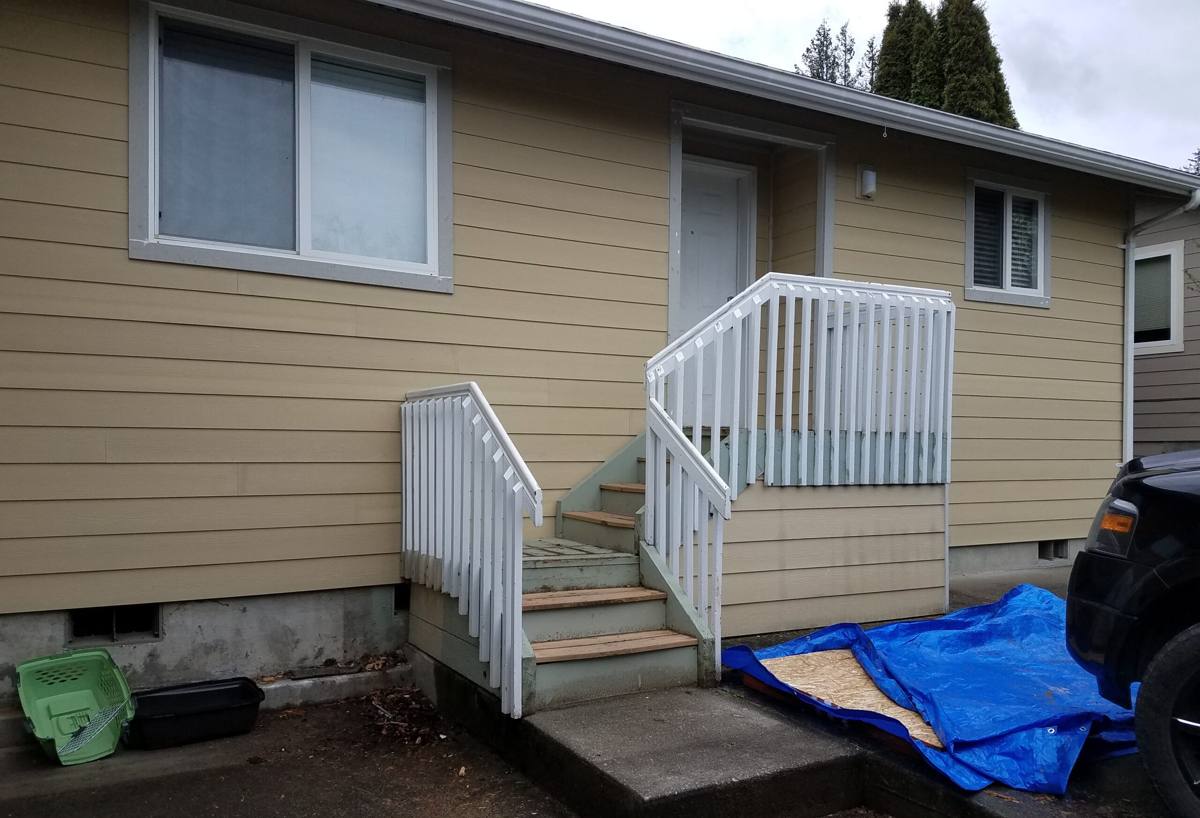
What Whatcom County Weather Does to Siding Over Time
Salt Air and Coastal Moisture
Homes closer to the water take on airborne salt that settles on exterior surfaces and accelerates the breakdown of paint films, caulking, and lower-grade composite materials. Over time this shows up as chalking, fading, and finish failure well before a product's rated lifespan is up.
Driving Rain
Bellingham's rain doesn't just fall straight down — it comes in sideways during a lot of our storms, which pushes water into laps, seams, and trim joints that a siding system in a drier climate would never have to deal with. Any gap in flashing or caulking becomes an entry point for water intrusion, and once moisture gets behind siding it can sit there for months before anyone notices a problem.
Moss and Algae Season
Whatcom County's mild, wet winters and shaded lots mean moss and green algae growth is active for a large part of the year, especially on north-facing walls and areas shielded from direct sun. Moss holds moisture against the siding surface, and on materials that aren't dimensionally stable or properly sealed, that sustained dampness is what starts rot, delamination, or paint failure.
Signs a Barkley Home Needs Siding Replaced, Not Just Repaired
Whether your home in Barkley is newer construction or has been standing for a few decades, the warning signs of failing siding tend to look similar. Some can be patched. Others mean the whole system needs to come off.
- Soft or spongy spots when you press on the siding, especially near the bottom courses or under windows
- Paint that's peeling, bubbling, or chalking heavily despite being repainted recently
- Visible gaps, warping, or buckling panels, particularly after a wet winter
- Persistent moss or dark streaking that comes back within weeks of cleaning
- Rising energy bills that suggest the wall assembly behind the siding is no longer doing its job
- Rot or staining around window and door trim, which often signals moisture already inside the wall
If you're only seeing one or two isolated spots, a targeted repair might be enough. If you're seeing several of these at once, or the siding is original to a home built decades ago, replacement is almost always the more cost-effective long-term call — patching a system that's failing everywhere just delays the same decision.
Why We Only Install James Hardie Fiber Cement
We made a deliberate decision to standardize on James Hardie fiber cement siding for every home we work on, including in Barkley. That's not brand loyalty — it's because the products we used to install alongside it, including vinyl and some engineered wood systems, kept showing the same weak points in this specific climate: seams that let water in, finishes that faded and chalked faster than advertised, and moisture sensitivity that punished any installation shortcut. Fiber cement doesn't share those weaknesses.
Non-Combustible and Dimensionally Stable
James Hardie siding is made from cement, sand, and cellulose fibers, which makes it non-combustible and far less reactive to moisture swings than wood-based or vinyl products. It won't warp, swell, or buckle the way some alternatives do when they take on repeated wetting and drying cycles, which matters in a climate where that cycle repeats constantly from fall through spring.
ColorPlus Factory Finish
Rather than relying on field-applied paint, Hardie's ColorPlus finish is baked on at the factory under controlled conditions, then backed by its own finish warranty. In a salt-air environment like Barkley's, that matters — factory finishes hold color and resist chalking longer than most site-applied paint jobs, which reduces how often the exterior needs to be repainted.
Climate-Engineered Product Lines
James Hardie manufactures different formulations for different climate zones — HZ5 for regions with hard freeze-thaw cycles, and HZ10 for humid, high-moisture climates like ours. Western Washington falls squarely in HZ10 territory, and that's the product line engineered specifically for the kind of sustained dampness and moss exposure Barkley homes deal with.
A Warranty That Actually Transfers
Hardie backs its products with a long-term, transferable limited warranty on the substrate and a separate finish warranty on ColorPlus color. That transferability matters in a neighborhood like Barkley where homes do change hands — it protects the investment for whoever owns the house next, not just the person who paid for the job.
What a Correct Siding Replacement Actually Involves
Siding failures in this region are rarely about the cladding material alone — they're usually about what's happening behind it. A correct replacement addresses the whole wall assembly, not just what's visible from the street.
Full Tear-Off and Sheathing Inspection
We remove the existing siding down to the sheathing so we can actually see the condition of the wall underneath. This is where hidden rot, past water damage, or failed weather barriers get found — problems that get sealed back up and forgotten if a contractor just installs new siding over the old system.
Weather-Resistive Barrier and Flashing
A new, properly lapped weather-resistive barrier goes on before any siding, with flashing detailed correctly at every window, door, and roof transition. Given how much wind-driven rain Barkley homes take on, this layer is doing as much work as the siding itself — get it wrong and even the best cladding material won't keep water out.
Rainscreen Gap
We install with a rainscreen gap behind the siding wherever the assembly calls for it, giving any moisture that does get past the outer layer a way to drain and dry out instead of sitting against the wall. This is one of the details that separates a durable installation from one that looks fine for a year or two and then starts showing problems.
Fastening and Clearances to Manufacturer Spec
James Hardie's installation instructions specify exact fastener types, spacing, and minimum clearances from grade, roofing, and decks. Skipping these specs is the single most common reason fiber cement siding fails prematurely — and it's also the reason manufacturer warranties get voided. We install to spec, every time, because that's the only way the warranty and the material actually perform as designed.
Our Process for Barkley Homeowners
- Free on-site estimate — we walk the exterior, check current siding condition, and look for signs of moisture damage before quoting anything.
- Detailed scope and product selection — we walk you through Hardie's plank, panel, and shingle options and colors so you know exactly what's going on the house and why.
- Tear-off and inspection — old siding comes off, sheathing gets inspected, and any rot or damage found gets addressed before anything new goes up.
- Weather barrier, flashing, and rainscreen installation — the moisture-management layer goes in correctly before the first piece of siding is hung.
- Hardie installation to manufacturer spec — proper fastening, clearances, and joint treatment throughout.
- Final walkthrough and cleanup — we review the finished work with you and make sure the job site is left clean.
What Drives the Cost of a Siding Replacement
Every Barkley home is different, so we don't quote off square footage alone. These are the factors that actually move the number:
| Cost Factor | Why It Matters |
|---|---|
| Home size and wall complexity | More corners, gables, and trim details mean more labor and material cutting |
| Condition of the sheathing underneath | Hidden rot or water damage found during tear-off requires repair before new siding goes on |
| Siding profile chosen | Lap, panel, and shingle-style Hardie products differ in material and labor cost |
| Trim and accessory scope | Replacing trim boards, fascia, or soffits alongside siding adds to the project |
| Story height and access | Two- and three-story sections require more staging and safety setup |
| Color and finish selection | Standard ColorPlus colors versus custom or premium finishes affect material pricing |
We'll never give you a number over the phone with any real accuracy — the only way to price a job correctly is to see the house, which is exactly what the free estimate is for.
Why It Matters to Hire a Crew That Already Works in Barkley
A crew that's worked on homes throughout Bellingham and Whatcom County has already seen how the local climate behaves against different wall orientations, roof lines, and lot conditions — which sides of a house tend to hold moss, where driving rain hits hardest, and which older construction methods in this area tend to hide moisture problems. That experience shows up in the quality of the tear-off inspection and the flashing details, not just the finished look.
It also means faster response if something needs attention after the job is done, straightforward communication about scheduling around our wet season, and a crew that isn't learning Pacific Northwest moisture management for the first time on your house.
Keeping Your New Siding Performing for the Long Run
James Hardie siding is low-maintenance compared to most alternatives, but "low-maintenance" isn't "no-maintenance," especially in a climate like ours. A little attention each year keeps the system performing the way it's designed to.
- Rinse siding annually to remove salt residue and organic buildup before it can take hold
- Check and clear gutters each fall so overflow doesn't run down the siding face
- Inspect caulking at trim, windows, and doors yearly and have any cracked joints resealed
- Keep landscaping and irrigation from spraying directly onto siding or sitting against the wall base
- Address any moss regrowth promptly with a gentle wash rather than pressure washing, which can damage the finish
If you're seeing signs of wear on your current siding, or you just want an honest read on what condition your home's exterior is really in, we're happy to take a look. The estimate is free, there's no pressure, and you'll walk away with a clear picture of what your Barkley home actually needs.