 Bellingham Siding
 Storm Damage in Barkley: What Bellingham Weather Actually Does to a Roof
Barkley sits close enough to the water and tucked into enough tree cover that its roofs take a different kind of beating than a roof out on open ground. Whatcom County storms rarely bring the kind of straight-line hail damage you'd see elsewhere in the country. What they bring instead is a steady combination of driving rain, gusty wind off the bay, salt-laden air, and a moss season that runs longer here than almost anywhere else in the state. Individually, none of these are dramatic. Together, over years, they find every weak seam, every under-nailed shingle, and every spot where flashing was installed a little too fast.
Storm damage repair in this neighborhood isn't just about patching what a single bad night did. It's about recognizing that Bellingham's climate keeps working on a roof long after the wind dies down, and a repair that doesn't account for that will fail again within a season or two.
What Actually Counts as Storm Damage
Homeowners often assume storm damage means a hole in the roof. Most of what we find after a windstorm or heavy rain event in Barkley is less obvious than that, but no less serious.
Wind-Lifted and Missing Shingles
Sustained gusts off the water can lift shingle tabs without tearing them off entirely. The shingle looks fine from the ground, but the seal strip underneath has broken, leaving a gap that wind-driven rain can work into on the next storm. This is the single most common thing we find on post-storm inspections here.
Wind-Driven Rain Intrusion
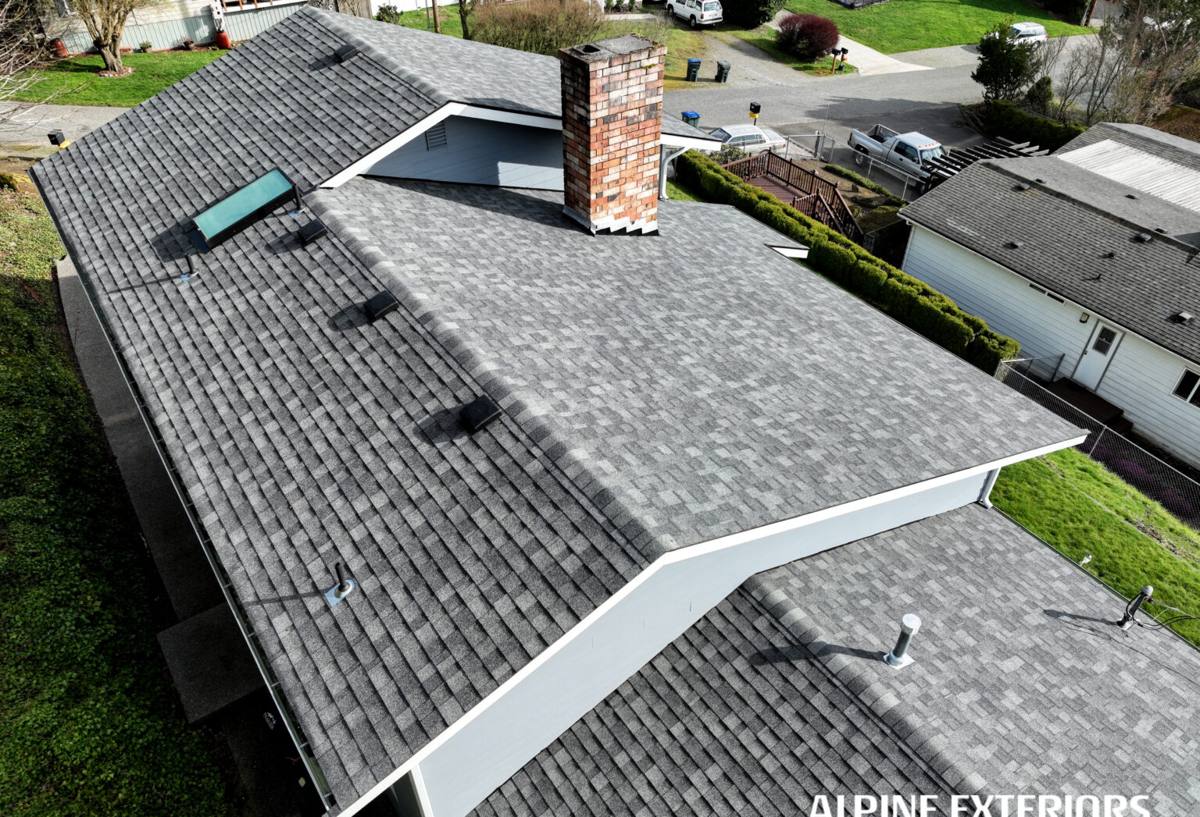
Bellingham rain doesn't always fall straight down. When it comes in sideways off a coastal front, it can push past flashing and underlayment details that would hold up fine in a calmer climate. Chimney flashing, valley metal, and roof-to-wall transitions are the usual entry points.
Falling Limbs and Impact Damage
Barkley's mature tree canopy is part of what makes the neighborhood attractive, but it also means limb strikes are a real risk during winter windstorms. Impact damage can crack shingles, dent flashing, or in worse cases puncture the decking underneath — and that kind of damage isn't always visible from the ground.
Why Barkley Roofs Need a Closer Look After a Storm
A few things about this specific area push us toward a more thorough inspection than a generic storm check.
- Tree-heavy lots mean more debris impact points and more shaded, slow-drying roof sections where moss and moisture linger.
- Proximity to the water means salt air accelerates corrosion on exposed fasteners, flashing, and metal drip edge over time.
- Mixed roof ages and styles in the neighborhood mean older roofs may already be near the end of their service life when a storm hits, turning a minor repair into a bigger decision.
- Sloped and wooded lots can make attic and roof access trickier, which is exactly where damage gets missed if an inspection is rushed.
None of this means every storm is a crisis. It means a proper inspection after a real wind or rain event has to check more than the obviously damaged spot — it has to check the areas most likely to fail next.
Our Storm Damage Repair Process
We keep this process the same whether the damage is a single lifted shingle or a section of roof that took a limb strike.
1. Inspection and Documentation
We walk the roof (or use a ladder and camera where pitch or access makes walking unsafe) and document every point of damage — not just the spot the homeowner noticed. This includes checking the attic from underneath for water staining, since active leaks don't always show up where the exterior damage is.
2. Temporary Protection if Needed
If there's an active leak or exposed decking, we get a tarp or temporary seal on it before anything else. A roof that's actively taking on water doesn't wait for a full repair plan.
3. Repair Scope and Explanation
We walk the homeowner through exactly what needs to happen, what materials are involved, and why. No pressure to upgrade or replace more than the damage requires.
4. The Repair Itself
Depending on scope, this might mean replacing individual shingles and re-sealing tabs, rebuilding a section of flashing, or replacing damaged decking before shingles go back down. We match existing shingle profile and color as closely as the manufacturer's current lineup allows.
5. Final Check
Before we call it done, we recheck the repaired area and the surrounding roof for anything that got missed, and confirm there's no remaining path for water intrusion.
Repair vs. Replace: How We Decide
Not every storm-damaged roof needs a full replacement, and not every roof is a good candidate for another round of patch repairs. Here's the general logic we use:
| Factor | Leans Toward Repair | Leans Toward Replacement |
|---|---|---|
| Roof age | Under 12–15 years, in otherwise good condition | Near or past expected shingle lifespan |
| Extent of damage | Localized — one section, one slope | Widespread across multiple slopes |
| Decking condition | Solid, no rot found on inspection | Soft spots or rot found in multiple areas |
| Shingle availability | Current shingle line still in production for a close match | Discontinued profile with no reasonable match |
| History | First storm event in years | Repeated repairs on the same sections |
We'll always tell you honestly which side of this table your roof falls on. A repair that's likely to need redoing in two years isn't a good use of your money, and we'd rather say so up front than let you find out the hard way.
Materials and Methods We Use for Storm Repairs
Given the salt air and long wet season this area deals with, we're particular about a few details that matter more here than they would inland:
- Corrosion-resistant fasteners and flashing — standard-grade metal degrades faster this close to the water, so we use flashing and fasteners rated for coastal exposure where budget and scope allow.
- Ice-and-water shield at vulnerable points — valleys, eaves, and chimney transitions get self-adhered underlayment, not just felt, since these are the spots wind-driven rain finds first.
- Proper shingle sealing — hand-sealing lifted tabs where the factory adhesive strip has broken, rather than assuming sun exposure alone will reseal them.
- Matching, not just covering — we match shingle type, weight, and color as closely as current product lines allow, so a repair doesn't stand out as a patch job for the next twenty years.
Insurance Claims: What Homeowners Should Know
Storm damage is one of the more common insurance-eligible roof issues, but the process goes smoother when the documentation is solid from the start. We provide photos, a written description of the damage, and our assessment of cause, which homeowners can hand directly to their adjuster. We're not a public adjuster and we don't negotiate your claim for you, but we've done enough of these that we know what documentation adjusters actually want to see, and we won't inflate or downplay a scope to fit an outcome either way.
One honest note: not every roof issue found during a storm inspection is storm-related. Long-term wear, poor original installation, or moss damage that's been building for years sometimes gets uncovered at the same time a storm caused separate, legitimate damage. We'll tell you clearly which is which — that distinction matters for your claim and for your own understanding of what you're paying for.
Preventing Repeat Damage: Moss, Gutters, and Ventilation
Bellingham's moss season is long enough that it deserves its own mention separate from storm damage itself. Moss holds moisture against shingles, lifts tab edges over time, and makes a roof more vulnerable the next time wind and rain show up together. A few maintenance basics go a long way toward keeping storm damage from turning into recurring damage:
- Keep gutters clear so wind-driven rain has somewhere to drain instead of backing up under the roof edge.
- Trim back tree limbs that overhang the roof, especially ones that could reach the roof in a strong gust.
- Address moss growth before it spreads — early treatment is far less invasive than removing established growth.
- Check attic ventilation periodically; poor airflow traps moisture and accelerates decking and shingle wear from the inside out.
- Have the roof looked at after any storm with sustained winds, even if nothing looks obviously wrong from the ground.
Why a Crew That Already Works Barkley Matters
A roofing crew that works this neighborhood regularly already knows which tree species tend to drop limbs in a windstorm, which roof orientations catch the worst of the rain off the bay, and what shingle lines were commonly used on homes built in different eras around here. That familiarity shortens the inspection, sharpens the repair scope, and means fewer surprises mid-job. It also means we're not learning Whatcom County's weather patterns on your roof — we already know what a Bellingham winter does to a shingle over a decade.
If a recent storm left you with a lifted shingle, a slow leak, or visible impact damage on your Barkley home, we're glad to take a look. Reach out for a free, no-pressure estimate — the form below gets you a straight answer on what's actually going on and what it would take to fix it right.