 Bellingham Siding
 Why Birch Bay Roofs Wear Out Faster Than Inland Homes
Birch Bay sits right on the water, and that changes what a roof has to deal with year after year. Homes a few blocks inland in Bellingham face rain and gray winters like the rest of Whatcom County, but Birch Bay adds a coastal layer on top: salt-laden air off the Strait, near-constant onshore wind, and long stretches of shade and dampness that let moss take hold fast. A roof that would hold up fine in a drier, more sheltered part of the county can show its age early out here.
Salt air is corrosive to exposed metal — nails, flashing, drip edge, valley metal, even the fasteners holding shingles down. Once that metal starts to rust, it stops doing its job of keeping water out at the seams, and that's usually where leaks start, not in the middle of a shingle field. Combine that with driving rain that comes in sideways during winter storms, and any weak point in the flashing or underlayment gets tested hard, repeatedly, for months at a time.
Then there's moss. Birch Bay's mix of moisture, mild temperatures, and shaded, north-facing roof slopes near trees is close to ideal moss habitat. Moss doesn't just look bad — it holds water against the roofing material, works its way under shingle tabs, and lifts edges over time. A roof that's fighting moss for years without proper attention is often further along in its decline than it looks from the ground.
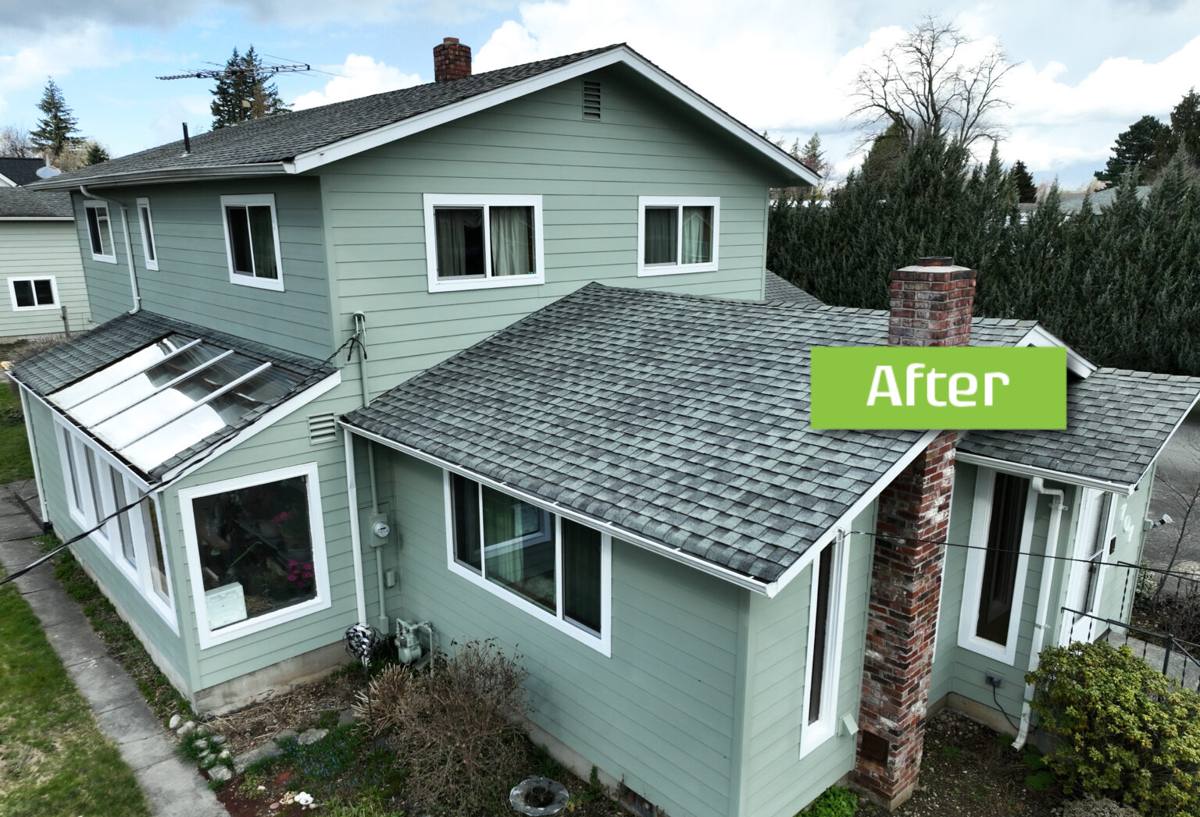
Signs a Birch Bay Roof Needs Replacement, Not Another Repair
Not every problem roof needs a full tear-off. But there's a point where patching stops making sense, especially on a coastal roof that's been absorbing this kind of weather for fifteen, twenty, or more years. Some signals we look for:
- Granule loss heavy enough that shingles look patchy or bald in spots, especially on wind-exposed slopes facing the water
- Curling, cupping, or cracked shingle tabs, particularly on south- and west-facing slopes that take the most sun and wind stress
- Rusted or failing flashing around chimneys, vents, and valleys — the most common source of coastal leaks
- Persistent moss or algae staining that keeps coming back even after cleaning
- Soft spots or sagging in the decking when walked, which points to trapped moisture underneath
- Daylight visible through the roof deck from inside the attic, or water staining on attic sheathing
- A roof that's simply reached the end of its material's realistic service life given the coastal exposure
If a roof is only a few years old and the damage is isolated — one bad flashing detail, storm damage to a small section — targeted repair is usually the honest answer. We'll tell you that. Replacement makes sense when the underlying materials themselves, not just the surface, are compromised across most of the roof.
What a Correct Roof Replacement Involves
A roof replacement is only as good as what's underneath the shingles. In a coastal environment like Birch Bay, the details that don't show once the job is done are the ones that determine whether it lasts.
Tear-Off and Deck Inspection
We remove the old roofing down to the deck rather than layering over it. That's the only way to actually see the plywood or plank sheathing underneath — soft, delaminated, or water-stained decking has to be replaced before anything new goes down, or the new roof is just sitting on a compromised base.
Underlayment and Water Protection
Given how much wind-driven rain Birch Bay sees, underlayment choice matters more here than in drier parts of the county. We use ice-and-water shield membrane at eaves, valleys, and around every roof penetration — the spots most likely to see wind-forced water intrusion — with synthetic underlayment across the rest of the deck for a secondary water barrier under the shingles.
Flashing That Resists Salt Corrosion
All new flashing, drip edge, and fasteners are corrosion-resistant material, not standard-grade steel that will start rusting within a few seasons of coastal exposure. This is one of the most overlooked details in roofing work near the water, and it's usually the first thing to fail if it's skipped.
Ventilation
Proper intake and exhaust ventilation keeps the attic dry and temperature-balanced, which slows moss regrowth on the roof surface and prevents moisture buildup in the attic that leads to rot and mold. A roof replacement is the right time to correct ventilation that wasn't adequate on the old roof.
Final Details
Ridge caps, valley work, and penetration seals get finished to manufacturer spec, and we walk the property afterward for cleanup — nails, debris, and material scraps, especially important with kids, pets, or beach-adjacent yards nearby.
Choosing a Roofing Material for a Coastal Property
There's no single "best" roofing material for Birch Bay — it depends on budget, how exposed the roof is to wind and salt spray, and how the home is used. Here's how the common options stack up for this specific environment:
| Material | Coastal Performance | Moss Resistance | Typical Lifespan Here |
|---|---|---|---|
| Architectural asphalt shingle | Good with proper flashing and fasteners; wind-rated products handle onshore gusts well | Moderate — benefits from zinc/copper strips and regular cleaning | 20–30 years |
| Metal (standing seam) | Excellent — sheds water fast, handles wind well, no granules to lose to salt air | High — moss struggles to grip smooth metal | 40–50+ years |
| 3-tab asphalt shingle | Fair — lower wind rating, more seams exposed to driving rain | Lower — flatter profile holds moisture longer | 15–20 years |
| Synthetic/composite shingle | Good — engineered for wind and moisture, doesn't corrode | Moderate to high depending on product | 30–40 years |
Cost generally tracks with lifespan and performance — 3-tab is the least expensive up front and metal the most, with architectural shingle and composite in between. For a straight beach-exposed roof taking the brunt of wind and salt spray, we often steer homeowners toward architectural shingle with upgraded flashing and fasteners, or metal for a longer-term investment. We'll walk through the honest trade-offs for your specific roof rather than pushing one product across the board.
Managing Moss for the Long Term
Moss is going to try to come back on any shaded, moisture-prone roof in this area — the goal is slowing it down and making it easier to manage, not pretending it won't happen. A few things that help:
- Zinc or copper control strips installed near the ridge, which release trace metal ions that inhibit moss growth every time it rains
- Keeping tree limbs trimmed back from the roofline to reduce shade and let the surface dry between rain events
- Clean, unobstructed gutters so water isn't sitting against roof edges
- Gentle, low-pressure cleaning on a periodic basis rather than pressure-washing, which can strip granules and shorten shingle life
These are maintenance habits, not one-time fixes — but they meaningfully extend how long a new roof looks and performs like new out here.
How Our Process Works
We keep the process straightforward from first call to final walkthrough:
- On-site inspection. We get on the roof, check the deck condition where accessible, look at flashing, ventilation, and the extent of moss or wear, and take photos to document what we find.
- Written estimate. A clear breakdown of material options, scope of work, and pricing — no pressure, no surprise add-ons buried in fine print.
- Scheduling around Whatcom County weather. We plan the tear-off window carefully so your home isn't sitting exposed during an incoming storm system, which matters more here than in drier climates.
- Tear-off and install. Full removal, deck repair as needed, new underlayment, flashing, and roofing material installed to manufacturer and code specification.
- Cleanup and walkthrough. Magnetic sweep for nails, debris removal, and a final walk-through so you can see and ask about the finished work directly.
Why a Crew That Already Works Birch Bay Matters
Coastal roofing isn't the same job as roofing a house a few miles inland, even within the same county. A crew that regularly works Birch Bay knows to spec corrosion-resistant fasteners and flashing as standard, not an upsell; knows which slopes on a given lot orientation are going to fight moss hardest; and knows how to sequence a tear-off around the wind and rain patterns that roll in off the water. That experience shows up in fewer callbacks and a roof that's actually built for the conditions it's going to face, not just built to code minimum.
Permitting and inspection also run through Whatcom County, and a local crew that's pulled those permits before knows the process and the timeline, so there are no surprises partway through the job.
A Quick Checklist Before You Sign With Anyone
- Do they carry current Washington contractor licensing and liability insurance?
- Does the written estimate specify underlayment type, flashing material, and fastener type — not just "shingles and labor"?
- Do they address ventilation, or just the roofing surface?
- Is the warranty explained clearly — what's covered by the manufacturer versus the installer?
- Have they worked coastal properties in Whatcom County before, and can they speak specifically to salt air and moss?
If your roof in Birch Bay is showing its age — moss that won't quit, granules in the gutters, or flashing that's starting to rust — we're happy to take a look and give you a straight assessment. Reach out for a free, no-pressure estimate using the form below.