 Bellingham Siding
 Blaine's Coastal Climate and Your Roof
Blaine sits right up against the water at the top of Whatcom County, and that location comes with a specific set of roofing problems. Salt-laden air off the Strait and Drayton Harbor works on exposed metal, fasteners, and flashing year-round. Driving rain off the water pushes water sideways under shingle edges that would stay dry in a calmer inland setting. And the long, wet, shaded stretch of the year that Northwest Washington is known for gives moss and algae months to gain a foothold on any roof that isn't shedding water and drying out efficiently.
None of this means asphalt shingle roofing is a poor choice for Blaine — it's still one of the most practical, cost-effective roofing systems available, and the majority of homes in this part of the county are roofed in it. It does mean the installation details matter more here than they would in a drier climate. A roof that's "close enough" in Spokane can fail years early in Blaine.
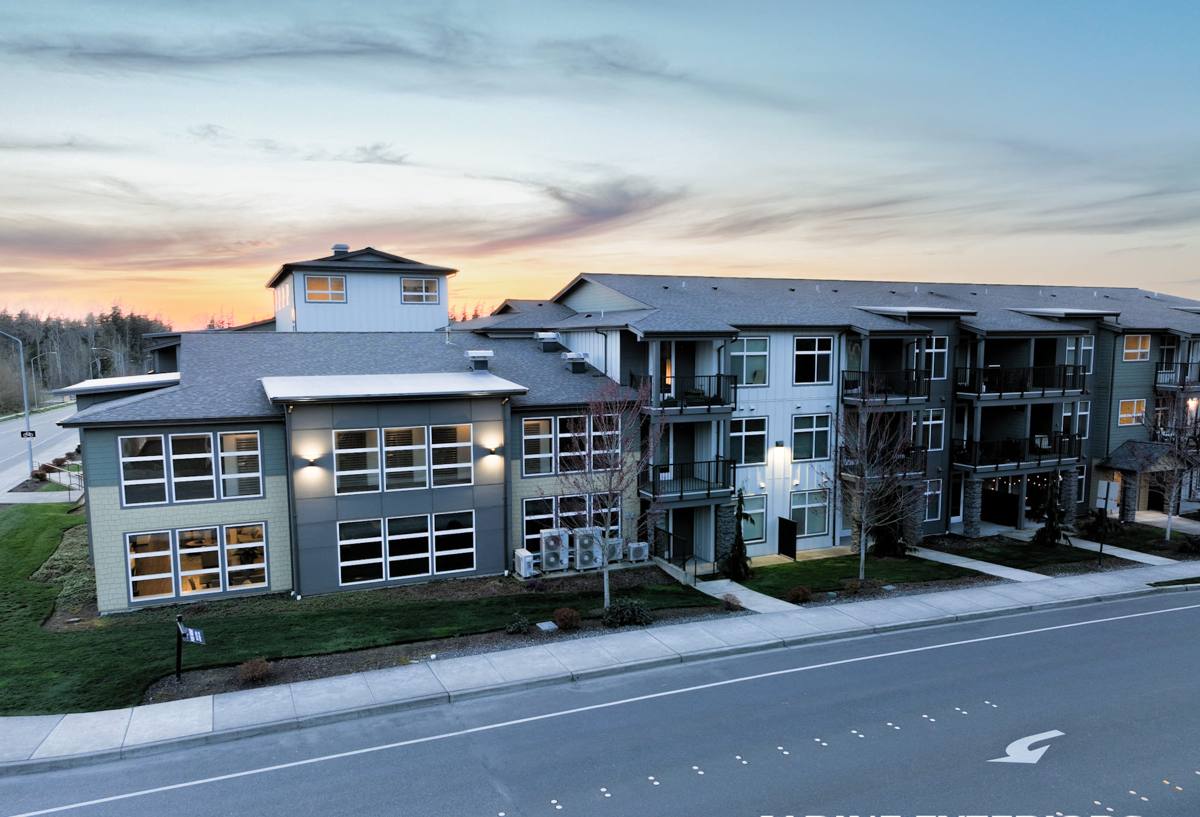
What Correct Asphalt Shingle Roofing Looks Like
Asphalt shingles are a system, not just a surface layer. The shingles themselves get the attention, but in a wet, salt-exposed coastal town, the components underneath and around them are what actually determine whether the roof holds up.
Underlayment and Ice/Water Barrier
A synthetic underlayment provides the roof's real waterproofing layer — the shingles are the wear surface, but the underlayment is what keeps the deck dry if wind-driven rain gets past a shingle edge. At eaves, valleys, and any low-slope section, we install a self-adhering ice-and-water membrane. Blaine doesn't see the ice dams that inland or higher-elevation homes do, but that same membrane also blocks wind-driven rain intrusion at the roof's most vulnerable points, which matters more here than the ice protection it was originally designed for.
Flashing Details
Step flashing at walls, counter-flashing at chimneys, and properly lapped valley flashing are where most roof leaks actually start — not in the open field of shingles. Salt air accelerates corrosion on cheap or improperly lapped flashing, so we use flashing rated for the exposure and detail it so water is always directed onto the next course down, never behind it.
Ventilation
A roof that can't breathe traps moisture in the attic, which shows up as premature shingle failure from underneath, condensation on the deck, and conditions that feed moss growth on the roof surface itself. Balanced intake at the eaves and exhaust at the ridge keeps air moving and the deck dry, which is just as important to shingle lifespan as the shingles' own weather resistance.
Picking the Right Shingle for a Blaine Home
Not every asphalt shingle is built the same, and in a salt-air, high-moisture environment the differences show up faster than they would somewhere drier.
| Shingle Type | Typical Lifespan | Best Fit for Blaine |
|---|---|---|
| 3-tab | 15-20 years | Budget projects; less wind and algae resistance than architectural |
| Architectural / dimensional | 25-30+ years | Best all-around choice — thicker, better wind rating, more common on coastal homes |
| Algae-resistant (copper-granule) architectural | 25-30+ years | Worth the upgrade on shaded or north-facing roofs where moss and algae take hold fastest |
We generally steer Blaine homeowners toward architectural shingles with an algae-resistant granule blend, especially on roof faces that stay shaded through the wet months. The upcharge is modest, and it's a straightforward way to buy back years before the moss conversation comes up again. We'll also check the shingle's wind rating against the home's actual exposure — a waterfront or open lot takes a different gust load than a roof tucked behind trees or neighboring structures.
Moss, Algae, and Salt Air: What Actually Slows Them Down
You can't eliminate moss risk on a shaded Whatcom County roof, but you can install a roof that resists it far longer than one that wasn't set up to.
- Zinc or copper strips installed near the ridge let rain carry trace metal ions down the roof, which inhibits moss and algae growth over the shingle field below
- Keeping gutters and valleys clear so water doesn't pool or back up under shingle edges
- Trimming back overhanging branches where practical, since shade and falling debris are the two biggest drivers of moss growth
- Using algae-resistant shingles on north-facing or heavily shaded slopes
- Soft-washing moss off periodically rather than scraping it, which can lift granules and shorten shingle life
Salt air is a slower, quieter problem — it mostly affects exposed fasteners, flashing, and any metal roof accessories. We use fasteners and flashing suited to the exposure rather than the cheapest available option, since replacing corroded flashing on an otherwise sound roof is an avoidable expense.
Our Process, Start to Finish
A roof replacement or major repair goes smoother when the homeowner knows what to expect. Our process on a typical Blaine project runs:
- Inspection and estimate — we walk the roof (or use a lift/drone where the pitch or access calls for it), check the deck condition where visible, and note flashing, ventilation, and any problem areas before quoting
- Tear-off — old shingles and underlayment removed down to the deck so we can actually assess what's underneath rather than roofing over hidden problems
- Deck inspection and repair — any soft, rotted, or delaminated sheathing gets replaced before anything new goes down
- Underlayment and ice/water barrier — installed per the details above, with extra attention at eaves and valleys
- Flashing — new step, counter, and valley flashing installed or reused only where it's still sound and correctly detailed
- Shingle installation — installed to manufacturer nailing and exposure specs, which is what keeps the warranty valid and the wind rating intact
- Ventilation check — intake and exhaust confirmed balanced, corrected if not
- Cleanup and magnetic sweep — job site and surrounding yard cleared of debris and stray fasteners
- Final walkthrough — we go over the finished roof with the homeowner before calling the job done
Repair, or Full Replacement?
Not every roof problem calls for a full tear-off. The right call depends on the roof's age, how widespread the damage is, and what's happening underneath the shingles.
| Situation | Repair Usually Makes Sense | Replacement Usually Makes Sense |
|---|---|---|
| Roof age | Under 12-15 years | Approaching or past 20-25 years |
| Damage pattern | Localized — one slope, one flashing detail, storm damage to a section | Widespread granule loss, curling, or leaks in multiple areas |
| Deck condition | Sound where inspected | Soft spots, rot, or repeated leak staining suggest deck damage |
| Moss/algae extent | Surface growth, roof otherwise intact | Heavy, long-term growth that's lifted granules or degraded the mat |
We won't push a full replacement on a roof that just needs a flashing repair or a section of storm-damaged shingles. We also won't patch a roof that's clearly at the end of its service life just to postpone the inevitable — that usually costs more in the long run in repeat service calls.
What Affects Cost
Every roof is quoted after an actual inspection, but a few factors consistently move the number for Blaine homes:
| Factor | Why It Matters |
|---|---|
| Roof size and number of planes | More material and more flashing/valley detail work |
| Pitch and access | Steeper or harder-to-access roofs take longer and need more safety setup |
| Deck condition | Hidden rot or delamination found during tear-off adds material and labor |
| Shingle grade | Architectural and algae-resistant shingles cost more than 3-tab but last longer |
| Flashing and ventilation scope | Full replacement vs. reuse of sound existing components |
We give straightforward, itemized estimates rather than a single lump number, so homeowners can see what they're actually paying for.
Why a Crew That Already Works Blaine Matters
Roofing crews that mostly work drier or more inland parts of Whatcom County sometimes underbuild for Blaine's exposure — lighter flashing, standard shingle grade regardless of shade or sun exposure, or underlayment specs that would be fine forty miles inland but leave a coastal roof more exposed than it should be. Working this area regularly means knowing which roof faces need the algae-resistant upgrade, which flashing details need extra attention against salt exposure, and how much wind rating actually matters on a given lot. It also means knowing the local permitting expectations and being available for warranty or follow-up work without a long drive.
If you're weighing a repair, a full replacement, or just want an honest read on how much life is left in your current roof, we're happy to take a look. Reach out for a free, no-pressure estimate using the form below.