 Bellingham Siding
 Why Columbia Homes Need Siding Built for Bellingham's Coastal Climate
Columbia sits close enough to Bellingham Bay that salt-laden air is a real factor in how exterior materials age here, not a theoretical one. Add in the driving rain that comes through Whatcom County during fall and winter storms, plus the long stretch of gray, damp months that let moss and algae take hold on anything that stays wet, and you have a climate that is genuinely hard on siding. Homes in this neighborhood don't just get rained on — they sit in months of sustained moisture with limited drying time between storms, especially on north- and west-facing walls that don't get much direct sun.
That combination punishes materials that swell, rot, or hold moisture against the wall. Wood-based products absorb water at cut edges and joints and start to soften from the inside out. Vinyl doesn't rot, but it flexes and gaps in wind-driven rain and offers nowhere for a house to actually resist the moisture load. Fiber cement was engineered for exactly this kind of exposure, which is a big part of why it's the only siding material we install.
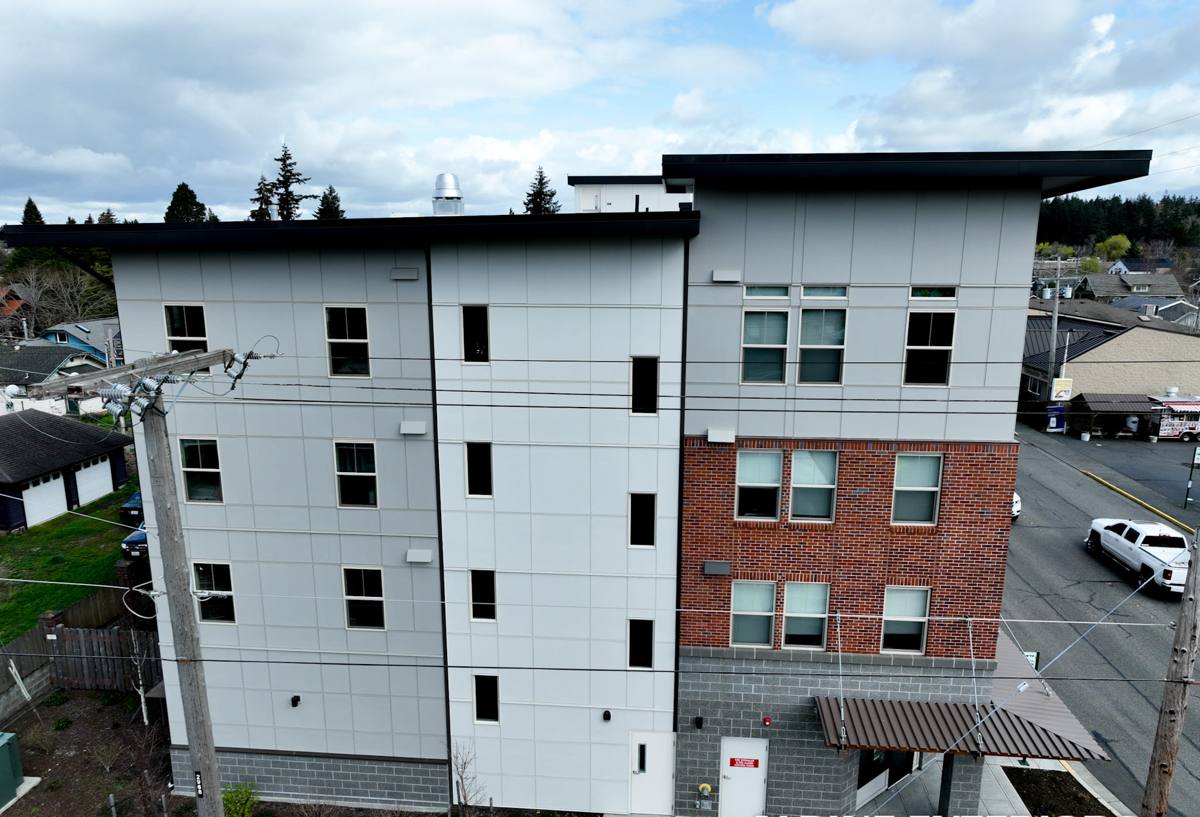
What Fiber Cement Actually Solves for This Neighborhood
Columbia has a mix of housing stock — older homes closer to downtown Bellingham alongside newer infill construction — and fiber cement works well across both. On older homes, it gives you a chance to correct decades of trapped moisture problems behind the old siding during the reinstall. On newer builds, it's a long-term upgrade over the vinyl or engineered wood that often comes standard from production builders.
Fiber cement is made from cement, sand, and cellulose fibers, so it doesn't feed mold or moss the way wood-based products do, and it doesn't warp, swell, or delaminate when it gets wet repeatedly. It's non-combustible, which matters given the dry-season wildfire smoke and ember exposure the Pacific Northwest has seen in recent years. And with a factory-applied finish, it holds its color and seal far longer than a field-painted product exposed to this much rain.
None of that means fiber cement is maintenance-free. It still needs to be installed and finished correctly, and it still needs periodic cleaning to keep moss and algae from building up on shaded elevations. The difference is that a correctly installed Hardie system sheds water and dries out the way it's supposed to, instead of trapping it.
What a Correct Installation Involves
Most siding failures we see on older Columbia homes aren't a materials problem — they're an installation problem. The siding itself outlives the workmanship underneath it. Getting this right matters more in a high-rain climate than almost anywhere else in the country.
Moisture Management Behind the Siding
Everything starts with the weather-resistive barrier and how it's lapped and taped at seams, windows, and penetrations. In a climate with this much sustained rain, we also look at whether a drainage gap — furring strips or a rainscreen product behind the siding — makes sense on exposed elevations, since it gives incidental moisture a path to drain and the wall assembly a chance to dry rather than staying damp for days after a storm.
Fastening and Clearances
James Hardie has specific fastening patterns, nail placement, and clearance requirements — ground clearance, deck and roof clearance, and gaps at butt joints — that exist for a reason. Skipping them doesn't show up as a problem on day one; it shows up two or three winters later as staining, buckling, or rot at the point where water was allowed to sit.
Trim, Caulking, and Finish Lines
Where siding meets trim, windows, and corners is where most water intrusion actually starts. Correct caulk joints, properly primed cut edges, and consistent paint lines matter as much as the siding panels themselves. This is detail work, and it's the difference between a job that looks right at handoff and one that still looks right in ten years.
James Hardie Product Lines That Fit Columbia's Exposure
We install James Hardie exclusively, and specifically their HZ5 product line, which is engineered for the Pacific Northwest's wet climate zone rather than a generic national spec. Which profile makes sense depends on the home's style and how exposed each elevation is to wind-driven rain.
| Product | Best Use | Why It Fits This Climate |
|---|---|---|
| HardiePlank Lap Siding | Most standard elevations, traditional and modern homes | Widest range of profiles and ColorPlus finishes; proven track record in wet coastal climates |
| HardiePanel Vertical Siding | Modern facades, gable ends, accent walls | Fewer horizontal joints where water can collect on exposed elevations |
| HardieShingle | Craftsman and cottage-style homes common in older Bellingham neighborhoods | Matches historic shingle detailing without the moisture issues of cedar shingle |
| HardieTrim | Corners, window and door surrounds, fascia | Won't rot or split at the cut edges the way wood trim does in constant rain |
Our Process From Estimate to Finished Job
On-Site Assessment
We walk the home, check the condition of the existing siding and sheathing, and look specifically at the elevations that take the worst weather — usually the sides facing the prevailing rain and wind. This tells us if there's hidden moisture damage that needs to be addressed before new siding goes on.
Prep and Tear-Off
Old siding comes off, the sheathing gets inspected and repaired where needed, and the weather-resistive barrier and flashing details get installed correctly before a single piece of Hardie goes up. This step gets rushed on some jobs; it's the one we won't rush.
Installation
Panels and trim go up to Hardie's fastening and clearance specifications, with attention to butt joints, caulking, and paint lines as the job progresses — not fixed after the fact.
Final Walkthrough
We walk the finished job with the homeowner, check trim and caulk lines up close, and make sure everything matches what was scoped at the estimate.
Why a Crew That Already Works Columbia Matters
A contractor who's worked this neighborhood knows which elevations of a Columbia home typically take the worst of the driving rain and which walls tend to grow moss fastest, because they've seen it on the last job down the street. That's not something you get from a general spec sheet — it comes from doing this work in this specific climate, on homes with the same exposure to Bellingham Bay's salt air and the same weather patterns coming off the water. It also means fewer surprises with permitting and lot access, since older Bellingham neighborhoods often have tighter setbacks and mature landscaping that affect how a job gets staged.
Cost Factors for Fiber Cement Siding Projects
We don't quote firm numbers without seeing the home, but the broad range for a properly installed fiber cement siding job — materials and labor — typically falls somewhere in the neighborhood of $12 to $25 per square foot installed, with the final number driven by the factors below.
| Factor | Why It Moves the Price |
|---|---|
| Tear-off and disposal | Removing old siding, especially multiple layers, adds labor and disposal cost |
| Sheathing repair | Rot or moisture damage found during tear-off has to be fixed before new siding goes on |
| Trim and detail complexity | Gables, dormers, and multiple roof lines take more cutting, fitting, and caulking time |
| Access and lot constraints | Tight side yards, mature landscaping, and multi-story walls affect staging and labor time |
| Factory finish vs. field paint | ColorPlus factory finish costs more up front but avoids a repaint cycle down the road |
Maintenance Checklist for a Moss-Prone Climate
Correctly installed fiber cement is low-maintenance, not no-maintenance. In a climate that stays damp this long, a little upkeep goes a long way toward protecting the investment.
- Rinse siding annually, focusing on north- and west-facing walls where moss and algae build up fastest
- Keep gutters clear so overflow doesn't run down the wall and stay wet at the siding edge
- Trim back shrubs and trees so foliage isn't holding moisture against the siding
- Inspect caulk joints at trim, windows, and corners every couple of years and re-caulk where it's cracked or pulled away
- If any siding was field-painted rather than factory-finished, plan for a repaint cycle sooner than you would in a drier climate
- Watch for any staining or soft spots at the bottom edge of the siding, which can signal a clearance or flashing issue worth checking early
If you're planning a siding project for a home in Columbia, we're glad to come take a look and give you a straightforward, no-pressure estimate — what your home actually needs, what it will cost, and why. Use the form below to get started.