 Bellingham Siding
 Building Decks That Actually Hold Up in Ferndale
Ferndale sits close enough to the water and open farmland that decks here take a different kind of beating than a deck in a drier inland climate. You've got salt-tinged air drifting in off Bellingham Bay and the Strait, driving rain that comes in sideways more often than straight down, and a moss season that can stretch from October well into May. A deck built with generic, one-size-fits-all methods will show it within a few seasons — soft spots underfoot, black-green streaking on the boards, fasteners bleeding rust through the wood. A deck built for this specific climate won't.
We work on decks throughout Whatcom County, and Ferndale properties get their own set of considerations: open exposure on newer subdivision lots, mature tree cover on older in-town lots that keeps decks shaded and damp, and everything in between along the river and out toward the coast. This page covers what a custom deck actually needs to hold up here, what a correct build looks like from the ground up, and how we run the job from first call to final walkthrough.
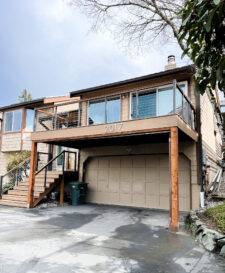
What Ferndale's Climate Does to a Deck
Understanding the failure points before you build is what separates a deck that lasts twenty-plus years from one that needs major repair in five.
Salt Air and Fastener Corrosion
Ferndale isn't beachfront, but it's close enough to tidal water that airborne salt reaches structures on breezy days, especially on west- and north-facing decks with open exposure. Salt accelerates corrosion in anything less than fully rated hardware. Standard galvanized screws and joist hangers can start showing rust streaks and pitting well before the wood itself is due for attention. Once a fastener corrodes, it loses holding strength quietly — you don't see it until something moves.
Driving Rain and Moisture Intrusion
Rain in this part of Whatcom County frequently comes with wind behind it, which pushes water into places a vertical-only rain would never reach: ledger board connections, stair stringer notches, the underside of rail post bases. Any gap in flashing or any spot where water can enter but not drain becomes a rot starting point. This matters most where the deck attaches to the house — a poorly flashed ledger is the single most common source of structural deck failure in this region, full stop.
Moss, Algae, and Surface Buildup
A long, mild, wet moss season means any horizontal wood or composite surface that doesn't shed water and get some airflow underneath will grow moss and algae. Beyond looking bad, moss holds moisture against the deck surface and turns it slick — a real fall hazard on stairs and ramps. Board spacing, ventilation under the deck frame, and surface texture all affect how much moss problem you'll have five years from now.
What a Correctly Built Deck Includes
A deck that's going to earn its keep in this climate isn't about upgrading every single component to the most expensive option — it's about getting the moisture-critical details right, every time, with no shortcuts.
- Fully flashed ledger board connection with self-adhering waterproof membrane behind and over the flashing, not just caulk
- Stainless steel or high-grade coated structural hardware (joist hangers, ledger bolts, post bases) rated for the corrosion exposure of the specific site
- Proper joist spacing and blocking sized to the decking material and expected snow/live load
- Ventilation gaps maintained under the deck framing so air can move and wood can dry between rain events
- Drainage-conscious grading or under-deck drainage systems where the ground beneath doesn't shed water on its own
- Post bases set above grade on concrete footings, never wood-to-soil contact
- Stair stringers and rail posts detailed to shed water rather than trap it at end grain
- Decking fastener pattern and board gapping suited to the material's expansion and moisture behavior
Choosing Decking Material for This Climate
There's no universally "best" decking material — there's the right material for your budget, your maintenance appetite, and how much sun or shade your particular lot gets. Here's how the common options actually compare once you factor in Ferndale's rain and moss pressure.
| Material | Moss/Algae Resistance | Maintenance | Typical Lifespan Here |
|---|---|---|---|
| Pressure-treated fir/hem-fir | Low — needs regular cleaning and sealing | Annual wash, re-seal every 2-3 years | 15-20 years with upkeep |
| Cedar | Moderate — natural oils help but fade over time | Cleaning and oil/stain every 2-3 years | 20-25 years with upkeep |
| Composite (capped) | Good — dense cap sheds moisture and resists staining | Periodic wash, no sealing/staining | 25-30+ years |
| PVC decking | Best — non-porous surface, nothing for moss to grip | Occasional wash | 30+ years |
We're straightforward with clients about the trade-offs. Real wood costs less upfront and can be refinished if it gets damaged, but it demands consistent upkeep or it will show moss and gray out fast in this climate. Composite and PVC cost more initially but largely take moss and algae out of the maintenance equation, which matters a lot for a shaded, damp lot. We'll walk your specific site — sun exposure, tree cover, how close it sits to grade — and give you an honest read on which material actually fits before you commit to one.
Framing and Structure: Where Decks Actually Fail
Most deck problems we get called out to repair aren't decking-surface problems — they're framing and connection problems that took years to show themselves. The ledger-to-house connection, post footings, and joist hardware are the parts of a deck you'll never see again once it's built, which is exactly why they need to be right the first time.
For Ferndale specifically, we pay close attention to footing depth and drainage — some lots here have heavier clay soils that hold water around footings longer than sandy or well-drained soil would. We also size framing hardware for the actual corrosion exposure of the site rather than defaulting to the cheapest code-minimum option, particularly on decks with open western exposure toward the water.
Railings, Stairs, and Code
Whatcom County follows the state building code for deck railing height, baluster spacing, and stair geometry. Beyond meeting code, we detail rail posts and stair stringers so end grain isn't left exposed to standing water, since end grain absorbs moisture far faster than a flat cut face and is where you'll see rot start first on an otherwise sound structure.
Our Process, Start to Finish
- Site visit and assessment — we look at sun exposure, tree cover, drainage, soil, and how the deck will attach to your house before recommending anything
- Design and material selection — layout, decking material, railing style, and any built-in features are worked out with you, with honest pros and cons for each option
- Permitting — we handle the permit application and inspections required by the county or city so you don't have to chase paperwork
- Demo and site prep — removal of any existing structure and grading or drainage work as needed
- Framing — footings, posts, ledger, and joists built to the structural and moisture-management standards above
- Decking, rails, and stairs installed — with attention to fastening pattern, gapping, and end-grain protection
- Final walkthrough — we go over the finished deck with you, including any maintenance recommendations specific to the material you chose
Why Hire a Crew That Already Works Ferndale
A deck contractor who's worked across Whatcom County knows which details actually matter here versus which are generic advice that doesn't account for our rain patterns, our soil, or how close we sit to salt water. We've seen what happens to under-flashed ledgers after a few wet winters, what moss does to a poorly ventilated deck, and which fastener grades hold up and which start rusting within a couple of seasons. That's knowledge you only get from building and repairing decks in this specific climate, not from a national installation manual.
We also know the practical side — what the local permitting process looks like, typical lot conditions in and around Ferndale, and how to sequence a build around our wet-season weather windows so your project doesn't stall out mid-construction.
Deck Maintenance Checklist for Ferndale Homeowners
Whatever material you choose, a little seasonal attention goes a long way toward avoiding early repairs.
- Sweep leaves and debris off the deck surface regularly through fall — trapped organic matter feeds moss and holds moisture against the boards
- Rinse or gently wash the deck surface at least once a year to remove algae film before it becomes established moss
- Check under-deck ventilation gaps for blockage by plants, stored items, or debris buildup
- Inspect stair treads and rail post bases for soft spots or discoloration each spring
- Reseal or re-stain wood decking on the schedule appropriate to the product — don't wait until it looks gray and worn
- Look at fastener heads periodically for rust streaking, which can signal a hardware grade mismatch
Get an Honest Look at Your Deck Project
Whether you're planning a new custom deck or replacing one that's showing its age, we'll come out, take a real look at your site and its exposure, and give you a straightforward assessment of what it needs. There's no pressure and no obligation — just a free estimate and an honest conversation about what will actually hold up on your property. Use the form below to get started.