 Bellingham Siding
 Windows Built for Birchwood's Weather, Not Just Its Openings
Birchwood homes take a specific kind of beating. You're close enough to the water and the weather systems moving off the Salish Sea that salt-laden air, sideways rain, and long stretches of overcast, moss-friendly moisture are just part of living here. None of that is dramatic on its own, but over years it adds up on window frames, sills, and the seals that are supposed to keep water out. A window that was installed correctly in a drier climate can still fail here if it wasn't installed with this specific exposure in mind.
When we talk about "custom windows" for a Birchwood property, we don't mean a fancy shape or an unusual grille pattern, though we do that too. We mean windows sized, flashed, and sealed to fit your actual openings and your actual exposure — not a generic stock size forced into place with extra caulk to make up the difference.
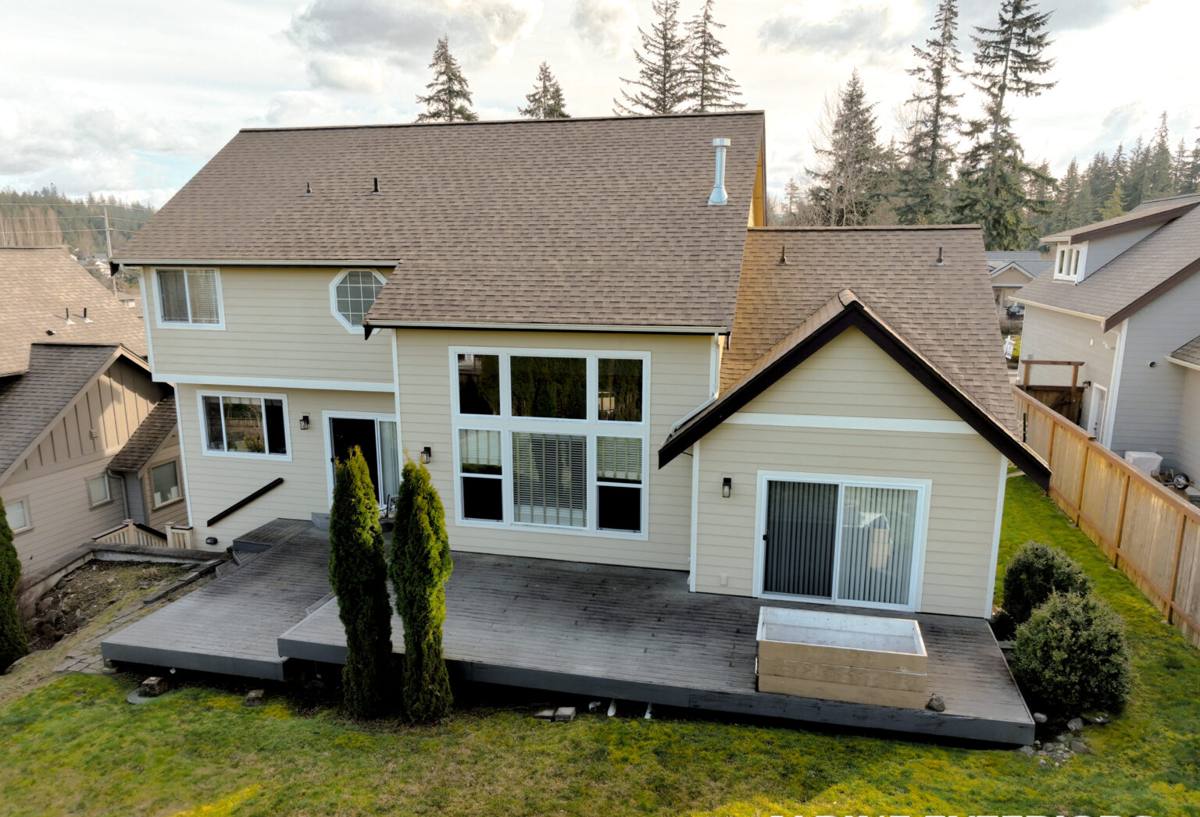
What Bellingham's Climate Actually Does to Windows
Whatcom County doesn't get extreme temperature swings, but it gets persistent, low-grade moisture stress, and that's arguably harder on a window than a hard freeze. A few things we see repeatedly on Birchwood homes:
- Wood sills and frames that stay damp longer than they should because of poor drainage or missing flashing, leading to soft spots and paint failure
- Moss and algae growth on horizontal trim and sills that holds moisture against the wood or vinyl surface
- Condensation between panes or on interior glass, a sign of failed seals or windows that were never rated for this level of humidity
- Corrosion on hardware and metal components exposed to salt-carrying air, especially on the sides of a home facing open water or prevailing wind
- Wind-driven rain finding its way past old or improperly installed flashing, showing up as staining or soft drywall around the window opening
Any one of these can happen slowly enough that a homeowner doesn't notice until there's a real repair on their hands. Custom window work in this area is as much about managing water as it is about the glass itself.
What "Correct" Looks Like for a Custom Window Install
Accurate measurement, not approximation
Older homes in this area often have openings that have shifted slightly over decades of settling, or that were never perfectly square to begin with. Custom windows are built to the actual dimensions of your opening, including any out-of-square condition, rather than assuming a standard size and shimming the gaps. That fit is what makes the difference between a window that seals well for twenty years and one that starts leaking air and water within a few seasons.
Flashing and drainage first, window second
The window itself is only part of the system. Proper installation means correctly lapped flashing tape, a sloped sill pan that directs any water that gets past the exterior back outside instead of into the wall cavity, and sealant used in the right places — not as a substitute for good flashing. This step matters more in Bellingham than in drier climates, because the margin for error with driving rain is smaller.
Glass and frame material matched to exposure
Not every wall of a house sees the same weather. A window facing the prevailing wind and salt air needs different consideration on hardware and frame material than one on a sheltered side. We factor in orientation when recommending materials, not just style preference.
Insulation and air sealing around the frame
A well-built window with a poorly insulated gap around it still performs badly. Low-expansion foam or appropriate insulation in that perimeter gap, done right, keeps both drafts and moisture-laden air from cycling through the wall.
Our Process for a Birchwood Window Project
- On-site assessment. We look at existing window condition, sill and frame moisture, flashing (or lack of it), and how each opening is exposed to wind and rain.
- Measurement and material selection. Custom sizes are taken opening by opening. We talk through frame material, glass package, and hardware based on that specific wall's exposure and your budget.
- Removal and inspection. Once old windows come out, we check the framing and sheathing underneath for any moisture damage that needs to be addressed before a new window goes in — this is often where hidden problems surface.
- Flashing, sill pan, and air sealing. This is the step that determines long-term performance, done before the new window is ever set in place.
- Installation and sealing. The window is set, shimmed level and plumb, fastened per manufacturer specification, and sealed on the exterior with materials rated for this climate.
- Interior and exterior finish work. Trim, casing, and paint or stain are completed to match the home, and everything is cleaned up before we leave.
Choosing Frame Materials for a Marine-Influenced Climate
There's no single "best" window material for every situation — it depends on exposure, budget, and how much upkeep you want to take on. Here's how the common options generally compare for a home in this part of Whatcom County:
| Material | Moisture Resistance | Maintenance | Typical Trade-Off |
|---|---|---|---|
| Vinyl | Good — won't rot, handles humidity well | Low | Limited color/finish options; can look less traditional on older homes |
| Fiberglass | Very good — stable in temperature and moisture swings | Low to moderate | Higher upfront cost than vinyl |
| Wood (clad exterior) | Good if the cladding is intact and well-sealed | Moderate — exterior clad, interior wood needs occasional attention | More sensitive to installation quality; a weak seal shows up faster here |
| Solid wood | Lower without diligent upkeep in a wet climate | High — regular painting/sealing needed | Best suited to homes prioritizing historic accuracy with a maintenance commitment |
| Aluminum | Prone to condensation and corrosion near salt air unless thermally broken | Moderate | We generally steer away from non-thermally-broken aluminum in this exposure |
We'll walk through these trade-offs with you directly rather than pushing one material for every project — the right call often differs from one side of the house to another.
Glass Packages Worth Considering
For Bellingham's overcast, moisture-heavy climate, the glass package matters as much as the frame:
- Low-E coatings help manage heat loss during our long cool season without sacrificing the daylight you actually want on gray days
- Double vs. triple pane — double pane is standard and performs well here; triple pane adds insulation value and sound dampening but at added cost and weight, worth discussing for north or west-facing rooms
- Argon or krypton gas fill improves insulating performance between panes, though its benefit fades over the window's lifespan as gas slowly diffuses
- Condensation-resistant spacers (warm-edge spacers) reduce the cold-edge effect that contributes to interior condensation on humid days, which is a real concern in this climate
Signs a Birchwood Home Needs Window Attention
Before assuming full replacement is the answer, it's worth knowing what to look for:
- Fogging or moisture trapped between panes — a sign the seal has failed and can't be repaired, only replaced
- Soft or spongy wood at the sill or lower frame corners
- Visible moss or dark staining on horizontal trim surfaces
- Drafts noticeable near the frame even with the window fully latched
- Difficulty opening, closing, or latching windows that used to operate smoothly — often a sign of frame movement or swelling
- Peeling or bubbling paint on interior trim near the window, which usually points to moisture getting in from outside
Some of these are cosmetic and manageable. Others, like failed seals or soft framing, tend to get more expensive the longer they're left alone.
Why Local Installation Experience Matters Here
Window installation instructions from a manufacturer are written for general conditions. Whatcom County's specific mix of driving rain, salt-influenced air near the water, and a moss season that can stretch for months isn't something a generic install approach fully accounts for. A crew that regularly works in Birchwood and the surrounding Bellingham neighborhoods has already seen how these specific conditions play out on flashing details, sill design, and material choices — and adjusts for it as standard practice, not as an afterthought.
That local pattern recognition is often the difference between a window installation that holds up for decades and one that needs revisiting in a handful of years.
Get a Straightforward Estimate
If you're dealing with drafty, foggy, or hard-to-operate windows, or you're planning ahead for a Birchwood home that needs custom-sized replacements, we're glad to take a look and give you an honest read on what's going on and what it would take to fix it. There's no pressure and no obligation — just fill out the form below to get a free estimate.