 Bellingham Siding
 Building a Deck That Actually Holds Up in Fairhaven
Fairhaven sits close enough to the water that its homes take a different kind of weathering than decks built further inland in Whatcom County. Salt-laden air off Bellingham Bay, long stretches of driving rain through fall and winter, and a moss season that can run half the year all work against a deck that wasn't built with this specific microclimate in mind. A deck that would hold up fine in a drier part of the state can start showing rust streaks, soft spots, and slick green growth within a couple of seasons here if the materials and details weren't chosen for it.
This page is about what actually matters when building a deck in Fairhaven specifically — not a generic overview of decks in general. We'll walk through what the climate does to a deck over time, what a correctly built substructure looks like, how we choose materials for this neighborhood, and what our process looks like from first visit to final walkthrough.
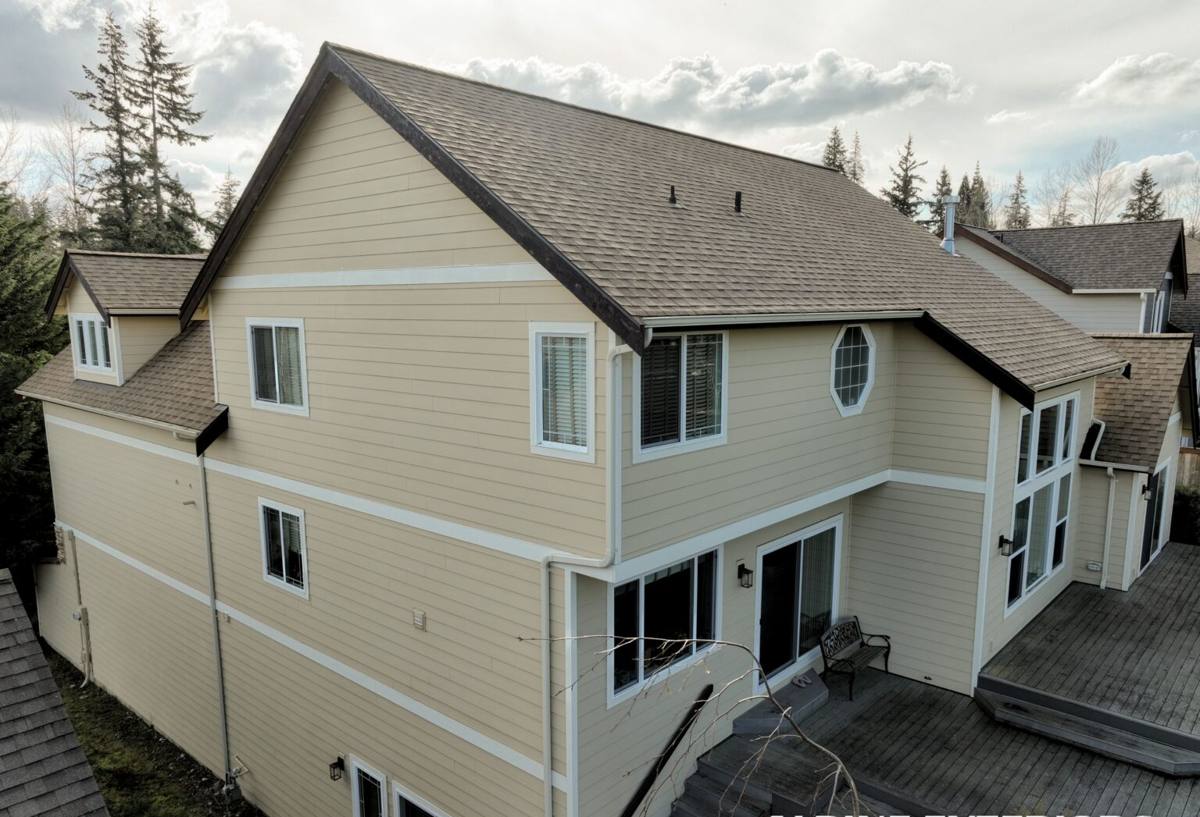
What Fairhaven's Climate Does to a Deck
Every coastal Bellingham neighborhood deals with rain. Fairhaven's combination of salt air and shade from mature trees and close-set lots adds a few extra variables that change how a deck should be built.
Salt Air and Fasteners
Airborne salt accelerates corrosion on anything metal — fasteners, joist hangers, post bases, and railing hardware. Standard galvanized coatings can start to break down faster near the water than they would a few miles inland. We spec stainless steel or heavy-duty coated fasteners rated for coastal exposure on Fairhaven jobs, not because it's required everywhere, but because it's cheap insurance against hardware failure that's expensive and disruptive to fix once the decking is already down.
Driving Rain and Standing Water
Bellingham's rain doesn't just fall straight down — winter storms off the Strait push it sideways, which means water gets driven into joints, under ledger boards, and into end grain that a purely vertical rain wouldn't reach as hard. Decks with poor drainage detailing trap that water against framing members, and trapped moisture combined with mild coastal temperatures is exactly the condition wood rot and fungal growth need to get established.
Moss Season
Shaded lots near mature trees, damp air, and a long wet season add up to moss and algae growth that can start as early as October and last into late spring. Beyond the cosmetic issue, moss on decking holds moisture against the board surface and creates a genuinely slippery walking surface — a real safety concern on stairs and landings. Surface texture, board spacing, and material choice all affect how much moss a deck collects and how hard it is to keep clean.
Choosing the Right Decking Material for This Neighborhood
There's no single "best" decking material for every home — it depends on budget, how much sun the deck gets, and how much upkeep the homeowner wants to do. In a neighborhood like Fairhaven, moisture resistance and mold/moss resistance matter more than they would on a drier, sunnier lot.
| Material | How it handles Fairhaven's climate | Maintenance |
|---|---|---|
| Pressure-treated wood | Affordable and strong, but end grain and fastener holes need consistent sealing to resist the wet season | Annual cleaning and re-sealing recommended |
| Cedar | Naturally rot-resistant and handles the Pacific Northwest climate well, but still needs care in shaded, damp spots | Periodic oiling or sealing; more if shaded |
| Composite decking | Strong moisture and rot resistance; some early-generation composites held moisture inside the board core, so we install newer capped composite products with a fully sealed outer shell | Occasional washing; no sealing needed |
| PVC decking | Fully synthetic, essentially immune to rot and moisture absorption — a strong fit for shaded, damp lots | Low; periodic washing |
We're honest with homeowners about trade-offs rather than pushing one product. Composite and PVC cost more up front but remove most of the moisture-related maintenance burden. Wood costs less initially but only performs as well as the sealing schedule behind it — skip a year or two of maintenance in a wet, shaded Fairhaven yard and a wood deck will show it faster than it would in a drier part of the county.
Framing and Substructure — What's Underneath Matters Most
The decking boards are what everyone sees, but the framing underneath determines whether the deck is actually sound. This is where a lot of corner-cutting happens on decks that look fine for the first year or two and then develop real problems.
The Ledger Board Connection
Where a deck attaches to the house is the single most common source of moisture damage and structural failure. A ledger board needs proper flashing that directs water away from the house rim joist, not just caulk, which breaks down and fails silently behind the board. We flash every ledger connection and check the condition of the house framing behind it before attaching anything.
Joist Hangers and Hardware
Every joist connection should use a rated hanger with the correct nails or screws for that hardware — not deck screws substituted in because they were on hand. In a salt-air environment, the corrosion resistance of that hardware determines how long the connection stays structurally sound.
Footings and Post Bases
Footings need to sit below frost depth and bear on undisturbed or properly compacted soil, and post bases should hold the post above the concrete rather than embedding wood directly in it, which traps moisture against the end grain. On sloped or tree-root-heavy Fairhaven lots, footing placement sometimes takes more thought than a flat, open yard would require.
Airflow Underneath
Decks built low to the ground or over poorly draining soil trap humid air underneath, which speeds up rot in framing and encourages moss and mildew on the underside of the decking. Where deck height allows, we build in enough clearance and, where it doesn't, we grade and drain the area underneath so water doesn't pool against the structure.
Our Deck Building Process
- Site visit and design conversation. We walk the yard, look at drainage, sun/shade exposure, tree cover, and how the deck will connect to the house.
- Material and layout recommendation. Based on the site conditions, we recommend decking and framing materials suited to that specific lot rather than a one-size-fits-all package.
- Permit handling. We prepare and submit the paperwork the project needs through the local jurisdiction before any framing work begins.
- Demolition of the old deck, if applicable. Old footings and framing are assessed — reused only if they're actually sound, not just because it's convenient.
- Footings and framing. Footings are set, ledger flashing installed, and the frame built with corrosion-resistant hardware throughout.
- Decking, railing, and stairs. Boards, railing systems, and stair components are installed to code, with attention to drainage gaps and fastener spacing.
- Final walkthrough and inspection. We review the finished deck with the homeowner and coordinate any required final inspection.
Permits and Code Considerations
Most new decks and significant deck rebuilds in Bellingham and unincorporated Whatcom County require a permit, particularly for structures above a certain height or attached to the home. Requirements can vary depending on the deck's size, height above grade, and proximity to property lines, and Fairhaven's mix of older homes and sloped lots sometimes adds site-specific wrinkles — retaining walls, setback questions, or existing structures that affect what can be built. We handle the permit application and inspection scheduling as part of the job so homeowners aren't left navigating that process alone.
Maintenance Checklist for a Fairhaven Deck
Whatever material a deck is built from, a little seasonal attention goes a long way in this climate. A homeowner doesn't need to do all of this constantly, but working through this list once or twice a year will catch small issues before they become expensive ones.
- Sweep debris and standing leaves off the decking regularly, especially in fall when trees are dropping
- Check for moss or algae buildup on stairs and shaded sections and clean it before it becomes a slip hazard
- Inspect the ledger board area and flashing for any signs of water staining or soft wood
- Look at fastener heads and hardware for rust streaking, which can signal coastal corrosion starting early
- Confirm gaps between boards are clear so water can drain through rather than pooling on the surface
- Reseal or oil wood decking on the schedule appropriate to that product, more often in shaded areas
- Check underneath the deck periodically for adequate airflow and drainage, clearing anything blocking it
Why Hiring a Crew That Already Works in Fairhaven Matters
A deck built to a generic spec sheet and a deck built for this specific neighborhood's conditions can look identical on installation day and perform very differently five years later. A crew that regularly works Fairhaven and the surrounding Bellingham waterfront neighborhoods already knows which fastener grades hold up against the salt air, which lots need extra drainage attention, and where moss becomes a real slip hazard versus just a cosmetic nuisance. That local pattern recognition is hard to substitute for, and it's the difference between a deck that needs major repair work in year six and one that's still solid well past that point with normal maintenance.
We also know the local permitting process and the kind of site conditions common to Fairhaven's older lots and sloped yards, which keeps the project moving instead of hitting avoidable delays partway through.
Get a Straightforward Estimate
If you're planning a new deck or need to replace one that's showing its age, we're happy to come take a look and walk you through what your specific lot and sun/shade conditions call for. There's no pressure and no obligation — just a straight assessment and a clear estimate. Use the form below to get started.