 Bellingham Siding
 Decks in Happy Valley Take a Different Kind of Beating
Happy Valley sits close enough to Bellingham Bay and the surrounding water that salt-laden air is a constant factor in how outdoor structures age here. Add Whatcom County's long, wet fall-through-spring stretch of driving rain off the water, and a short window of dry summer weather, and you get a climate that's genuinely hard on exterior wood and hardware. Decks in this neighborhood don't fail because homeowners neglected them. They fail because the materials and fasteners used weren't matched to what this specific location throws at them year after year.
Salt air accelerates corrosion in fasteners, brackets, and any exposed metal hardware faster than it would a few miles inland. Combine that with months of standing moisture and the shaded, moss-friendly conditions common on lots with mature trees or north-facing exposures, and you get a predictable failure pattern: rust streaks bleeding from screw heads, soft spots where boards meet the ledger, and a slick green film that makes the whole surface unsafe underfoot well before the wood itself gives out.
Why This Matters for Repair, Not Just Appearance
A deck that looks weathered but is structurally sound is a cosmetic job. A deck with corroded ledger bolts, punky joists, or rot traveling into the house framing is a safety issue. Part of what we do on every Happy Valley call is separate the two, because homeowners are often surprised to learn that the ugliest-looking boards aren't always the most dangerous part of the deck — and the parts they can't see, like the ledger connection to the house, usually matter more.
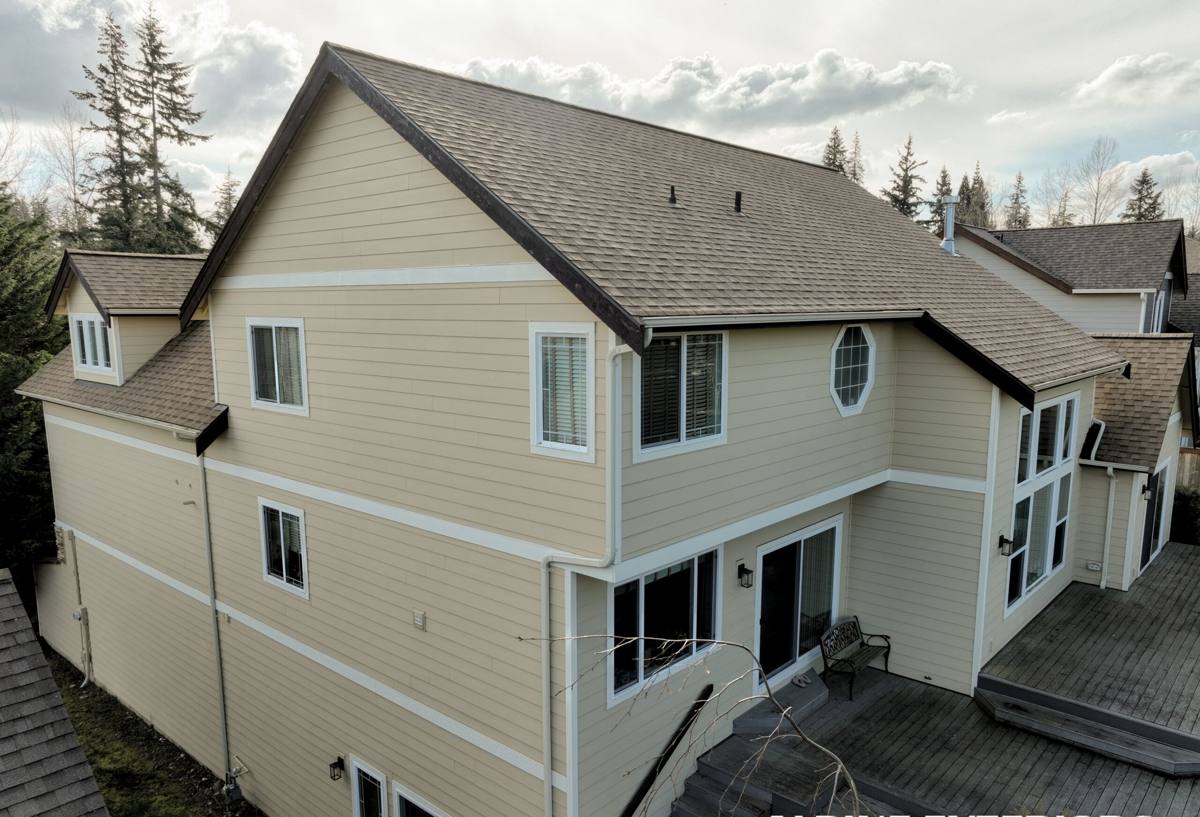
Signs Your Deck Needs Repair Right Now
Most deck problems in this area show up gradually, which makes it easy to put off a look until something gives way underfoot. Here's what we tell homeowners to check for, ideally before the wet season sets in:
- Soft, spongy, or springy spots when you walk across the deck surface
- Rust streaks running down from screw or nail heads
- Gaps opening up between boards, or boards that have cupped or crowned
- Green or black film on the surface, especially in shaded corners — early moss growth
- Any movement, wobble, or gap where the deck ledger meets the house
- Loose, wobbly, or splitting railing posts
- Stair stringers that flex or feel uneven underfoot
- Standing water that doesn't drain within an hour or two after rain
None of these individually means the whole deck needs to be torn out. But each one is a data point, and the combination tells us whether we're looking at a targeted repair or something more involved.
What a Proper Deck Repair Actually Involves
Structural Components First
Before anything cosmetic gets touched, we check the framing: joists, beams, posts, and — most importantly — the ledger board connection to the house. This is the single most common point of failure we find on older decks in this area, because it's the one place where wood, fasteners, and flashing all meet, and it's rarely visible without pulling a board or two. Water that gets behind a poorly flashed ledger doesn't dry out quickly in a climate this wet, and that's how rot spreads into the rim joist and sometimes into the house framing itself.
Decking Boards and Fasteners
Individual board replacement only works if the framing underneath is sound. Once that's confirmed, we replace failed boards, re-fasten loose ones, and — this is important in a salt-air environment — check whether the original fasteners are appropriate for the exposure. A lot of the corrosion problems we see trace back to standard galvanized screws used within reach of salt-influenced air, where stainless or coated deck-specific fasteners hold up considerably longer.
Railings and Stairs
Railings take a lot of lateral stress and are often the first thing to loosen, since post connections rely on a handful of fasteners carrying real load. We check post-to-frame connections for rot and hardware failure, not just wobble at the top rail. Stairs get the same structural review as the deck itself — stringer condition, fastener corrosion, and tread wear.
Surface Restoration
Once the structure and boards are sound, we address the surface: cleaning, sanding where needed, and refinishing with a product suited to this climate's moisture and moss exposure. A repair that skips this step tends to look patched rather than restored, and it leaves the wood without fresh protection right as it heads into another wet season.
Repair vs. Replacement: How We Help You Decide
Not every deck that looks rough needs to come out. The decision usually comes down to how much of the structure is still sound versus how much has been compromised by rot, corrosion, or years of moisture exposure.
| Factor | Leans Toward Repair | Leans Toward Replacement |
|---|---|---|
| Framing condition | Joists and ledger are solid, probed and sound | Widespread soft or rotted framing members |
| Extent of board damage | Isolated boards or sections affected | Majority of decking shows rot or fastener failure |
| Age of structure | Under 15-20 years, built to a reasonable standard | Older structure nearing the end of its practical life |
| Ledger connection | Properly flashed, no active water intrusion | Poor or missing flashing, ongoing moisture damage |
| Code and safety | Meets current railing and structural expectations | Undersized framing or non-compliant railings throughout |
We walk through this with every homeowner before recommending a direction. Our starting point is always the least invasive option that still results in a deck that's safe and durable — we don't default to replacement because it's a bigger job.
Our Deck Repair Process in Happy Valley
1. On-Site Inspection
We walk the full deck, check the ledger connection, probe suspect boards and framing members, and look at drainage and moss patterns. This tells us how much of the damage is cosmetic versus structural.
2. A Clear, Itemized Plan
You get a straightforward explanation of what needs to be repaired, what's optional, and what it will cost — before any work starts. No surprise scope changes once we've opened things up, unless we find something hidden that genuinely changes the picture, and if that happens we stop and talk it through with you first.
3. The Repair Itself
Structural work first, then decking, then railings and stairs, then surface finishing. We match fasteners and hardware to the exposure the deck actually gets, not just what's fastest to grab.
4. Final Walkthrough
We check the repaired areas with you, point out anything worth watching, and talk through what routine maintenance will keep the work holding up through the next wet season.
Material Choices That Make Sense for This Climate
Wood vs. Composite Repairs
Matching new material to existing decking is usually the right call for a repair — mixing composite boards into a wood deck (or vice versa) rarely looks intentional and can complicate future maintenance. For wood, we favor decay-resistant species and proper end-sealing on cuts, since an unsealed cut end is one of the fastest ways water gets into a board. For composite, the concern shifts to proper fastening and airflow underneath, since trapped moisture under composite boards can still cause problems for the framing below even though the boards themselves resist rot.
Fasteners and Hardware
Given the salt-air exposure common in Happy Valley, we lean toward stainless steel or high-grade coated fasteners and structural hardware over standard galvanized options, particularly for ledger bolts, joist hangers, and any connection that's difficult to inspect or replace later. It costs a little more up front and saves a repeat repair down the line.
Finishes
A finish that seals against moisture and resists mildew growth matters more here than in a drier climate. We'll talk through the realistic trade-offs between stains, sealers, and film-forming coatings — including how often each one needs to be refreshed — rather than pushing whatever's easiest to apply.
Keeping Moss and Moisture From Undoing the Repair
Whatcom County's moss season is long, and a freshly repaired deck can start growing moss again within a year or two if drainage and airflow aren't addressed at the same time. Part of a proper repair includes making sure water isn't pooling against the house, that gaps between boards allow drainage instead of trapping debris, and that shaded areas get enough airflow to dry out between rain events. We'll also point out simple habits — periodic sweeping, keeping gutters clear so runoff doesn't dump onto the deck, and an annual rinse — that go a long way toward protecting the work.
Why Hiring a Crew That Already Works This Neighborhood Matters
A contractor who works Bellingham and the surrounding Whatcom County neighborhoods regularly has already seen how salt air, driving rain, and moss behave on decks in this specific setting — not a generic climate zone. That means recognizing a ledger flashing problem before it becomes a structural one, knowing which fasteners actually hold up here versus which ones look fine for a year or two, and setting realistic expectations for how often a deck in this area needs attention. It also means being available and familiar with the neighborhood when a follow-up question comes up, rather than a one-time visit from someone unfamiliar with local conditions.
If your deck is showing rust streaks, soft spots, moss buildup, or just feels like it's due for an honest look, we're happy to come take a look and give you a straightforward, no-pressure estimate using the form below.