 Bellingham Siding
 Deck Repair Built for Lynden's Weather, Not Just the Job
Lynden sits inland from Bellingham Bay, but it doesn't escape the marine climate that defines this corner of Washington. Moist air off the Salish Sea pushes east across Whatcom County most of the year, and Lynden's flat, open farmland does little to slow it down. Add the long, low-angle rains that settle in from October through April, and a shoulder season where moss and algae get a running start on any wood or composite surface that doesn't dry out fast, and you've got conditions that are hard on decks — even well-built ones. We repair decks in Lynden because the failures we see here follow a pattern, and knowing that pattern is what separates a real fix from a patch job.
A deck repair company that mostly works subdivisions in Bellingham or Ferndale can still do competent carpentry, but they won't necessarily know that Lynden's older farmhouse decks were often built with undersized ledger connections, or that newer builds on smaller in-town lots tend to have drainage crowded right up against the house. Local knowledge shortens the diagnosis and keeps the repair from missing the actual cause.
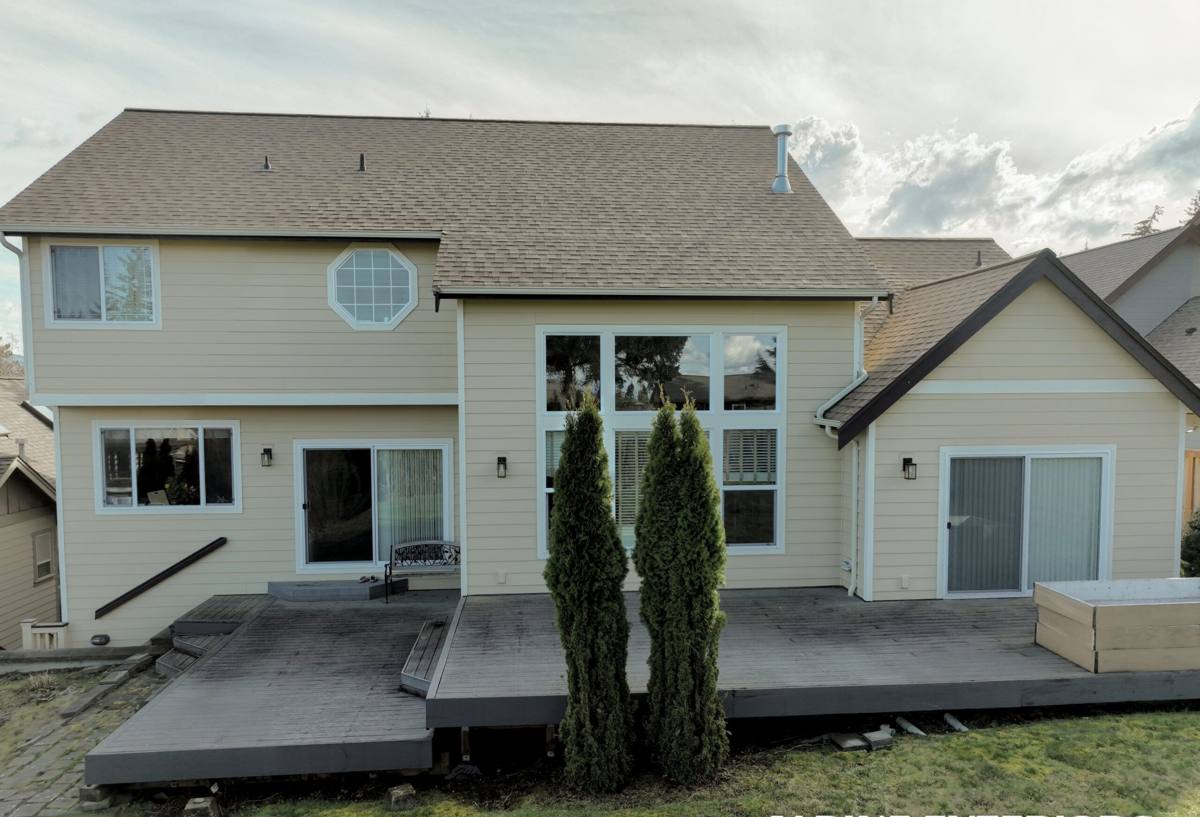
Why Decks Fail Faster Here Than in Drier Climates
Wood and even composite decking are engineered assuming some amount of dry-out time between wet periods. In Whatcom County, that dry-out window is short for roughly seven months of the year. Understanding the specific failure mechanisms helps homeowners know what they're actually looking at when a deck starts to feel soft, wobbly, or discolored.
Moisture Cycling and Wood Movement
Every time a deck board absorbs rain and then dries, it swells and shrinks slightly. Do that dozens of times a season for years, and fasteners work loose, joints open up, and boards cup or twist. This is the single biggest driver of deck repair calls we get in this area — not dramatic rot, just slow accumulated movement that eventually shows up as a squeak, a gap, or a board that flexes underfoot.
Moss, Algae, and Trapped Water
A deck that stays shaded or doesn't get afternoon sun holds moisture longer, and moss takes hold in the gaps between boards and in ledger areas where air doesn't circulate. Moss isn't just cosmetic — it holds water against the wood surface far longer than open air would, which accelerates rot underneath a layer that looks green and harmless from the top.
Ledger Board and Flashing Failure
The ledger board — where the deck attaches to the house — is the single most safety-critical connection on most decks, and it's also the most common place we find hidden rot. If flashing wasn't installed correctly, or wasn't installed at all, water runs behind the ledger for years before anyone notices a problem. By the time staining or sagging is visible from outside, the wood behind it can already be significantly compromised.
Post Base and Footing Deterioration
Posts that sit directly on or near grade, without a proper standoff base, wick moisture up from the ground. Over a decade or more of wet Whatcom County winters, that slow wicking rots the post from the bottom up — often invisibly, since the damage starts below where the post meets the footing.
Signs a Lynden Deck Needs Repair, Not Just Cleaning
Not every discolored or squeaky deck needs structural work. But a few signs mean it's time for an actual inspection rather than a pressure wash and a coat of stain.
- Any bounce, flex, or spring in the deck surface when you walk across it, especially near the house
- Soft or spongy spots you can press a finger into, particularly around the ledger or post bases
- Visible gaps opening between the ledger board and the house siding
- Railings that wiggle or have noticeable play when pushed
- Fasteners backing out, rust streaking down from screw or nail heads
- Standing water that doesn't drain within an hour or two after rain stops
- Moss or algae buildup that keeps returning within weeks of cleaning
- Stair stringers that feel uneven or have visible cracking
If you're seeing two or more of these, it's worth having someone look underneath the deck, not just at the surface. Most of the serious problems we find start below the boards you can see.
What a Correct Deck Repair Actually Involves
Deck repair gets treated as a simple trade sometimes — replace a board, tighten a rail, done. That approach papers over problems instead of solving them. A repair done right starts with understanding why the damage happened, not just where.
Full Structural Inspection
We check the ledger connection and flashing, post bases and footings, joist condition (especially joist ends, which trap water), beam bearing, and the fastener pattern holding it all together. In this climate, hidden rot is common enough that we don't consider a deck repair complete until we've physically checked what's under the visible surface, not just estimated it.
Matching the Fix to the Cause
Replacing a rotted board without fixing the drainage or flashing that caused the rot just buys a few more years before the same spot fails again. Part of doing this correctly is identifying whether the root cause is moisture intrusion, undersized original construction, ground contact, or simple age, and addressing that — not just the symptom.
Code-Correct Hardware and Connections
A lot of older decks in Whatcom County were built before current structural connector requirements were common practice — proper joist hangers, hurricane ties, ledger lag or through-bolt spacing, and rated flashing. When we open up a section for repair, we bring that connection up to a proper structural standard, not just cosmetically similar to what was there.
Drainage and Airflow
Wherever possible, a repair should improve — not just restore — how water moves off and away from the deck. That can mean adjusting board spacing, correcting a slope, adding ventilation under low-clearance decks, or redirecting a downspout that's been dumping water against a post base for years.
Repair vs. Replacement: How We Help You Decide
Not every deck with problems needs to come down. But sometimes a repair is a temporary patch on a structure that's past the point of piecemeal fixes. We walk homeowners through this honestly rather than defaulting to whichever job is bigger.
| Factor | Favors Repair | Favors Replacement |
|---|---|---|
| Structural frame (posts, beams, joists) | Sound, only surface boards affected | Rot or damage at multiple structural points |
| Ledger connection | Solid, properly flashed | Compromised flashing or ledger rot |
| Age of deck | Under 15 years, good original build | 20+ years or unknown/undocumented build quality |
| Extent of damage | Localized — one area or a handful of boards | Spread across the deck, recurring in multiple spots |
| Code compliance | Meets or is easily brought to current standards | Undersized footings, missing connectors, major gaps from current code |
| Homeowner plans | Staying put, deck otherwise meets your needs | Wanting a different size, layout, or material anyway |
When the frame is sound, targeted repair is almost always the better value — there's no reason to replace a structurally healthy deck because of a few bad boards. When the frame itself is compromised in more than one place, patching it usually just delays a bigger cost, and we'll tell you that plainly.
Decking Materials: What Holds Up in This Climate
When boards do need replacing, material choice matters more here than in drier parts of the country. We'll talk through the trade-offs honestly rather than pushing whatever's easiest to install.
Pressure-Treated Lumber
Affordable and structurally reliable when properly maintained, but it needs regular sealing to perform well through Whatcom County's wet season. Skipping maintenance is the single biggest reason PT decking fails early here.
Cedar
Naturally resistant to rot and insects and handles this climate well, but it's a softer wood that shows wear and needs periodic refinishing to keep its color and protection intact.
Composite and PVC Decking
Low maintenance and consistent performance, which appeals to a lot of homeowners tired of yearly upkeep. The trade-off is upfront cost and the fact that composite still needs correct spacing and ventilation underneath — trapped moisture under composite boards causes its own problems even though the boards themselves don't rot.
We don't push one material over another as a default. The right call depends on your budget, how much upkeep you're willing to do, and what the existing structure can support.
Our Process for a Lynden Deck Repair
- On-site inspection. We look at the deck from above and below, check the ledger, posts, and framing, and identify the actual cause of any damage — not just where it's visible.
- Honest scope and estimate. You get a clear written explanation of what needs fixing, why, and what it costs, with repair and replacement options laid out separately if both are reasonable paths.
- Repair execution. We replace what's compromised, correct the underlying cause (flashing, drainage, connectors), and bring connections up to a proper structural standard as we go.
- Final walk-through. We check the deck with you before we consider the job done — solid underfoot, railings secure, drainage working.
Maintenance That Extends the Life of a Repair
A repair is only as good as the upkeep that follows it. A few habits make a real difference in a climate like this one:
- Clear leaves and debris from between boards before fall rains set in
- Keep gutters and downspouts directing water away from posts and footings
- Reseal or restain wood decking on the manufacturer's recommended cycle, not just when it looks faded
- Sweep off standing water and moss buildup regularly through winter
- Have the underside checked every few years, not just the visible surface
Why Hire a Crew That Already Works in Lynden
A deck repair crew that regularly works Whatcom County jobs has already seen how local construction practices, soil conditions, and weather patterns play out over time — which ledger styles tend to fail, which post-base setups hold up, where drainage problems repeat from one property to the next. That's not something you get from a company parachuting in from outside the area for a one-off job. We show up knowing what to check first, which saves you time and keeps the estimate grounded in what's actually likely, not guesswork.
If your deck in Lynden has a soft spot, a wobble, or just hasn't been looked at in a few years, we're happy to come take a look. The estimate is free, there's no pressure, and you'll get a straight answer about whether you're looking at a simple repair or something bigger.