 Bellingham Siding
 Roofing in Edgemoor Means Building for Salt Air, Rain, and Shade
Edgemoor sits close to the water with mature tree canopy overhead, and that combination puts a roof through more than most Bellingham neighborhoods see. Salt-laden air off the bay accelerates corrosion on exposed metal, driving rain off Bellingham Bay finds its way under poorly sealed edges, and the shade from big conifers and hardwoods keeps roof surfaces damp long after a storm has passed elsewhere in Whatcom County. An asphalt shingle roof installed here has to be built for that specific mix of conditions, not just installed to a generic spec sheet.
We've worked on enough roofs in this part of Bellingham to know which details matter most: how the shingles are sealed at the edges, what's happening underneath them, and how well the roof sheds moisture instead of holding onto it. This page walks through what a correct asphalt shingle job looks like for an Edgemoor home, and what our process involves from the first look to the final walkthrough.
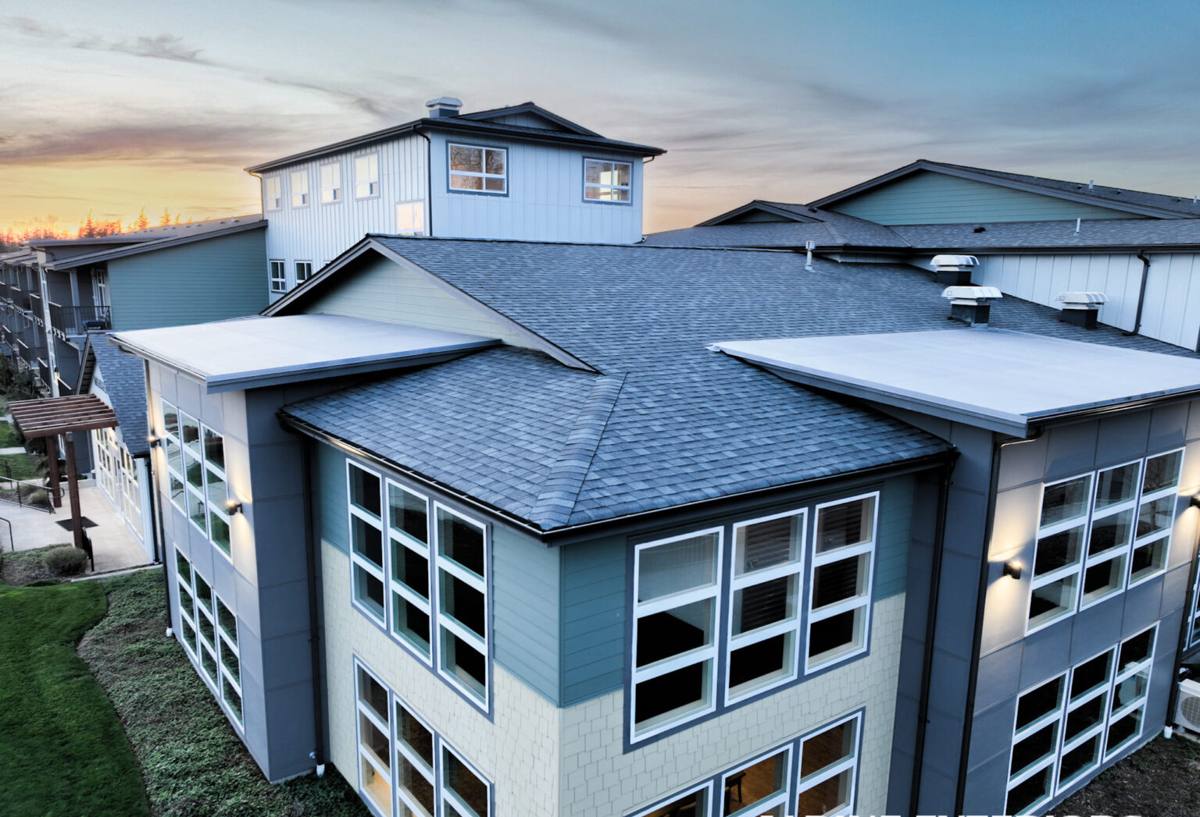
What Edgemoor's Climate Actually Does to a Roof
Salt Air and Metal Components
Even a few blocks inland from the water, salt air speeds up corrosion on flashing, fasteners, and vent components. Standard galvanized fasteners can start showing rust streaks years before they would in a drier, more inland part of the county. We account for this by choosing corrosion-resistant fasteners and flashing metals suited to a marine-influenced environment, not just whatever is cheapest to stock.
Driving Rain and Wind-Driven Moisture
Storms coming off the water don't always fall straight down — wind-driven rain can push moisture sideways and up under shingle edges, especially at eaves, valleys, and anywhere the roof plane changes. A roof that only handles vertical rainfall well isn't enough here. Proper underlayment coverage and sealed laps matter more in Edgemoor than they would on a roof in a more sheltered, inland location.
Shade, Moisture Retention, and Moss
Large trees are part of what makes Edgemoor a desirable place to live, but they also mean parts of many roofs stay shaded and damp well after a rain event has ended elsewhere. That prolonged dampness is exactly what moss and algae need to get established. Once moss takes hold under shingle tabs, it lifts them slightly, which lets water work its way underneath — a slow, patient kind of damage that isn't obvious from the ground.
What a Correct Asphalt Shingle Roof Needs in This Neighborhood
A roof built for Edgemoor conditions isn't a different product line — it's the same asphalt shingle system installed with extra attention paid to the details that matter most in a wet, shaded, salt-air environment.
- Full ice-and-water shield membrane at eaves, valleys, and roof-to-wall transitions, not just at code-minimum locations
- Corrosion-resistant flashing and fasteners suited to a coastal-influenced climate
- Balanced intake and exhaust ventilation so moisture doesn't get trapped in the attic and condense on the roof deck from underneath
- Shingles with algae-resistant granules where sun exposure is limited and shade is heavy
- Careful nailing pattern and sealant application so wind-driven rain can't work its way under the tabs
- Attention to tree-adjacent areas — valleys and low-slope sections where debris and moisture tend to collect
Choosing the Right Shingle for an Edgemoor Home
Most Edgemoor homes do well with either a standard three-tab shingle or a heavier architectural (laminated) shingle. The right choice usually comes down to the home's style, the roof's exposure to shade and moisture, and the homeowner's budget and expectations for how long the roof should last before it needs attention again.
| Factor | 3-Tab Shingle | Architectural Shingle |
|---|---|---|
| Typical lifespan | Shorter end of the asphalt range | Longer end of the asphalt range |
| Wind resistance | Lower rated | Higher rated, better for exposed sites |
| Moss/algae resistance options | Available on some lines | Widely available, often standard |
| Appearance | Flat, uniform look | Dimensional, heavier shadow lines |
| Upfront cost | Lower | Higher |
| Best fit | Budget-driven projects, simple rooflines | Homes under heavy tree cover or with more wind exposure |
Given how much shade and moisture pressure Edgemoor roofs deal with, we generally point homeowners toward architectural shingles with algae-resistant granules unless there's a specific reason to go with a lighter-weight product. It's not that three-tab shingles are a bad product — it's that the heavier, better-sealed architectural profile holds up better against the specific stresses this neighborhood puts on a roof.
What a Proper Installation Actually Involves
Tear-Off and Deck Inspection
We remove the old roofing down to the deck and inspect the sheathing for soft spots, delamination, or water staining before anything new goes down. Covering over a compromised deck just hides a problem that will resurface later — any damaged sections get replaced before installation continues.
Underlayment and Water Barrier
Given the driving-rain exposure common in this area, we install a full synthetic or felt underlayment with ice-and-water shield membrane extended beyond code minimums at vulnerable areas — valleys, eaves, skylights, and chimney transitions. This is the layer that protects the home if wind ever drives water past the shingles themselves.
Flashing
Flashing at chimneys, sidewalls, valleys, and vent penetrations is where most roof leaks actually start, not in the field of the shingles. We use corrosion-resistant metal and proper step-and-counter-flashing techniques rather than relying on sealant alone to do the job long-term.
Shingle Installation
Shingles go down with manufacturer-specified nailing patterns and exposure, sealed edge-to-edge so wind-driven rain can't lift a tab and find its way underneath. We pay particular attention to starter courses and rake edges, which are common weak points in a lower-quality installation.
Ventilation
We check and, where needed, correct intake and exhaust ventilation as part of the job. A roof can be installed perfectly and still fail early if the attic underneath it is trapping moisture — proper airflow is what keeps the deck dry from the inside as well as the outside.
Our Process From First Look to Final Walkthrough
- Free on-site assessment — we walk the roof (or inspect from the ground and access points when a roof isn't safely walkable) and look at attic ventilation, deck condition, and any tree-related wear
- Straightforward estimate — a written scope of work and price, explained in plain terms, no pressure to decide on the spot
- Scheduling around weather — Bellingham's rain patterns mean timing matters; we plan installation windows to avoid working a torn-off roof into an incoming storm
- Tear-off, deck check, and installation — done in the sequence described above, with photos documenting anything found once the old roofing is removed
- Cleanup and magnetic sweep — full site cleanup including a nail sweep of the yard and driveway
- Final walkthrough — we go over the finished roof and warranty paperwork with the homeowner before calling the job done
Moss Prevention Isn't a One-Time Fix
Even a well-installed roof in a shaded, moist part of Edgemoor will need some ongoing attention to stay ahead of moss and algae. Algae-resistant shingle granules slow the process significantly, but they don't eliminate it entirely under heavy tree cover. Periodic gentle cleaning — never high-pressure washing, which can strip granules and shorten shingle life — combined with keeping gutters and valleys clear of needles and leaves goes a long way toward protecting the investment.
- Keep overhanging branches trimmed back to reduce shade and debris buildup on the roof
- Clean gutters and valleys at least twice a year, more often under heavy tree cover
- Have moss treated or gently removed before it spreads under shingle tabs, not after
- Check attic ventilation periodically — blocked soffit or ridge vents undo a lot of the roof's built-in moisture protection
- Watch for granule buildup in gutters, which can signal a shingle surface starting to wear
What Roofing Typically Costs and Why It Varies
Asphalt shingle roof pricing depends on more than square footage. Roof complexity, accessibility, deck condition, and the shingle line chosen all move the number. We don't quote prices without seeing the roof, but the factors below are what typically drive cost up or down on an Edgemoor project.
| Cost Factor | Why It Matters |
|---|---|
| Roof pitch and complexity | Steeper, multi-plane roofs take longer and require more safety setup |
| Deck condition | Rotted or delaminated sheathing found during tear-off adds material and labor |
| Shingle line | Architectural and impact-rated products cost more upfront than basic three-tab |
| Access and tree cover | Tight lots and overhanging branches can slow staging and material delivery |
| Ventilation upgrades | Adding or correcting intake/exhaust venting is sometimes needed alongside reroofing |
| Flashing scope | Chimneys, skylights, and multiple valleys add flashing work beyond a simple gable roof |
Why Hiring a Crew That Already Works in Edgemoor Matters
A roofer who's worked this neighborhood before already knows what to expect: which areas hold moisture longest, how tree cover on a given lot affects shingle choice, and how wind off the water tends to move rain into vulnerable spots. That familiarity shows up in fewer surprises during the job and a roof that's built for the conditions it will actually face, not just a generic installation dropped onto a coastal, tree-shaded lot. It also means we're a known, findable local business if any warranty question ever comes up down the road — not a crew that worked the area once and moved on.
If you're planning a reroof or want a second opinion on the condition of your current shingles, we're happy to take a look. Reach out for a free, no-pressure estimate using the form below — we'll walk the roof, explain what we find in plain language, and give you a straightforward price with no obligation.