 Bellingham Siding
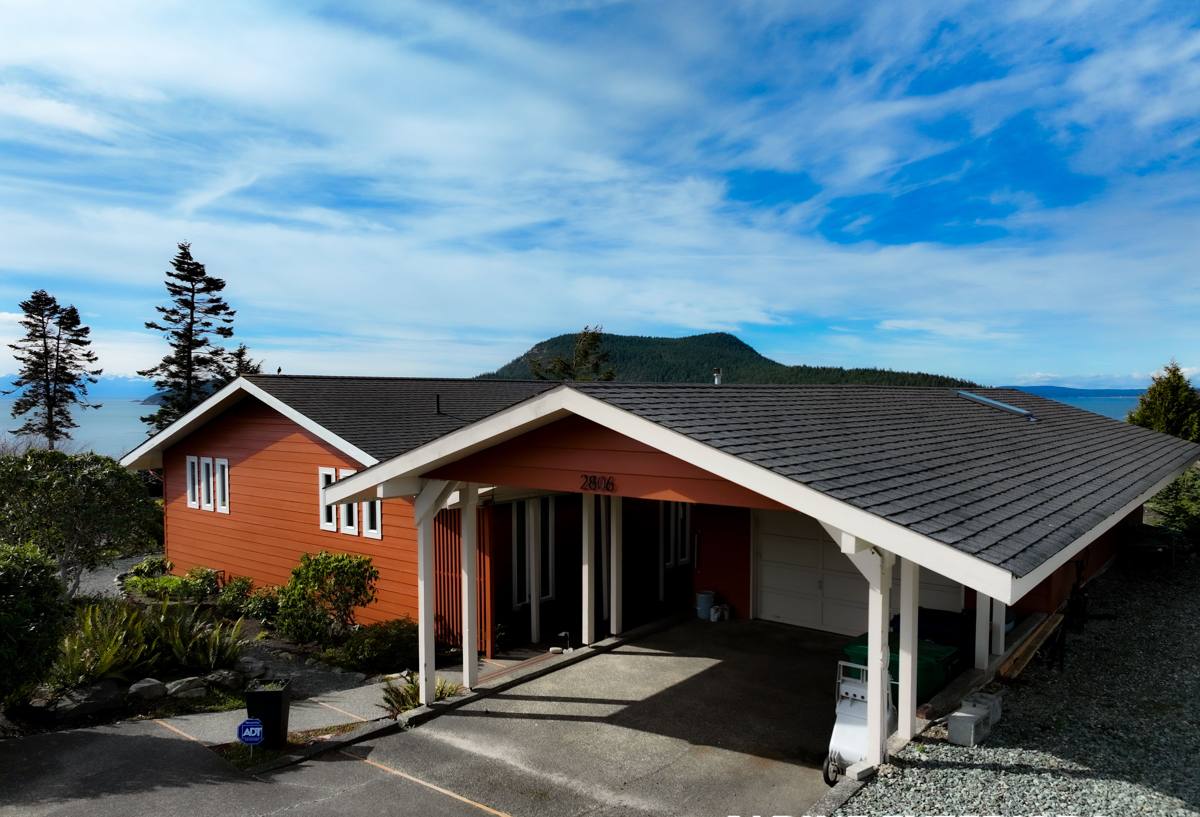
 Edgemoor's Exterior Sits Between the Bay and the Trees
Edgemoor is one of Bellingham's more exposed residential settings, and that exposure cuts two ways. Homes closer to the water take the brunt of salt-laden air and wind-driven rain coming off Bellingham Bay, while homes tucked back under mature tree canopy deal with deep shade, slow-drying siding, and moss that never really goes dormant. Some properties get both problems on different sides of the same house. Whatever combination of sun, salt, and shade a given lot has, the siding has to handle it every single day, year-round, for decades.
That's a different design problem than siding installed on a dry, open lot a few miles inland. In Whatcom County's marine climate generally, and in a shoreline-adjacent neighborhood like Edgemoor specifically, the material and the installation details both matter more than they would somewhere drier. This page covers what siding installation actually needs to get right in Edgemoor, how we approach it, and why the product we use is the one we've standardized on for every home we side in this area.
What Salt Air, Driving Rain, and Moss Actually Do to Siding
Salt Air
Airborne salt from the bay settles on exterior surfaces and accelerates the breakdown of paint films, corrodes fasteners and metal flashing that aren't rated for it, and speeds up fading on lower-quality finishes. Over years, a house facing the water can weather noticeably faster than an identical house set back from it, even if both get repainted on the same schedule.
Driving Rain
Wind off the bay doesn't just drop rain straight down — it drives it sideways into wall assemblies, which puts real pressure on laps, seams, and butt joints. Siding that relies on caulk or tight-fit joints alone to keep water out will eventually let moisture in, usually at the exact spots where two pieces meet or where trim meets field.
Moss and Prolonged Moisture
Shaded lots under fir and cedar canopy stay damp longer after every rain event, which is most of the year here. That extended moisture window is exactly what moss, algae, and mildew need to establish themselves on a wall surface. Beyond the cosmetic issue, sustained surface moisture is hard on any siding material that isn't dimensionally stable or that absorbs water into its core.
Why Material Choice Matters More in This Setting
We install James Hardie fiber cement siding exclusively, and we don't install vinyl, LP SmartSide, cedar, primed spruce, Cemplank, or Allura. That's not a marketing position — it's a standard we hold because of what we've seen these materials do (and not do) in exactly the kind of marine, shaded, rain-driven environment Edgemoor sits in.
| Material | Behavior in salt air / driving rain / moss shade |
|---|---|
| Vinyl siding | Can warp or distort under sustained heat and UV exposure, and gaps at seams give wind-driven rain a path behind the panel; doesn't hold paint if a color change is ever wanted |
| Cedar / primed spruce | Natural wood absorbs moisture in shaded, damp conditions, which feeds rot and moss growth at the surface; needs ongoing refinishing to keep water out |
| LP SmartSide (engineered wood) | Wood-strand core is more moisture-sensitive at cut edges and butt joints than fiber cement; edge sealing and caulk maintenance become critical in a wet climate |
| James Hardie fiber cement | Non-combustible, dimensionally stable cement-based product engineered specifically for wet climates; factory ColorPlus finish resists fading and holds up to salt air without repainting on a short cycle |
None of this means the other products are junk — plenty of them perform fine in drier, more sheltered settings. It means that for a neighborhood dealing with bay-driven salt air, sideways rain, and shaded, slow-drying wall sections, we've concluded fiber cement is the one material that consistently holds up without the maintenance headaches. That's why it's the only thing we put on a house.
James Hardie's Climate-Engineered Product Lines
Hardie doesn't make one universal siding — it engineers different formulations (HZ5 and HZ10) for different climate zones, primarily around moisture and freeze-thaw behavior. Western Washington, including Bellingham and Whatcom County, falls into the wetter, more moderate HZ5 zone, and that's the formulation we specify for Edgemoor installs. Getting the climate zone right isn't cosmetic — it affects how the board is engineered to manage moisture over its service life.
On top of the base product, ColorPlus factory-applied finish matters specifically in a salt air environment. A factory-baked finish is more uniform and more UV- and salt-resistant than field-applied paint, and it comes with its own finish warranty separate from the product warranty. For a house that's going to spend its life a short distance from open water, that finish durability is one of the bigger practical arguments for Hardie over a field-painted alternative.
What a Correct Installation Actually Involves
The material is only half the equation — installation quality is what determines whether any siding, Hardie included, actually performs the way it's engineered to. In an exposure like Edgemoor's, a handful of details matter more than usual:
- Proper weather-resistive barrier behind the siding, lapped correctly so water sheds outward and down, not into the wall cavity
- Rain-screen or drainage gap where conditions call for it, so any moisture that does get behind the cladding can drain and dry rather than sit against the sheathing
- Correct fastener type and spacing per Hardie's install specs — under-fastening or over-driving nails is one of the most common causes of early failure
- Flashing at every window, door, deck ledger, and roofline intersection, installed so water is directed out and away rather than trapped behind trim
- Proper clearance between the bottom of the siding and grade, decking, or roofing, so the board isn't sitting in standing water or snow
- Correctly sized gaps at butt joints and trim, caulked with the right sealant so the assembly can move without opening a water path
Any one of these done wrong can undermine an otherwise good product. We treat this list as non-negotiable on every job, not just the ones facing the water.
Our Process for an Edgemoor Siding Installation
1. On-Site Assessment
We walk the property and look at sun exposure, shade patterns, proximity to the water, existing moisture damage, and the condition of the current siding and trim. This tells us where extra attention is needed — a shaded north wall under trees gets treated differently than a south-facing wall catching direct salt-laden wind.
2. Tear-Off and Sheathing Check
Once the old siding comes off, we inspect the sheathing underneath for rot, soft spots, or prior water damage. This is often the point where hidden problems from years of a failing water-resistive barrier or bad flashing show up. Any damaged sheathing gets addressed before anything new goes on — installing new siding over compromised sheathing just hides the problem instead of solving it.
3. Weather Barrier and Flashing
We install the water-resistive barrier and flashing package correctly lapped and sealed at every penetration, window, and door before a single piece of siding goes up. This layer is what actually keeps a wall dry over the long run — the siding itself is the second line of defense, not the first.
4. Hardie Installation to Manufacturer Spec
Boards, panels, and trim go up per James Hardie's fastening, clearance, and joint-treatment specifications, using the HZ5 product line appropriate for this climate. We don't deviate from spec to save time, because deviations are exactly where premature failures start.
5. Final Walkthrough
We walk the finished job with the homeowner, check caulk lines, trim reveals, and clearances, and confirm everything is sealed and finished the way it should be.
Cost Factors Specific to This Kind of Job
Every home is different, but a few Edgemoor-specific factors tend to move the price of a siding job up or down more than general square footage does:
| Factor | Why it affects cost |
|---|---|
| Existing sheathing condition | Rot or moisture damage found during tear-off means repair work before new siding can go on |
| Wall exposure and access | Waterfront-facing walls, steep grades, or limited equipment access near mature trees can slow the work |
| Trim and detail complexity | Homes with more window trim, dormers, or roofline intersections need more flashing and cutting |
| Current moss/mildew buildup | Heavier existing growth may mean more prep work on the substrate before installation begins |
| Color and finish selection | Standard ColorPlus colors vs. custom finish options can shift material cost |
Maintenance After Installation
Correctly installed Hardie siding is low-maintenance, but "low" isn't "none" — especially in a shaded, salt-air setting like Edgemoor. A simple annual routine keeps it performing the way it's designed to:
- Rinse the siding down once or twice a year, focusing on shaded or north-facing walls where moss and algae are more likely to establish
- Check caulk joints at trim and window flashing annually for cracking or separation and have any gaps resealed promptly
- Trim back tree limbs and shrubs that keep a wall section shaded and damp longer than the rest of the house
- Look at ground-level clearance each year to make sure mulch, soil, or plantings haven't crept up against the bottom edge of the siding
- Have any impact damage or chips in the finish addressed before bare fiber cement is left exposed to moisture
Why a Crew That Already Works Edgemoor Matters
Siding installation done right in this neighborhood isn't generic residential work — it's residential work informed by what actually happens to a wall a few blocks from salt water under a shaded canopy through a wet Whatcom County winter. A crew that's worked this area knows which walls tend to need extra flashing attention, what moss growth patterns to expect on shaded lots, and how the local permitting and inspection process runs in Bellingham. That familiarity shows up in fewer surprises during tear-off and a finished install that's built for the conditions the house will actually face, not a generic spec sheet.
If you're weighing a siding replacement or new installation on an Edgemoor home, we're happy to come take a look, walk the property with you, and put together a straightforward, no-pressure estimate based on what your home actually needs.