 Bellingham Siding
 Why Windows in Columbia Take More Punishment Than People Expect
Columbia is one of Bellingham's older, established neighborhoods, with a mix of homes that range from mid-century originals to newer infill construction. What almost all of them share is exposure to the same Whatcom County weather pattern: marine air off Bellingham Bay, months of driving rain from the south and west, and enough shade and moisture in the cooler seasons to keep moss and algae established on roofs, siding, and window trim for most of the year. Windows sit right at the intersection of all of it — they're penetrations in the wall, they take wind-driven rain straight on, and they're one of the first places a house tells you something's wrong.
Older single-pane or early dual-pane windows in this area don't just waste heat. They fog up, they let salt-laden moist air work into the wood trim around them, and their seals give out years before a homeowner expects. We've replaced enough windows in this part of Bellingham to know the failure patterns are predictable — which is exactly why we can plan around them instead of guessing.
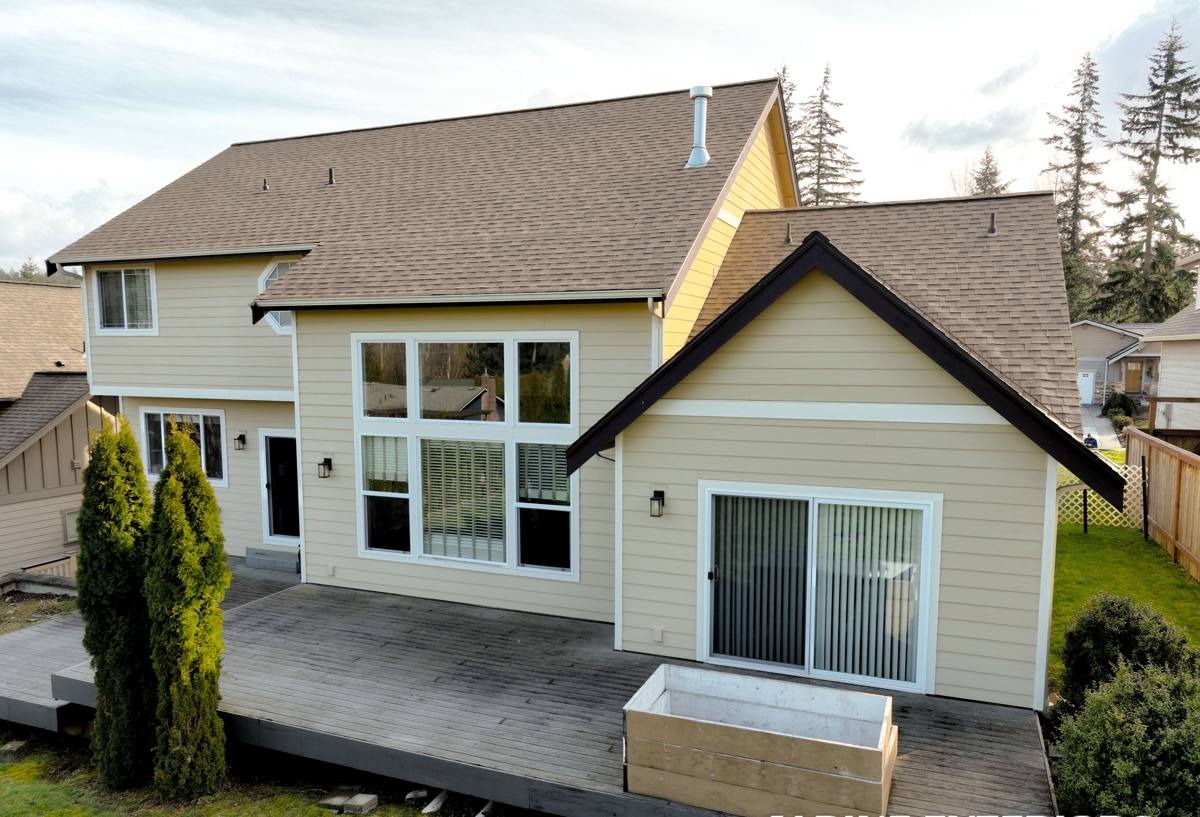
What "Energy-Efficient" Actually Means for a Columbia Home
Energy-efficient windows aren't defined by a sticker in the corner of the glass. For a home in this climate, three things matter more than any marketing label:
Low U-factor, not just a good SHGC number
Western Washington doesn't get the intense summer sun that makes solar heat gain coefficient (SHGC) the headline number in hotter climates. Here, the U-factor — how well the window resists heat loss through the frame and glass — matters more, because the bigger cost driver is heat escaping during our long stretch of cool, wet months. A window with a great SHGC rating but a mediocre U-factor is the wrong pick for Whatcom County.
Frame and seal performance in constant moisture
A window can have excellent glass and still underperform if the frame material or the installation lets moisture in around the edges. In a climate with this much sustained dampness, the seal between the window and the wall assembly is doing as much work as the glass itself.
Condensation resistance
Interior condensation on window glass or frames in winter is a common complaint we hear from Columbia homeowners. It's usually a sign of an aging window losing its thermal performance, not just a humidity issue inside the house. A properly rated, correctly installed replacement window largely eliminates it.
Common Window Problems We See in This Part of Bellingham
- Wood or composite trim around older windows softening from years of moisture intrusion, even when the glass itself still looks fine
- Failed seals on dual-pane units — visible as fogging or a milky haze between the panes
- Moss and algae staining building up on horizontal trim ledges and sills, holding moisture against the wood longer
- Drafts around aluminum-framed windows common in mid-century Bellingham construction, which conduct cold straight through the frame
- Paint failure and caulk cracking on south- and west-facing units that take the brunt of driving rain
None of these are unique to Columbia, but the frequency is higher here than in drier inland climates — which is why a generic, one-size-fits-all install approach doesn't hold up as well over time.
What a Correct Installation Actually Involves
Most window failures we're called out to inspect aren't a bad window — they're a window that was installed without the flashing and sequencing details that matter in a wet climate. A correct install in this area includes:
- Removing the old unit and inspecting the rough opening and sheathing for hidden rot or moisture damage before anything new goes in
- Installing sill pan flashing so any water that does get past the window has somewhere to drain, rather than sitting against the framing
- Integrating window flashing correctly with the home's existing weather-resistive barrier — shingle-lapped so water sheds outward and down, never trapped behind the siding
- Using appropriate sealants and backer rod at the perimeter, not just a bead of caulk over a gap
- Confirming the unit is level, plumb, and square before final fastening, since a racked frame stresses seals and shortens the life of the window
- Proper interior and exterior trim-out that matches the home's existing detailing
Skip any one of these steps and you can end up with a window that looks fine for a year or two and then starts showing rot, drafts, or leaks — right around the time the installer is long gone.
Our Process, Start to Finish
1. On-site assessment
We walk the home with you, look at each window in question, and check for existing moisture damage, settling, or trim issues that could affect the install — not just measure the glass opening.
2. Straight talk on options
We'll tell you honestly which window types and price tiers make sense for your home and budget, and where spending more actually buys you something versus where it doesn't.
3. Written estimate
No pressure, no expiring "today only" pricing games. You get a clear breakdown of materials and labor.
4. Installation
Old windows out, opening inspected and repaired if needed, new units flashed, sealed, and trimmed correctly the first time.
5. Walkthrough and cleanup
We check operation on every window with you before we consider the job done, and we clean up the site — inside and out.
Choosing the Right Window Material for This Climate
| Frame Material | How It Handles Our Climate | Maintenance |
|---|---|---|
| Vinyl | Good moisture resistance, no painting needed, solid thermal performance at a moderate price | Low — occasional cleaning |
| Fiberglass | Excellent dimensional stability in temperature and moisture swings, strong long-term performance | Low |
| Wood-clad | Good insulating properties and a traditional look, but the wood core is more sensitive to installation quality in a wet climate | Moderate to higher — cladding and seals need periodic attention |
| Aluminum | Durable but conducts cold and heat readily; largely why older aluminum-framed homes here run drafty | Low, but poor thermal performance |
We don't push one material as the answer for every home. A vinyl or fiberglass window is usually the more sensible choice for straightforward energy performance and low upkeep in this climate. Wood-clad can be the right call when matching an existing architectural style matters more than minimizing maintenance — that's a homeowner decision, and we'll lay out the trade-offs honestly rather than steering you toward whatever has the best margin.
What Affects the Cost of a Window Project
| Factor | Why It Matters |
|---|---|
| Number and size of windows | Bigger jobs get some efficiency in scheduling but scale mostly linearly with unit count and size |
| Frame material | Vinyl is typically the most budget-friendly; fiberglass and wood-clad run higher |
| Condition of the existing opening | Hidden rot or damaged sheathing found during removal adds repair time and material before the new window goes in |
| Access and site conditions | Second-story windows, tight side yards, or landscaping obstructions affect labor time |
| Trim and finish work | Matching existing interior trim or exterior detailing adds carpentry time |
We'd rather give you a realistic range up front than a low number that grows once the walls are open. If we find rot or moisture damage during removal, we'll show it to you and explain the fix before doing the work — not add it to an invoice as a surprise.
Questions Worth Asking Before You Hire Anyone
- Do they inspect the rough opening for hidden damage before installing, or just swap the unit?
- Do they use sill pan flashing on every install, not just when asked?
- Will they show you the U-factor and other performance ratings for the specific window they're quoting, not just a brand name?
- What's the warranty on both the window itself and their installation labor?
- Do they have current experience working on homes in Bellingham and Whatcom County specifically, where the moisture load is higher than a lot of manufacturer install guides assume?
- Will they give you a written estimate before starting, with no pressure to sign same-day?
Why It Matters That We Already Work in Columbia
A crew that's replaced windows across this part of Bellingham has already seen how Columbia's housing stock ages under this climate — where moisture tends to collect on a typical lot, how older trim details were originally built, and which corners get skipped by installers who aren't used to marine-climate conditions. That's the difference between a window that performs for twenty-plus years and one that needs attention again in five. We're not learning the neighborhood on your project.
If you're dealing with drafty, foggy, or aging windows in Columbia, we're happy to take a look and give you a straightforward, no-pressure estimate — just fill out the form below and we'll get in touch.