 Bellingham Siding
 Windows Built for Fairhaven's Marine Climate
Fairhaven sits close enough to Bellingham Bay that its homes take on a different kind of weather stress than houses further inland. Salt-laden air moves in off the water, wind-driven rain hits west- and south-facing walls at an angle instead of straight down, and the long gray stretch from October through April keeps window frames and sills damp for days at a time. On top of that, the shade from mature trees and the persistent moisture means moss and algae get a foothold on any surface that stays wet — including window sills, trim, and the glazing edges of poorly sealed units.
None of that is exotic. It's just what Whatcom County coastal weather does to a house, year after year, for as long as the windows are in the wall. The difference between a window that looks fine for five years and one that performs well for twenty five usually comes down to material choice, flashing detail, and installation care — not the sticker on the glass.
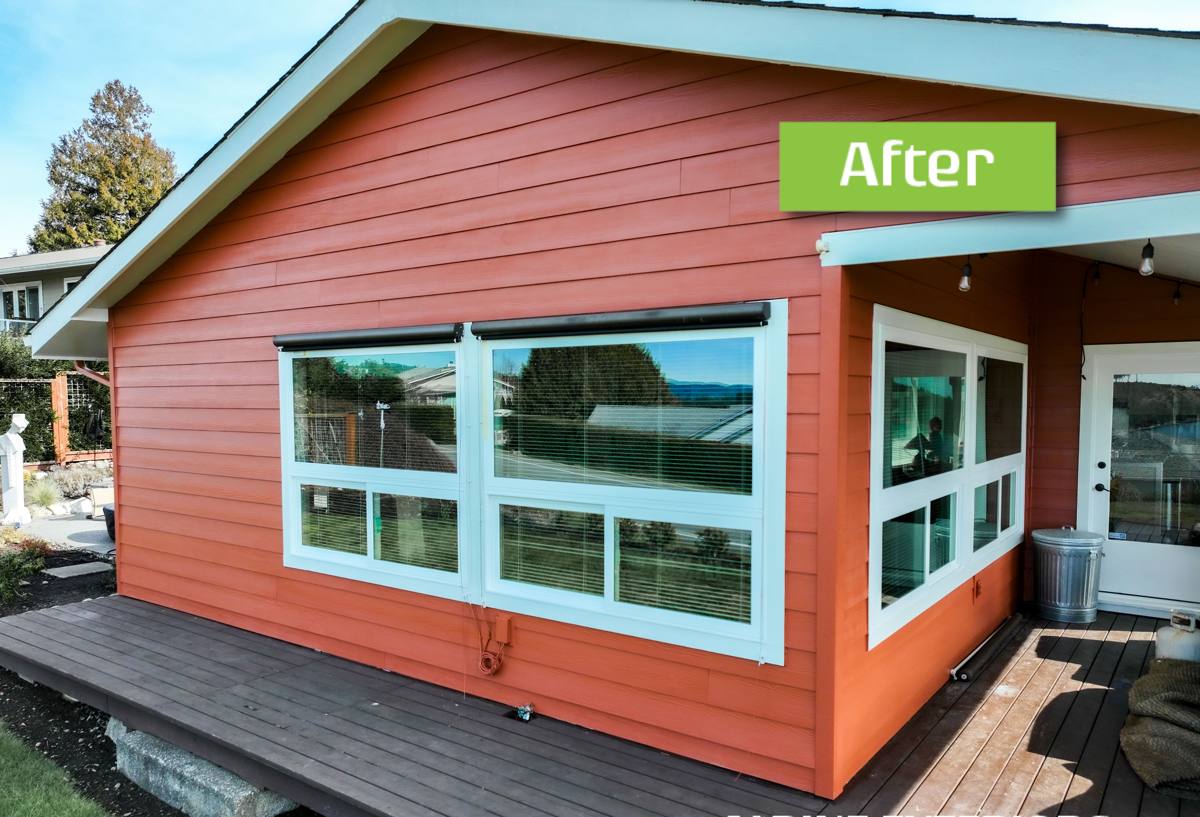
What Fairhaven's Older and Craftsman-Style Homes Need
A lot of the housing stock in and around Fairhaven has real character — older Craftsman bungalows, early-1900s cottages, and a mix of remodeled and infill homes sitting on lots with mature landscaping. That character creates a specific set of window challenges:
- Original openings are often out of square. Decades of settling mean the rough opening rarely matches factory dimensions exactly, which is exactly why "custom" matters here more than in a new subdivision.
- Trim profiles and sightlines matter. A stock replacement window with the wrong sash proportions or a flat, modern profile can look out of place on a home with existing Craftsman or cottage detailing.
- Old flashing (or none at all) is common. Many older Fairhaven-area homes were built or last re-windowed before modern weather-resistive barrier and flashing standards existed. Pulling the old unit is often the first time anyone has actually looked at the condition of the framing underneath.
- Shaded, damp wall sections need better drainage detailing, not just a better window — moss and mildew build where moisture can't escape.
Newer homes and additions in the area have their own issue: builder-grade vinyl windows that were adequate on day one but were never upgraded for the amount of wind-driven rain a west-facing wall near the water actually sees.
What "Correct" Custom Window Installation Actually Involves
"Custom" gets used loosely in this trade. For us it means two specific things: the window itself is sized and configured to the actual opening (not a nearest-standard-size compromise), and the installation is detailed to the specific wall assembly it's going into. Skipping either one is how you end up with a nice-looking window that leaks in three years.
The parts that actually determine performance
| Step | Why it matters in this climate |
|---|---|
| Opening inspection & measurement | Finds rot, out-of-square framing, or missing weather barrier before it becomes a hidden problem behind a new window |
| Sill pan flashing | Gives any water that gets past the window a sloped path back outside instead of into the framing — non-negotiable on rain-exposed walls |
| Window selection (material & glazing) | Matches frame material and glass package to sun exposure, wind load, and moisture conditions on that specific wall |
| Air seal & insulation at the rough opening | Prevents drafts and condensation at the frame edge, a common failure point in older homes |
| Exterior flashing tape & WRB integration | Ties the new window into the house's water management system so it isn't an isolated leak point |
| Trim, caulking & finish | Matches existing sightlines and closes the last gap where wind-driven rain can intrude |
Choosing the Right Window Material for a Coastal Bellingham Wall
There's no single "best" window material — there's a best fit for the wall, the exposure, and the homeowner's maintenance appetite. Here's how we actually walk clients through it for a home near the water:
Vinyl
Budget-friendly, low maintenance, and performs fine in most Fairhaven applications when it's a quality product with a properly reinforced frame. The trade-off is limited color and profile options, which can be a real drawback on a home with historic trim detail.
Fiberglass
Handles the expansion and contraction from Bellingham's temperature swings better than vinyl, holds paint well if you want a custom color, and generally shows less long-term warping on sun-exposed or salt-exposed walls. It costs more up front.
Wood & Wood-Clad
The right choice when matching original Craftsman or cottage sightlines is the priority. Clad exteriors (aluminum or fiberglass over a wood interior) give you that traditional look with far less exterior maintenance than bare wood — which matters a lot given how much moisture this area sees. Bare wood exteriors need a real maintenance commitment (repainting/resealing on a schedule) or moss, mildew, and eventually rot will find the seams.
Aluminum
Strong and slim-profile, but it conducts heat and cold efficiently, which can lead to condensation and, over time, corrosion in a persistently damp marine climate unless it's a thermally-broken, marine-rated product. We don't recommend standard aluminum for most residential Fairhaven applications for that reason — it's a maintenance and moisture-behavior trade-off, not a knock on the material itself.
Glass and Weatherstripping Choices That Matter Locally
Bellingham doesn't see extreme heat, so solar heat gain coefficient isn't the priority it would be in a hot climate — but a few glazing choices genuinely pay off here:
- Double or triple-pane with a low-E coating for consistent comfort during the long heating season and to reduce interior condensation on cold, damp days.
- Warm-edge spacer systems instead of older aluminum spacers, which lose their seal faster in constant humidity and show up as fogged glass years before the rest of the window fails.
- Corrosion-resistant hardware (locks, hinges, cranks) — salt air is genuinely harder on cheap zinc or steel hardware than an inland install, and it's a small upgrade cost compared to replacing seized hardware later.
- Quality compression weatherstripping that stays flexible through winter cold rather than stiffening and losing its seal.
Our Process for a Fairhaven Custom Window Project
- On-site assessment. We look at the actual openings, existing framing condition, sun/rain exposure per wall, and your priorities — energy performance, matching existing trim, easier operation, or all three.
- Custom measurement and product selection. Every opening is measured individually; we don't quote off assumed standard sizes.
- Written estimate. Material, glazing, and labor broken out so you can see what's driving the cost.
- Removal and opening inspection. Old units come out carefully so we can check the sheathing and framing before anything new goes in — this is where hidden moisture damage, if any, gets found and addressed.
- Flashing, install, and air/water seal detailing. Sill pan, integration with the weather-resistive barrier, insulation at the frame, and exterior flashing tape done in the correct sequence.
- Trim and finish work to match the home's existing look.
- Final walkthrough so you understand operation, hardware, and any maintenance recommendations specific to your window material.
Why Local Installation Experience Matters Here
Window failures around Bellingham Bay rarely show up as a dramatic leak on day one. They show up two or three winters in as a soft spot on a sill, a musty smell in a nearby closet, or moss creeping up a wall below a window that was never flashed to shed water correctly. A crew that hasn't worked this specific kind of weather — salt-influenced, wet nine months a year, with shaded and sun-exposed walls sometimes on the same house — can install a technically fine window with the wrong detailing for the exposure it's facing.
Working regularly in Fairhaven and the rest of Bellingham means we've seen how these particular walls, exposures, and older framing systems actually behave over time, not just how a spec sheet says a product should perform in ideal conditions.
Signs Your Current Windows Need Attention
- Fogging or condensation between panes — the seal has failed and the insulated glass unit needs replacement
- Visible gaps, soft or discolored trim, or paint that keeps failing at the same spot near a window
- Windows that are hard to open, close, or lock — often a sign of frame movement or swelling
- Noticeable draft or a cold wall around the frame in winter
- Moss, algae, or persistent staining on the sill or exterior trim below the window
- Musty smell or visible mold on interior trim near a window
If you're seeing even one or two of these, it's worth having the opening looked at rather than waiting — moisture problems at a window rarely stay contained to the window itself.
Cost Factors to Expect
Every project is priced individually, but the main variables that move the number for a Fairhaven custom window job are consistent: window material (vinyl vs. fiberglass vs. wood-clad), size and configuration (single unit vs. multi-lite or specialty shapes), the condition of the existing opening once we're inside the wall, and how much trim and finish matching is involved. A straightforward like-for-like vinyl replacement will run well below a full custom wood-clad unit matched to historic trim profiles — we'll walk you through where your project falls once we've seen the openings in person.
If your Fairhaven home has windows that are fogging, drafting, sticking, or just showing their age against Bellingham's wet coastal climate, we're happy to take a look and put together a straightforward, no-pressure estimate — just fill out the form below.