 Bellingham Siding
 Why Fairhaven Roofs Age Differently Than Roofs Inland
Fairhaven sits close enough to Bellingham Bay that salt-laden air is a daily fact of life, not an occasional event. Combine that with Whatcom County's long wet season, heavy tree canopy in parts of the neighborhood, and a climate that rarely gives a roof more than a few dry weeks in a row, and you get a set of wear patterns that show up faster and differently than they would on a roof forty miles inland. Metal fasteners and flashing corrode sooner when they're exposed to salt air. Shaded, moisture-retaining roof sections grow moss and algae earlier in their life. Underlayment and decking that would otherwise last decades can start breaking down years ahead of schedule if the original installation wasn't built with this specific climate in mind.
None of this means a Fairhaven roof is doomed to fail early — it means the materials, fastener choices, ventilation, and detailing have to match the environment they're actually sitting in. A roof spec that works fine in a dry Eastern Washington town is not automatically the right spec for a home three blocks from the water in Bellingham.
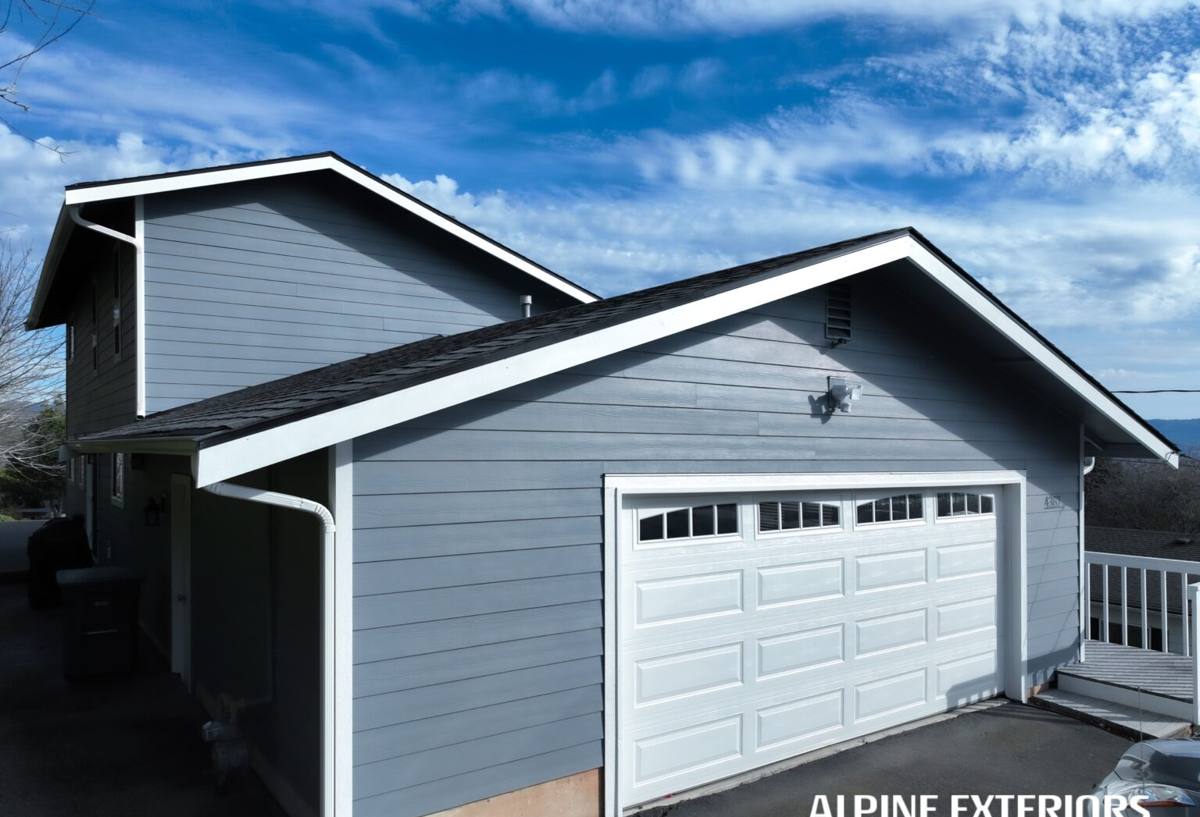
Signs a Fairhaven Roof Needs Replacement, Not Just Repair
Roof repair has its place, but there's a point where patching a roof costs more over time than replacing it — and in a salt-air, high-moss environment, that point tends to arrive earlier than homeowners expect. A few signs we look for during an inspection:
- Granule loss heavy enough that you can see bare asphalt on multiple slopes, not just one worn spot
- Moss establishing itself in the shingle mat itself, not just sitting on the surface — this means moisture is already being held against the roof
- Soft or spongy decking felt underfoot, especially near valleys, eaves, and any roof penetration
- Corroded or failing metal flashing around chimneys, skylights, and roof-to-wall transitions
- Daylight visible through the roof deck from the attic, or staining on attic sheathing
- A roof already past 20–25 years old with asphalt shingles, given how much wetter this coastal exposure is compared to drier parts of the state
If a roof is showing two or more of these at once, repair is usually a short-term patch on a problem that's already spread further than the visible symptom.
What a Correct Roof Replacement Actually Involves
A roof replacement done right is not just "old shingles off, new shingles on." In this climate, the parts of the job that don't show from the street are what determine whether the new roof lasts 15 years or 35.
Full Tear-Off and Deck Inspection
We remove the existing roofing down to the deck rather than layering over it. That's the only way to actually see the plywood or plank sheathing underneath — and in a marine climate, hidden rot at valleys, eaves, and around old penetrations is common enough that skipping this step is how homeowners end up with a new roof over a soft deck.
Ventilation
Trapped attic moisture is one of the fastest ways to shorten a roof's life here, and it also feeds the moss and mildew problems that are already common on Bellingham roofs. A correct replacement checks intake at the eaves and exhaust at the ridge and corrects the balance where it's off — not just installs whatever vent style was there before.
Underlayment and Ice-and-Water Protection
Given how much driving rain this area sees, we treat self-adhered waterproof underlayment at eaves, valleys, and around penetrations as standard, not an upgrade. Standard felt underlayment alone is a minimum-code answer, not a climate-appropriate one for a coastal Bellingham roof.
Flashing
Flashing around chimneys, skylights, sidewalls, and valleys is where most roof leaks actually originate — not in the field of the shingles. We use corrosion-resistant metal and proper step-and-counter-flashing methods rather than relying on caulk or roof cement to bridge gaps.
Material Options for a Fairhaven Home
There's no single "best" roofing material — the right choice depends on the home's style, budget, tree cover, and how much long-term maintenance the homeowner wants to take on. Here's how the common options compare for this specific environment:
| Material | Typical Lifespan Here | Moss/Algae Resistance | Salt-Air Considerations |
|---|---|---|---|
| Architectural asphalt shingle | 20–30 years | Moderate — algae-resistant granule options help | Standard fasteners should be corrosion-resistant near the water |
| Standing-seam metal | 40–50+ years | Strong — sheds moss more easily due to slope and surface | Requires marine-grade fasteners and coatings to avoid premature corrosion |
| Synthetic composite (shake/slate look) | 30–50 years | Good, product-dependent | Generally stable in coastal exposure; check manufacturer warranty terms for coastal zones |
| Cedar shake | 20–30 years with upkeep | Lower — needs regular treatment in a wet, mossy climate | Higher maintenance burden here than in drier regions |
We don't install every product on that list on every home. Cedar shake, for example, can look great, but it demands a maintenance schedule that a lot of homeowners underestimate once they're living with a wet Bellingham winter every year — that's a trade-off we'll walk through honestly rather than oversell.
Our Process
- On-site inspection — we look at the roof, the attic, and the areas most exposed to weather and salt air before quoting anything
- Written estimate — clear scope, material options, and pricing, no pressure to decide on the spot
- Scheduling around weather — we plan tear-off days for realistic dry windows rather than gambling on a forecast
- Tear-off and deck repair — full removal, deck inspected and repaired as needed before anything new goes down
- Underlayment, flashing, and ventilation correction — the parts that determine how the roof performs in ten years, not just how it looks this year
- Final installation — material installed to manufacturer specification, not shortcuts
- Walkthrough — we go over what was done, including the parts that aren't visible from the ground
Timing a Roof Replacement Around Bellingham Weather
Whatcom County doesn't offer a long, reliably dry season, so scheduling matters more here than it does in drier climates. Tear-off exposes the deck to whatever weather shows up that day, which is why we plan around realistic dry windows and keep the exposed roof covered and protected if conditions turn. Spring through early fall generally offers the most workable stretches, but a well-run crew can work responsibly outside that window too — it just takes more careful weather tracking and contingency planning, not less.
What Drives the Cost of a Roof Replacement
| Factor | Why It Matters |
|---|---|
| Roof size and pitch | Steeper, larger roofs take more labor and material, and steep pitches require more safety setup |
| Deck condition | Rotted or soft sheathing found during tear-off adds repair cost that can't always be predicted beforehand |
| Material choice | Asphalt, metal, and synthetic products span a wide price range and each carries different long-term costs |
| Number of penetrations | Chimneys, skylights, and vents each need individual flashing work |
| Layers to remove | Roofs with multiple existing layers take longer to tear off than a single-layer roof |
| Access and tree cover | Dense trees or tight lot access can add setup and cleanup time |
We give a firm written estimate after inspecting the actual roof — not a phone quote based on square footage alone, since the deck condition and detailing needs vary too much house to house to guess accurately.
Why a Crew That Already Works in Fairhaven Matters
Fairhaven has a mix of older character homes and newer construction, and a lot of the older homes have roof framing, venting, and trim details that don't match a modern build. A crew that's worked in this specific neighborhood has already seen how those older roof systems tend to be put together, what the moss and moisture patterns look like on homes near the water, and how local permitting and inspection work in Bellingham. That familiarity shortens the guesswork on inspection day and reduces the odds of surprises once tear-off starts.
It also means we're a known, findable crew if a question comes up after the job is done — not a company that worked the area once and moved on.
Questions Worth Asking Any Roofing Contractor Before You Hire
- Will you do a full tear-off, or is overlay being offered as a cheaper shortcut?
- What specifically will you check on the deck, and how is unexpected rot handled and priced?
- What underlayment and ice-and-water protection do you use at eaves and valleys?
- How do you handle ventilation balance, not just vent count?
- Is the estimate written, itemized, and based on an actual inspection?
- What's the manufacturer's warranty, and what voids it?
- How do you plan around weather delays during the job?
If your roof is showing wear, or you just want an honest read on how much life it has left, we're glad to come take a look. The estimate is free, there's no pressure attached to it, and you'll get a straight answer about repair versus replacement — you can request one using the form below.