 Bellingham Siding
 Decking in a Neighborhood That Doesn't Get a Dry Season
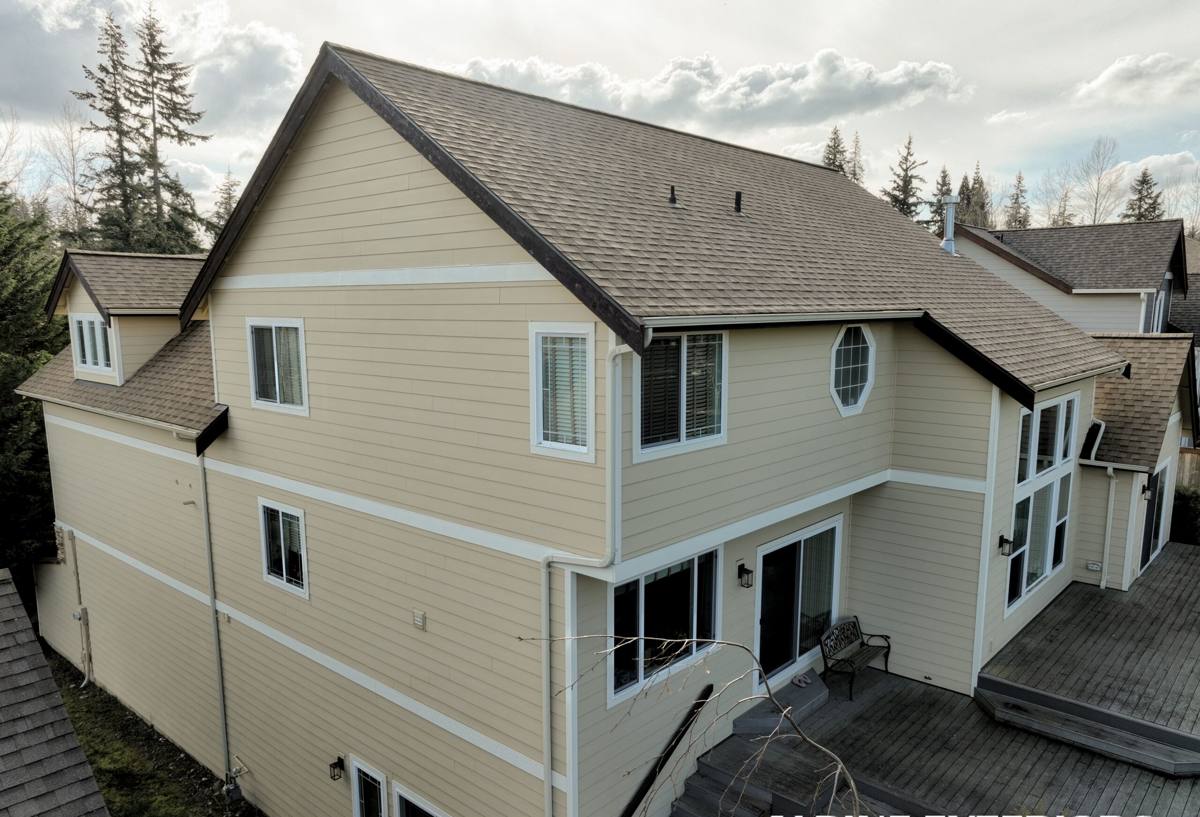
Happy Valley sits close enough to Bellingham Bay that salt-laden air is part of daily life, and like the rest of Whatcom County, it goes months at a time with the ground staying wet. That combination is hard on outdoor structures. Wood decks in this part of Bellingham fight moisture nearly year-round, and the shaded, tree-lined lots common in the neighborhood add a second problem: moss and algae get a long runway to establish themselves on any horizontal surface that doesn't dry out quickly between storms.
Composite decking was designed for exactly this kind of exposure. It doesn't mean a deck becomes maintenance-free, but it changes what maintenance looks like — and it removes the failure modes that cause the most expensive problems in wood decks around here: rot at fastener points, cupping boards, and structural framing that quietly deteriorates under a deck that still looks fine on top.
What Local Conditions Actually Do to a Deck
Driving Rain
Storms coming off the Sound don't just fall straight down — wind-driven rain gets pushed sideways into ledger boards, fastener heads, and the narrow gaps between deck boards. Any place water can collect and sit is a place where a wood deck starts to fail first.
Salt Air
Proximity to the bay means airborne salt settles on outdoor surfaces and accelerates corrosion on fasteners, brackets, and hardware. A deck can look structurally sound while its hidden connectors are quietly rusting underneath.
Moss and Algae
Whatcom County's long wet season, combined with the shade from mature trees on many Happy Valley lots, creates ideal conditions for moss and green algae film on deck surfaces. Beyond looking bad, that buildup holds moisture against the board and makes the surface slick and unsafe underfoot.
Why Composite Makes Sense for This Neighborhood
Composite decking is engineered from a blend of wood fiber and polymer, which means it doesn't absorb water the way solid wood does, doesn't splinter, and doesn't need annual staining or sealing to hold up. That doesn't make it immune to moss — anything left wet in the shade will grow something eventually — but it removes rot as a concern entirely and makes routine cleaning far more effective, since the surface doesn't have open wood grain for spores and algae to root into.
We treat composite as the right call for the majority of Happy Valley decks specifically because of the climate, not because we're pushing a product. If a homeowner has a shaded, low-airflow site near mature landscaping, wood decking there is signing up for a much heavier maintenance schedule than most people want to keep up with.
What a Correct Composite Deck Installation Involves
Composite boards are only as good as what's underneath them. A lot of the decks we get called out to repair look fine on the surface but were built on framing that wasn't set up for our climate. A correct installation covers:
- Pressure-treated or naturally durable framing lumber, spaced and spanned according to the manufacturer's requirements for our region's load and moisture conditions
- Proper airflow underneath the deck so the substructure can actually dry out between rain events, rather than staying damp for weeks
- Corrosion-resistant, manufacturer-approved fasteners and hidden fastening systems rated for coastal or high-moisture exposure
- Flashing at the ledger board where the deck attaches to the house — this is the single most common source of hidden rot in this region
- Correct board spacing to allow for thermal expansion and to keep water moving off the surface instead of pooling between boards
- Joist tape or a moisture barrier on top of the framing to protect the wood structure underneath the composite decking itself
Skipping any one of these doesn't show up right away. It shows up in year three or four, when the deck surface still looks new but the frame underneath has started to fail.
Composite Board Options and What Drives Cost
Composite decking isn't one product — it spans a range of construction types and price points, and the right choice depends on budget, sun exposure, and how much upkeep a homeowner wants to do.
| Factor | What It Affects | Considerations for Happy Valley |
|---|---|---|
| Capped vs. uncapped composite | Moisture resistance, staining, warranty length | Fully capped boards handle constant moisture and moss exposure better long-term |
| Board color | Heat absorption, fade resistance, how dirt and moss show | Lighter, variegated colors show moss and organic staining less than solid dark tones |
| Substructure material | Long-term durability, upfront cost | Treated lumber vs. composite or aluminum framing changes both price and maintenance |
| Fastening system | Surface appearance, install labor, board spacing accuracy | Hidden fastener systems cost more but reduce water intrusion points |
| Deck size and complexity | Material quantity, labor hours, waste factor | Multi-level decks or tight tree-shaded lots add labor time |
As a broad range, homeowners in this area typically see composite deck projects land anywhere from the mid-teens to well over $30,000 depending on size, board tier, railing choices, and site complexity. We give exact numbers only after seeing the site and framing condition — anyone quoting a firm price sight unseen is guessing.
Our Process
- Site visit and assessment. We look at drainage, sun exposure, existing framing (if this is a rebuild), and how the deck ties into the house.
- Framing evaluation or design. For a rebuild, we inspect the existing substructure for rot and corrosion before deciding what can stay and what needs to be replaced. For new builds, we plan joist spacing and airflow to match the shaded, wet conditions common in the neighborhood.
- Board and fastening selection. We walk homeowners through capped vs. uncapped options and fastening systems, matching the choice to the site's actual sun and moisture exposure rather than defaulting to whatever is cheapest.
- Flashing and moisture barrier installation. This step happens before a single composite board goes down, and it's the part that protects the investment for decades.
- Installation. Boards are set with correct spacing and manufacturer-specified fastening, checked for level and drainage as we go.
- Final walkthrough. We cover basic care — what cleaning products are safe, how to keep gutters and drainage clear near the deck, and what to watch for seasonally.
Living With a Composite Deck Through Moss Season
Composite decking still needs periodic cleaning in a climate like ours — it just needs far less of it than wood, and there's no re-staining or sealing involved. A seasonal rinse and an occasional scrub with a soft-bristle brush and a composite-safe cleaner keeps moss and algae from getting a foothold. Pressure washers should be used carefully, if at all, since too much pressure can damage the board's surface texture over time.
The bigger maintenance win is structural, not cosmetic: because the boards don't absorb water and swell, and because we build in proper airflow underneath, the framing stays drier and lasts longer than it would under a wood deck exposed to the same conditions.
Signs Your Current Deck Needs Attention
- Boards that feel spongy or soft, especially near the house or stair stringers
- Persistent green or black staining that comes back within weeks of cleaning
- Fasteners with visible rust streaks or heads that have started to pull through the board
- Gaps or cupping where boards have warped away from level
- A ledger board connection that looks discolored or damp even on dry days
- Railings or posts that feel loose or flex more than they used to
Any of these are worth a look before they turn into a full rebuild. Catching framing rot early is a fraction of the cost of replacing an entire deck structure.
Why Local Experience in Happy Valley Matters
General contractors who don't work this specific area regularly can miss the details that matter here — how much shade a lot actually gets through the year, how close a property sits to salt air influence, or how a particular yard drains after a heavy Whatcom County rain event. A crew that installs decks in and around Happy Valley on a regular basis already knows which framing details, fastener grades, and airflow gaps matter most for this microclimate, instead of applying a generic install method built for a drier region.
We'd rather talk through the realities of your specific lot — sun exposure, tree cover, drainage — than sell a one-size-fits-all package. If you're planning a new composite deck or replacing a failing wood one in Happy Valley, we're happy to take a look and put together a free, no-pressure estimate using the form below.