 Bellingham Siding
 Why Silver Beach Exposure Is Different
Homes around Silver Beach take a steady beating that inland Whatcom County properties don't see nearly as much of. The combination of salt-laden air drifting off the water, wind-driven rain that hits siding at an angle instead of falling straight down, and long stretches of shade that keep surfaces damp for days at a time adds up to one of the tougher exposure profiles we work in around Bellingham. Siding here isn't just a weather barrier — it's fighting a slow, constant moisture load almost year-round.
That matters because not every siding product handles this combination well. Wood-based products absorb and release moisture with the seasons, salt air accelerates corrosion on fasteners and hardware, and shaded, damp conditions are exactly what moss and algae need to take hold. A siding choice that works fine in a dry, sunny neighborhood can struggle here within a few years. That's the lens we install through in this area.
Salt Air and Driving Rain
Airborne salt is corrosive to unprotected fasteners, trim hardware, and paint films. Combined with rain that gets pushed sideways into walls, eaves, and window returns, it puts real pressure on every seam, joint, and penetration in a siding system. A product that's dimensionally stable and a finish that resists moisture intrusion at the surface — rather than absorbing it — holds up far better under this kind of repeated exposure.
The Long Moss Season
Bellingham's wet season stretches long, and shaded lots near the water stay damp even longer. Moss and algae don't just look bad — on porous or textured siding they hold moisture against the substrate, which is exactly the condition that leads to rot, paint failure, and swelling over time. Siding that sheds water quickly and doesn't give moss a foothold to begin with is a real advantage in this kind of setting, not a cosmetic nicety.
What Correct James Hardie Installation Requires Here
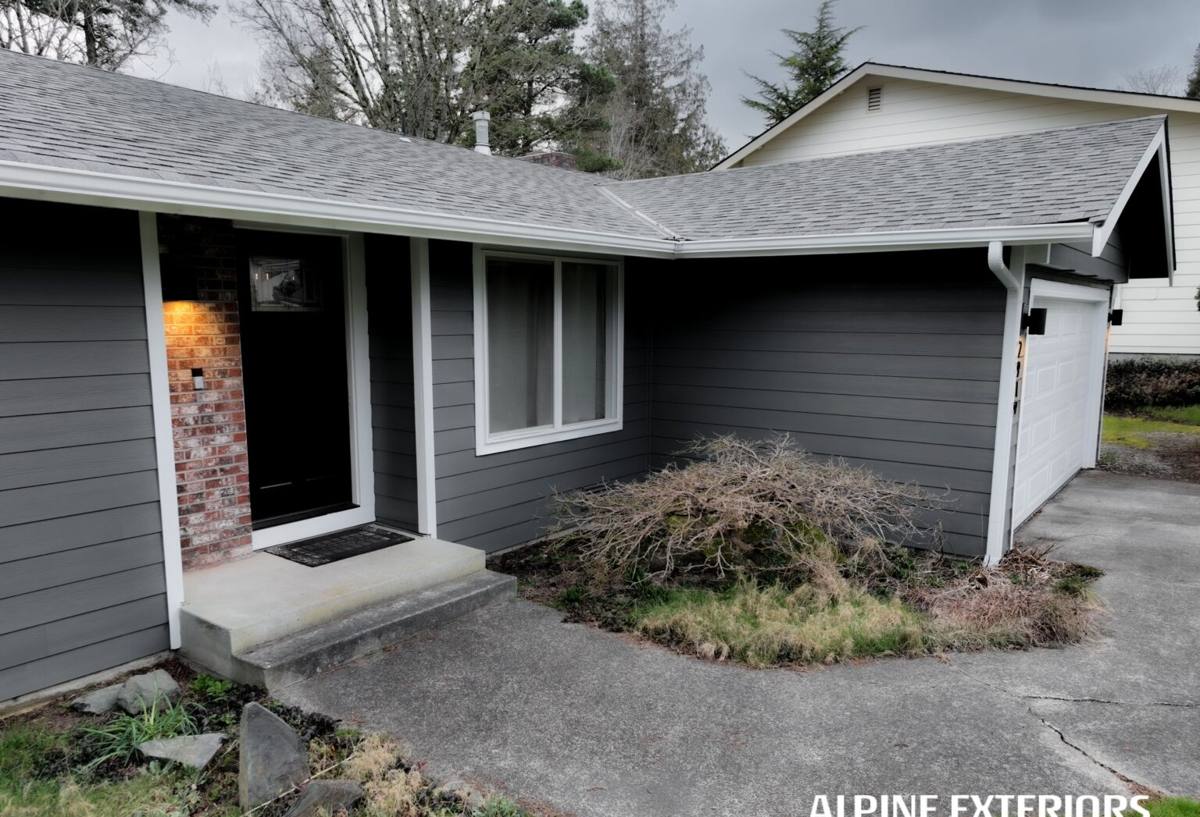
James Hardie fiber cement is engineered specifically for climates like this, but the product only performs to spec when it's installed to spec. In a marine-influenced, high-moisture neighborhood like Silver Beach, a few details matter more than they would on a drier inland lot.
Using the Right HZ Product Line
James Hardie engineers its siding by climate zone — the HZ5 line is formulated for the wetter, harsher weather patterns found in the Pacific Northwest, including freeze-thaw cycling and sustained moisture exposure. Using the correct HZ designation for this region isn't optional if you want the product to perform and the warranty to hold up as intended.
Flashing and Water Management
Given the amount of wind-driven rain this area sees, water management behind the siding matters as much as the siding itself. That means correctly lapped weather-resistant barrier, properly flashed windows and doors, kick-out flashing at roof-to-wall intersections, and rainscreen or drainage gap detailing where it's called for. Fiber cement is only as good as the wall assembly behind it — skip these details and you're inviting moisture into the sheathing regardless of what's on the outside.
Fastening and Hardware
In salt-influenced air, fastener choice isn't a place to cut corners. Corrosion-resistant fasteners, proper nailing patterns per Hardie's fastening schedules, and correct clearances at grade and roof lines all protect against the slow corrosion and moisture wicking that shortens the life of an otherwise sound installation.
The James Hardie Product System
James Hardie makes several distinct product lines, and choosing the right one — or combination — depends on the home's style and exposure. Most Silver Beach homes end up on some mix of lap siding for the field and either panel or shingle-style accents for architectural detail.
| Product | Best Use | Notes for This Area |
|---|---|---|
| HardiePlank lap siding | Primary field siding on most home styles | Available in smooth or textured finish; smooth sheds moss buildup more easily in shaded spots |
| HardiePanel vertical siding | Modern facades, accent walls, gable ends | Fewer horizontal laps means fewer water-catching ledges |
| HardieShingle siding | Craftsman and cottage-style accents | More surface texture — benefits from good sun exposure or extra maintenance attention in shade |
| HardieTrim boards | Corners, window and door surrounds, fascia | Keeps trim dimensionally stable next to fiber cement field siding |
All of these are available with Hardie's ColorPlus factory finish, which is baked on under controlled conditions rather than field-painted. In an area that sees this much rain, a factory finish that resists fading and doesn't need repainting on the same schedule as site-applied paint is a meaningful advantage.
Why We Only Install James Hardie
We don't install LP SmartSide, vinyl, Cemplank, Allura, or primed wood siding, and in a neighborhood like Silver Beach the reasoning is straightforward. Vinyl can warp and its seams are a weak point against driving, wind-pushed rain. Wood-based composite products depend heavily on field-applied caulking and paint maintenance to keep moisture out — miss a maintenance cycle in a climate this wet and the risk of edge swelling goes up. Cedar and primed spruce look great initially but require the most ongoing upkeep of any option, which is a tough ask given how much moisture and moss pressure this area sees.
James Hardie fiber cement is non-combustible, dimensionally stable across our wet-dry cycles, doesn't support pest damage, and comes with a strong transferable warranty when installed correctly. It isn't the cheapest option on day one, but for homes fighting salt air, driving rain, and a moss season that doesn't really end, it's the product that holds its line the longest with the least ongoing maintenance. That's why it's the only thing we put on houses.
Our Installation Process for Silver Beach Homes
Every home is different, but the sequence we follow for this neighborhood doesn't change, because the exposure conditions don't change much house to house.
- On-site assessment of existing siding, sheathing condition, and moisture history before any tear-off begins
- Full removal of old siding and inspection of the wall assembly for hidden rot or water damage
- Repair or replacement of any compromised sheathing before new material goes up
- Installation of a weather-resistant barrier with correctly lapped and taped seams
- Rainscreen or drainage gap detailing where the wall assembly and exposure call for it
- Correct HZ5 James Hardie product installed per manufacturer fastening and clearance specifications
- Flashing at all windows, doors, roof intersections, and penetrations
- Final walkthrough covering caulking, trim details, and touch-up before the job is called complete
Skipping steps in that sequence is how houses end up with siding that looks fine for a couple of years and then starts showing problems at the seams. We don't shortcut it.
Cost Factors to Expect
Every Silver Beach home is priced individually based on square footage, existing wall condition, and how much trim and architectural detail is involved, but the factors that move the number the most are consistent.
| Factor | Why It Matters |
|---|---|
| Tear-off and sheathing condition | Hidden rot from prior moisture intrusion adds repair work before new siding can go on |
| Home size and wall complexity | More corners, gables, and dormers mean more cutting, trim, and labor |
| Product mix | Combining lap siding with panel or shingle accents adds material and detail work |
| Finish choice | ColorPlus factory finish colors and textures vary in cost by product line |
| Site access | Waterfront and hillside lots can add setup and staging time |
We'd rather walk your specific home and give you real numbers than throw out a broad estimate that doesn't reflect your situation.
What to Expect Long-Term
Correctly installed James Hardie siding in this climate is a long-lifespan, low-maintenance exterior. It won't need repainting on the schedule wood siding does, it resists the moss and algae buildup that plagues shaded, damp walls, and the factory ColorPlus finish holds its color well against this much rain exposure. Periodic rinsing to clear pollen, debris, and light moss growth, along with an annual check of caulking and trim joints, is about all it asks for. That's a meaningfully lighter maintenance load than wood or vinyl carry in a neighborhood with this much moisture pressure.
Why a Local, Experienced Crew Matters
Installing siding correctly in Silver Beach isn't the same job as installing it on a dry, sun-exposed lot across town. A crew that already understands this neighborhood's wind direction, moss patterns, and moisture behavior makes fewer assumptions and catches problems — like sheathing damage from a slow, long-term leak — before they get sealed behind new siding. Experience with James Hardie's fastening and clearance specs, and with the flashing details this climate demands, is what separates siding that looks good at installation from siding that still looks good in fifteen years.
If you're weighing a siding replacement or repair for a Silver Beach home, we're happy to take a look and walk you through what your specific house needs — no pressure, no obligation. Reach out below for a free estimate.