 Bellingham Siding
 Asphalt Shingle Roofing Built for Lynden's Climate
Lynden sits in one of the wetter corners of Whatcom County, and that shapes what a roof needs to survive here. Long stretches of steady drizzle, driving rain off the Pacific weather systems, and a moss season that can run most of the year all put steady pressure on a roof system. Add the salt-tinged marine air that moves through this part of Washington and settles on metal flashing, fasteners, and vents, and you have a climate that is genuinely harder on roofing than most manufacturers' warranty language assumes. Asphalt shingle roofing done right for a Lynden home accounts for all of this from the first day of the job, not as an afterthought.
We work on homes throughout Lynden and the surrounding Whatcom County area, and asphalt shingle roofing is one of the most common projects we do here. It remains the most practical, cost-effective roofing option for most houses in this region, but only when it is installed with this specific climate in mind.
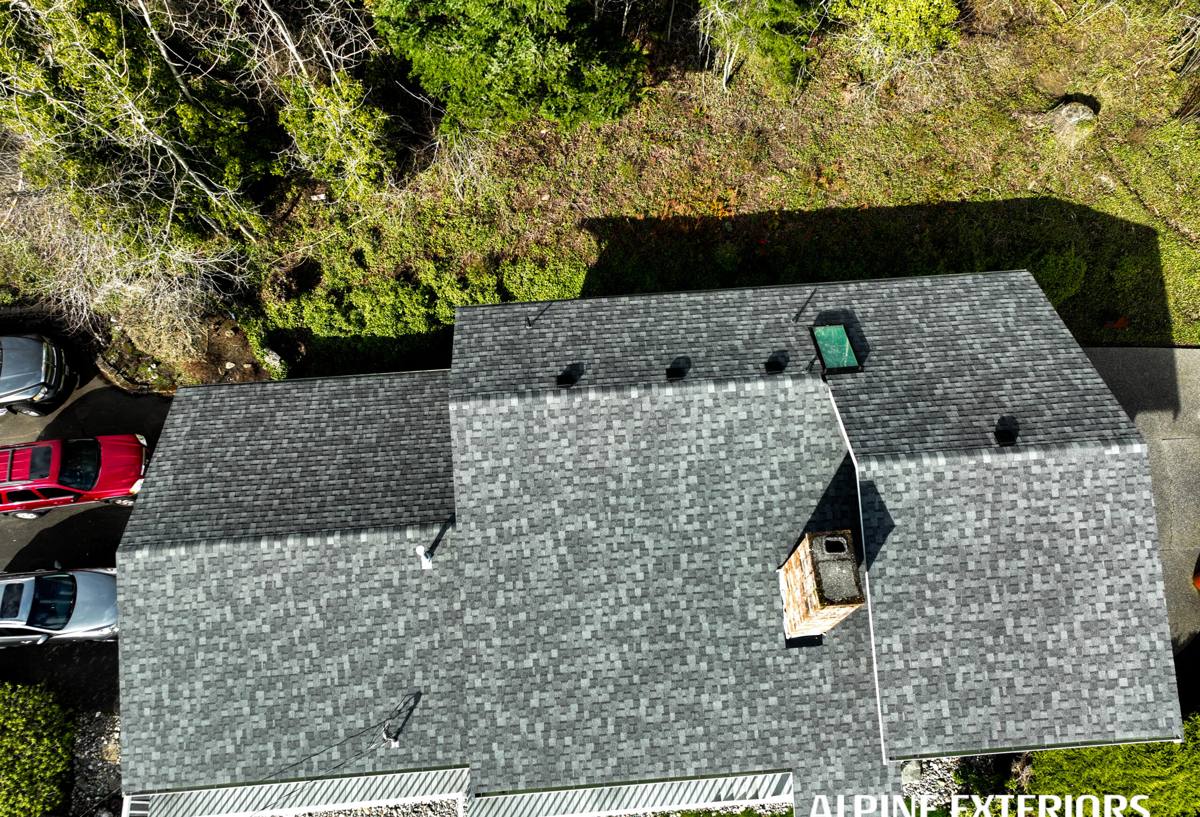
What Lynden's Weather Actually Does to a Roof
Sustained Moisture
Whatcom County doesn't usually get dramatic storms so much as long, low-intensity rain that sits on a roof for days at a time. That kind of sustained wetness is harder on underlayment, flashing, and shingle edges than a short, heavy downpour, because it gives water more time to find any weak point in the system.
Moss and Organic Growth
Shaded roof sections, north-facing slopes, and areas near overhanging trees stay damp long enough for moss and algae to take hold. Once moss establishes itself, it holds moisture against the shingle surface, lifts shingle edges as it grows, and can shorten the usable life of an otherwise sound roof. Prevention during installation matters far more than treatment after the fact.
Driving Rain and Wind-Driven Water
Wind off the water can push rain sideways during storms, which means water tests roof penetrations, valleys, and edges in ways a straight-down rain never does. Flashing details and shingle overlap have to be built for that reality, not just standard-condition installation.
Marine Air and Metal Components
The mild salt content in regional air accelerates corrosion on unprotected metal over time. Fasteners, flashing, and vent components that aren't rated for coastal or near-coastal exposure will corrode faster here than they would in a drier inland climate, which is why material selection matters as much as installation technique.
What a Correct Asphalt Shingle Job Looks Like Here
A roof that's going to hold up under Lynden's conditions needs more than shingles nailed to plywood. The details below are what separate a roof that lasts from one that needs attention in five years.
- Ice-and-water shield at vulnerable points — valleys, eaves, and roof-to-wall transitions get self-adhering waterproof membrane, not just standard felt, because these are the spots sustained moisture exploits first.
- Proper ventilation balance — intake at the eaves and exhaust at the ridge working together, so moist air isn't trapped in the attic where it condenses and rots the deck from underneath.
- Corrosion-resistant fasteners and flashing — hardware rated for the marine-influenced air common to this region, not generic components that corrode early and cause staining or leaks.
- Wide, correctly lapped flashing at every penetration — vents, chimneys, and skylights are common leak points, and they need flashing sized and layered for wind-driven rain, not the minimum code allowance.
- Shingle selection matched to moss resistance — algae-resistant shingle lines with embedded copper or zinc granules slow moss and algae growth significantly compared to standard shingles on shaded roof sections.
- Solid deck inspection and repair before shingles go down — any soft, water-damaged decking gets replaced, because new shingles over a compromised deck just hide a problem instead of solving it.
Our Process for a Lynden Roofing Project
1. On-Site Inspection and Honest Assessment
We walk the roof, check the attic for ventilation and moisture issues, and look at the deck condition — not just the shingle surface. You get a straight answer on whether you need a full replacement, a repair, or something in between.
2. Written Estimate with Real Options
You'll see material choices, what each one costs, and why we'd recommend one over another for your specific roof — slope, shade exposure, and sun exposure all factor in.
3. Tear-Off and Deck Prep
Old material comes off down to the deck so we can actually see what's underneath. Any damaged sheathing gets flagged and replaced before anything new goes down.
4. Underlayment, Flashing, and Ventilation Installed to Spec
This is where most of the long-term performance of the roof gets decided, and it's the part that's invisible once the shingles are on — which is exactly why it has to be done right the first time.
5. Shingle Installation
Installed to manufacturer specifications for nailing pattern, exposure, and sealant activation, so the warranty you're paying for actually applies if you ever need it.
6. Final Walkthrough
We go over the completed roof with you, answer questions, and make sure you know what routine maintenance — if any — the specific shingle line requires.
Comparing Asphalt Shingle Options for Whatcom County Homes
| Shingle Type | Moss/Algae Resistance | Typical Lifespan Here | Best Fit |
|---|---|---|---|
| Standard 3-tab | Low without added protection | Shorter end of the range in this climate | Budget-focused projects, less-shaded roofs |
| Architectural (dimensional) | Moderate to high with algae-resistant granules | Longer, more consistent performance | Most Lynden homes — best balance of cost and durability |
| Premium/designer laminate | High, with reinforced algae resistance | Longest of the asphalt options | Homes with heavy shade, steep-pitch or highly visible roofs |
Most homes in Lynden do well with a mid-tier architectural shingle carrying algae-resistant granules — it's the option where the added upfront cost over 3-tab shingles is clearly paid back in reduced moss issues and a longer service life given the local climate.
Cost Factors Specific to This Area
Every roof is different, but a few factors consistently move the price on Lynden projects:
- Roof pitch and access — steeper roofs and limited ground access around the house take more time and safety equipment.
- Deck condition — how much plywood needs replacing depends heavily on how long moisture has been sitting under the old roofing.
- Number of penetrations — chimneys, skylights, and multiple vent stacks each add flashing work.
- Shingle tier selected — 3-tab, architectural, and premium lines carry different material costs.
- Existing layers — a roof with a prior layer of shingles left in place typically requires a full tear-off, which adds labor.
We give firm, itemized numbers after the on-site inspection rather than a phone estimate, because these variables genuinely change the total and we'd rather you have an accurate figure than a guess.
Why a Crew That Already Works Lynden Matters
A contractor who works this area regularly already knows which shingle lines hold up against local moss patterns, which flashing details actually stop wind-driven rain here, and how ventilation needs to be balanced for our specific humidity levels. That's knowledge you don't get from a crew passing through from somewhere with a different climate. It also means we're accountable locally — if a question comes up after the job, we're not far away and we're not hard to reach.
We're licensed and insured to do this work in Washington, and we stand behind the installation itself in addition to whatever manufacturer warranty comes with the shingles you choose.
Signs Your Lynden Roof May Need Attention
- Visible moss or dark streaking, especially on shaded or north-facing slopes
- Granules collecting in gutters or at downspout outlets
- Shingles that look cupped, curled, or are missing at the edges
- Soft spots or sagging visible from the ground or in the attic
- Water stains on interior ceilings after heavy or sustained rain
- Daylight visible through the roof deck from inside the attic
Catching these early usually means a repair rather than a full replacement, which is why we're happy to take a look even if you're not sure yet whether you need new roofing.
Get a Straightforward Estimate
If your Lynden home's roof is showing signs of wear, growing moss it shouldn't, or you're simply due for a look, we're glad to come take a look and give you an honest read on what it needs. Use the form below to request a free, no-pressure estimate — we'll walk the roof, answer your questions, and give you real numbers, not a sales pitch.