 Bellingham Siding
 Why Happy Valley Roofs Take a Different Kind of Beating
Happy Valley sits close enough to Bellingham Bay that salt-laden air is a constant factor in how a roof ages, not an occasional one. Add Whatcom County's long wet season — months of low-intensity, driving rain broken up by windstorms off the water — and you've got a climate that punishes roofing materials in three specific ways: corrosion from airborne salt, water intrusion at every seam and penetration, and moss and algae growth that thrives in the shade and dampness common to this neighborhood's tree cover. A roof that was engineered for a drier inland climate, or installed by a crew that doesn't work this area regularly, tends to show its weaknesses here faster than it would elsewhere.
Metal roofing, done correctly, is one of the better answers to that combination. It's not the only right answer for every home, but for Happy Valley's mix of coastal exposure and heavy tree canopy, it solves problems that asphalt shingles simply can't.
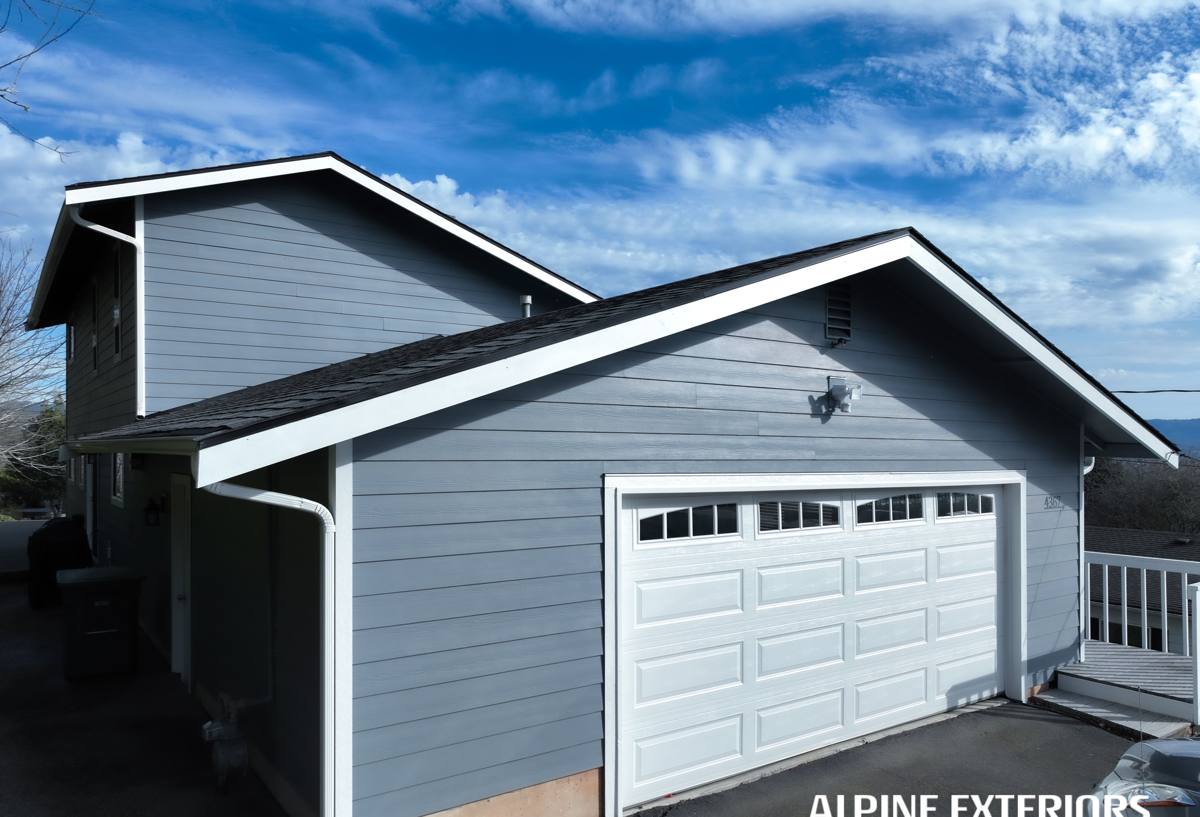
What Metal Roofing Actually Solves in This Neighborhood
Moss and Algae Resistance
Asphalt shingles have a granular surface that gives moss spores and algae something to grip. Metal panels are smooth and shed water fast, which starves moss of the moisture it needs to establish. That doesn't make a metal roof moss-proof — debris that piles up in valleys or against a chimney will still hold moisture and eventually grow something — but it dramatically reduces how much moss takes hold on the field of the roof itself, which is where most of the damage from moss actually happens on shingle roofs.
Standing Up to Driving Rain
Bellingham's rain rarely falls straight down. Wind off the bay pushes it sideways, which means water gets tested at every edge, seam, and flashing detail on a roof, not just the open field. Metal roofing systems, particularly standing seam, are built around raised interlocking seams specifically to resist wind-driven water — there's no exposed fastener for water to find its way under, and no shingle tab for wind to lift and peel back over time.
Salt Air and Corrosion
This is the one homeowners in Happy Valley ask about most, and it's a fair question. Not all metal roofing handles salt air equally well. Bare or poorly coated steel can corrode faster near the water. The fix isn't avoiding metal — it's choosing the right substrate and finish (we'll get into that below) and making sure fasteners, flashing, and trim are all rated for coastal exposure, not just whatever happens to be on the shelf.
Metal vs. Asphalt for a Happy Valley Home
| Factor | Metal Roofing | Asphalt Shingles |
|---|---|---|
| Typical lifespan | 40–60+ years with proper coating | 20–30 years, often less under heavy moss growth |
| Moss/algae resistance | Strong — smooth surface sheds water and debris | Weaker — granular surface holds moisture and spores |
| Performance in wind-driven rain | Excellent with standing seam profiles | Good when installed well, but seams are more vulnerable |
| Coastal salt air durability | Very good, with the right substrate/finish | Neutral — salt air isn't a major factor for asphalt |
| Upfront cost | Higher | Lower |
| Long-term maintenance | Lower — occasional debris clearing and fastener checks | Higher — periodic moss treatment, more frequent replacement |
Neither material is universally "better" — it depends on how long you plan to own the home, your budget horizon, and how much shade and moss pressure your specific lot has. We'll walk through that honestly during an estimate rather than pushing one material because it's what we happen to have on the truck.
Panel Types: What We Recommend and Why
Standing Seam
This is our default recommendation for most Happy Valley homes, especially anything close to the water or under heavy tree cover. The concealed fastener system means no exposed screw heads for water to work loose over decades of expansion and contraction, which matters in a climate with this much seasonal moisture cycling. It's a cleaner look, a longer service life, and fewer maintenance visits over the life of the roof.
Exposed-Fastener Metal Panels
These cost less upfront and are a reasonable option for outbuildings, shops, or budget-conscious projects. The trade-off is honest: exposed fasteners have rubber washers that degrade over time, especially with UV and moisture cycling, and eventually need re-torquing or replacement. We'll install this system when it fits the project and the budget, but we tell homeowners up front what the maintenance schedule looks like so there are no surprises five or ten years in.
Coating and Substrate
For coastal exposure, we steer toward steel panels with a high-quality Galvalume or comparable coated substrate and a baked-on finish rated for the environment, rather than bare or minimally coated material. It's a modest cost difference upfront that pays for itself by avoiding early corrosion at cut edges, fastener heads, and panel seams.
What a Correct Metal Roof Installation Actually Involves
Metal roofing fails prematurely almost never because of the metal itself — it fails because of shortcuts underneath and around it. A correct install in this climate includes:
- A synthetic or self-adhered underlayment rated for the climate, not just whatever's cheapest, providing a real secondary water barrier
- Proper flashing at every valley, wall intersection, chimney, and vent penetration — the majority of leaks on any roof happen at these transitions, not in the open field
- Fasteners and trim matched to the panel material to avoid galvanic corrosion between dissimilar metals
- Correct panel overlap and seam engagement so the system actually locks the way it's designed to
- Attention to roof ventilation, so trapped moisture underneath the deck isn't quietly rotting sheathing behind a roof that looks fine from the outside
- Ice and water shield at eaves and valleys where wind-driven rain and any winter freeze-thaw is most likely to push moisture backward under the panels
Skipping any one of these to save a day of labor is how a 50-year roof system turns into a 15-year problem.
Our Process for Happy Valley Projects
1. On-Site Assessment
We look at more than the roof surface — tree overhang, drainage patterns, existing moss or algae staining, and how exposed the home is to wind off the bay all factor into the recommendation.
2. Honest Material Walkthrough
We explain the real trade-offs between panel types and coatings for your specific site, including what maintenance each option will realistically require, before you commit to anything.
3. Tear-Off and Deck Inspection
Once the old roofing is off, we inspect the deck for any moisture damage — common on older Happy Valley homes where moss or clogged gutters have been sending water somewhere it shouldn't go for years. Any soft or compromised sheathing gets replaced before a single panel goes on.
4. Installation to Manufacturer Spec
Underlayment, flashing, and panels go in following the manufacturer's coastal/high-wind installation guidance, not a generic shortcut version.
5. Final Walkthrough
We go over the finished roof with you, including what routine maintenance — if any — the system needs going forward.
Maintenance: What Actually Needs Doing
One of the real advantages of metal roofing in this climate is how little ongoing work it needs compared to shingles — but "little" isn't "none." A short seasonal checklist:
- Clear needles, leaves, and debris from valleys and around penetrations once or twice a year, especially after fall leaf drop
- Check and clear gutters so water isn't backing up under the eave edge
- Look for any developing moss or algae in shaded valleys or against chimneys and remove it before it spreads
- On exposed-fastener systems, have fasteners checked periodically for backing out or washer wear
- After major windstorms, a quick visual check for lifted trim or loosened flashing is worth the ten minutes
Why Local Experience Matters for This Job
A metal roof is only as good as the flashing details around it, and flashing details are exactly where general knowledge stops being enough. A crew that regularly works Whatcom County knows how far wind-driven rain travels up a wall, how much moss pressure a shaded valley on a Happy Valley lot actually sees over a winter, and which coastal exposure details matter within a few miles of the bay versus further inland. That's not something you get from a manufacturer's install manual alone — it's built from doing the work in this specific climate, on this specific kind of terrain, repeatedly.
It also means faster response if something does come up after the job — no waiting on a crew that has to drive in from out of the area to look at a flashing detail during a storm.
Getting Started
If you're weighing metal roofing for a Happy Valley home — whether it's a full replacement, a re-roof after storm damage, or you're just tired of dealing with moss every year — we're happy to come take a look and walk you through what makes sense for your specific roof. The estimate is free, there's no pressure, and you'll get a straight answer about what your home actually needs.