 Bellingham Siding
 New Roofs Built for Edgemoor's Marine Climate
Edgemoor sits close enough to Bellingham Bay that homes here take a different kind of weather beating than houses further inland in Whatcom County. Salt-laden air moves in off the water, wind-driven rain hits roof planes sideways instead of straight down, and the shaded, tree-lined lots that make the neighborhood attractive also keep roofs damp longer after every storm. That combination shortens the life of a poorly installed roof and, more importantly, it punishes cut corners that would never show up in a drier climate.
When we install a new roof in Edgemoor, we're not just matching shingles to a house — we're building an assembly that has to shed a lot of water fast, resist wind uplift off the bay, and survive months of moss and moisture pressure every single year. That's the standard we hold every job to, whether it's a full tear-off and replacement or new construction.
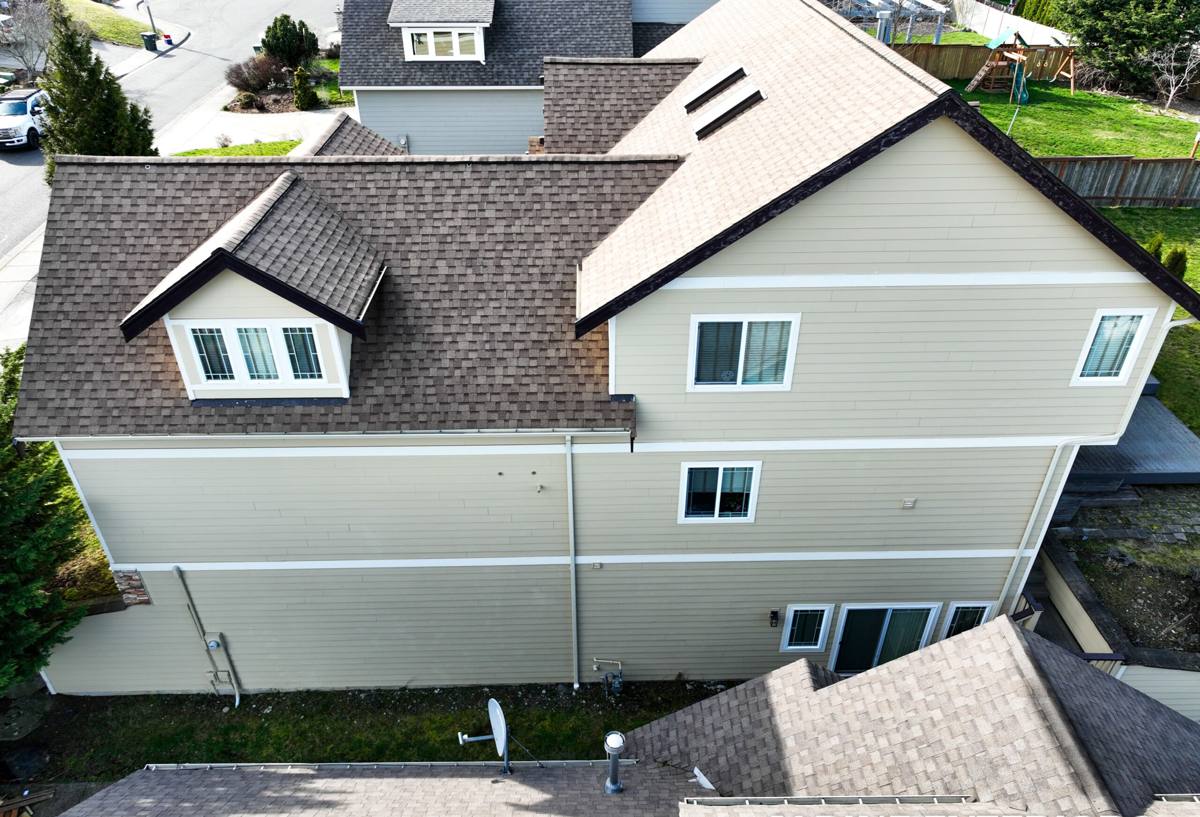
What Edgemoor Homes Are Up Against
Salt Air and Metal Fatigue
Proximity to saltwater accelerates corrosion on exposed metal — flashing, fasteners, vents, and gutter hardware all age faster here than they would on the same house twenty miles inland. Bargain-grade fasteners and unprotected flashing are the first things to fail, and once flashing corrodes, water finds its way under the roofing material long before the shingles themselves are worn out.
Driving Rain and Wind-Driven Water
Storms coming off the water don't fall straight down — wind pushes rain sideways and under roof edges, ridge caps, and anything with a gap. A roof that would perform fine in calm rain can leak in Edgemoor if the underlayment, ice-and-water shield, and flashing details weren't installed with that wind direction in mind.
The Long Moss Season
Whatcom County's wet season runs long, and shaded lots with mature trees — common in Edgemoor — stay damp for extended stretches. That's exactly the environment moss needs to establish. Moss doesn't just look bad; it holds moisture against the roofing material, works its way under shingle edges, and can lift tabs enough to let water in. Roofs installed without moss-resistant details or proper ventilation tend to show moss again within a season or two.
What a Correct Installation Actually Involves
A lot of roof problems in this area don't trace back to the shingles themselves — they trace back to what's underneath them. Here's what we consider non-negotiable on every new roof install:
- Full tear-off to the deck on replacement jobs, so we can actually inspect and repair what's underneath instead of covering up rot or soft spots
- Deck repair or replacement of any damaged sheathing before new material goes down
- Ice-and-water shield at eaves, valleys, and roof penetrations — the areas most exposed to wind-driven rain and ice damming
- Synthetic underlayment across the full roof, not just felt paper, for a stronger secondary water barrier
- Corrosion-resistant flashing and fasteners at every penetration, valley, and roof-to-wall transition, sized for our salt-air exposure
- Balanced intake and exhaust ventilation, so the attic can actually dry out between storms instead of trapping moisture against the deck
- Zinc or copper moss-control strips at the ridge where appropriate, to slow moss regrowth over time
- Manufacturer-specified nailing pattern and exposure, checked shingle by shingle, not eyeballed
Skip any one of these and the roof will likely still look fine for a year or two. The failures in this climate tend to show up slowly — a soft spot near a valley, a stain on a ceiling after a windy winter storm, moss creeping up from the north-facing slope. By the time they're visible, the fix is usually bigger than it would have been to just do the install correctly the first time.
Choosing Roofing Material for Edgemoor's Exposure
There's no single "best" roofing material for every house — it depends on the roof's pitch, how much shade and moss pressure it gets, your budget, and how long you plan to be in the home. Here's how the common options actually perform in this specific climate:
| Material | Moss & Moisture Resistance | Salt Air Durability | Typical Lifespan Here |
|---|---|---|---|
| Architectural asphalt shingle | Good with proper ventilation and moss strips; needs periodic cleaning | Good — corrosion risk is mainly in fasteners and flashing, not the shingle itself | 25–30 years |
| Standing seam metal | Excellent — moss struggles to hold on steep, smooth metal panels | Requires marine-grade coated panels and stainless or coated fasteners near the bay | 40–50+ years |
| Cedar shake | Poor without diligent maintenance — shakes hold moisture and are highly moss-prone in shaded, damp settings | Moderate; hardware still needs corrosion resistance | 20–30 years with upkeep |
| Synthetic composite shingle | Good — many products are engineered to resist moisture uptake | Good, provided flashing details match asphalt-grade standards | 30–50 years depending on product |
We'll walk through these trade-offs with you based on your actual roof — a heavily shaded, low-pitch section of roof deserves a different conversation than a sunny, steep south-facing plane on the same house.
Where We're Cautious
Cedar shake can be a beautiful roof, and we'll install it if that's what a homeowner wants, but we're upfront that it's a higher-maintenance choice in a shaded, damp neighborhood like Edgemoor. Moisture sits in the wood grain longer than it does on a smooth shingle or metal panel, and without regular cleaning and treatment, moss and rot pressure build up faster here than in drier parts of the state. It's not that the product is bad — it's that it demands more upkeep in exactly the conditions Edgemoor has plenty of.
Our Process, Start to Finish
1. On-Site Inspection and Estimate
We walk the roof (or send someone up safely to do so), check the attic for ventilation and moisture signs, and look at the specific exposure your home has — tree cover, shade patterns, prevailing wind direction off the bay. That's what informs the material and ventilation recommendation, not a generic template.
2. Written Scope and Timeline
You get a clear, itemized scope: tear-off or overlay, deck repair allowance, underlayment and flashing spec, material, and ventilation plan. No vague line items. We also plan around Whatcom County's wetter months where possible, since roofing over a fully dry deck matters more here than almost anywhere else in the state.
3. Tear-Off and Deck Inspection
Old material comes off, the deck gets inspected board by board, and any soft or damaged sheathing is replaced before anything new goes down. This is the step that gets skipped on corner-cutting jobs, and it's the step that determines whether the new roof actually lasts.
4. Underlayment, Flashing, and Ventilation Install
Ice-and-water shield at vulnerable areas, synthetic underlayment across the field, corrosion-resistant flashing at every transition, and a ventilation layout that balances intake and exhaust for your specific attic.
5. Roofing Material Install
Installed to manufacturer spec — nailing pattern, exposure, and fastening schedule checked as we go, not just at the end.
6. Final Walkthrough
We walk the finished roof and the property with you, clean up job-site debris including stray nails, and go over care and maintenance specific to your new roof and your lot's moss exposure.
Signs an Edgemoor Roof Needs Replacing Soon
Not every roof problem means a full replacement, but these are the signals worth taking seriously before they turn into interior damage:
- Moss establishing on multiple slopes, not just the shaded north side
- Shingle tabs curling, cracking, or missing granules in patches
- Soft or spongy spots when walked, especially near valleys or the eaves
- Rusted or lifting flashing around chimneys, vents, or skylights
- Daylight visible through the attic roof deck
- Ceiling stains that appear or worsen after wind-driven storms specifically
- A roof approaching or past 20–25 years old that hasn't had a full inspection recently
Cost Factors Worth Understanding
Every roof is priced on its own specifics, but the same handful of factors move the number up or down on most Edgemoor projects:
| Factor | Why It Matters Here |
|---|---|
| Roof size and pitch | Steeper, more cut-up roofs take longer to work safely and use more flashing material |
| Deck condition | Hidden rot from long-term moisture exposure means more sheathing replacement — this is common on older Edgemoor roofs |
| Material choice | Metal and premium composite cost more upfront but carry lower long-term moss and corrosion maintenance |
| Ventilation upgrades | Adding intake/exhaust venting where an older roof lacked it adds cost but pays back in roof lifespan |
| Tree cover and access | Heavily shaded, tree-close lots can add cleanup and protection work during tear-off |
We give straightforward, written numbers — we're not going to inflate a quote to pad it, and we're not going to lowball it and hit you with change orders once the tear-off exposes deck damage we could have flagged upfront through a thorough inspection.
Why a Crew That Already Works Edgemoor Matters
Roofing crews that mostly work drier, inland climates sometimes under-spec ventilation or skip moss-resistant details because those problems don't show up where they usually build. A crew that works Bellingham and Whatcom County regularly already knows which flashing grades hold up near the bay, how much ice-and-water shield a valley actually needs in our rain patterns, and why balanced attic ventilation isn't optional here — it's what keeps moisture from condensing against the deck all winter. That local knowledge doesn't add cost to the job. It's what keeps the roof from needing attention again in three years instead of twenty.
If you're weighing a roof replacement or planning ahead for one, we're happy to take a look and give you a straight answer — including telling you if a repair makes more sense than a full replacement. Reach out for a free, no-pressure estimate using the form below.