 Bellingham Siding
 Asphalt Shingle Roofing Built for Puget's Conditions
The Puget area of Bellingham sits close enough to Bellingham Bay that homes here deal with a specific combination of weather stress: salt-laden air moving in off the water, driving rain that comes in sideways during winter storms, and a long, shaded moss season that runs from fall through spring. None of these individually is unusual for Whatcom County, but together they put more demand on a roof than most manufacturers' warranty language accounts for. An asphalt shingle roof installed the same way you'd install one in a dry inland climate will not hold up the same way here, and homeowners in Puget often find that out the hard way, usually a few years too late.
This page is specifically about asphalt shingle roofing for homes in Puget — what the local climate does to a roof over time, what a correctly built roof actually involves, and why the installation details matter more here than they do in most parts of the country.
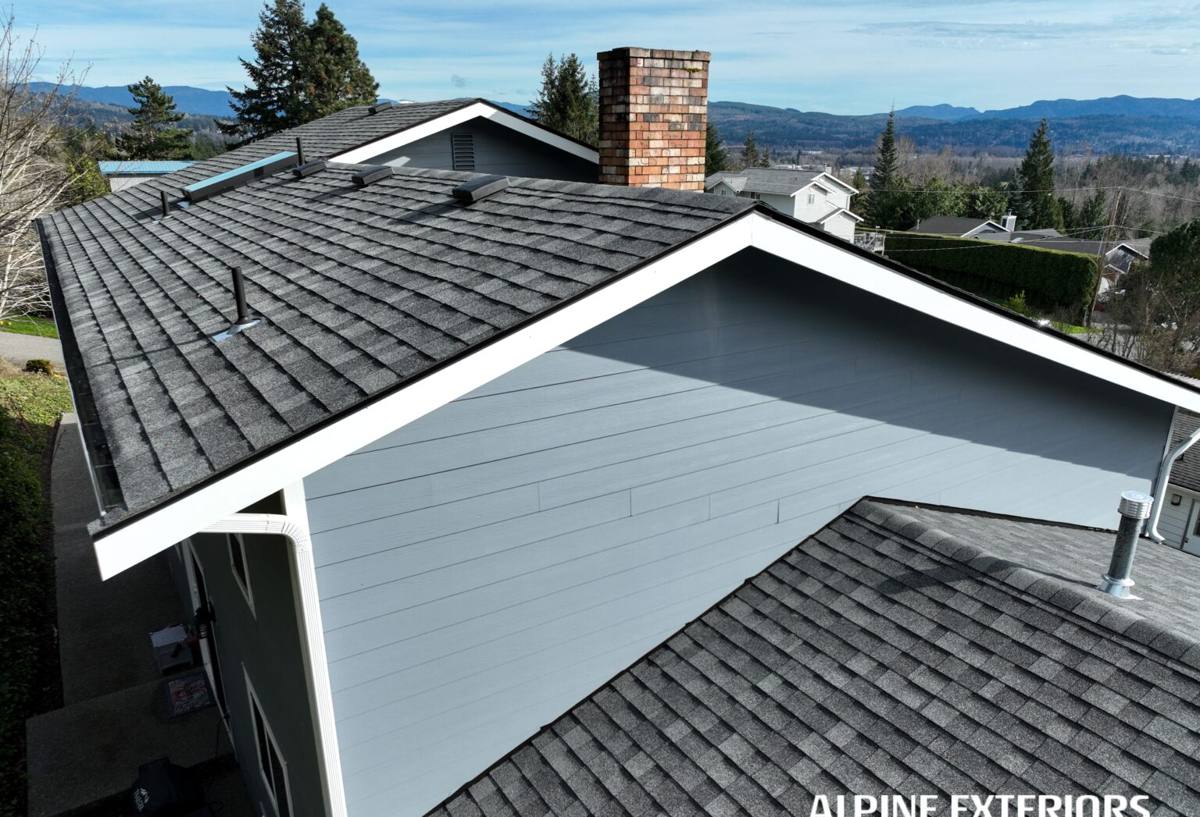
What Salt Air, Rain, and Moss Actually Do to a Shingle Roof
Salt Air
Homes closer to Bellingham Bay get airborne salt and moisture carried in on the wind. Over time this accelerates corrosion on any exposed metal — nail heads, flashing, drip edge, and vent stacks. A roof can look fine from the ground while its fasteners and flashings are quietly corroding underneath the shingles. This is one of the biggest reasons fastener and flashing material choice matters more in Puget than it would a few miles further inland.
Driving Rain
Storms moving through this part of Whatcom County frequently bring rain at an angle rather than straight down. Wind-driven rain finds its way into gaps that would never leak in calm weather — under improperly lapped step flashing, around undersized valleys, or through nail holes that weren't sealed correctly. A shingle roof can pass a "does it leak in light rain" test and still fail badly in a wind-driven storm.
Moss Season
Shade from mature trees, combined with the region's damp fall-through-spring stretch, gives moss a long window to establish itself. Moss holds moisture against the shingle surface far longer than the shingle is designed to tolerate, and as it spreads it can lift shingle edges and channel water sideways instead of letting it shed downhill. Left alone for a few seasons, moss growth shortens the usable life of an asphalt shingle roof considerably.
Signs a Puget Home's Roof Needs Attention
Most roof failures in this area don't start as leaks — they start as small, ignorable-looking issues that take a year or two to turn into water damage. Homeowners are usually better served catching these early than waiting for a ceiling stain to force the issue.
- Dark streaking or green-black patches on north-facing or shaded slopes
- Granules collecting in gutters or at downspout outlets
- Shingle edges that curl, cup, or look "fuzzy" rather than flat
- Moss visibly bridging between shingle tabs, not just sitting on the surface
- Rust staining below nail heads or around flashing edges
- Soft or spongy decking felt underfoot near valleys or chimneys
- Daylight visible through the attic at eaves, ridges, or penetrations
What a Correct Asphalt Shingle Installation Involves
A shingle roof is a system, not a single product. The shingle itself gets most of the attention, but in a climate like this the components underneath and around it are what actually determine whether the roof holds up.
Underlayment and Water Barriers
We install a synthetic underlayment across the full deck, with self-adhered ice-and-water barrier at eaves, valleys, and around penetrations — the areas most exposed to wind-driven rain and ice damming. This is the layer that protects the home if wind ever drives water up under a shingle course, and it's not optional in a climate that sees this much sideways rain.
Flashing
Step flashing at walls and chimneys, proper valley metal, and corrosion-resistant drip edge along eaves and rakes matter more here because of the salt air exposure discussed above. We use flashing materials chosen for corrosion resistance rather than the cheapest available option, since replacing failed flashing later means tearing into finished shingle work.
Ventilation
Balanced intake and exhaust ventilation keeps the attic deck dry and at a stable temperature. Poor ventilation traps moisture, which shortens shingle life from underneath — a problem that's easy to miss because it doesn't show up as a visible leak, just a roof that ages faster than it should.
Fastening
Correct nail placement, count, and depth — driven flush, not overdriven or underdriven — is what keeps shingles from lifting in wind and prevents the fastener itself from becoming a leak point. This is a detail that's invisible once the roof is finished, which is exactly why it gets skipped on rushed jobs.
Starter Course and Ridge
A proper starter strip along eaves and rakes seals the first course against wind uplift, and ridge cap shingles rated for the field shingle's wind exposure finish the job. These are small material and labor costs relative to the whole roof, but they're common corner-cutting points.
Choosing the Right Shingle for This Climate
Not every asphalt shingle product is a good match for a moss-prone, salt-air, high-rainfall area. The table below compares the general categories homeowners in Puget typically choose between.
| Shingle Type | Moss/Algae Resistance | Wind Rating | Typical Lifespan Here |
|---|---|---|---|
| Standard 3-tab | Low unless treated | Lower | Shorter in shaded, damp areas |
| Architectural / laminate | Moderate to good with algae-resistant granules | Higher | Longer, more consistent |
| Impact-resistant laminate | Good with algae-resistant granules | Highest | Longest, best value on shaded/exposed roofs |
We generally steer Puget homeowners toward algae-resistant, architectural-grade shingles rather than basic 3-tab product, not because 3-tab is a bad product in general, but because the added moss resistance and heavier wind rating are worth the modest upgrade in cost given how much shade and moisture this area sees.
Our Process
- Roof and attic assessment — we check the shingle surface, flashing, decking condition, and attic ventilation before quoting anything, since a roof's problems are often not where they first appear.
- Honest scope and estimate — a written estimate that separates what's needed now from what can wait, with clear reasoning for each line.
- Tear-off and deck inspection — old material comes off down to the deck so we can check for soft spots or rot before anything new goes down, not over it.
- System installation — underlayment, ice-and-water barrier, flashing, shingles, starter and ridge, installed in the order and manner described above.
- Cleanup and walkthrough — magnetic sweep for nails, debris removal, and a walkthrough so you know exactly what was done and why.
Maintaining an Asphalt Shingle Roof Through Moss Season
Even a well-installed roof benefits from basic seasonal attention in an area like this. A few habits go a long way toward getting the full expected life out of the roof:
- Keep gutters clear so water isn't backing up under the eave line
- Trim back overhanging branches to reduce shade and debris buildup on the roof
- Have visible moss or algae treated before it spreads under shingle tabs, rather than after
- Avoid pressure washing shingles — it strips granules and shortens shingle life
- Schedule a walk-through inspection every couple of years, especially after major windstorms
Cost Factors for a Puget Roof Replacement
Every roof is different, but the factors below are what typically move the price up or down, independent of shingle brand.
| Factor | Why It Matters |
|---|---|
| Roof pitch and access | Steeper or harder-to-access roofs take longer and require more safety equipment |
| Number of existing layers | Tear-off of multiple old layers adds labor and disposal cost |
| Decking condition | Rot or soft spots found during tear-off require replacement before shingles go down |
| Ventilation upgrades | Adding or correcting intake/exhaust vents protects the new roof from the inside |
| Valleys, chimneys, skylights | Each penetration needs its own flashing detail, adding material and labor |
| Shingle grade chosen | Algae-resistant, higher wind-rated shingles cost more up front but hold up longer here |
Why It Matters That We Already Work in Puget
A crew that regularly works this specific pocket of Bellingham already knows which slopes tend to hold moss, which older homes commonly have deck issues under their existing shingles, and how much wind exposure to plan for near the water. That's not something a crew coming in from outside the area factors in the same way — they're often working from a general playbook rather than local experience with this exact combination of salt air, rain direction, and shade. For a roof that's expected to perform for two decades or more, that local knowledge shows up in the details: flashing choices, ventilation planning, and which shingle grade actually makes sense for your specific lot.
If you're seeing moss, granule loss, or just want an honest read on how much life is left in your current roof, we're happy to take a look. There's no pressure and no cost to get a straight answer — use the form below to request a free estimate.